Occupying southern Chad, they are divided into two stylistic
provinces: the Sara of the Southeast and the North, and the Sara of the Southwest and their neighbors to the South and to the North.
The Sara from the Southeast and the North
They are distributed in the regions of Chari-Baguirmi,
Moyen-Chari, Tandjilé, and Mayo-Kebi, to the north to Bornu
and south to Kanem. If we exclude the Laka and Ngambaye,
they represent the totality of the Sara ethnic group: Madjingay,
Gulay, Muzum, Nar, Daye, Mbaye, Gor, Ngama, Nduka, Kaba,
Valé, Luto, Tele, Baguirmi, Kenga, Kuka, Bulala, and Medogo.
This region of Lake Chad is recognized as the place where
throwing knives originated. This flat country, comprising
swamplands and wetlands, stretches along the Chari and
Logone Rivers. Bordered on the east by hills, the rest is covered
with a dry savannah with some patches of bush.
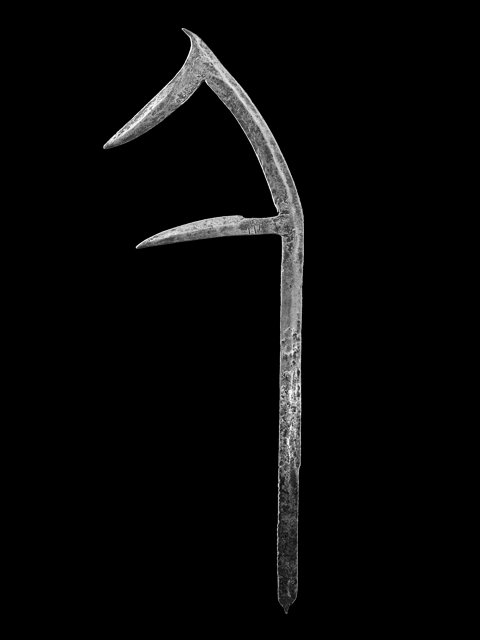
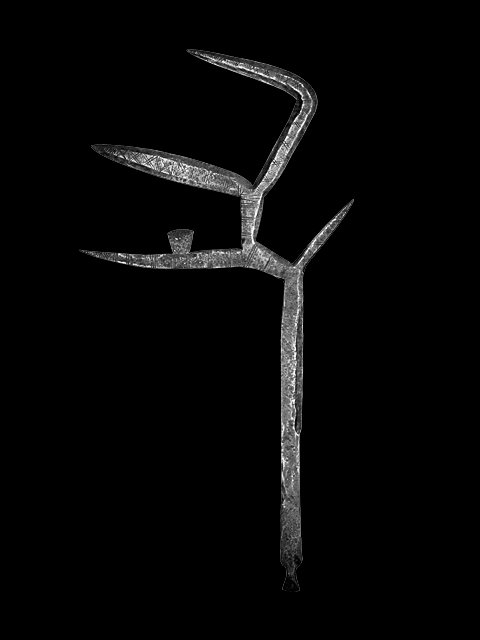
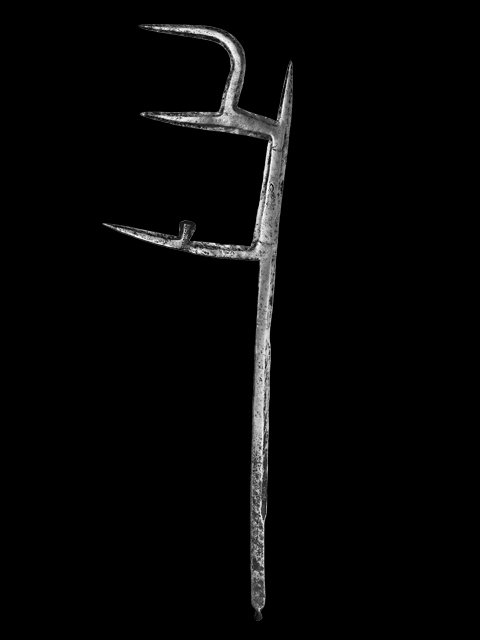
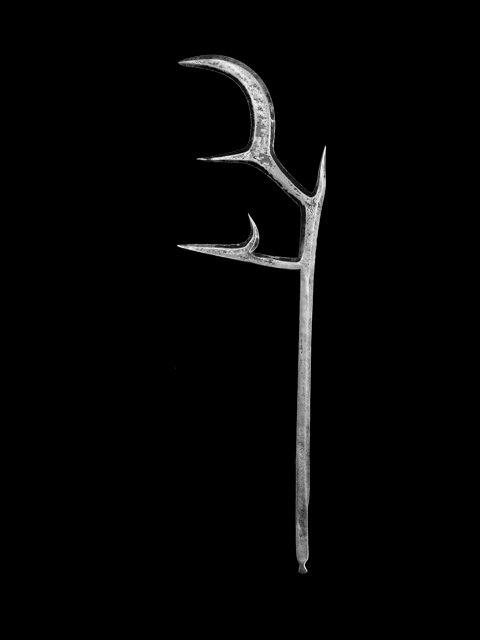
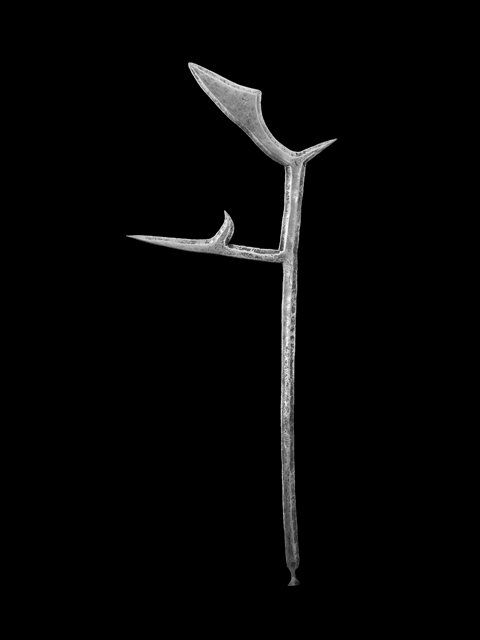
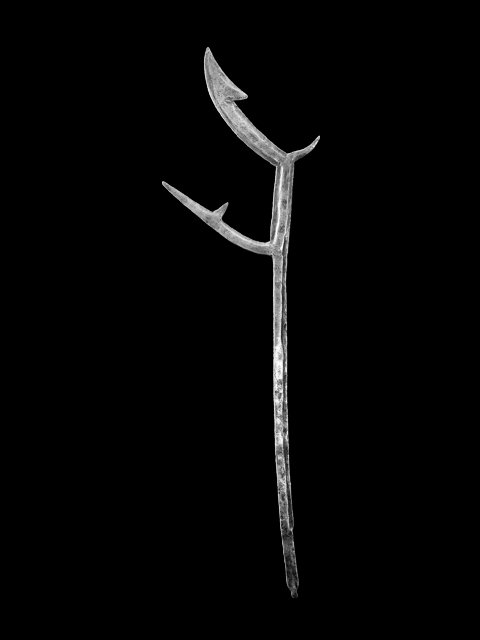
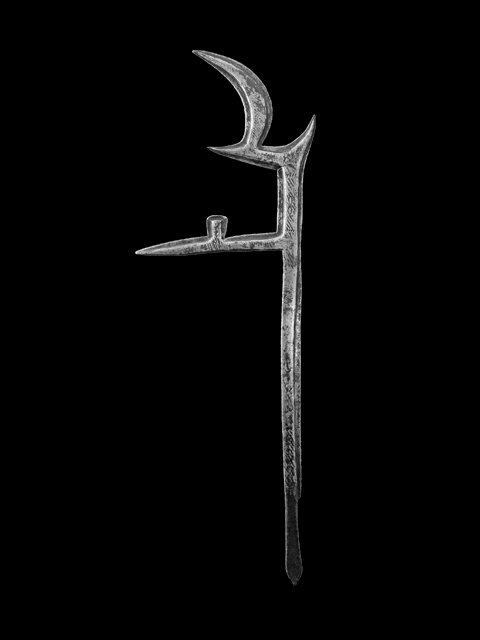
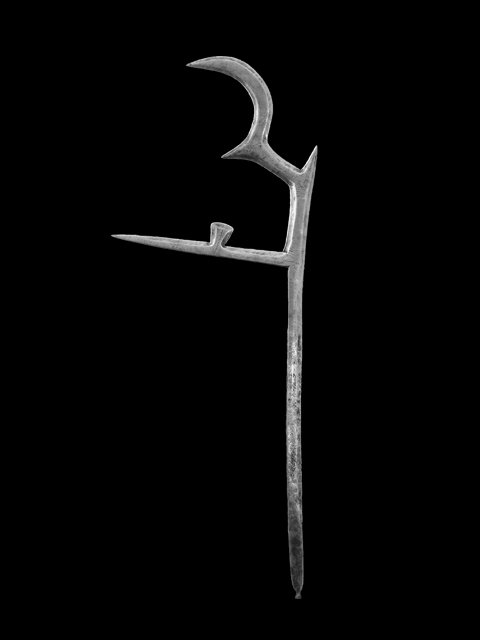
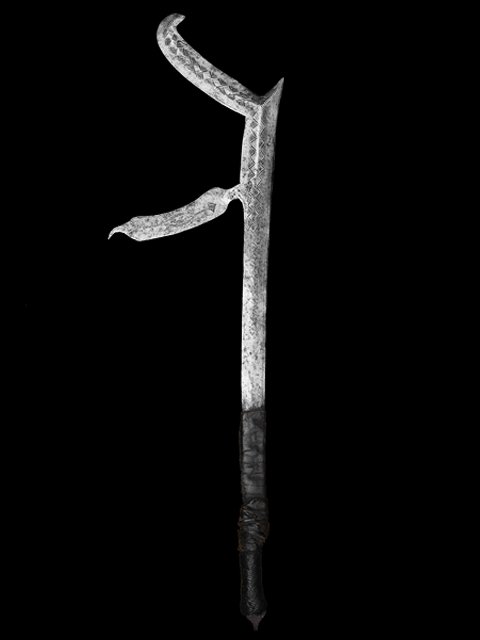
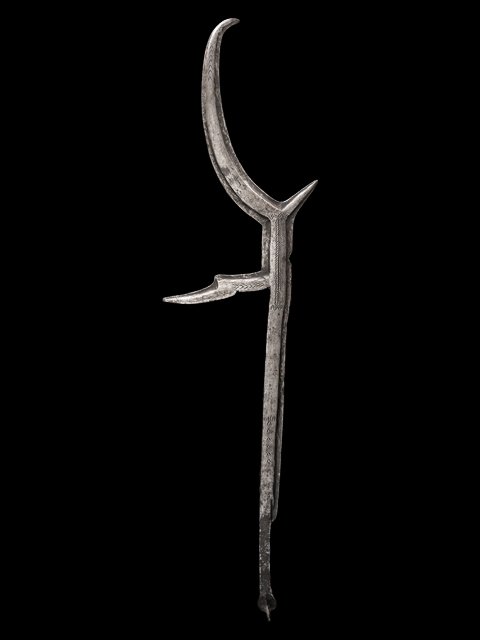
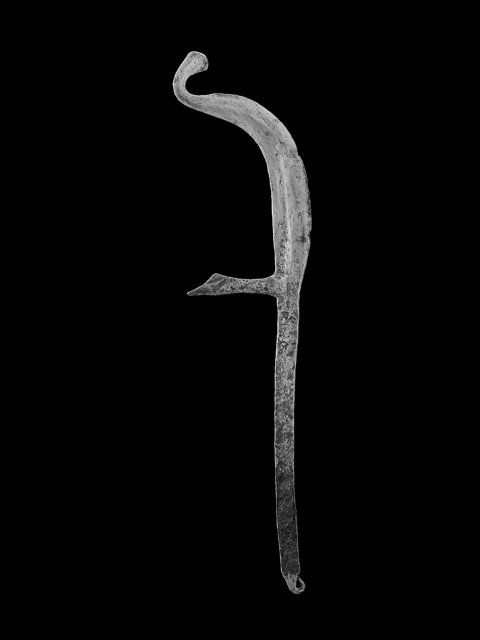
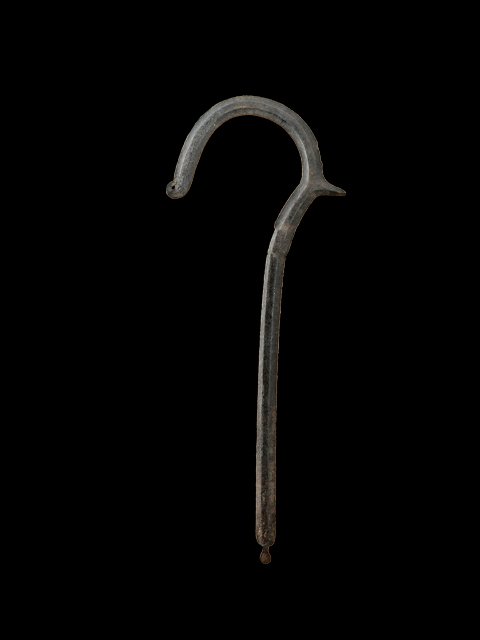
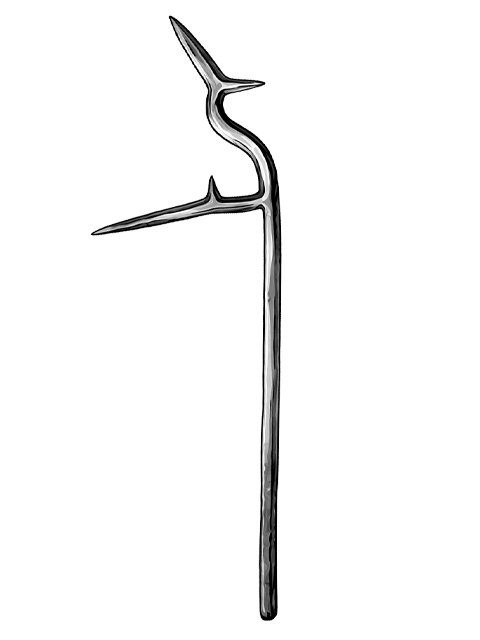
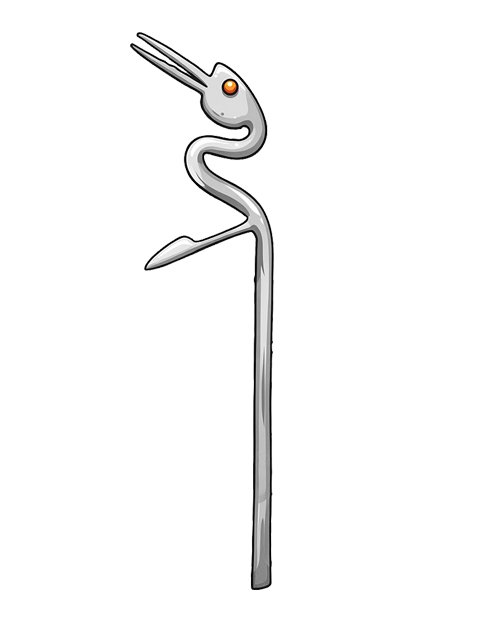
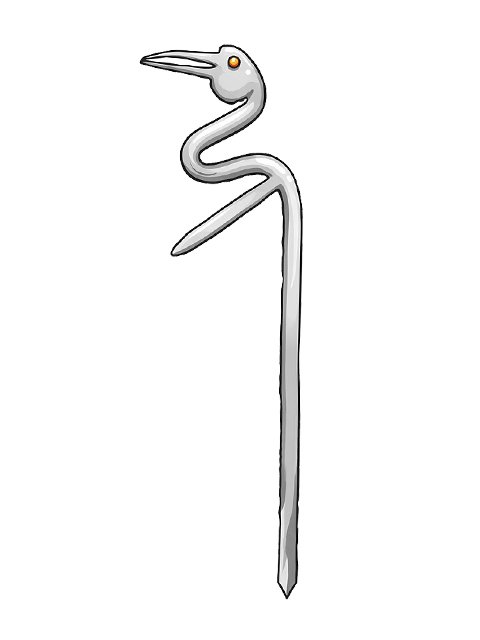
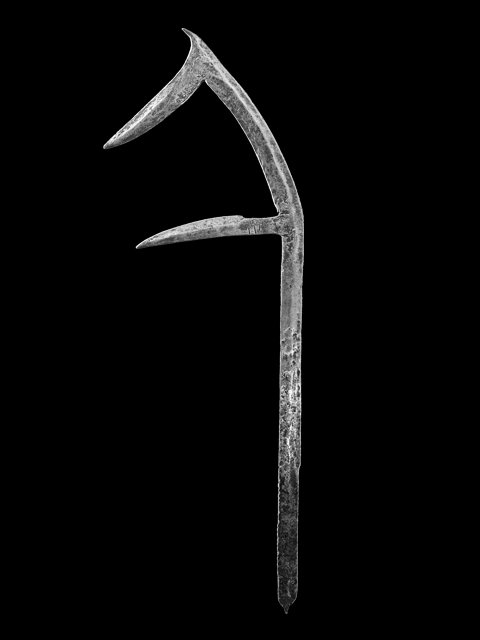
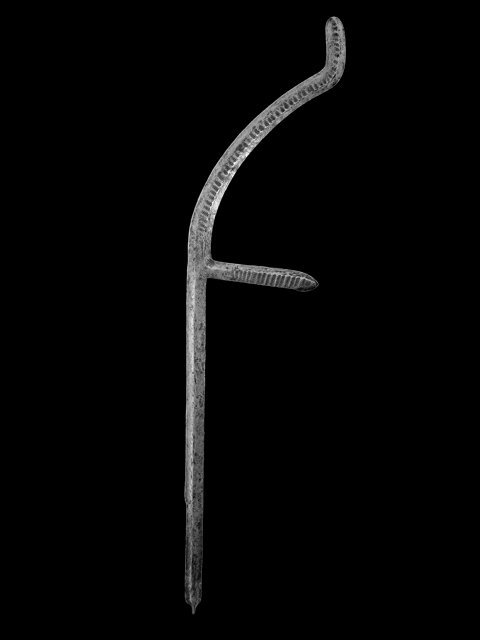
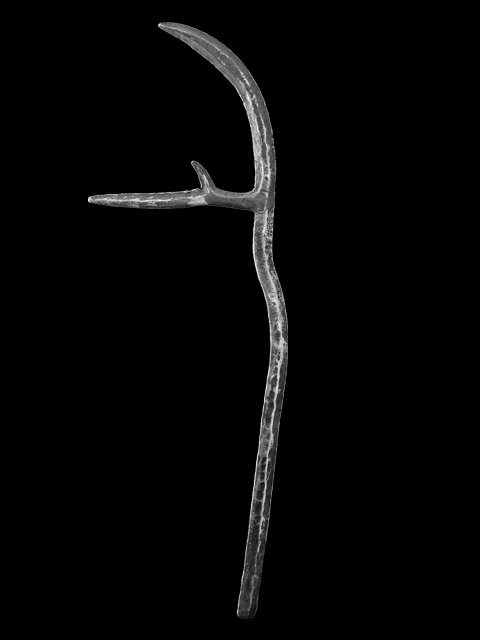
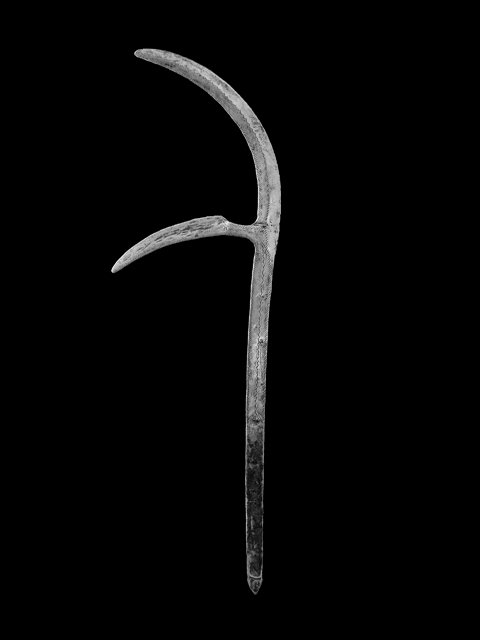
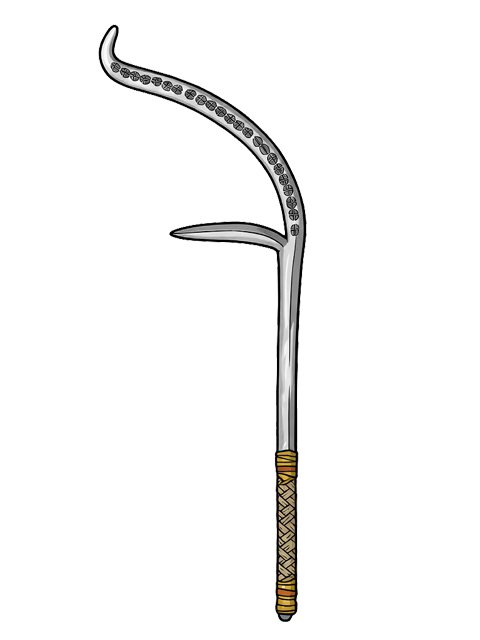
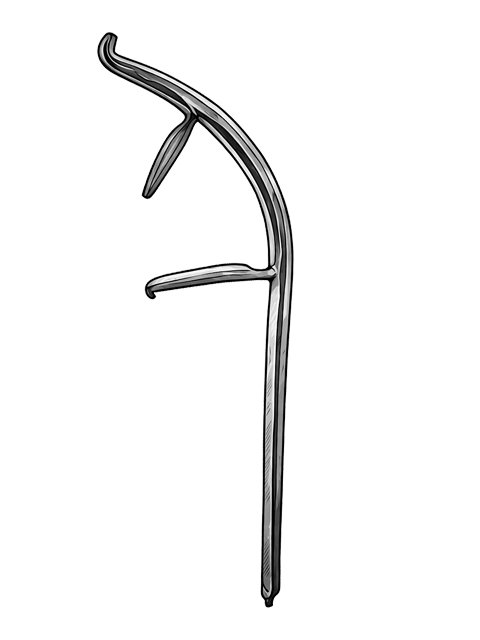
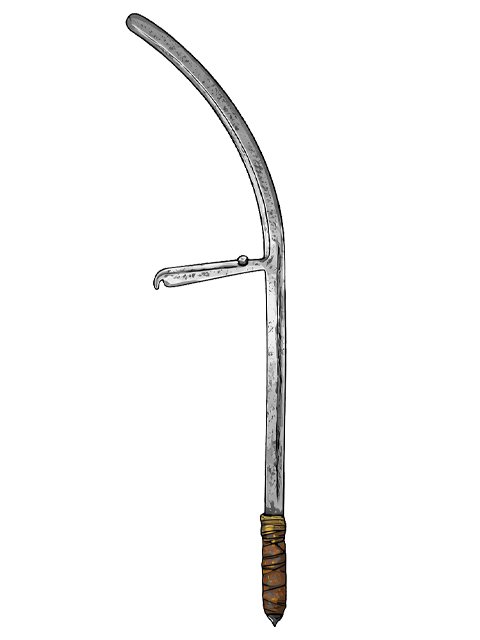
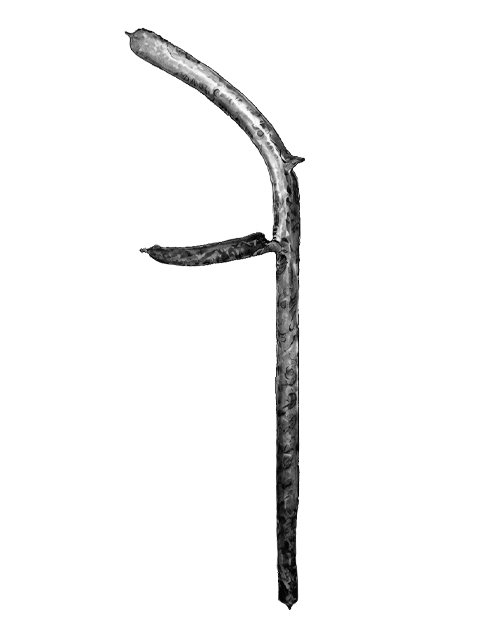
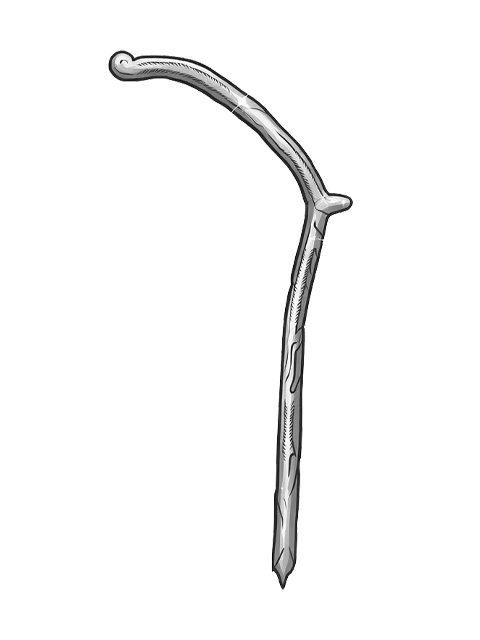
The knives of this province are reversed-F forms and are called
ngalio, mva or mia, and were originally made by Sara blacksmiths
known as kodi. They were later made by the haddad caste, Arab
blacksmiths occupying parts of this region and working for many
ethnic groups. They contributed to the spread of this form to
neighboring regions. These knives measure on average 70 to 75 cm
high and 16 to 20 cm wide and weigh around 450 g. They are
rarely decorated, but on the back of the crossbar and topbranch,
closely spaced indented areas can be found, which form waves
perpendicular to the blade. We do not know the reason for these,
perhaps they were a way to strengthen the weapon.
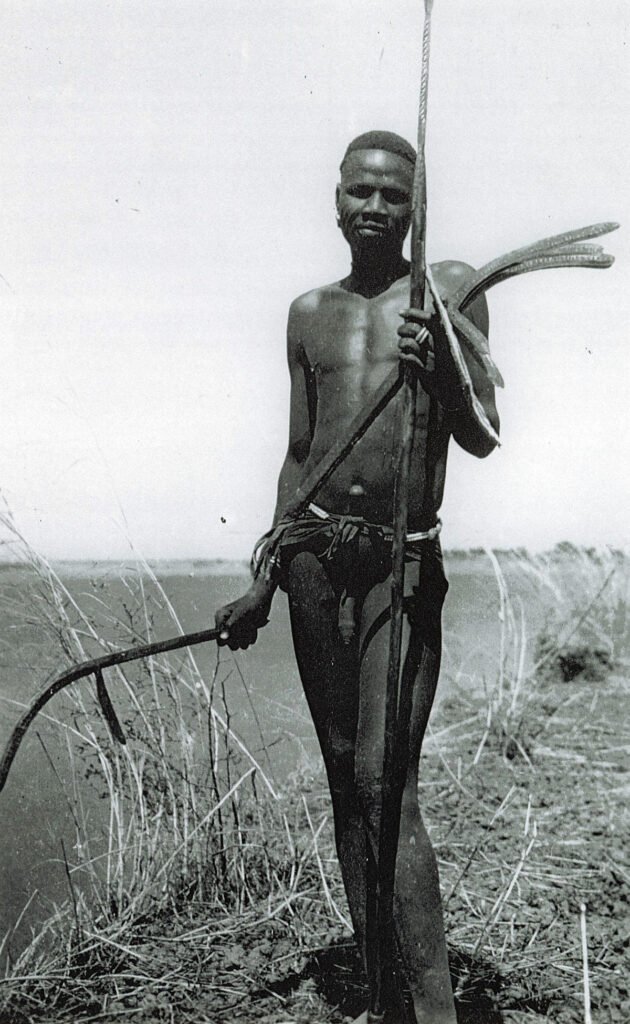
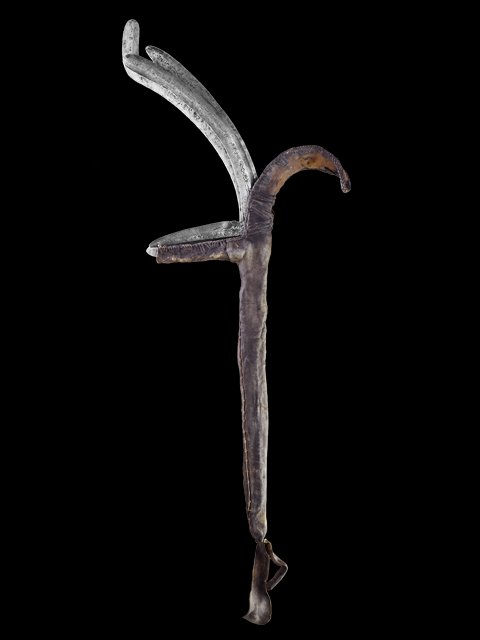
The throwing knife was the Sara’s main weapon, worn simply on
the shoulder or grouped with 3 to 7 others in a quiver made
of antelope hide and, for the part that rested on the shoulder,
buffalo hide. This arsenal was completed with spears and javelins
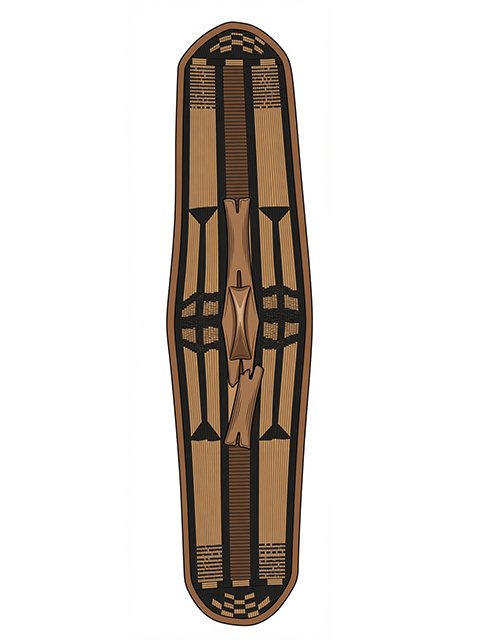
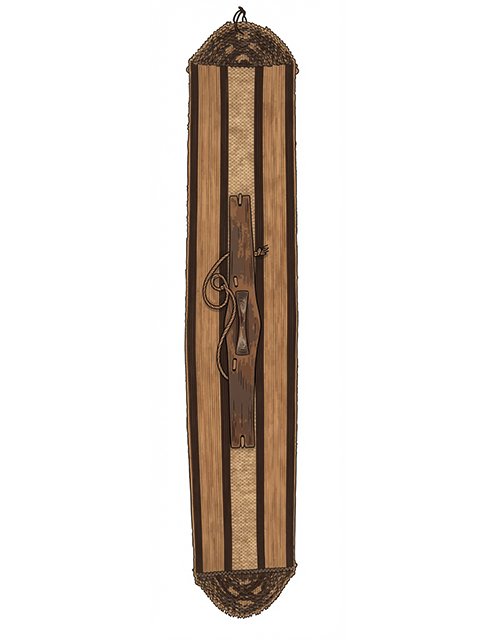
that sometimes had poisoned tips, a dagger, and a shield
of braided rush. Used for war and hunting, these throwing knives
became, over time, prestige items that defined one’s masculine
identity and the power of the king.
Indeed, the origin of this knife is mythical: “In the beginning,
Nuba, the god of the sky, sent Sou with a miya-bo, the sacred
throwing knife, to give it to the Mbang (King of the Sara) of
Bedaya. Then Sou himself asked to come to earth. Nuba gave him
an iron balafon, a drum, a miya-bo and other things for the men
of the earth.” The tales differ according to different ethnic groups,
but the power of the king of the Sara is confirmed by his
possession of these three sacred relics. “A Mbang without his
miya-bo would no longer be a king, and he would be forced to
abdicate.” It is interesting to note that according to the
mythology of their neighbors, the Ngam (the only ones in the
Sara region known to have transformed ore into iron), Sou ended
up underground and became a blacksmith. This makes it a
founding myth of the introduction of iron to the region and its
transformation. (Fortier)
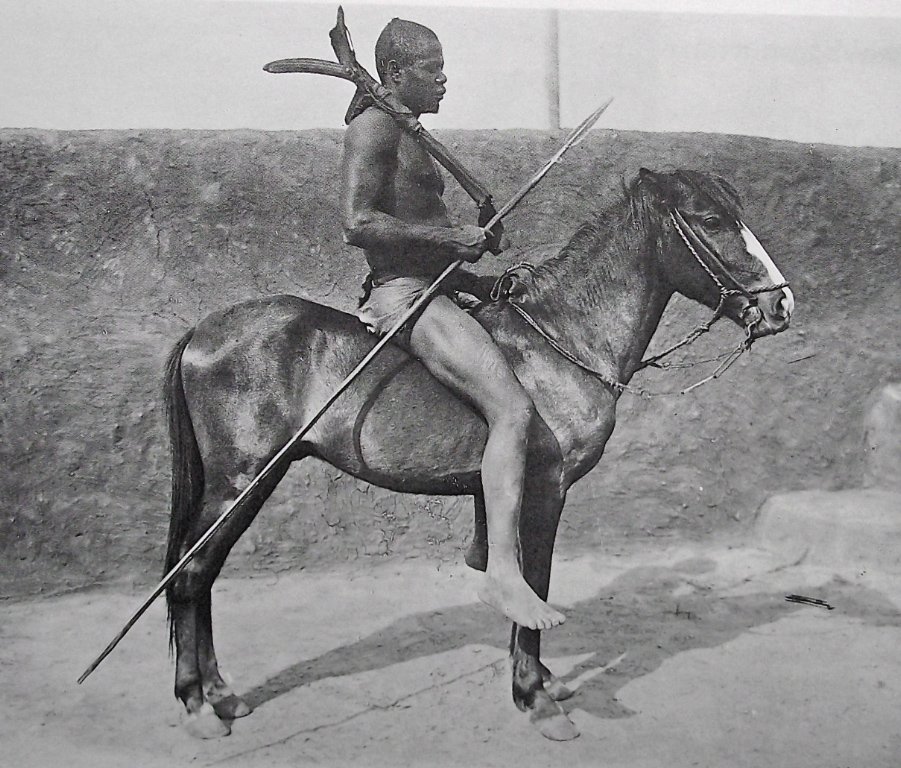
The ponies of the Logone Adamawa region
To thoroughly discuss the throwing knives of this province, it
seems necessary to mention a small horse called Musey Pony, or
Kirdi horse (or replace Kirdi with Musgo, Sara, Lakka or the name
of an ethnic group from this region who were horsemen).
It is a small horse from 1.30 m to 1.40 m at the withers that moves
with ease, mounted bareback or with a simple piece of leather,
straddling or riding. The traditional harness is a cavesson made of
six metal pieces that has the particularity of supporting a
decorative piece of copper or ovoid brass called bilna. Nachtigal
described this pony in 1880 and Brunache illustrated it in 1894
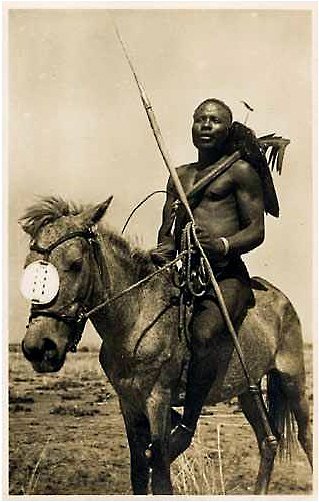
with riders armed with throwing knives and a shield. It was
therefore used by local cavalry units that could line up more than
1,000 ponies and perhaps even reach the kingdoms further north
of Kanem-Bornu, Baguirmi, and Wadaï. There is no doubt that
being mounted gave a definite military advantage to the Musgum,
Bata, and Camba in their military conquests, and to the ethnic
groups of the Mandara Mountains. If his pony pleased a rider, he
called it kuluma, and its life was punctuated with rituals until its
death, where it was buried with a real funeral. It was used for
hunting, war, raids, and agriculture. Today, this breed still exists
in Logone and Cameroon, and is used for field work.
The southwest Sara and their neighbors in south and north
These are the Laka and Ngambaye, and they represent about half
of the Sara people. They are located west of the Logone River to
the Benue Basin, straddling three countries in the south: Chad,
Cameroon, and Central African Republic. To the north are the
Massa-Musgum in the Mayo-Kebi region (Massa, Musgum,
Musseye, Bana, Djime, Pve) and the Mundang, Tuburi, and Kera
belonging to the Mbum-Lakka group. The latter are distributed in
the south with the Mbere, Kare, and Lakka, not to be confused
with the Laka who are a different tribe not belonging to the same
linguistic group.
This region is swampy around the Logone but also hilly in the
south with a drier savanna.
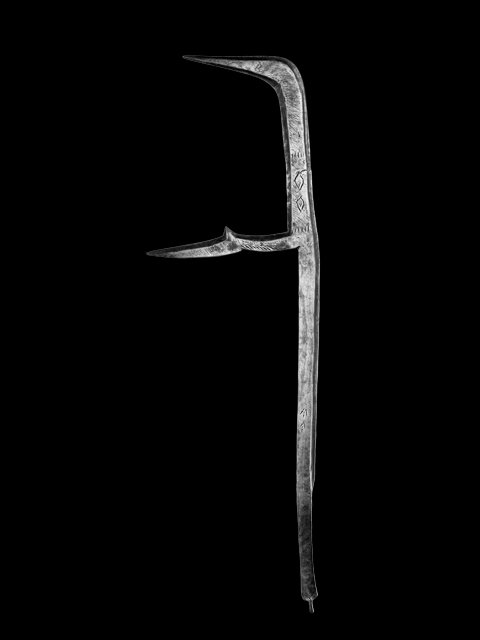
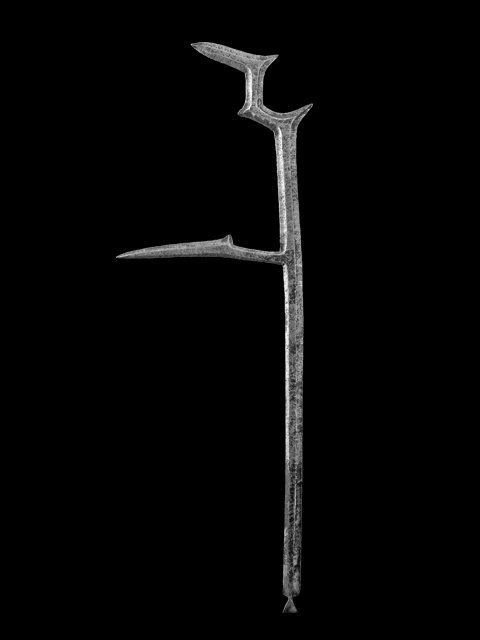
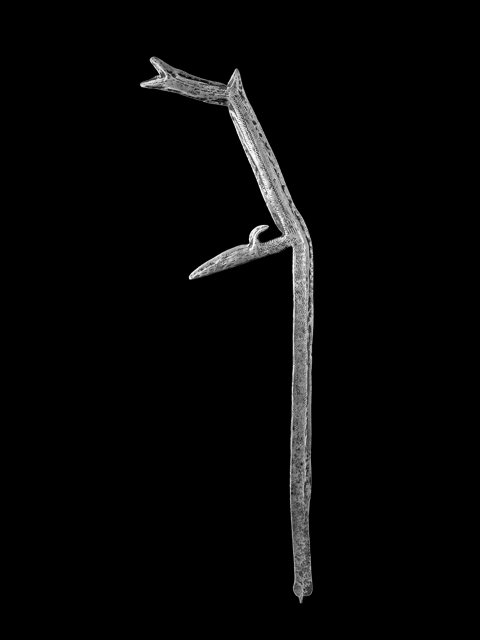
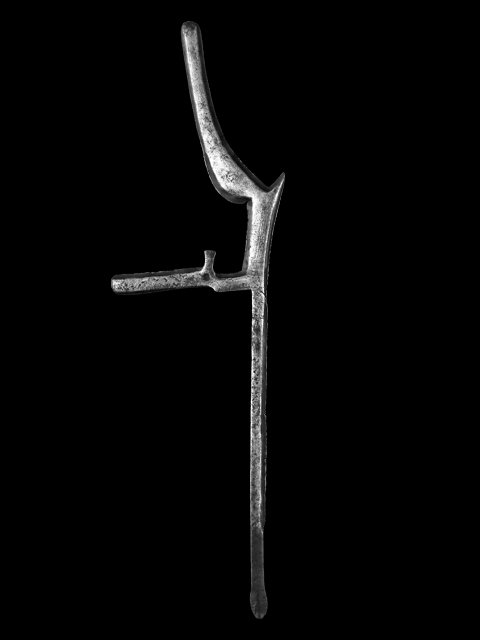
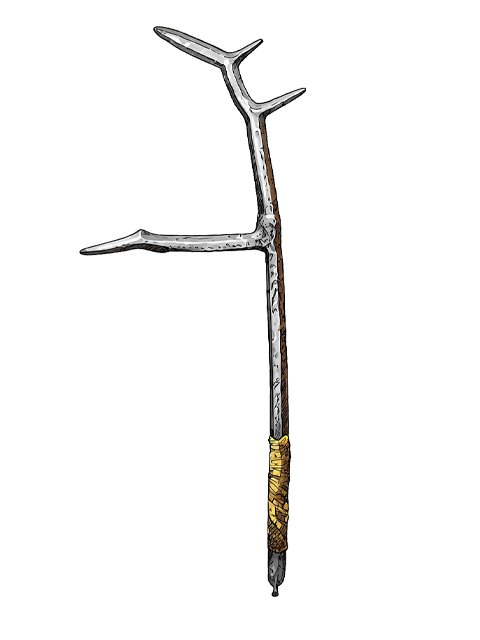
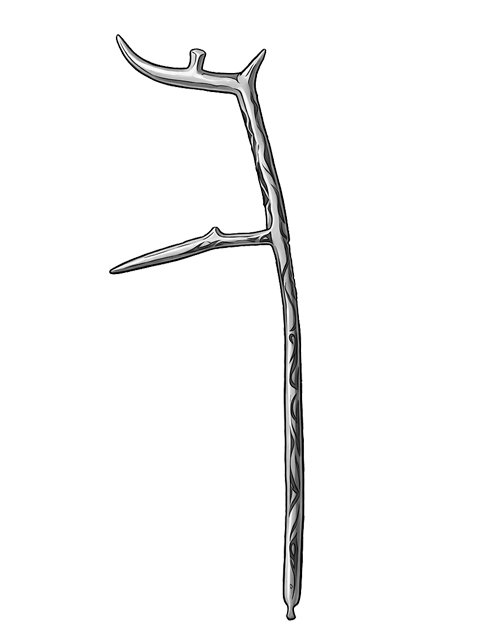
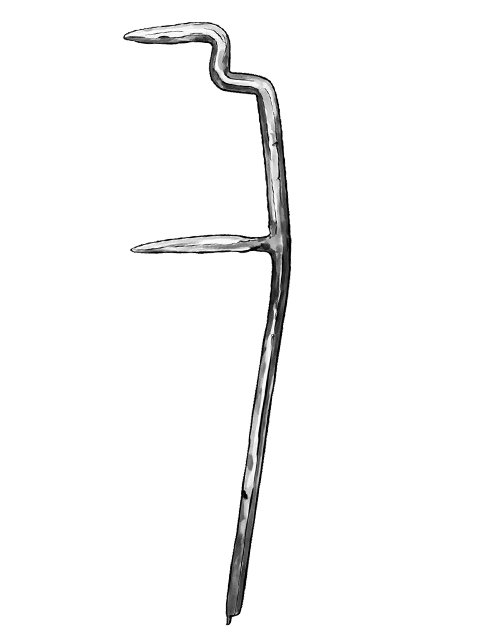
The throwing knives bear the same names as in the first stylistic
province (ngalio, mia). Their shape changes by losing their curves
that turn into angular broken lines with a very cubist design. Two
groups of different sizes can be distinguished, the first of 54 to
58 cm which weigh 250 to 350 g with a width of 1.7 cm.
The second group measures 65 to 70 cm with a weight between
400 and 600 g and a width of 2 to 2.5 cm. The forging is more
sophisticated than in the first Sara group, with bevels that give
relief on the front, the back generally remaining flat. The handle
is almost always absent, but the tip can end with an appendage,
a sort of flattened tongue. The crossbar and stem are sometimes
engraved with ovoid patterns, lozenges, parallel or zig-zag lines,
and dots. These knives can also be carried in groups in a leather
quiver carried on the shoulder, the back being protected from
the points by a small shield (see photo of the rider on the
previous page). Throwing knives were the ultimate weapon of
this group, with javelins, spears, throwing sticks, and clubs being
secondary.
Warriors carried large braided shields for protection. Shields of
the Musgum and Kotoko, known as marayada, evoke the shape
of a fan, and were made of basket wicker assembled with string
and a wooden handle.
In the pictures below, it is interesting to note that the rider
wears his throwing knives in a holster that passes through a piece
of leather, perhaps a kind of shield that would also serve to
protect the rider’s back when traveling.