This vast province covers the Darfur region of Sudan and
encroaches into eastern Chad. As in the previous province,
we find the populations of the Maba group, especially the
Masalit living in Wadaï, the Dadjo in Darfur, the Zaghawa of
the Berti group, and the Fur occupying Darfur. The Nubian
ethnic groups are represented by the Midob and Birgid, who
are a caste of blacksmiths like the haddad, who produce
weapons for the Masalit and Fur.
The region is covered in desert and mountains, except for in
the southwest, where there is sparse vegetation.
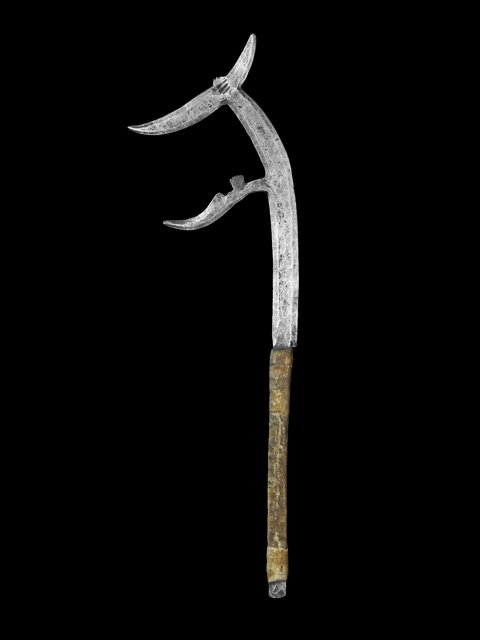
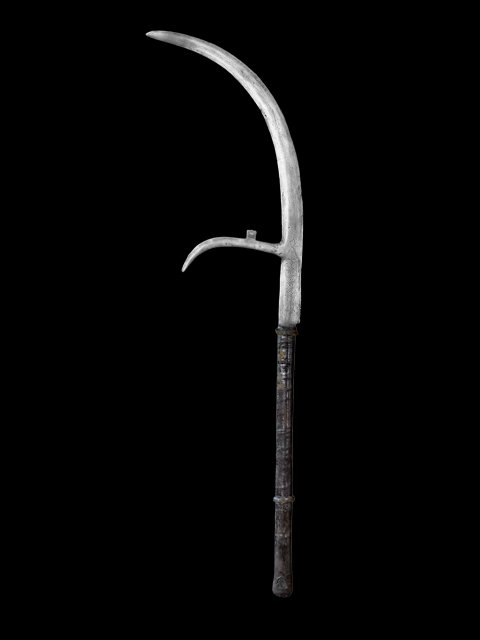
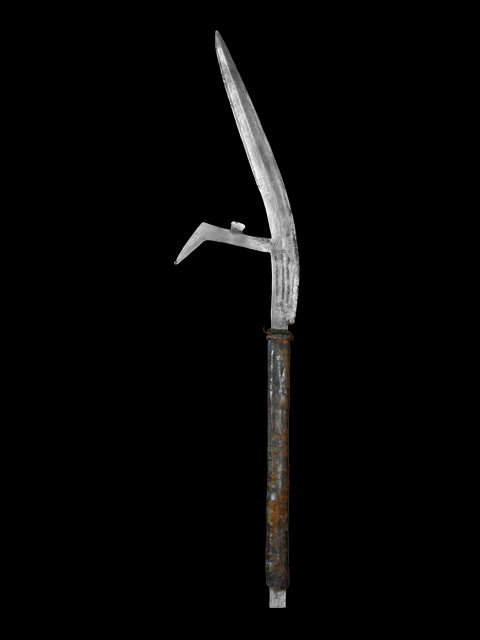
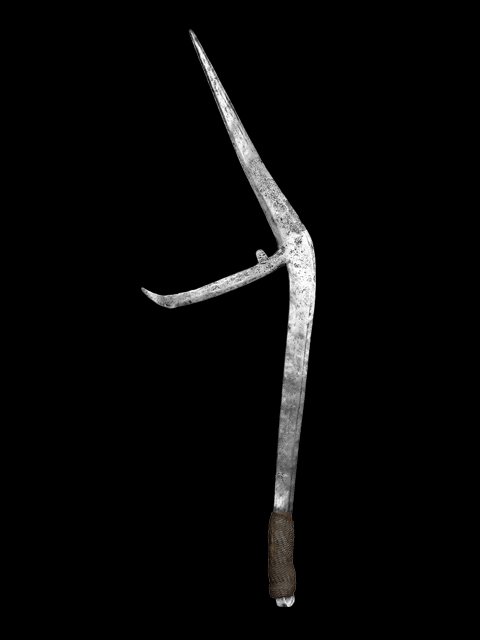
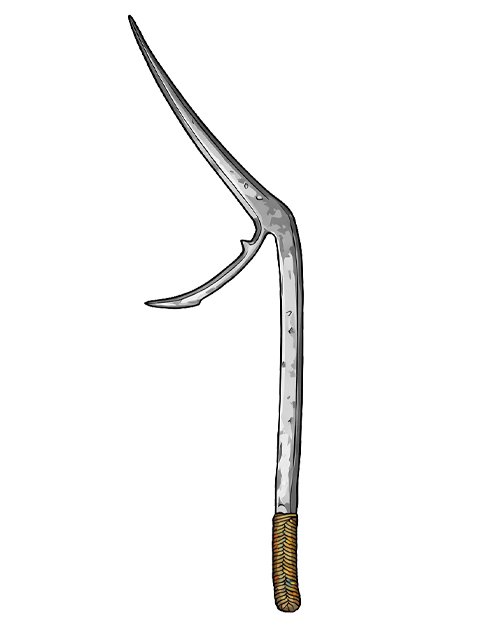
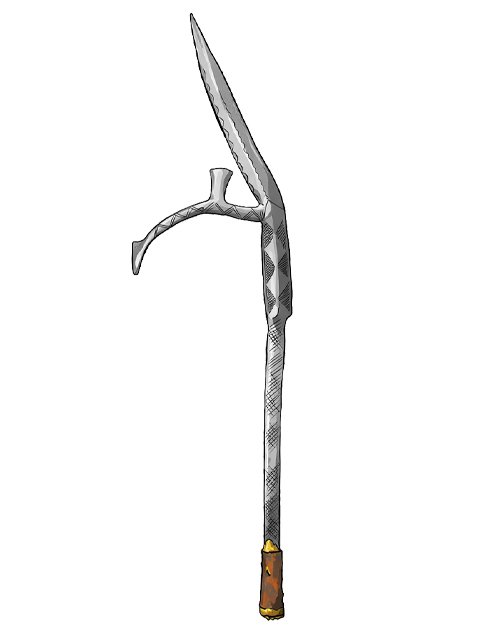
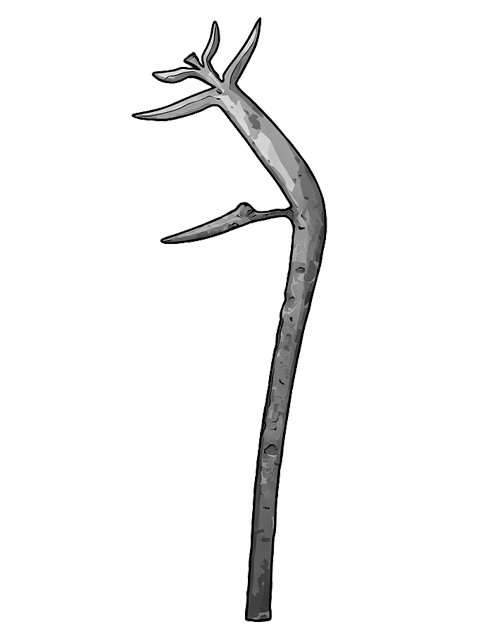
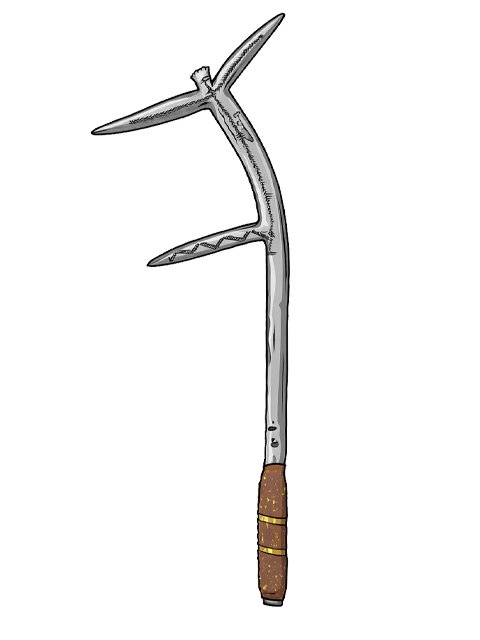
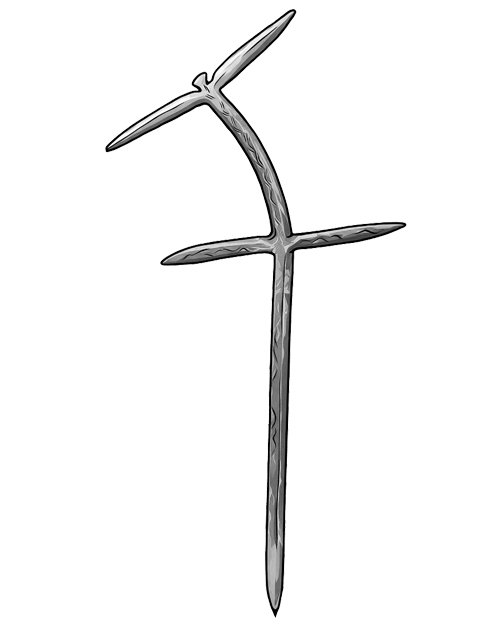
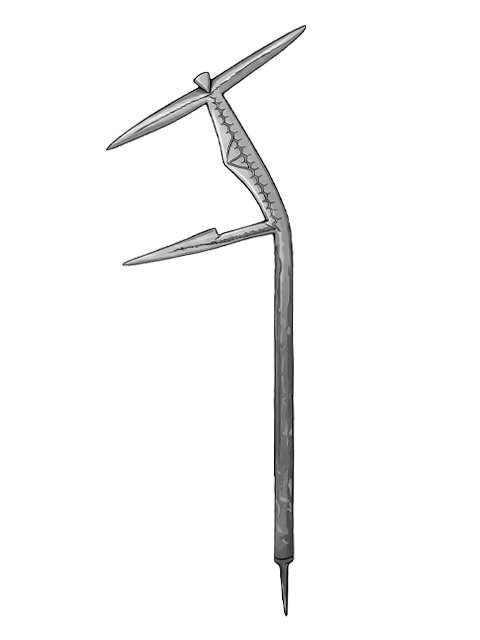
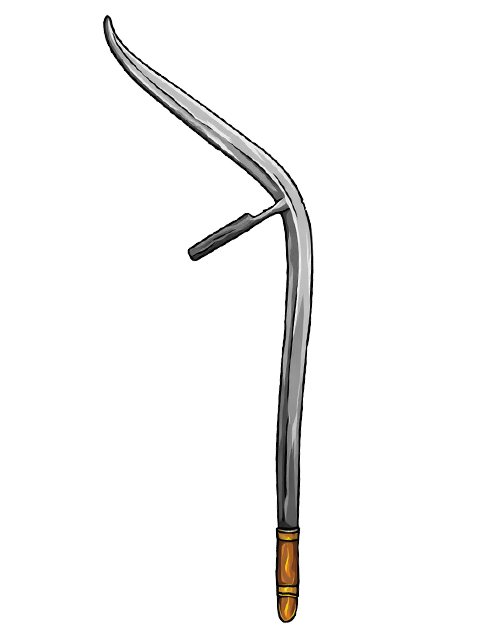
Unlike those of the previous province, the knives here are flat
and therefore thinner (3 mm), which gives them a certain
elegance. Additionally, they are often engraved with
sophisticated decorations on both sides. The handles consist
of either braided leather or a thin layer of red-dyed camel or
goat leather, covering a substantial section of the handle
(30 cm). The size of these knives varies between 60 and 70 cm,
and their weight between 400 and 500 g. We can easily
distinguish two groups of knives, the first resembling
the knives of the previous province (Tubu-Daza), made by
the Masalit haddad, and the second having features in common
with the knives of Sara and Laka, made by the haddad of
the Fur.
With the rise of the cavalry in the nineteenth century,
throwing knives lost their important role in the ranks of
the infantry, which relegated the troops on foot to
the background. Spears, swords, and daggers were mostly used
in battle.