This stylistic province is located between the Kadei and Mambere
Rivers (both tributaries of the Sangha), straddling Cameroon,
the Central African Republic, and the Republic of Congo.
There are wooded savannas, dense forests in the south, and
some open areas.
This is the territory of the Gbaya peoples: Gbaya Lai, Gbaya
Mbodono, Gbaya Buli, Bosoko, Yangere Gbaya, Ngombe, Bokare,
Biyanda, Budamono, and Bumbele.
The Yangere are a group of Banda origin who migrated from Dar
Banda (1800-1820) and integrated with the Gbaya. They brought
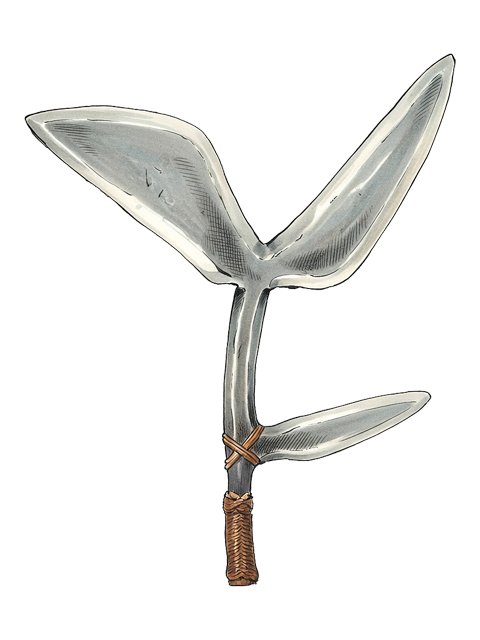
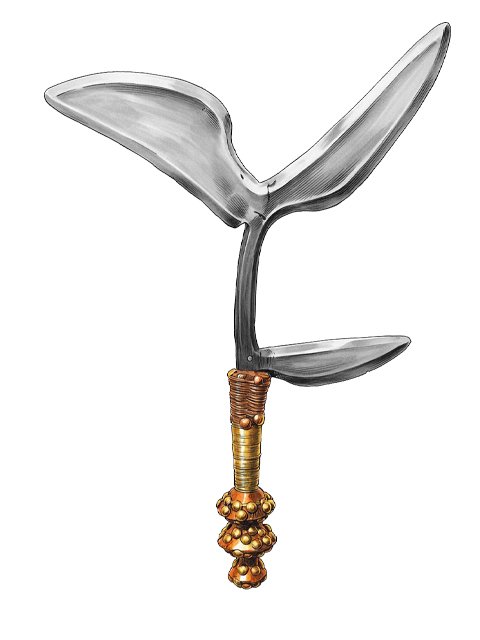
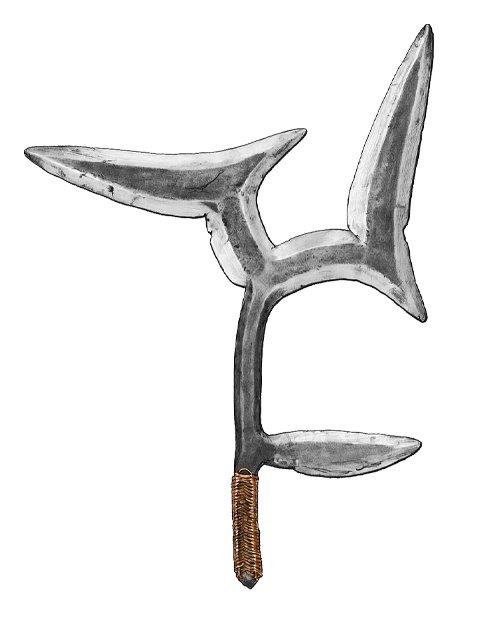
the design of the Banda’s ondo throwing knives with them, and
created an entirely new throwing knife design after their
migration. The Kaka, of Yangere origin, live between the Gbaya
and the Ndzimu.
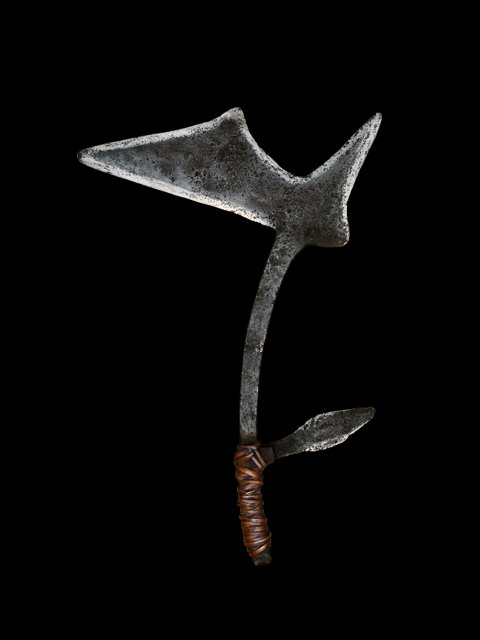
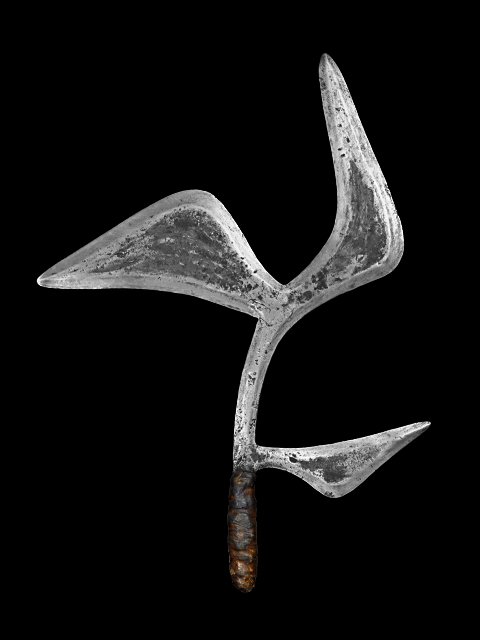
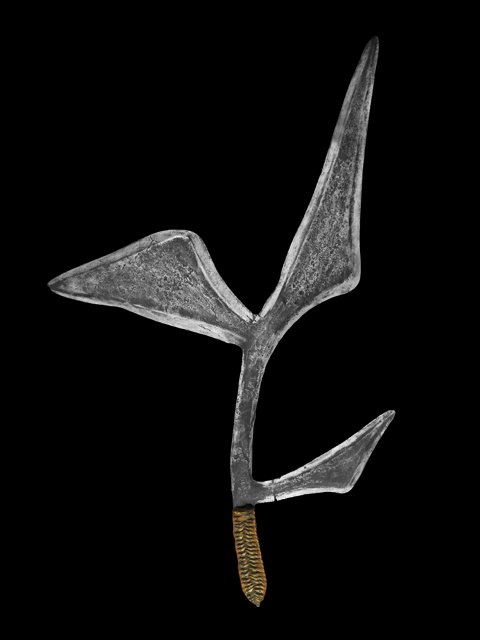
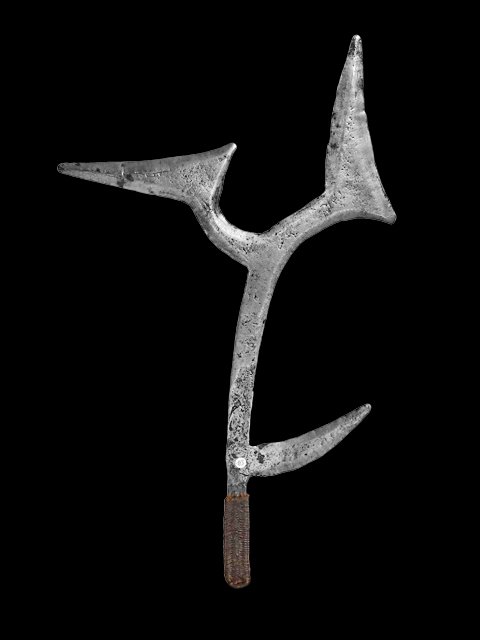
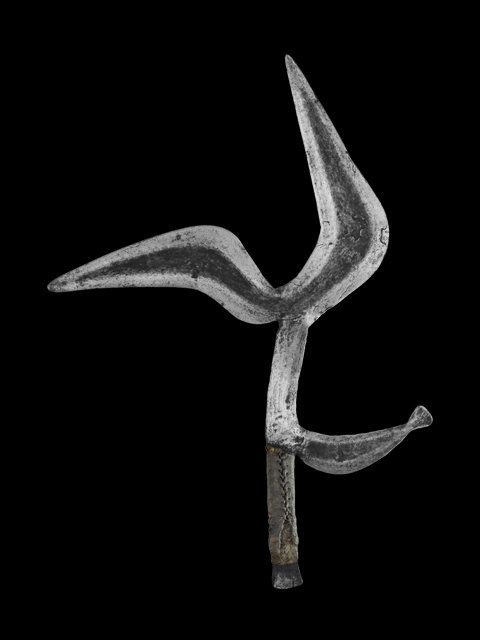
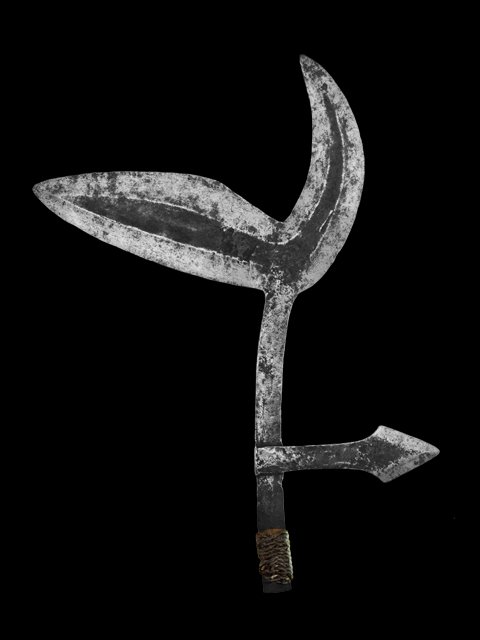
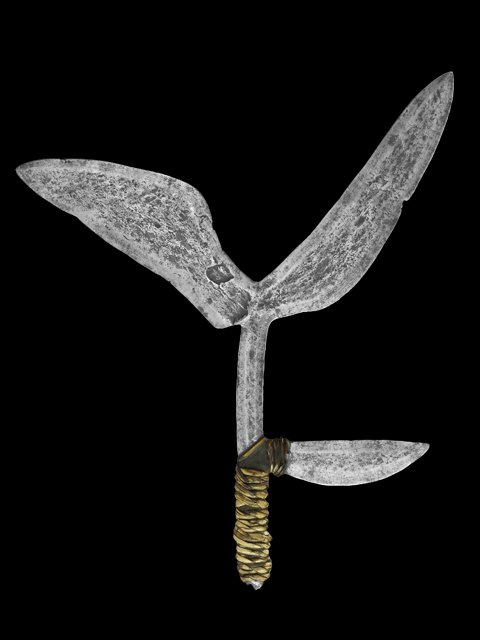
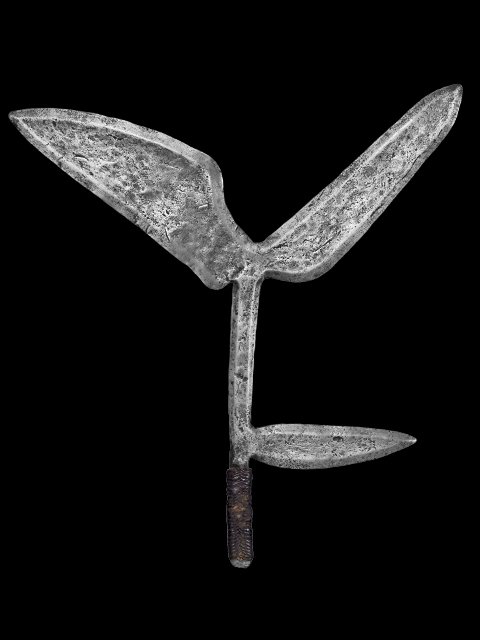
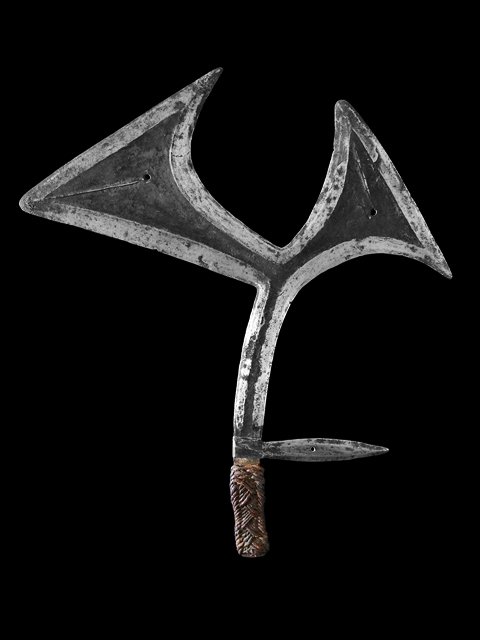
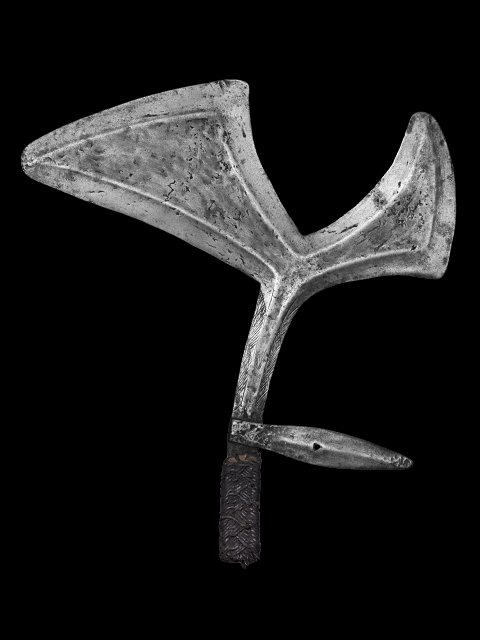
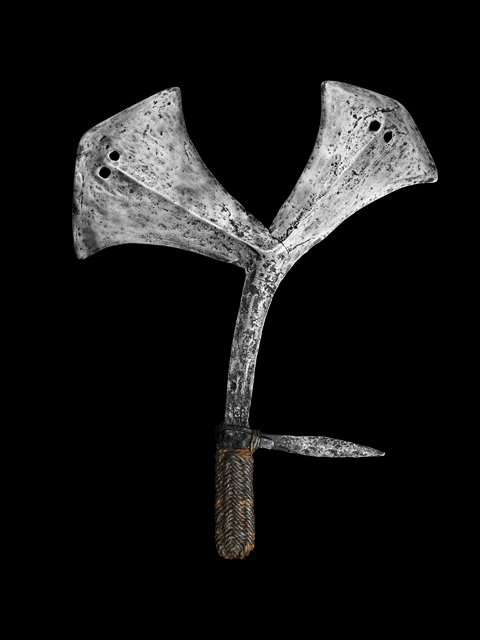
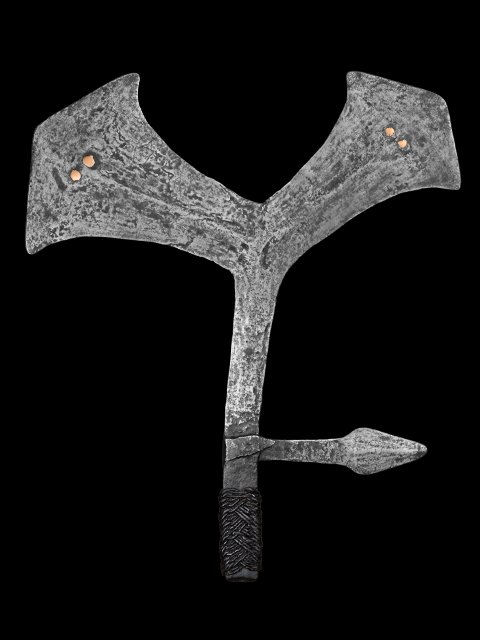
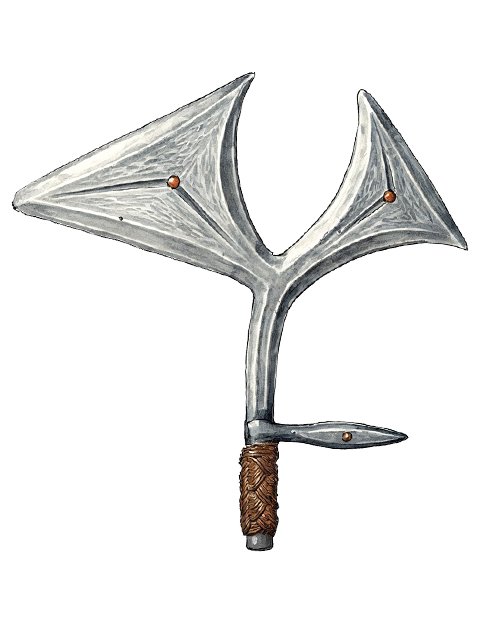
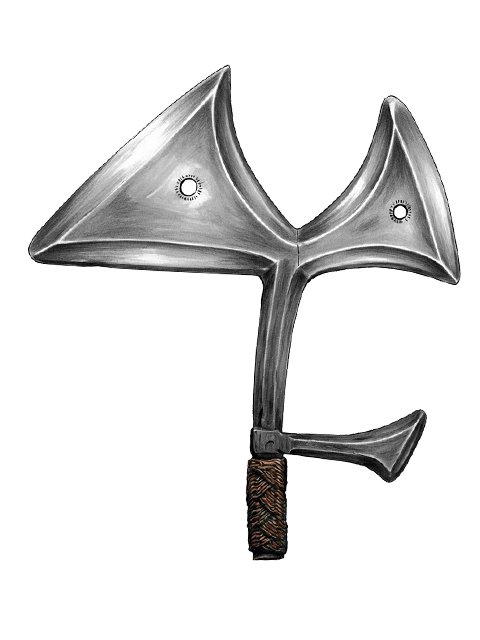
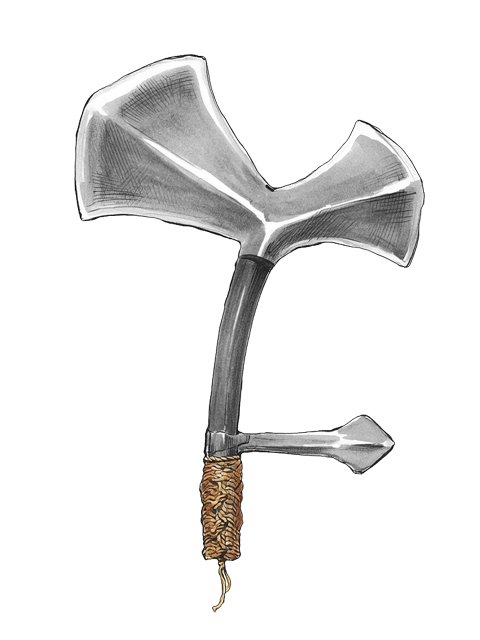
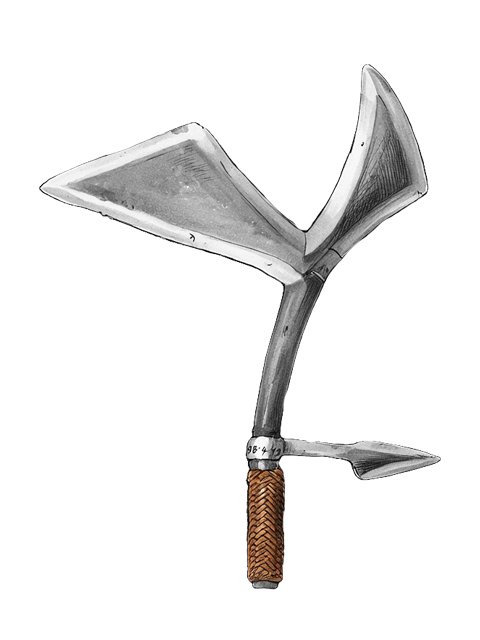
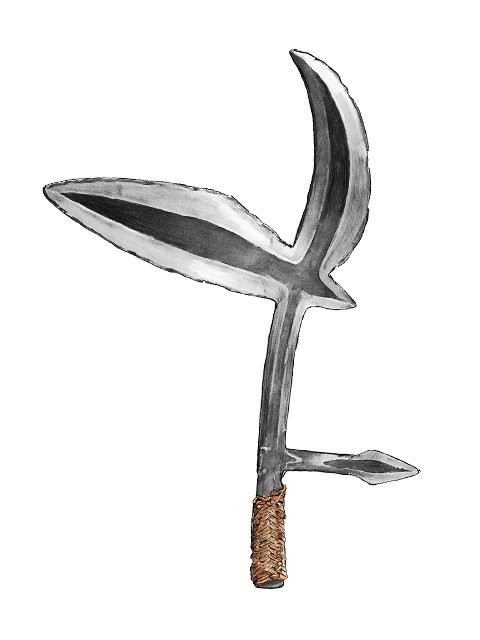
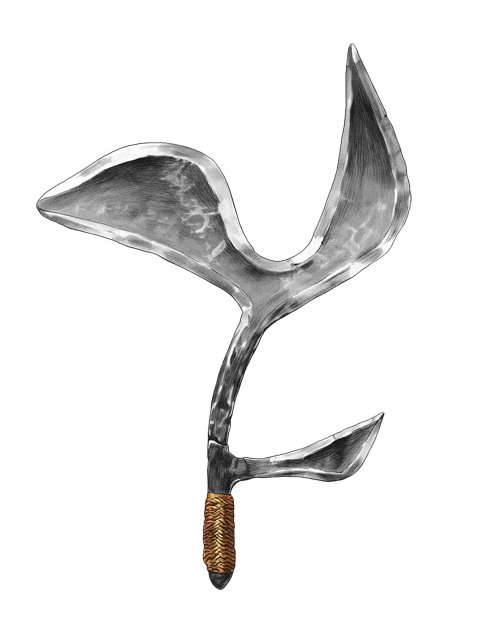
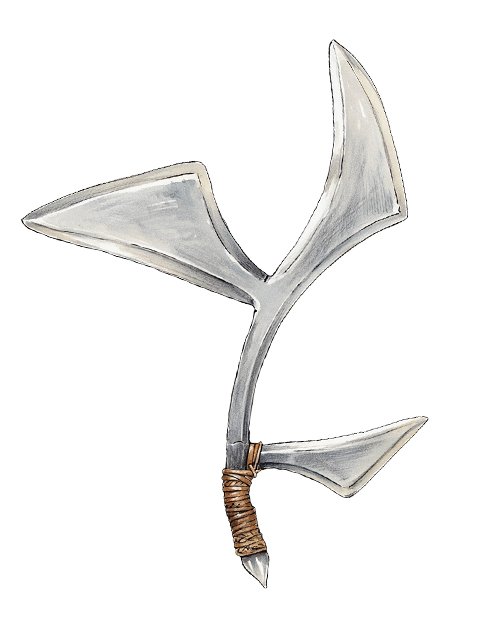
It seems that the Yangere were the main manufacturers and users
of the knives known as kpenga or binga. They mastered
the manufacturing techniques and their know-how spread to
tribes neighboring the Gbaya.
There are two types of weapons: some fine and slender weighing
350 to 500g and measuring 35 to 46cm high, the oldest of which
are attributed to the Yangere; and the others are stockier with
broad and thick wings weighing from 600 to 700g and measuring
33 to 38cm, undoubtedly more recent and attributed to the Gbaya.
The latter have a characteristic spur that wraps around the rising
stem, and given their weight, they were probably used as hand
weapons. They share the same type of forging and handle as
the Gbaya’s F-shaped throwing knives that were studied in
the first volume.
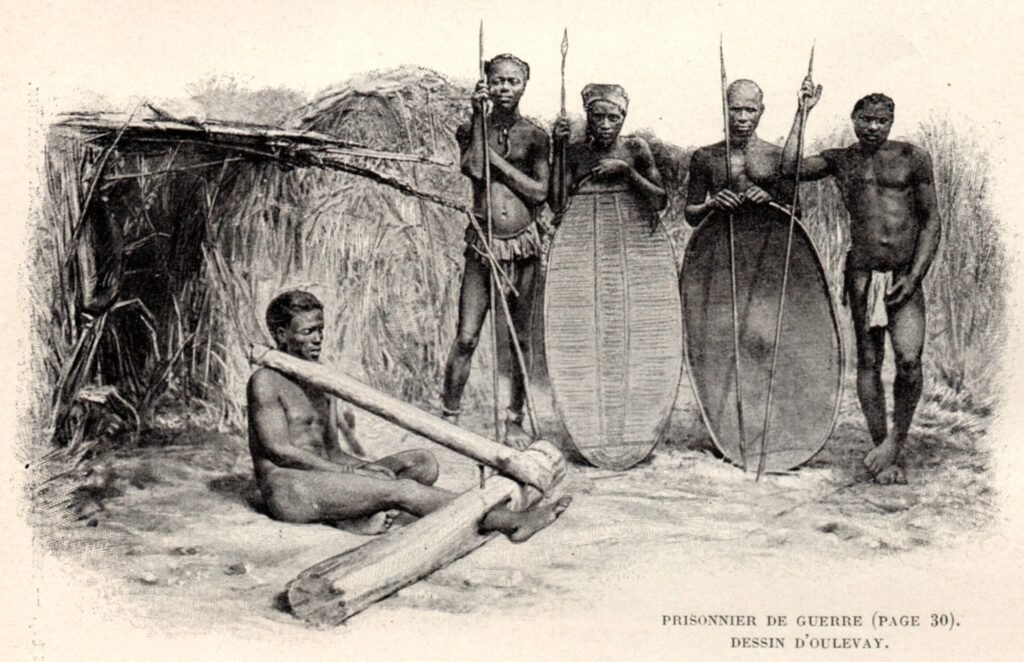
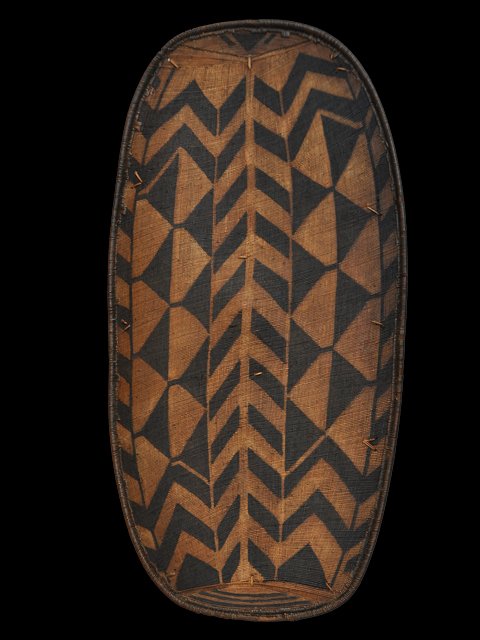
The main armament of this province consists of bows, javelins
and spears, magia curved knives, throwing knives, and wooden
clubs. A large basketry shield decorated with many geometric
patterns completes the panoply.