This province extends over a large part of the Central African
Republic and spills over the Congolese bank of the Ubangi River in
the south. The north is covered with dry savannah, the center is more
wooded, and the south is a dense savannah dotted with forest areas.
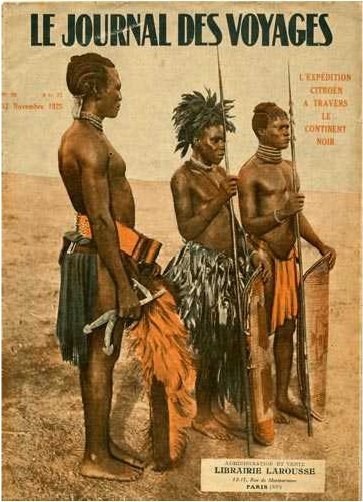
The Banda tribes occupy this vast territory. Fleeing the slave raids of
the Wadaï, these groups that originated from the Haute-Kotto and
the Ndélé plateau migrated south: first the Yangere and the Mbanja
in the south-west (1830-1850), then the Mbugbu, Langba, Langbase,
and Dakpa in the south-east territory that borders the Nzakara
(1850) then the Togbo, Ndri, Ngao, and Yakpa (1850-1860). The last
groups left the Dar-Banda region around 1870-1880: the Nduka, Luto,
and Tani towards the Sara and Manza territories in the north/
northwest; the Biri, Ngobu, Tambago, Jeto, and Wada to the south/
southeast near Shinko and west of Bar-el Ghazal; the Mono Ngbundu,
Mbanja, and some of the Togbo, Langbase, and Gobu crossed
the Ubangi. These migrations stopped with the Franco-Belgian
colonization of these regions.
The dispersion of these groups explains the « Banda » mosaic in CAR
and also the establishment of conflicting and commercial relations
as well as artistic influences with neighboring ethnic groups such as
the Nzakara, the Zande of West Rafai, the Manza, and the Yakoma.
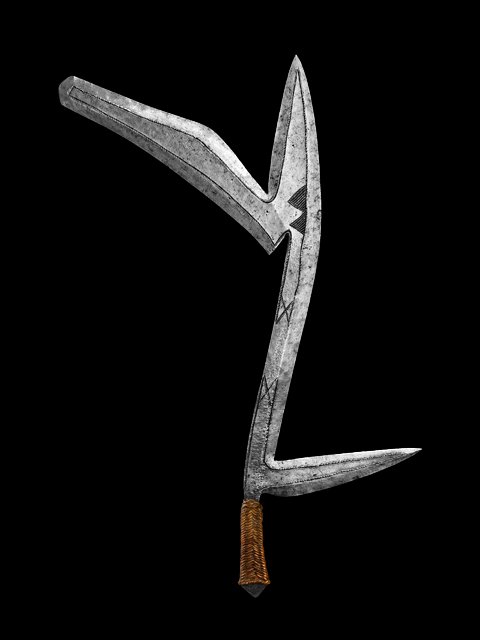
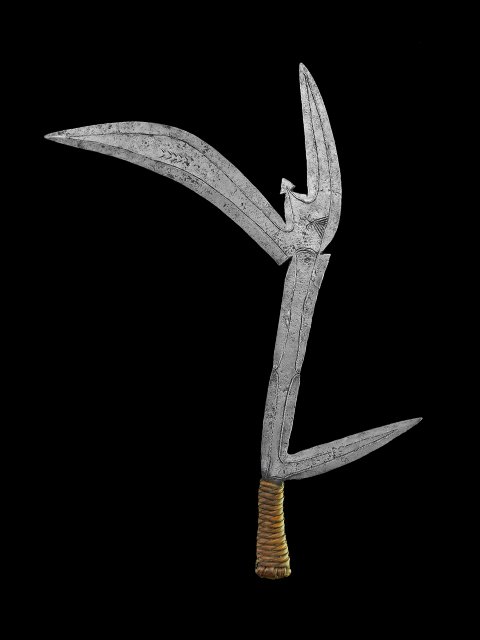
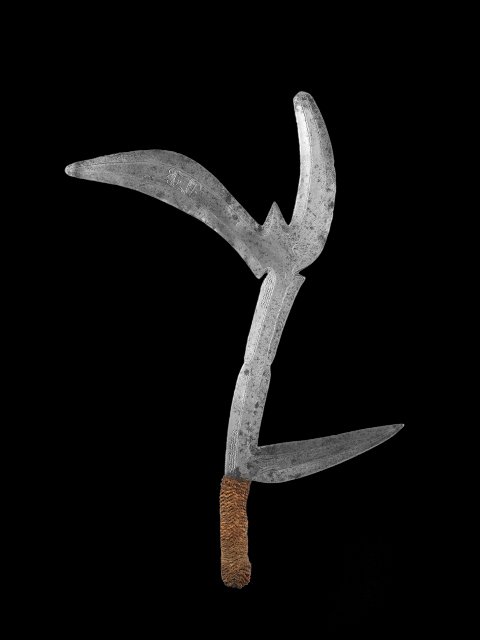
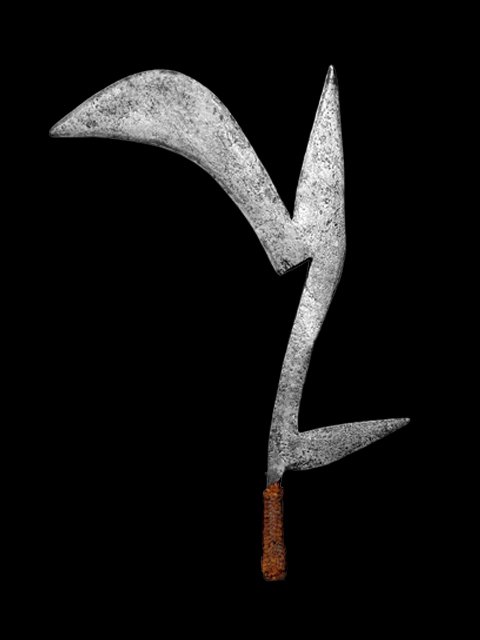
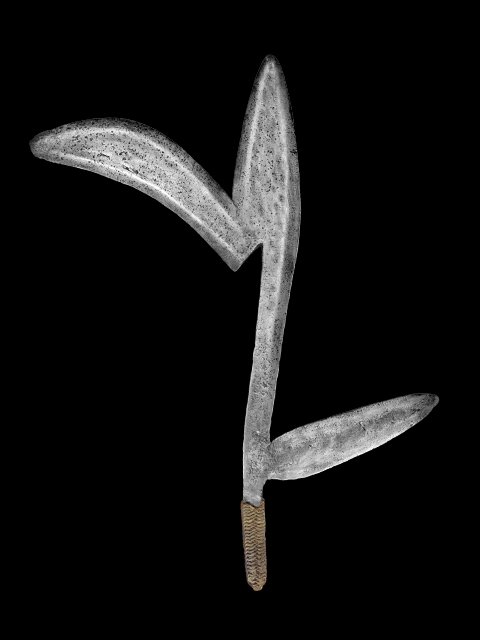
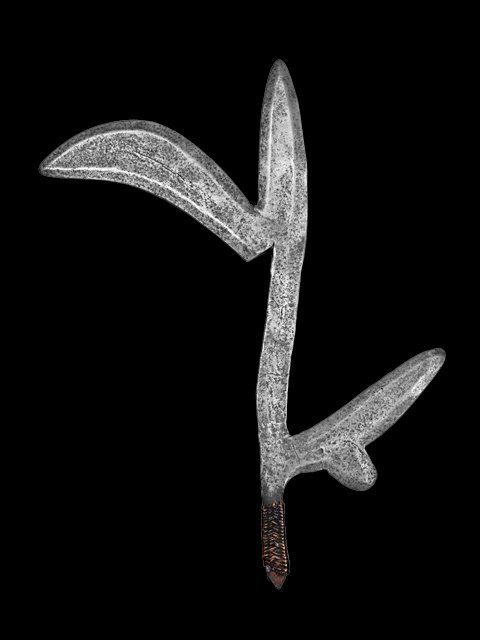
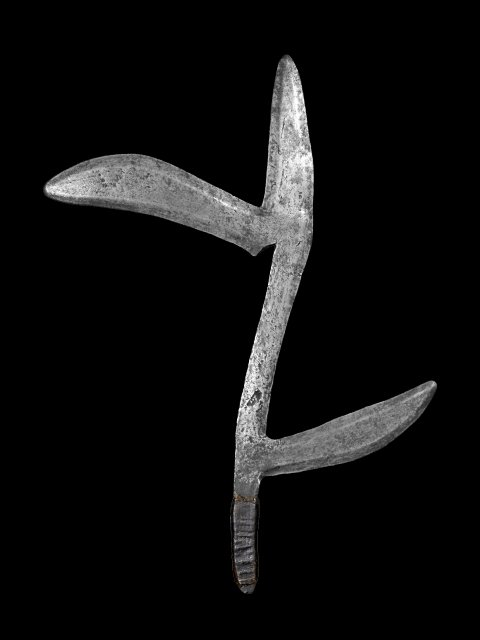
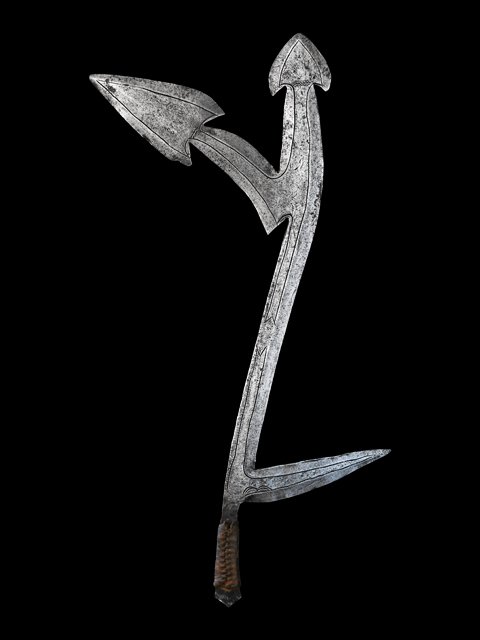
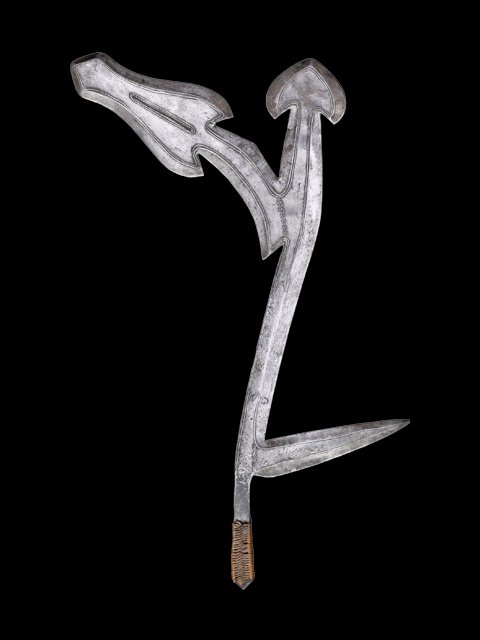
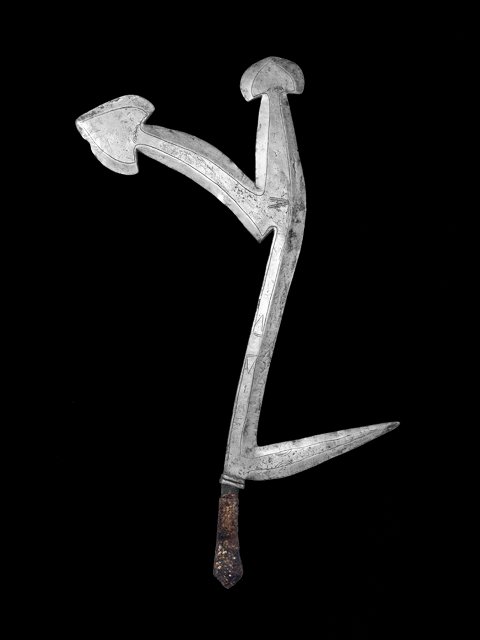
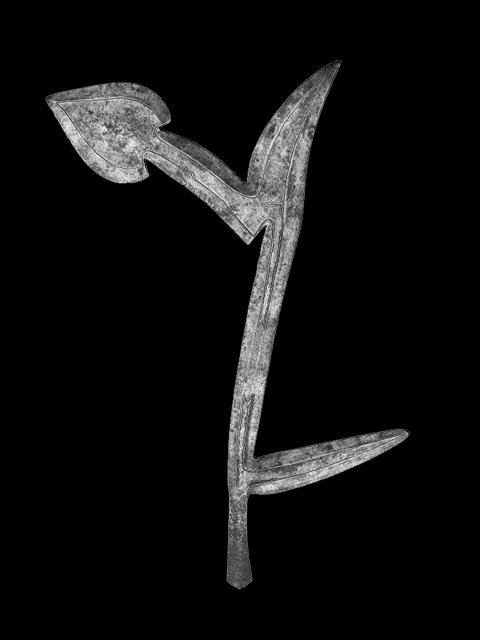
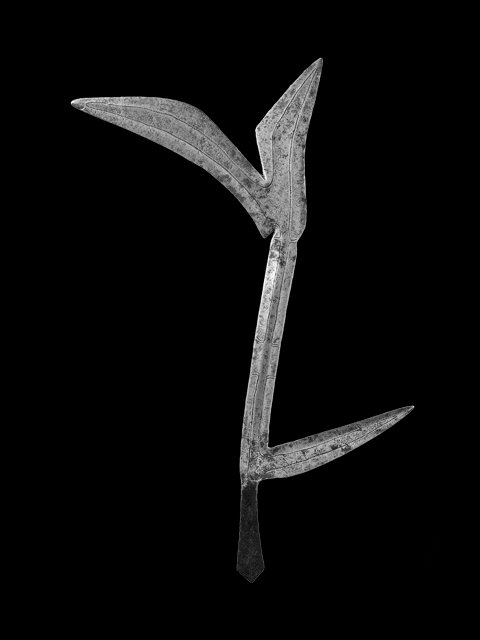
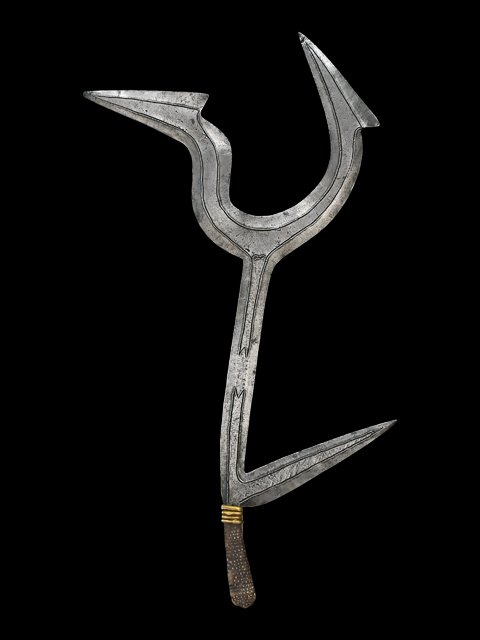
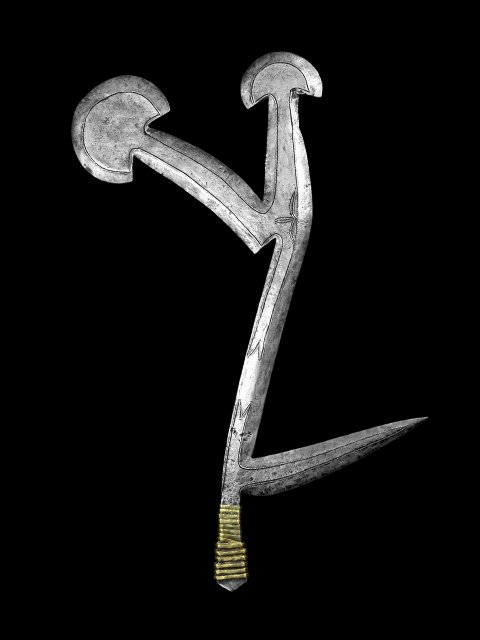
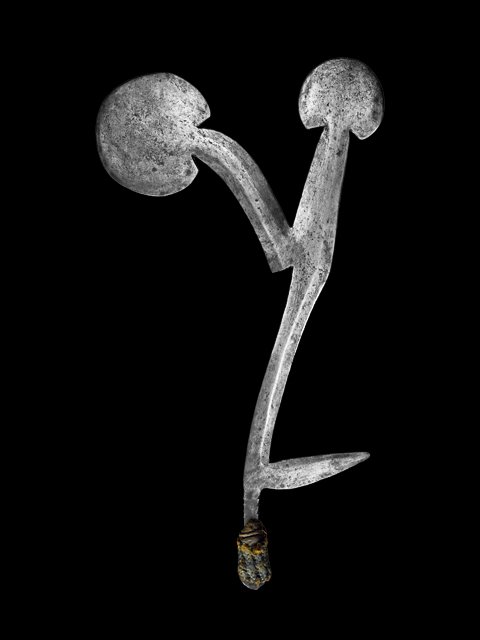
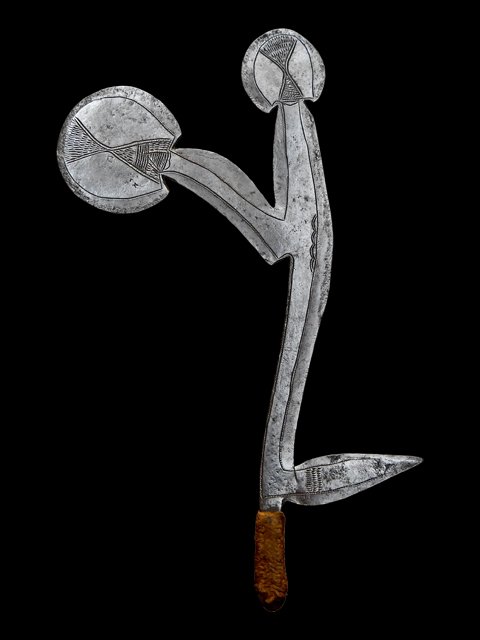
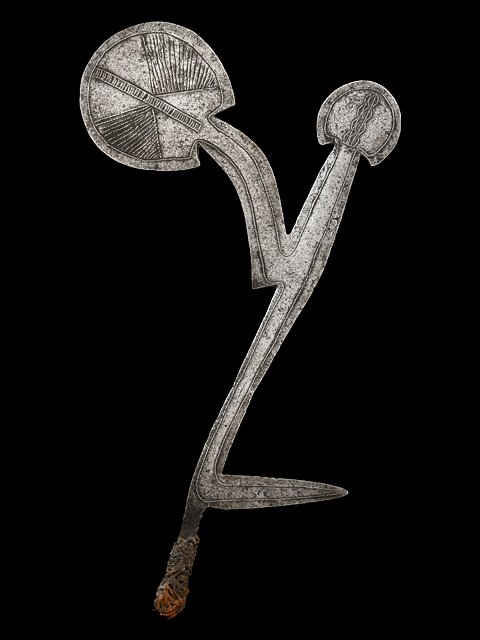
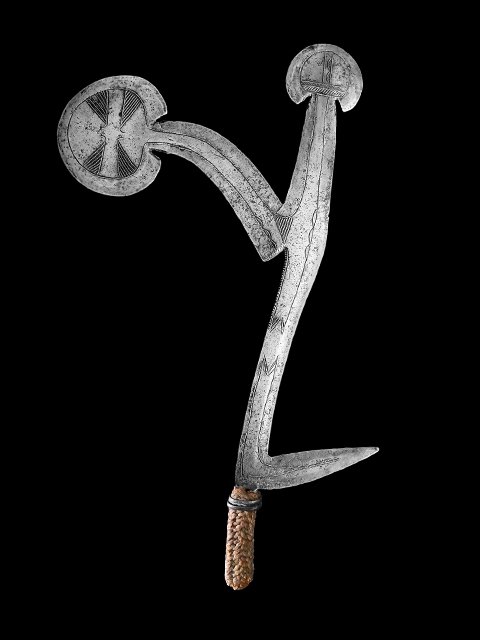
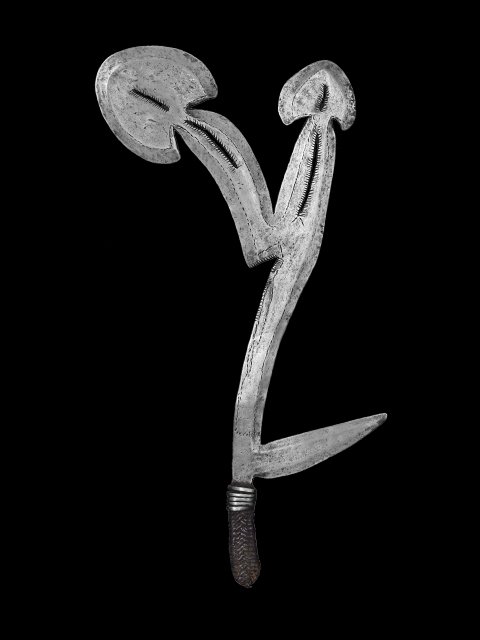
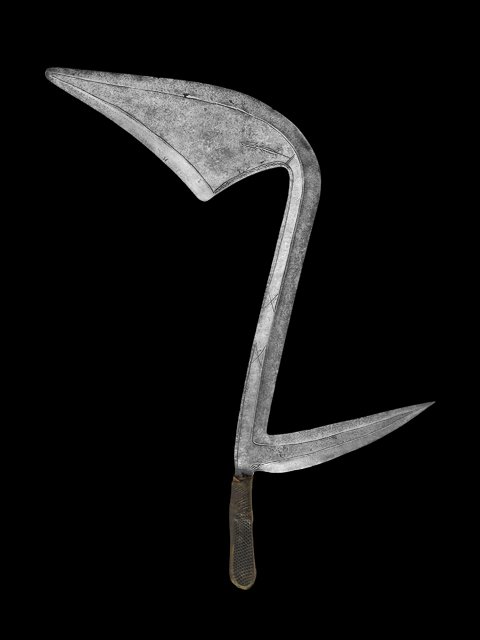
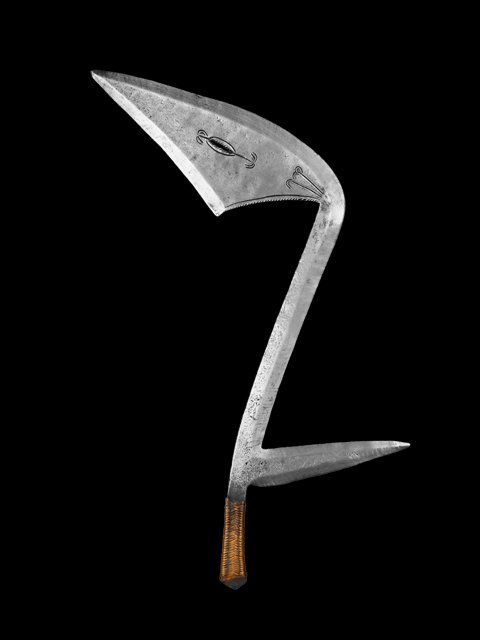
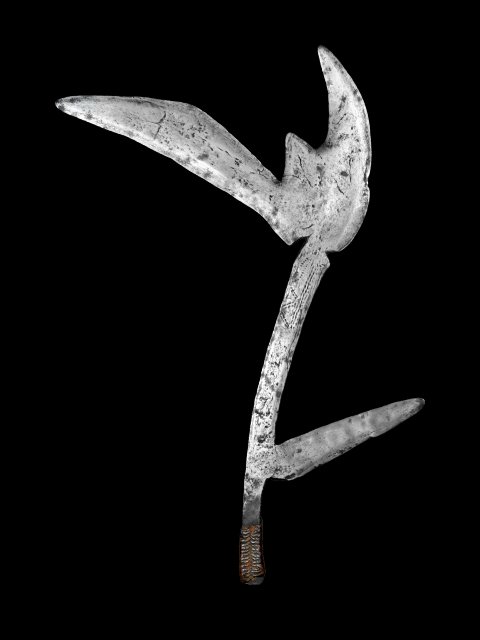
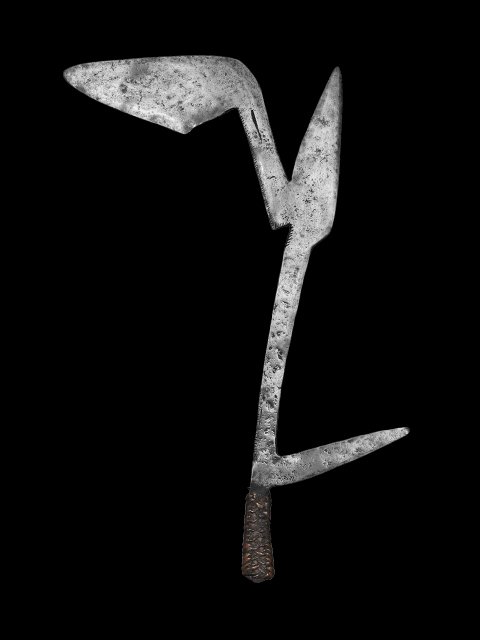
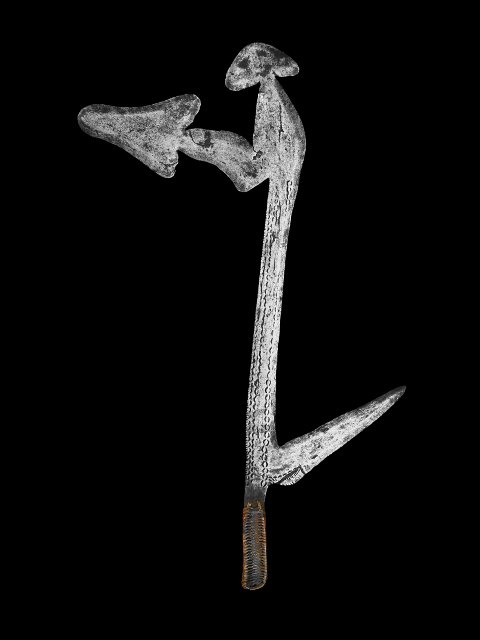
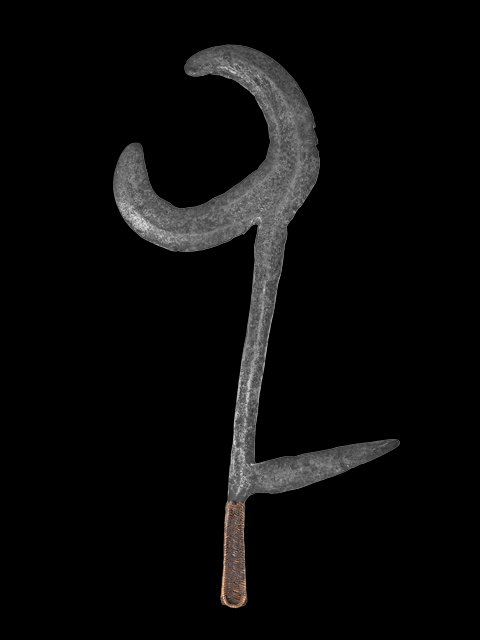
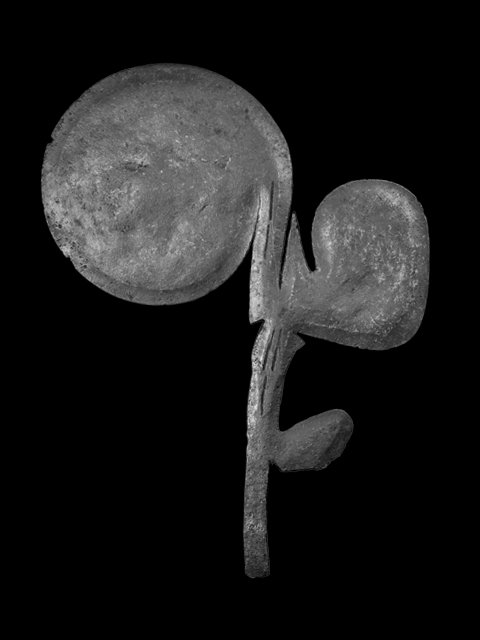
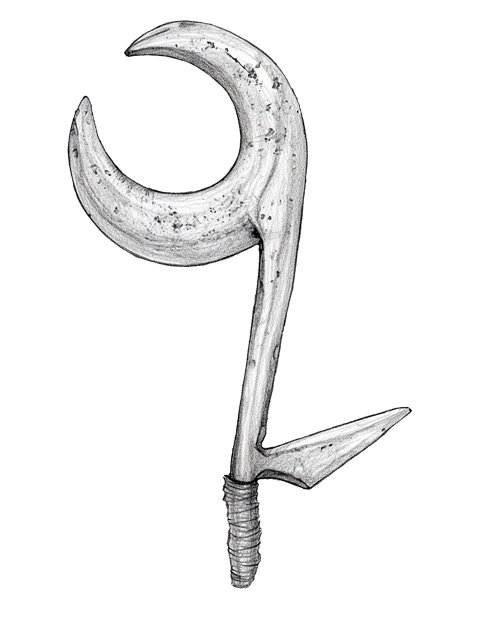
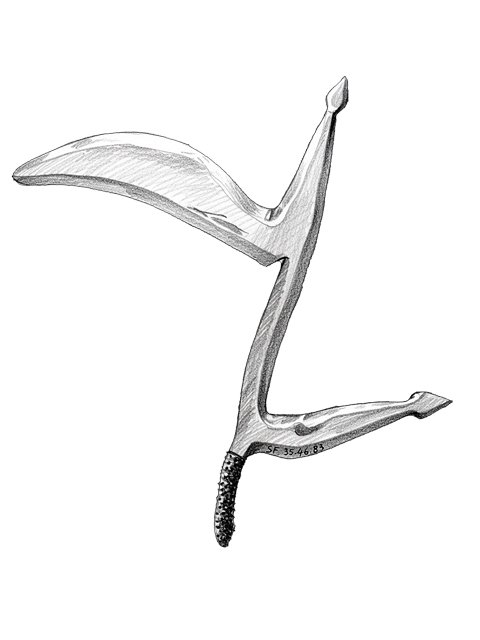
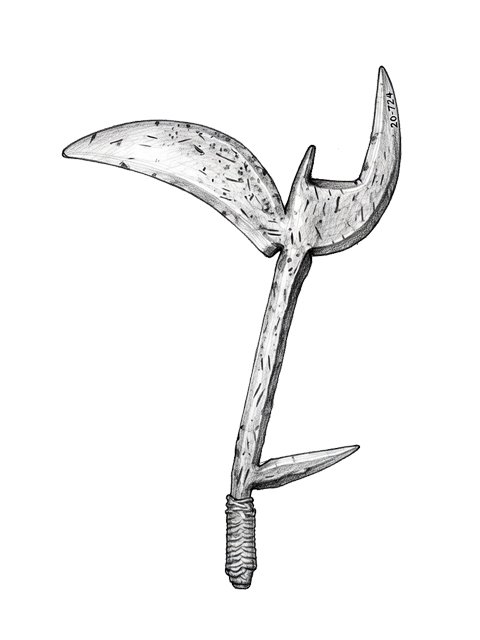
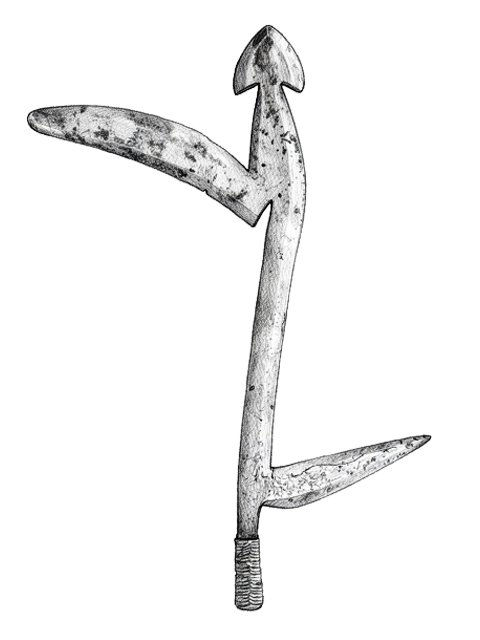
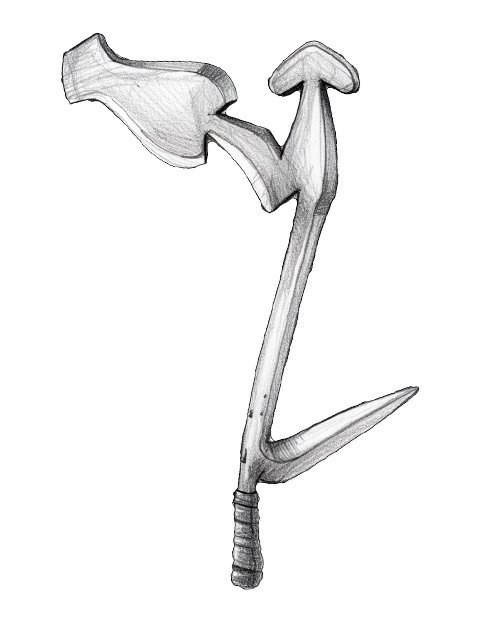
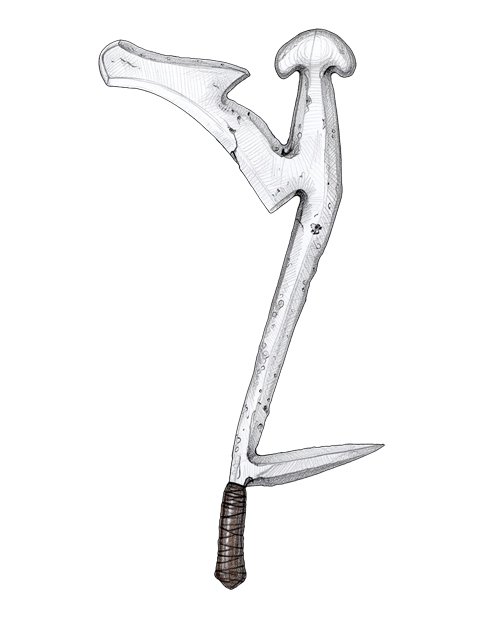
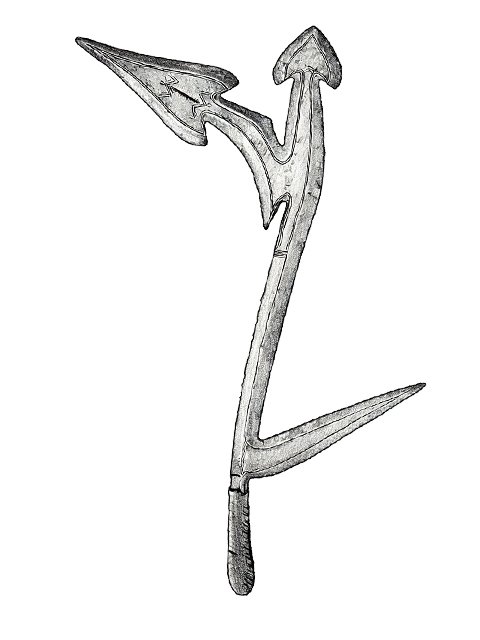
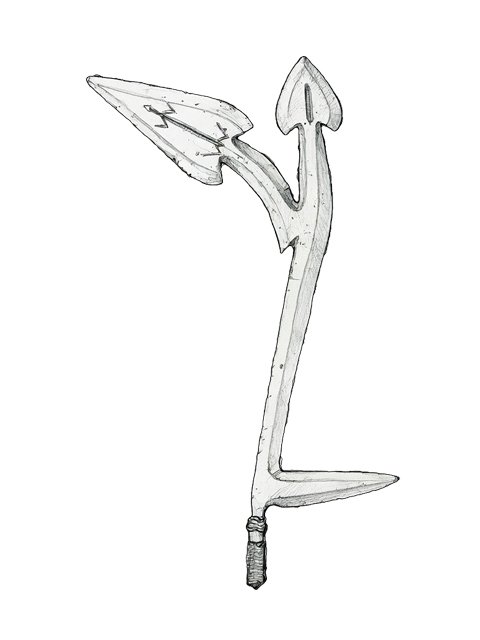
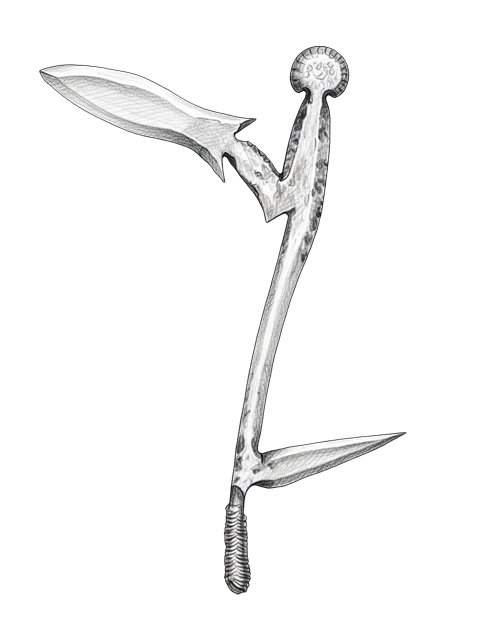
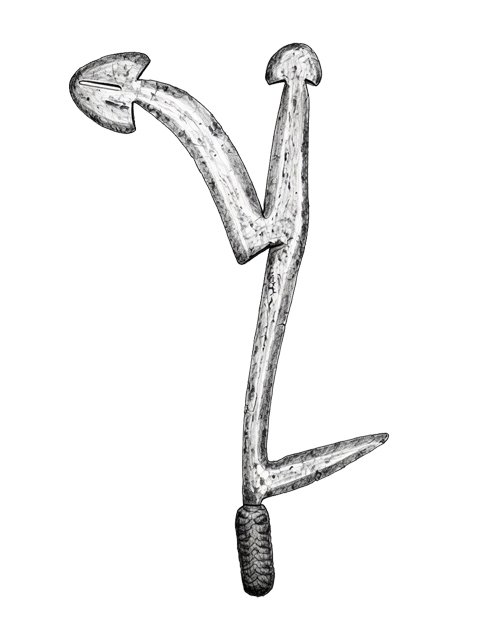
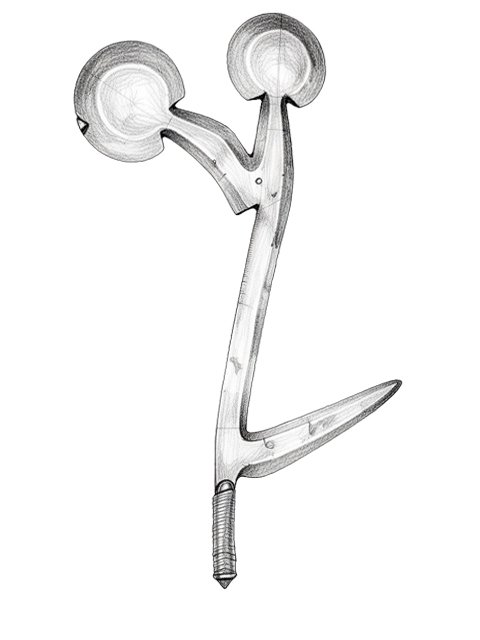
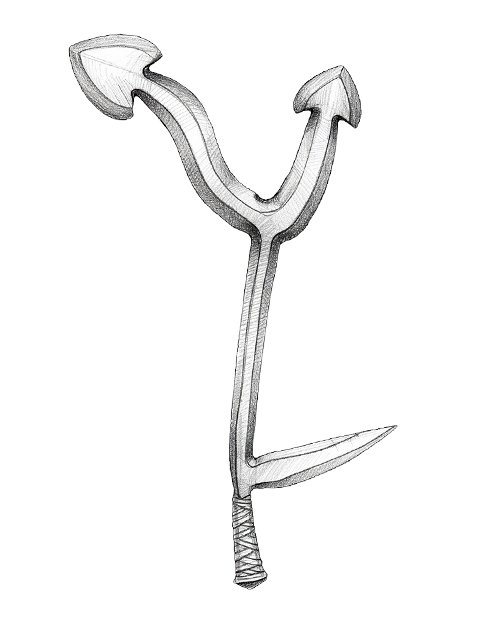
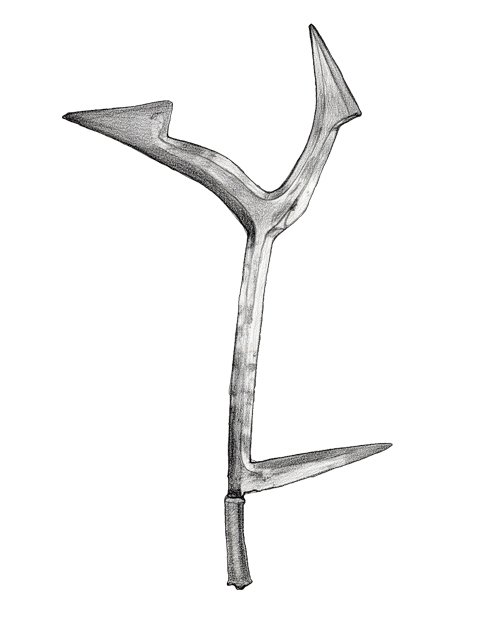
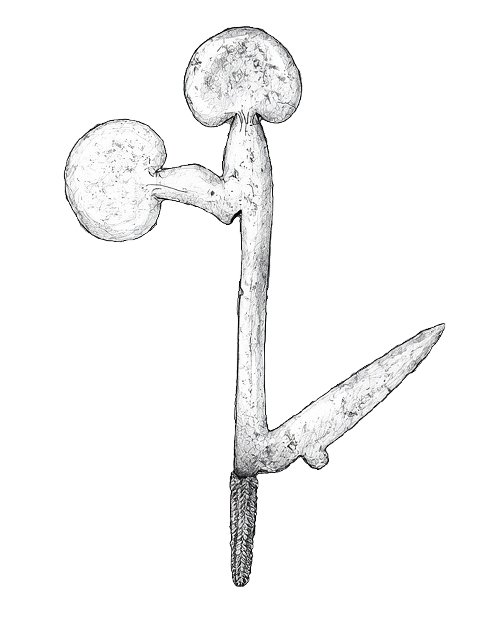
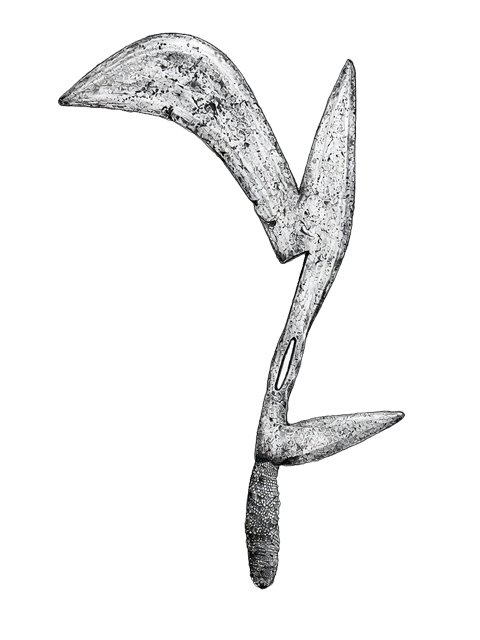
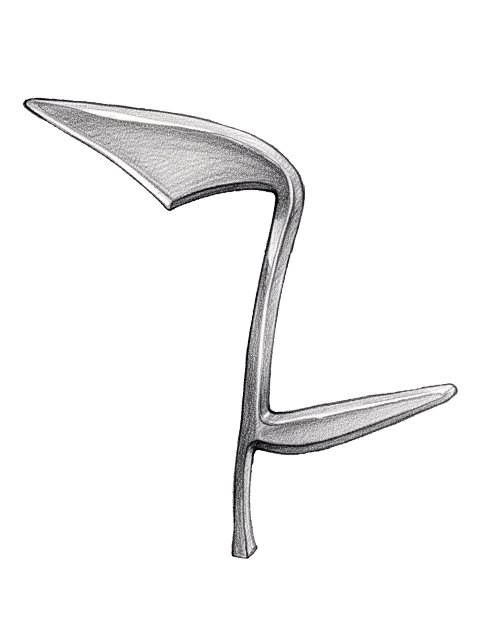
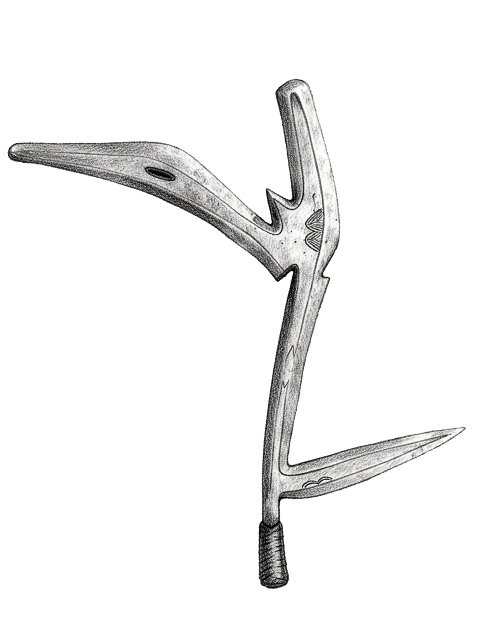
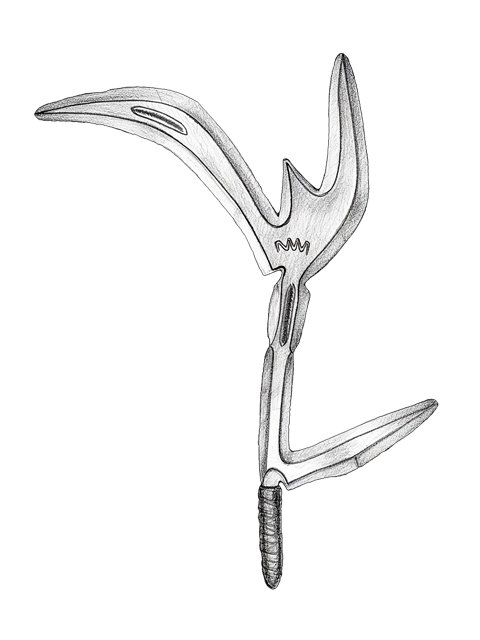
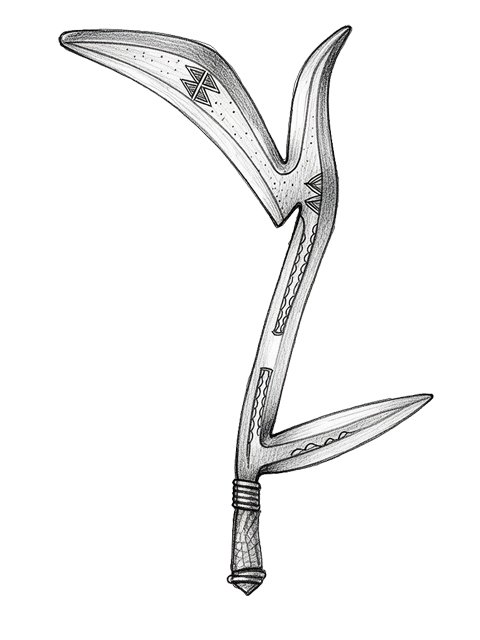
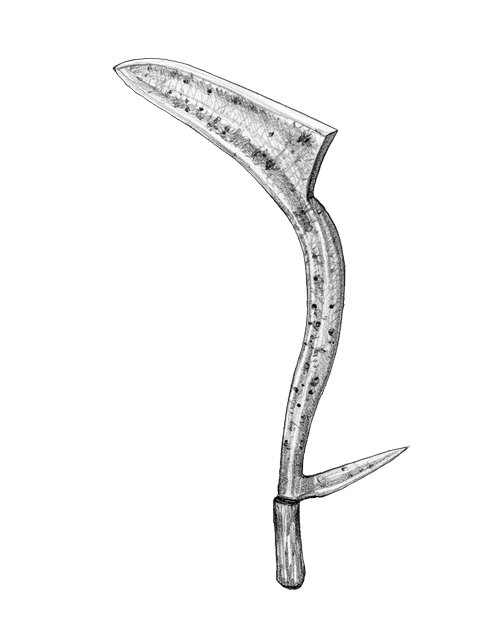
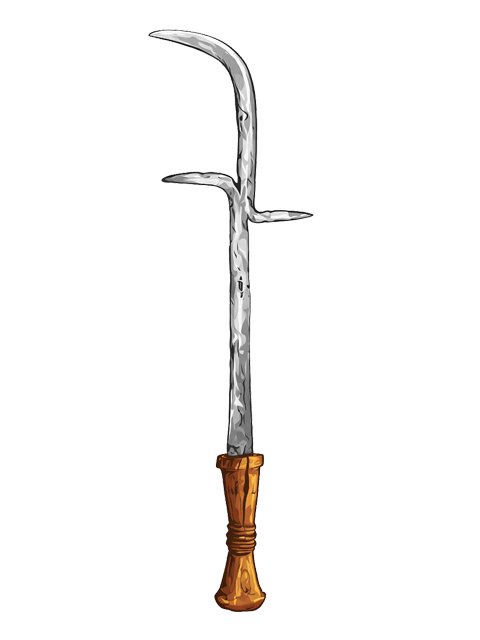
The general shape here is the Z with one exception in the Y shape.
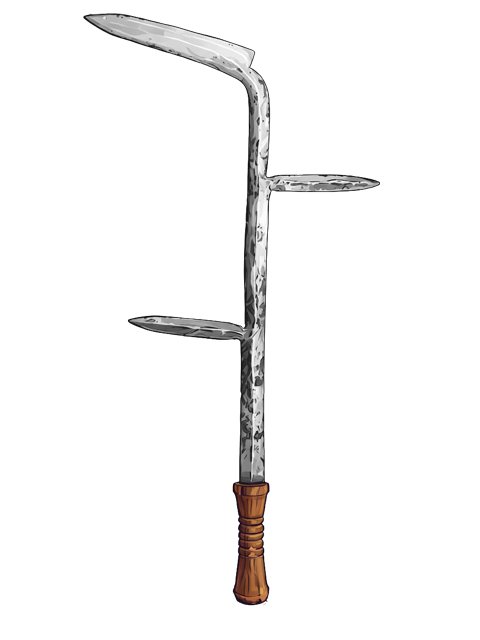
Throwing knives are called ondo, and measure from 38 to 46cm
and weigh from 200 to 350g. Their handles are covered with
vegetable fiber or Nile monitor lizard skin, sometimes with additions
of iron or brass bands or even leather repairs. The blades are either
finely engraved (Yakpa, Wada, Mbugbu), or rough (Vidri), or very
polished (Gbodo).
The Banda carried up to six knives on the back of a single shield.
Their main weapons consisted of bows and arrows, spears, curved
knives (magia), and daggers.
Although the original shape of the ondo throwing knife is a Banda
creation, there are two types: eastern Banda and western Banda.
The fundamental difference is a pointed outgrowth, a kind of lip
between the two wings that results from the influence of
the Nzakara and Zande on the eastern Banda. But all of this
somewhat nuanced.
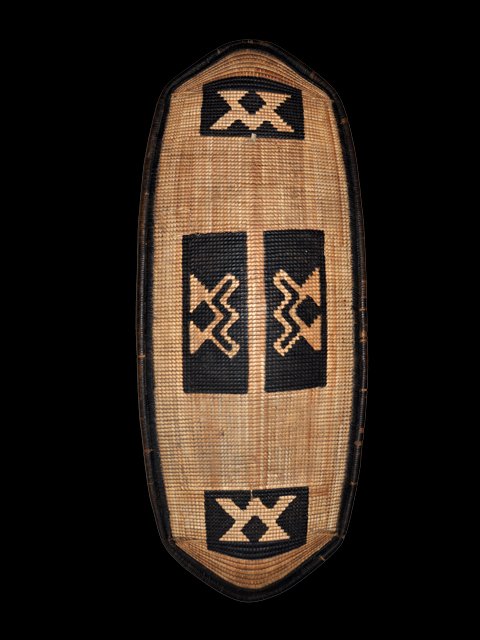
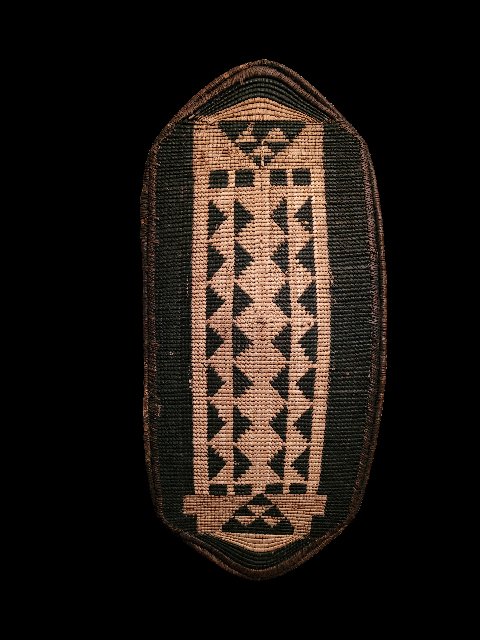
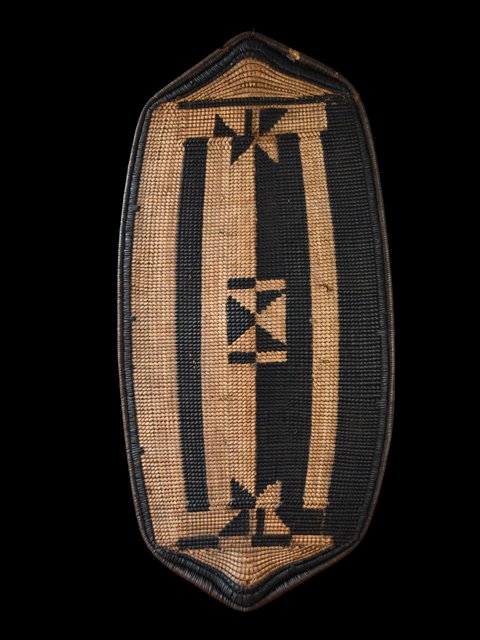
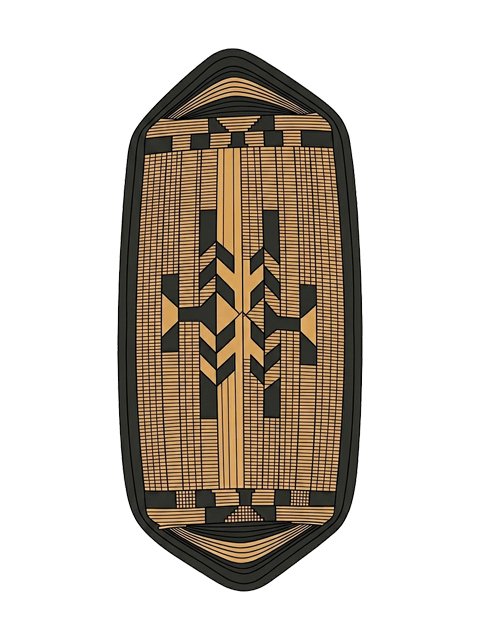
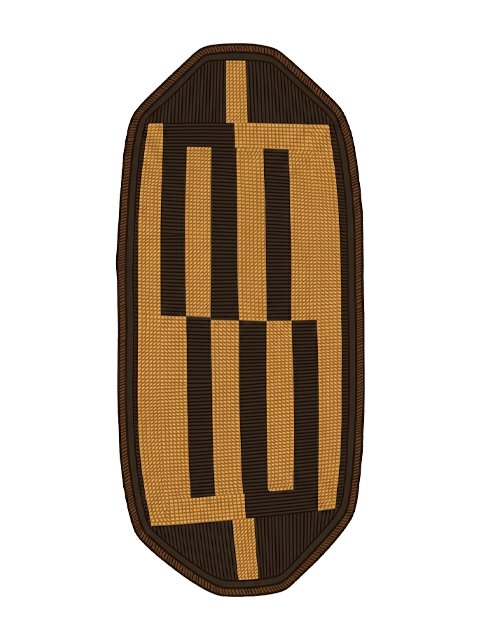
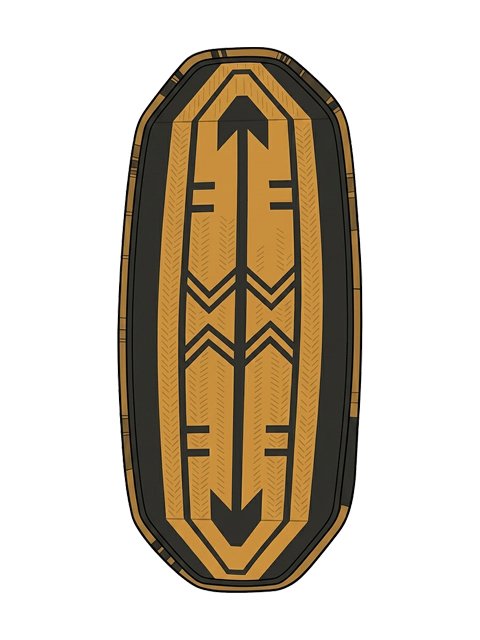
The basketry shields are small (120cm), decorated with black
patterns and sometimes decorated with a disc on which to hang
knives.