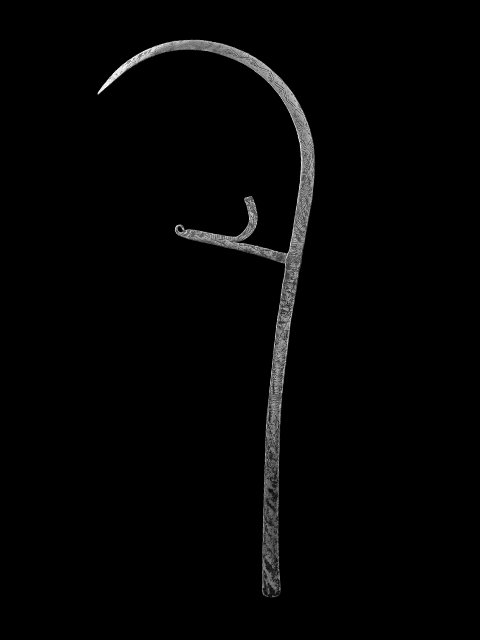
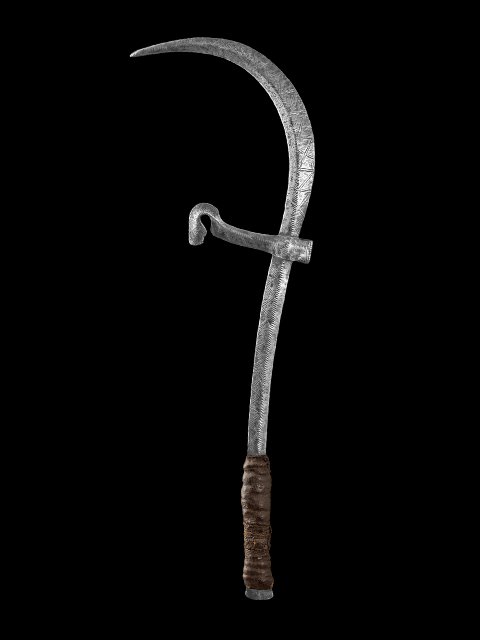
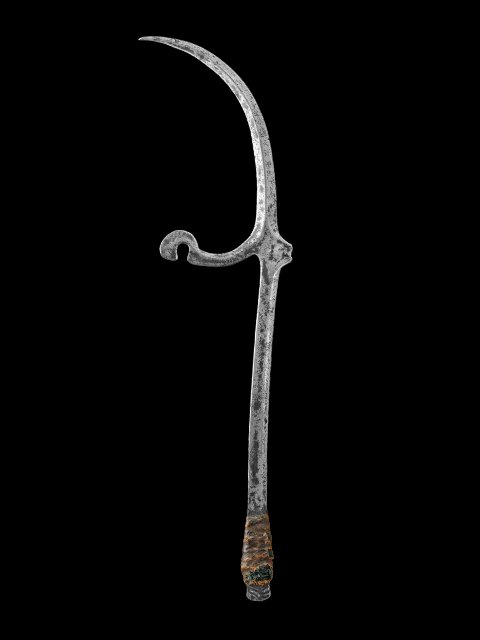
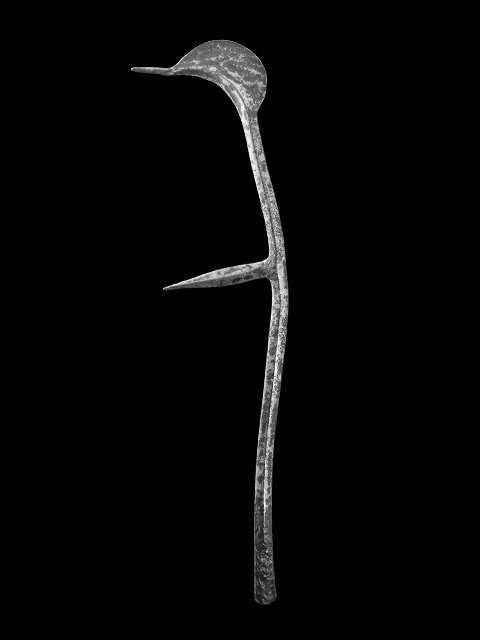
These populations are distributed in the northwest of Cameroon,
straddling the eastern border of Nigeria. The group is bordered
in the north by Lake Chad and in the south by the Adamawa
plateau. The term Kirdi, which means « barbarian pagans »,
is used for the tribes in the north of this region, whereas
the word Fali applies to the tribes living south of the Mandara
mountains and north of the Adamawa plateau.
Ethnic groups using throwing knives are numerous: Mandara,
Wandala, Lamang, Guduf, Podoko, Dghwede, Muktele (Matal),
Sukur, Matakam (Mafa), Mada, Zulgo, Gemjek, Mofu, Margi, Higi,
Kapsiki, Djeny (Nzangi), and Bana. The Mandara Mountains
are a series of rocky ridges, hills, and peaks (1,500 m), bordered
on the north and east by marshy plains and on the south by
plateaus. It is an open landscape of dry savannah with some
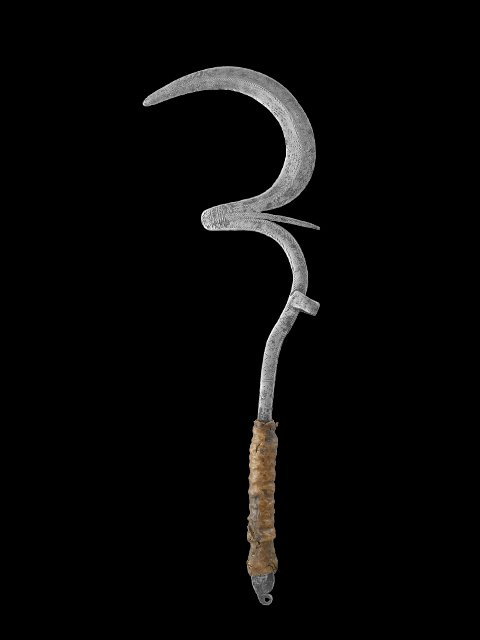
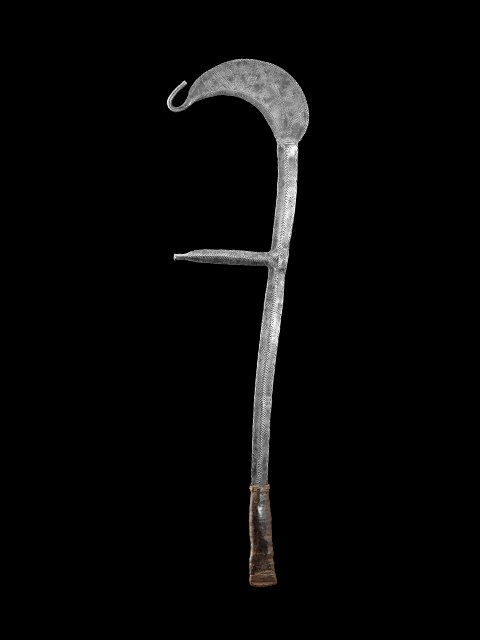
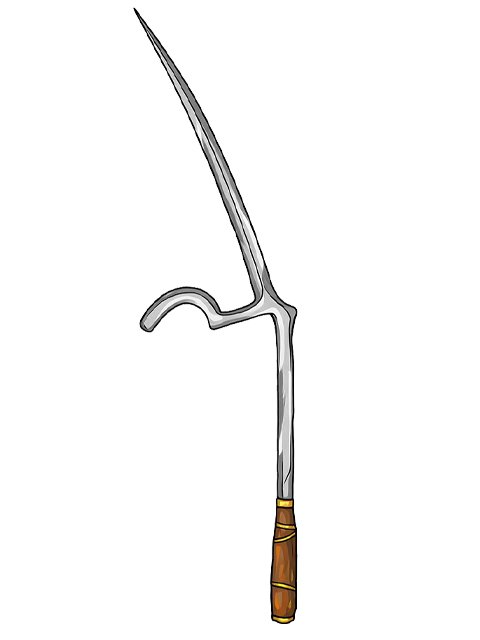
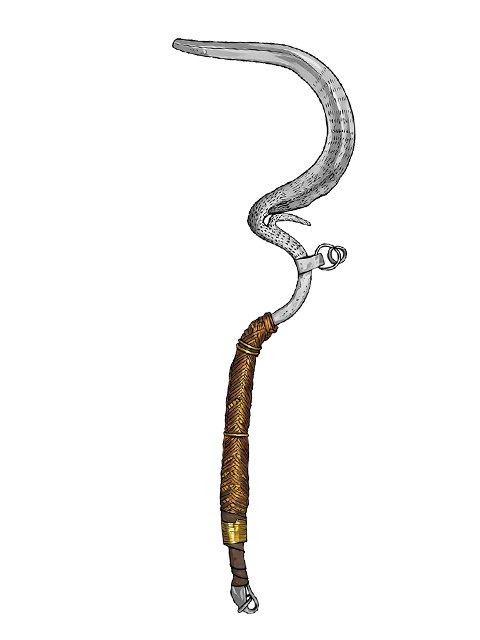
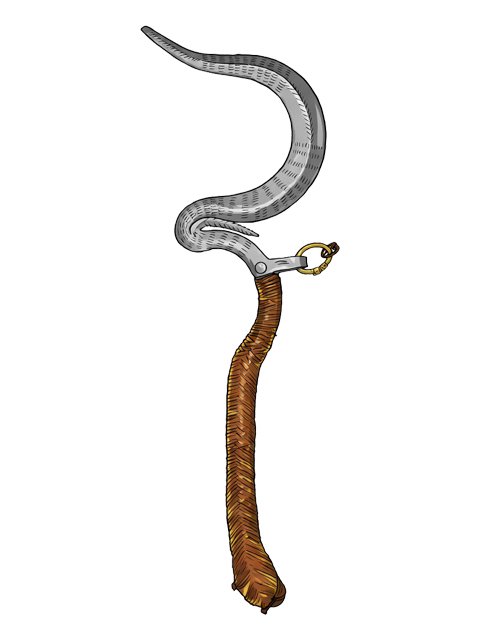
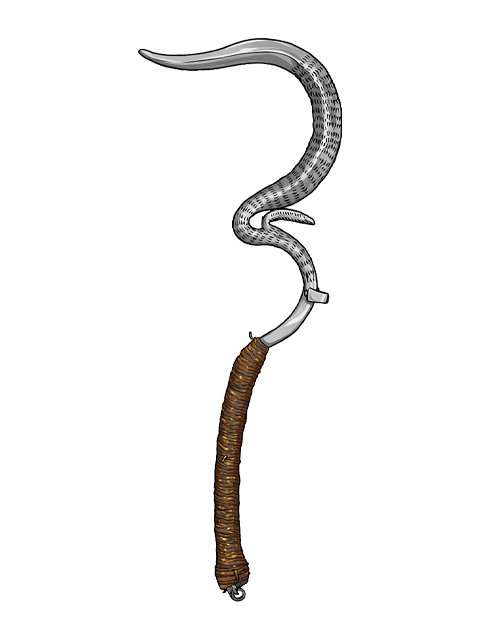
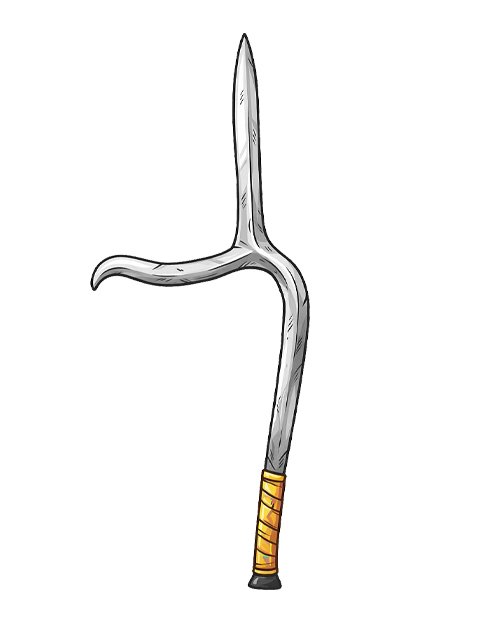
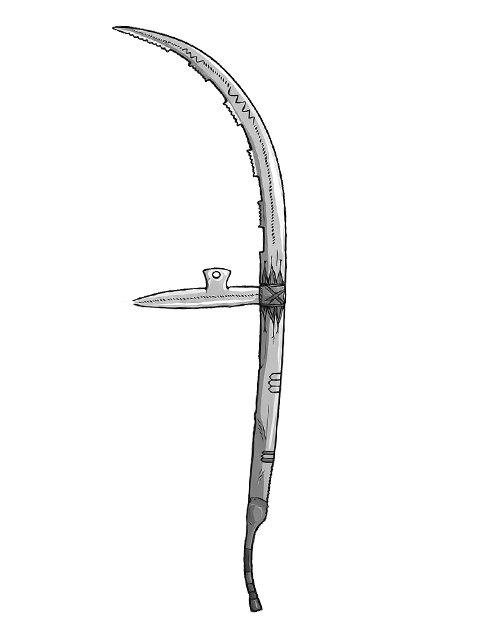
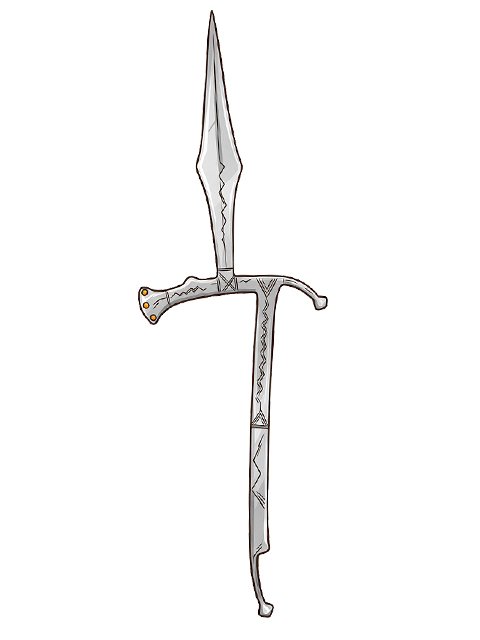
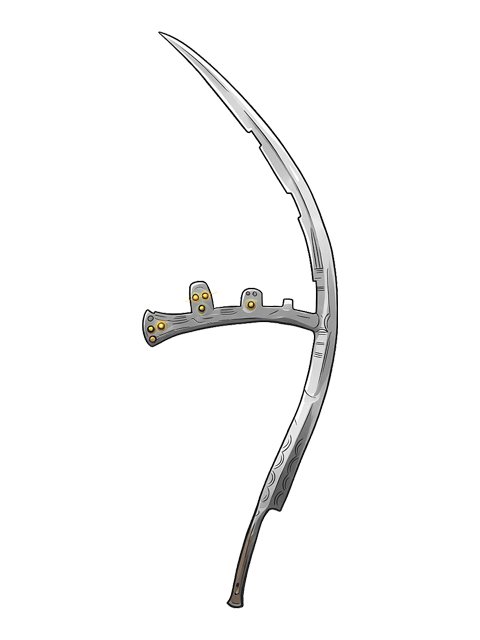
bush plots. The predominant shape of knives from this province
is the F, and they are characteristically quite heavy, which, in fact,
makes them unfit to be thrown!
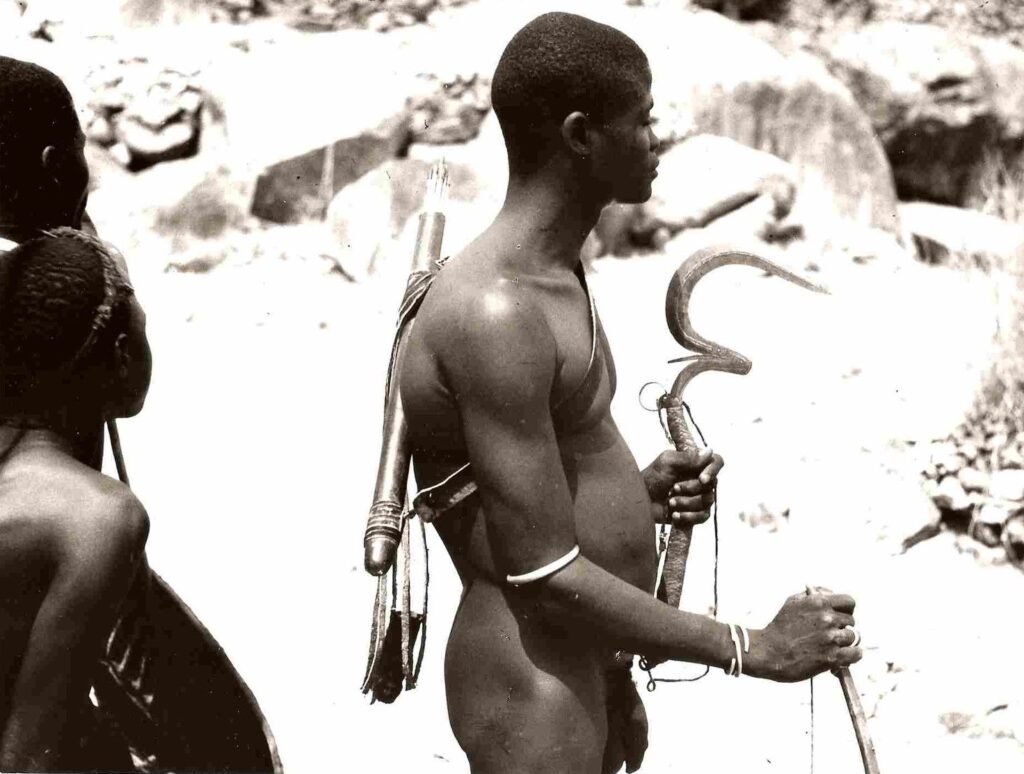
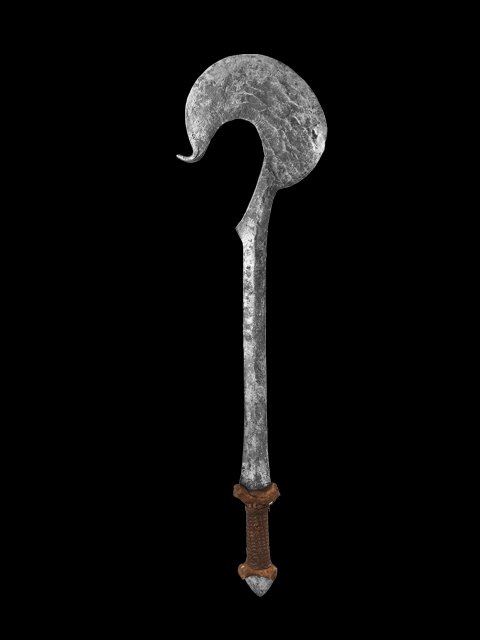
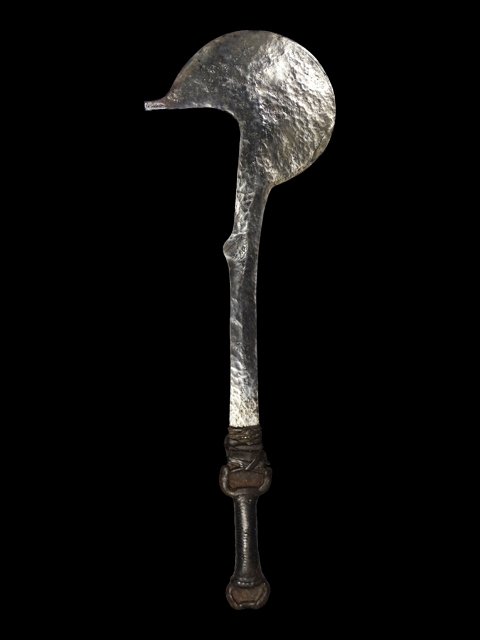
They were used as hand weapons, ritual dance knives, and tools.
They measure on average 65 cm and weigh 600 to 700 g.
They are more assemblages of « bars » than blades, embellished
with handles made of leather straps or strips of fabric covered
with leather and sometimes vegetable fiber ropes.
It is difficult to accurately determine the ethnic origin of each
type of knife, due to the fact that these numerous tribes
are intertwined.
Throwing knives occupy only a secondary place in the armament
of these peoples. Bows and arrows, spears, shields, sticks, axes,
daggers, and swords are predominant.
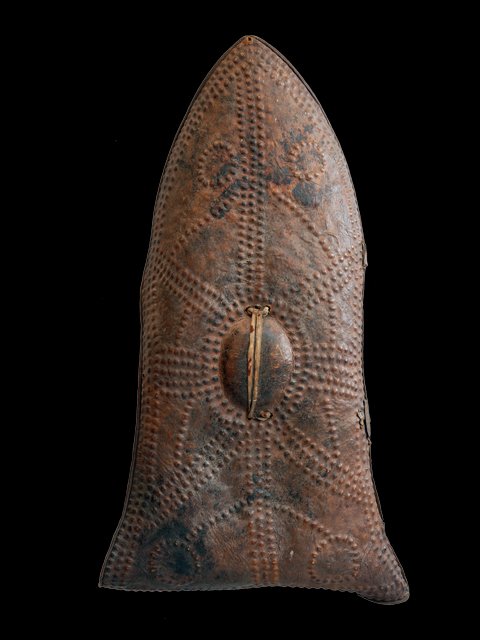
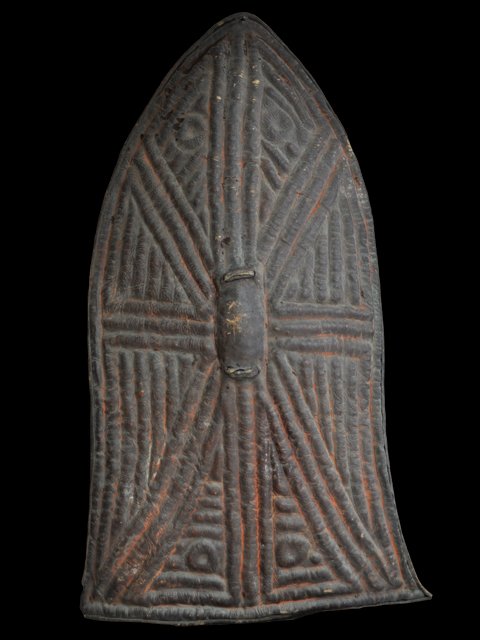
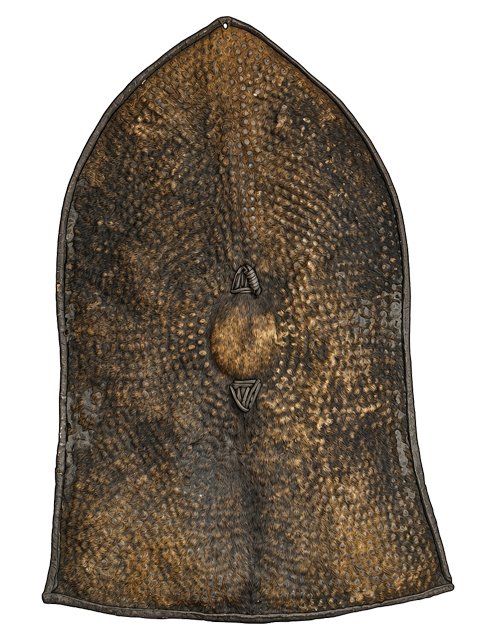
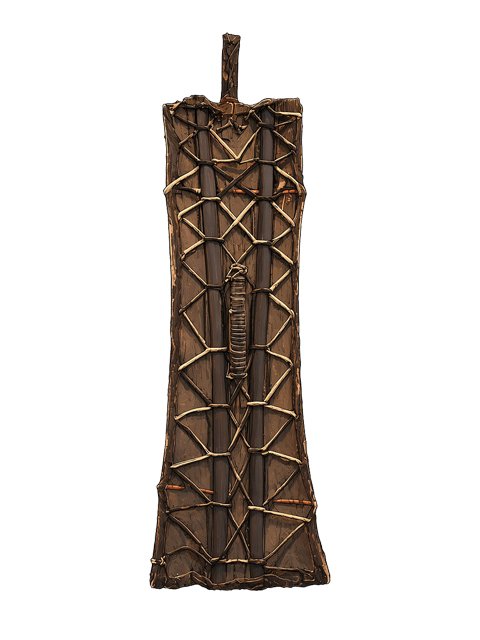
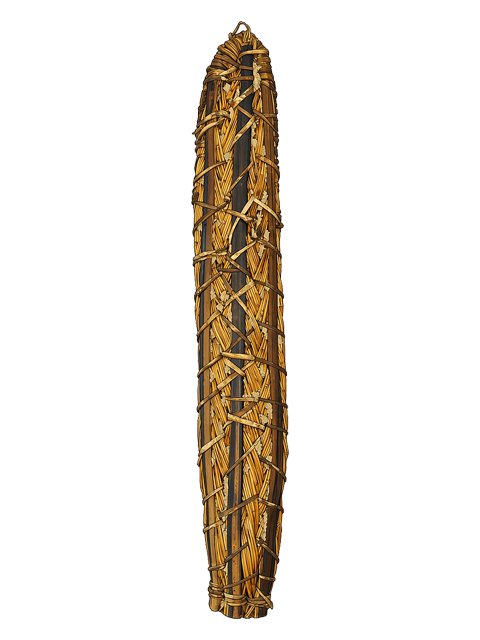
There is a wide variety of shields in this province: leather,
basketry, bark, metal, large or small. One of the best known
is the leather glagwa of the Wandala: bell-shaped, the warrior
whocarried it was it was also dedicated to its maintenance.
Among the Lamang and Guduf, the shield is called glaawa or
zalam, and is decorated with linear patterns starting from
the umbo, the central bulge. Among the Zulgo, shields are
smaller and known as tlokwo, and are sometimes painted with
a mixture of red ochre and oil. These shields are still used today
for some funeral ceremonies.