Extending to the central-western Central African Republic from
Fort Crampel in the north to the south of Lobaye in Republic of
Congo, this stylistic province is made up of dense savannas and
wooded valleys, with tropical forests to the south.
The Manza in the north are very close to the Banda groups
(Ngapu, Togbo) with whom they have long been in territorial
conflicts. The center is occupied by the Ngbaka-Manza.
The Ngbaka (Mbaka, Bwaka) are made up of two groups:
the Ngbaka-Mabo in the center and on the banks of the Ubangi
and the Ngbaka-Minagende in the south in the DR Congo.
The Nzombo are an Ngbaka-Mabo group who are sometimes
classified with the Ngbaka-Manza from the south and the Ali
under the generic term of Bondjo. The Mbati are known to have
also forged these knives.
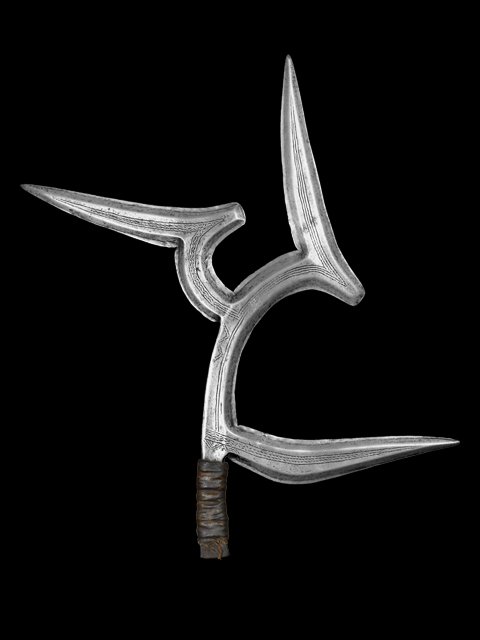
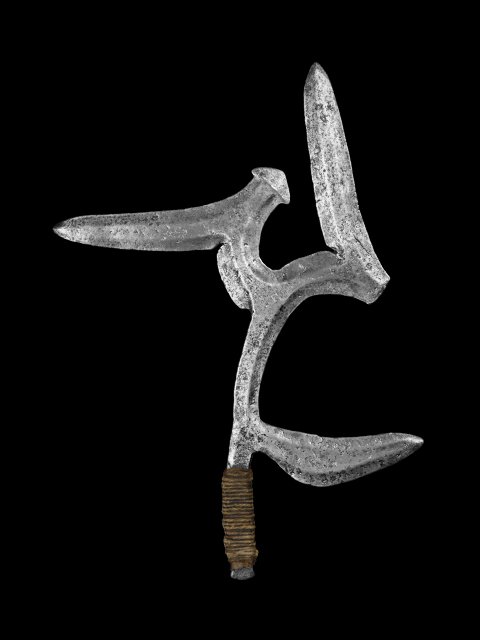
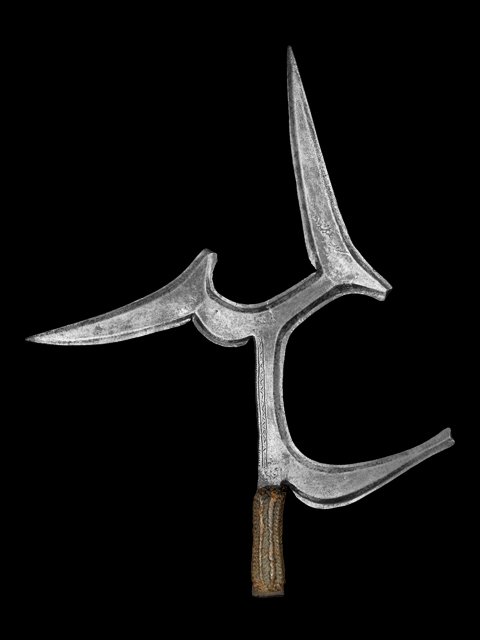
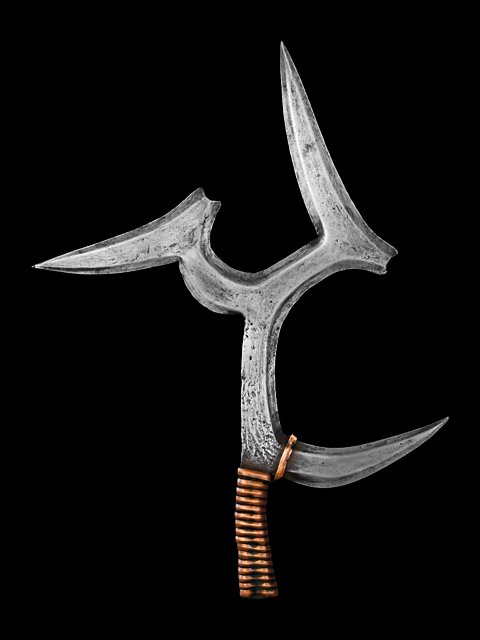
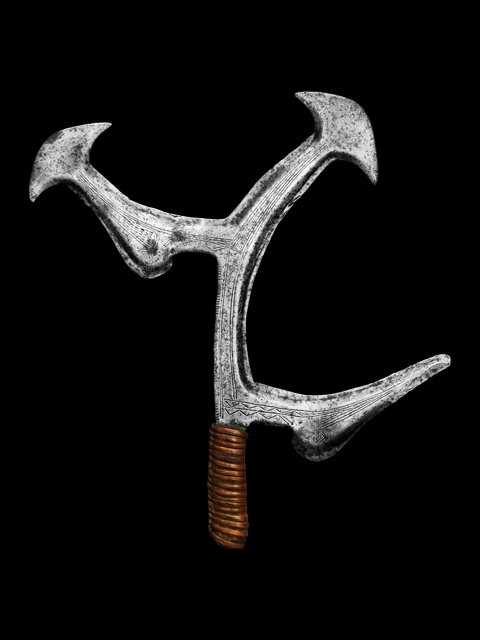
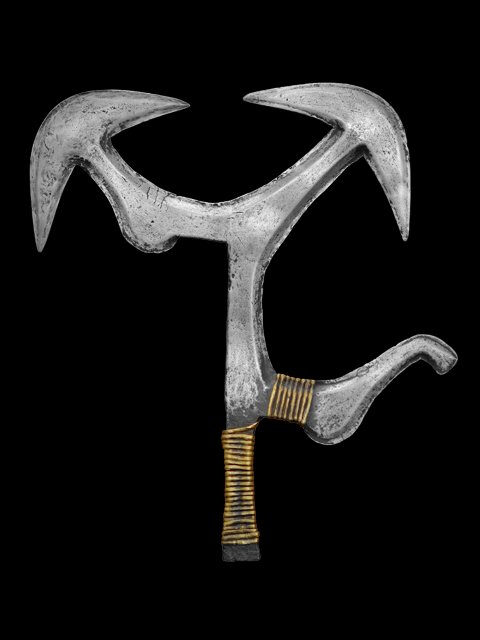
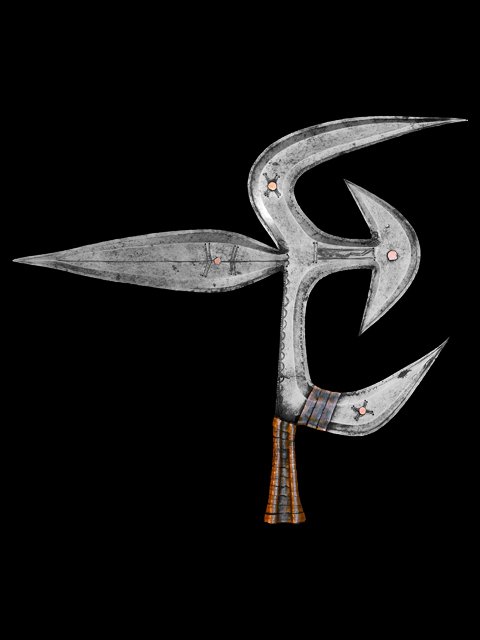
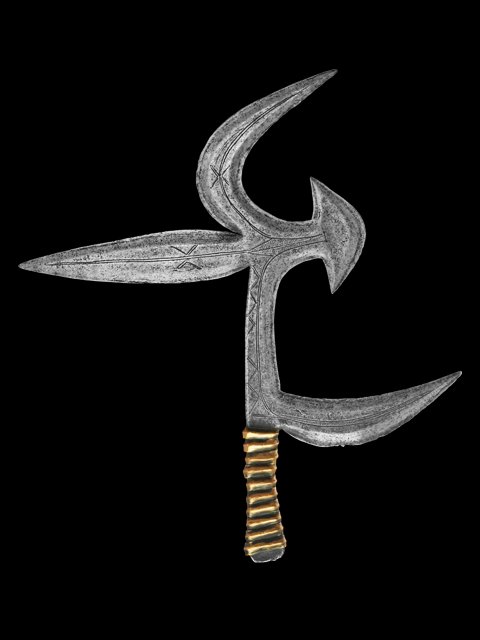
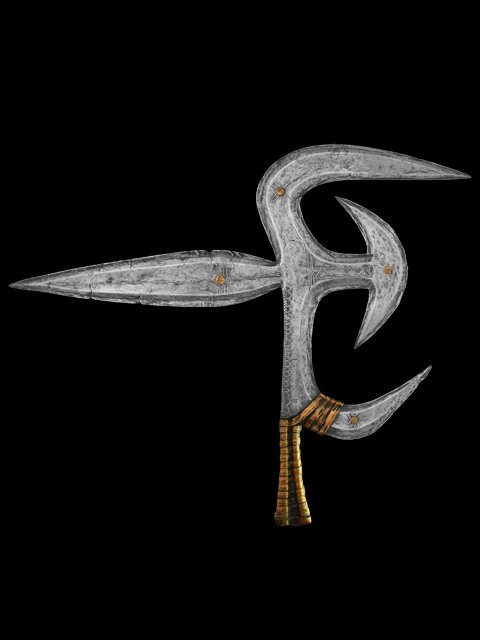
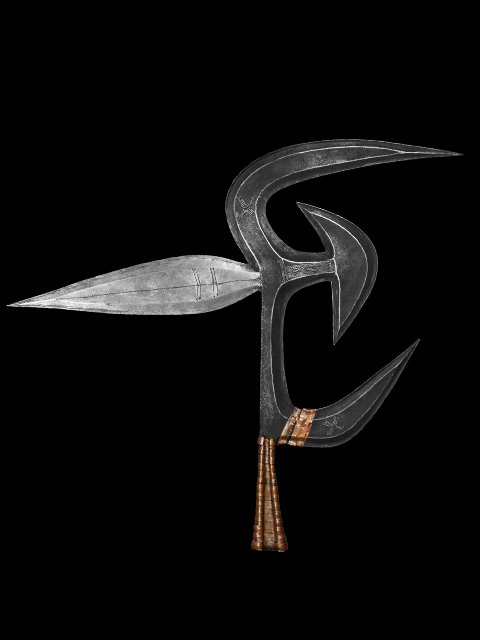
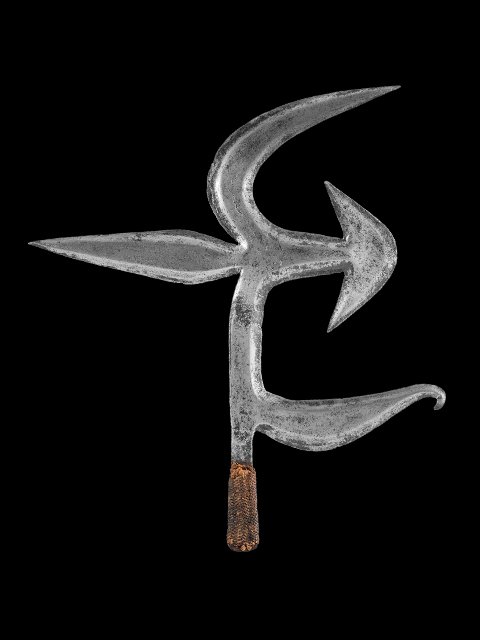
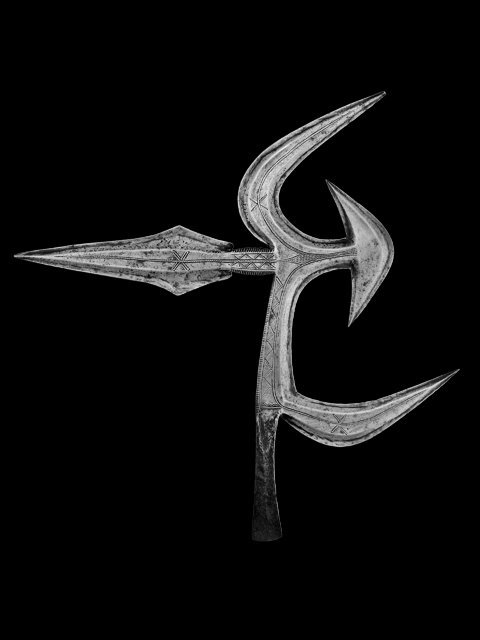
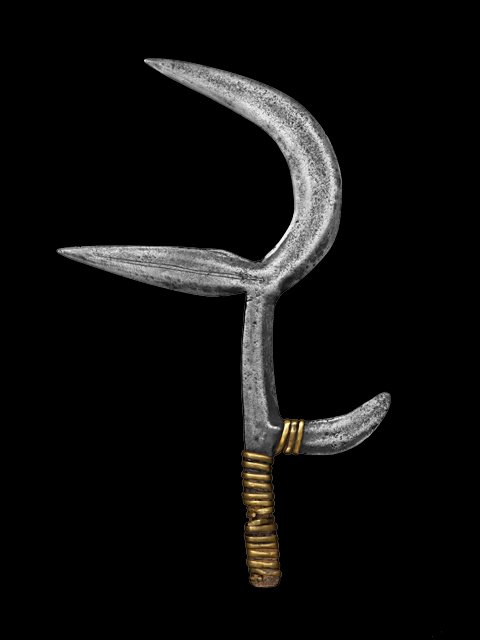
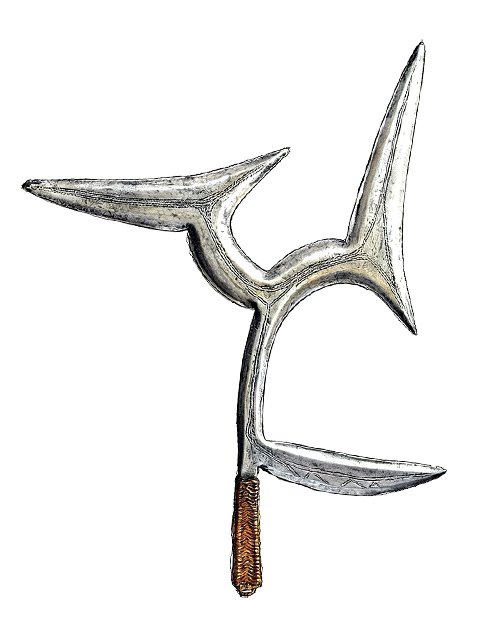
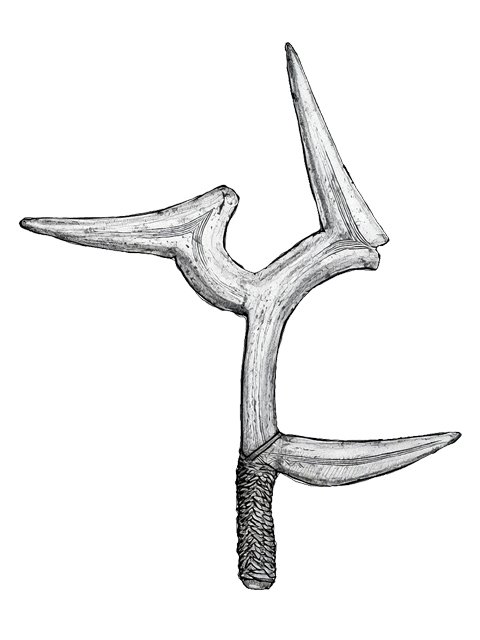
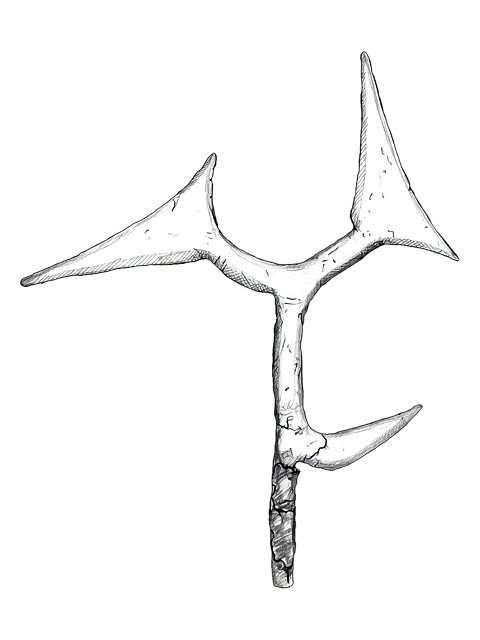
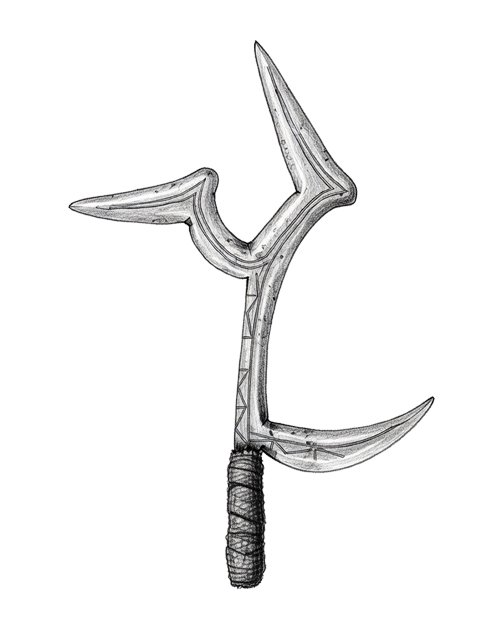
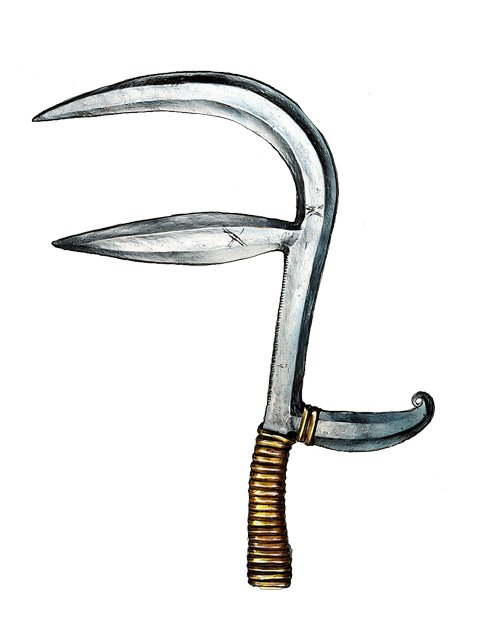
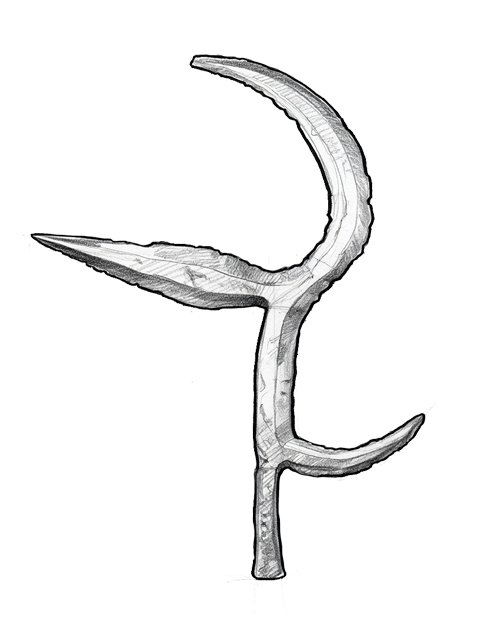
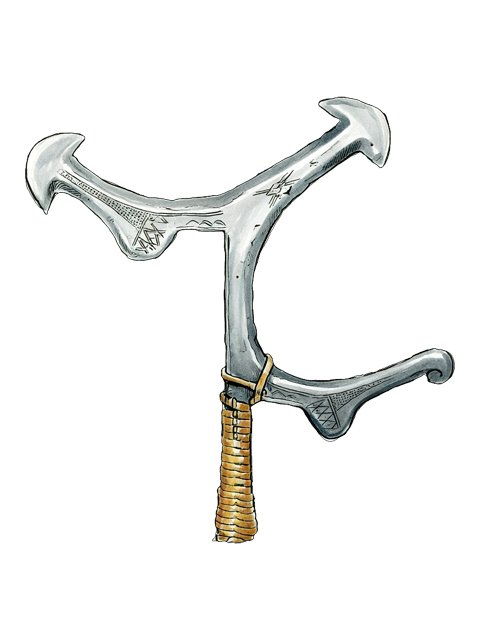
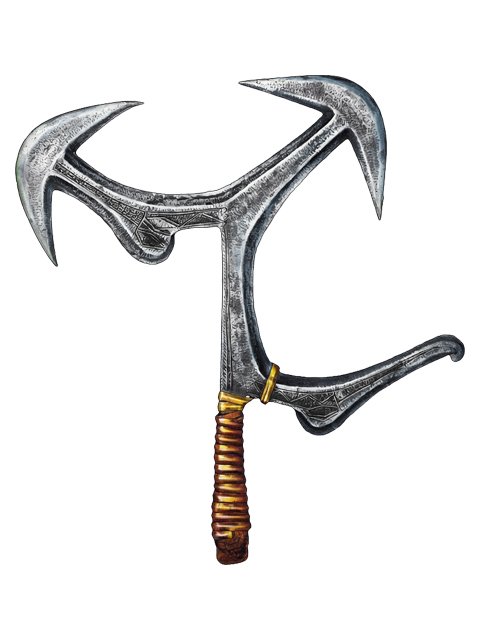
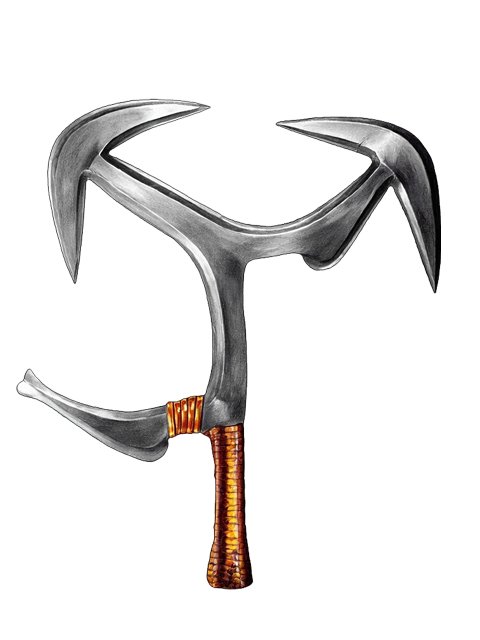
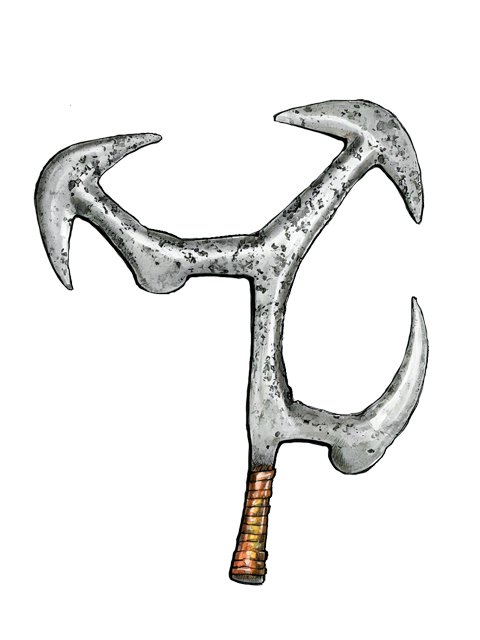
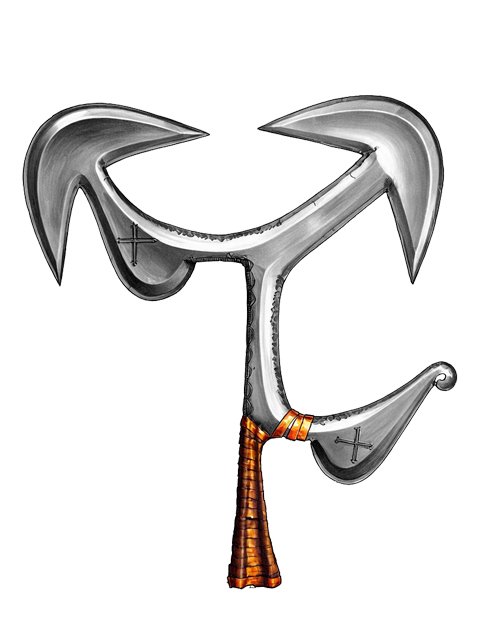
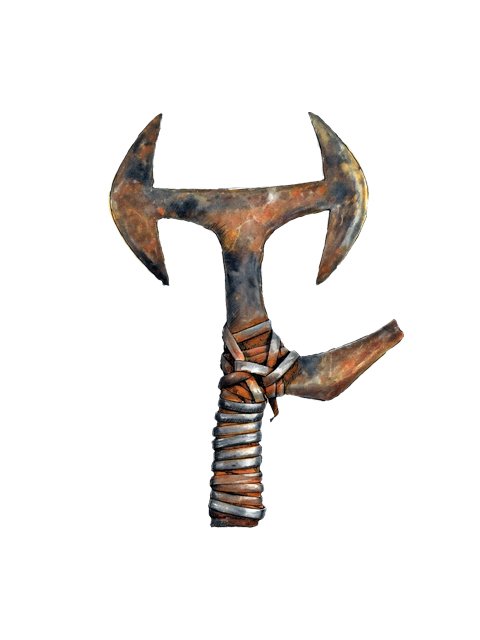
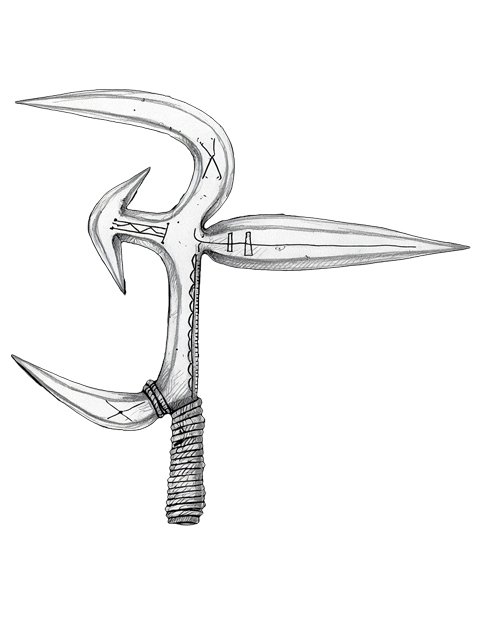
Ethnic entanglement explains the spread of the knife shapes (Y, E,
and a mixture of Y and Z) to all of these groups.
Manza throwing knives are often quite rough while those of the
Ngbaka-Mabo are finely decorated with “spider” crisscross
patterns (the mythical animal of the Mabo fables) or parallel lines
and zigzags. Those of the Nzombo are embellished with incisions
of teeth. Some have copper inserts, possibly an influence from
the neighboring Gbaya. The Manza call their knives kpenga,
the Ngbaka-Mabo ndo, but certain models have a more specific
name: soro, ndumo, moko-ndo. The Mbati call them mbalio and
ngbuta. Size and weight vary widely by ethnicity and design.
The Manza’s armament consisted mainly of bows, javelins, and
curved knives; they also used F-shaped knives from the northern
provinces and those from neighboring Banda groups.
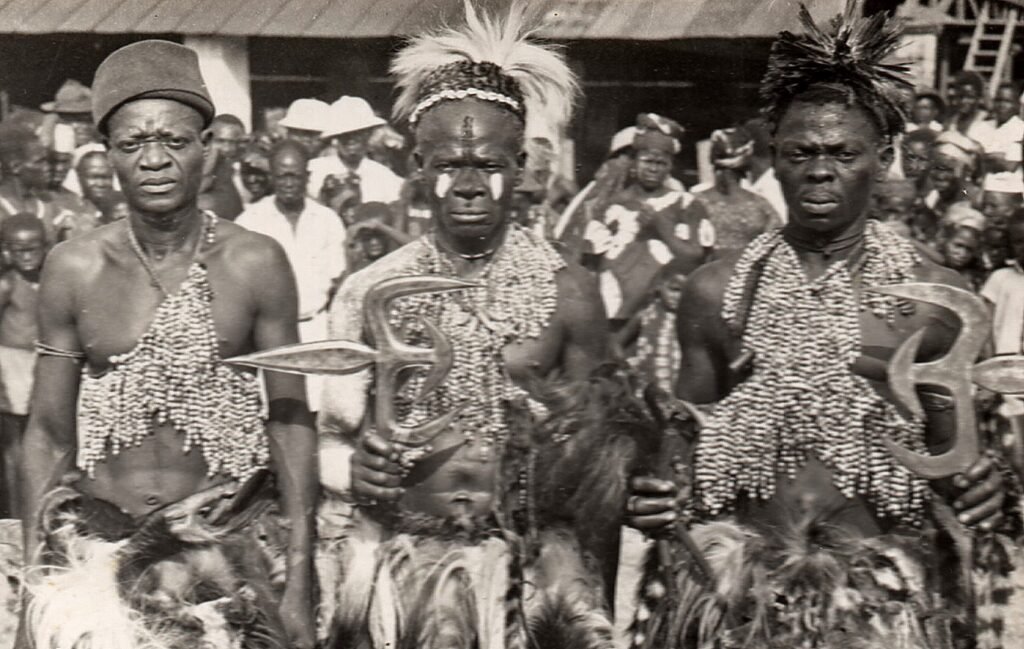
The Ngbaka-Mabo used spears and throwing knives.
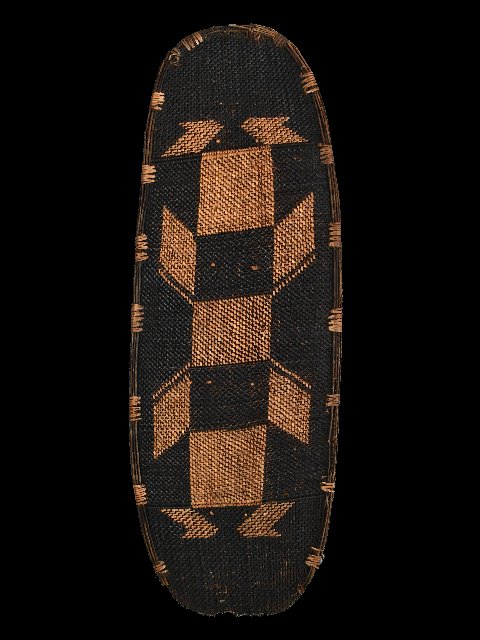
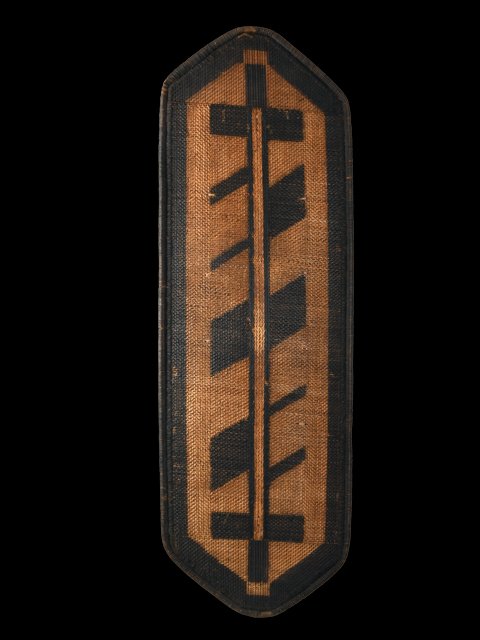
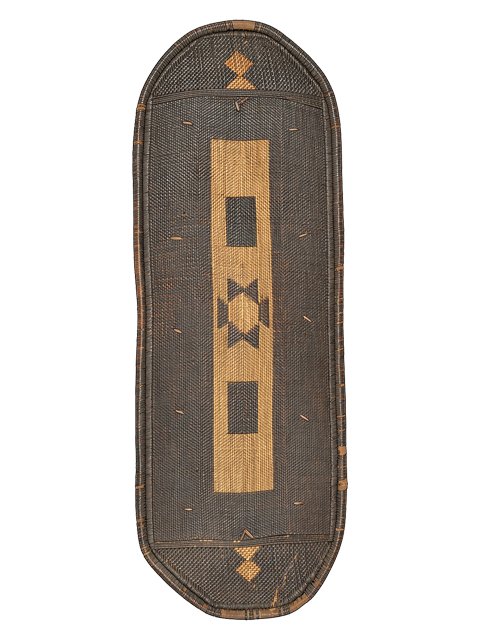
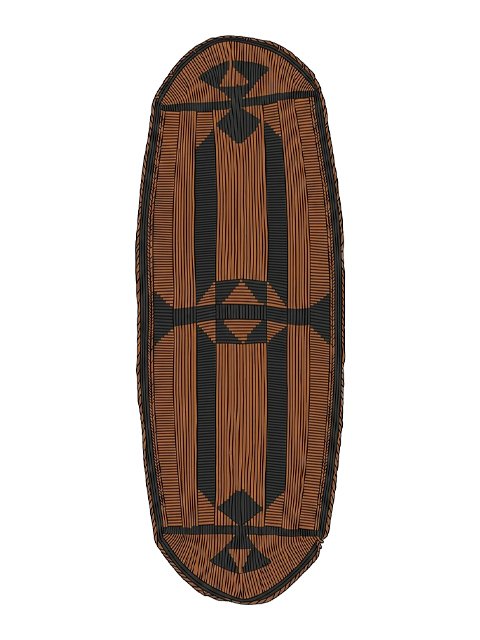
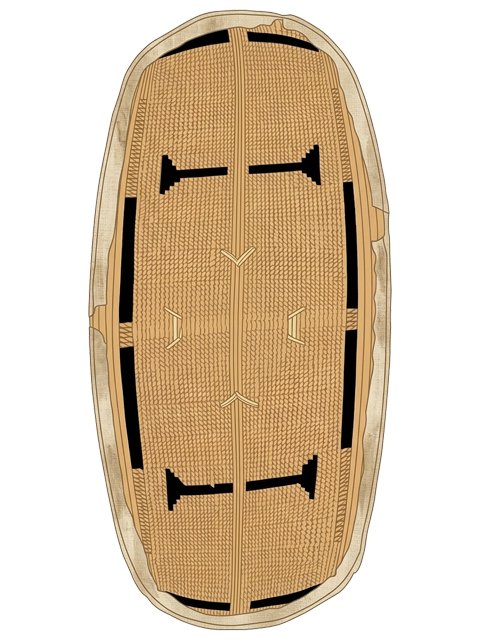
Basketry shields protected the warriors. The knives were used
for war, hunting, as currency, and as prestige and parade
objects. Each man had one or more knives and assigned
paramount significance to them, as they contained the power
of the ancestors.
Widespread distribution took place among the nearby Banda,
but also in southern Ubangui among the Banda (Gobu) and the
Ngbaka-Minagende. The Gbanziri boatmen transported knives
to the Teke downstream and the Mbugbu and Gbodo upstream.