This province extends across eastern Cameroon, western
Central African Republic, northern Gabon, and northern
Congo-Brazzaville. The Gbaya are the main inhabitants,
comprised of a northern group known as the Kara (who
consider themselves the « real » Gbaya), and a northeastern
group including the Suma and Kare (who were influenced by
the Sara), Bokoto, Biyanda, Buli, Mbodomono, and Lai.
To the south are Bangando [whose primary neighbors are
the Pomo (with Pol and Kwakum)], Bumali (Maka and Njem),
and Gbaya Bokare.
The northern region is covered by a high savannah
interspersed with rocky hills and dotted with wooded areas,
while the southern region is densely forested with some
wooded savannah areas.
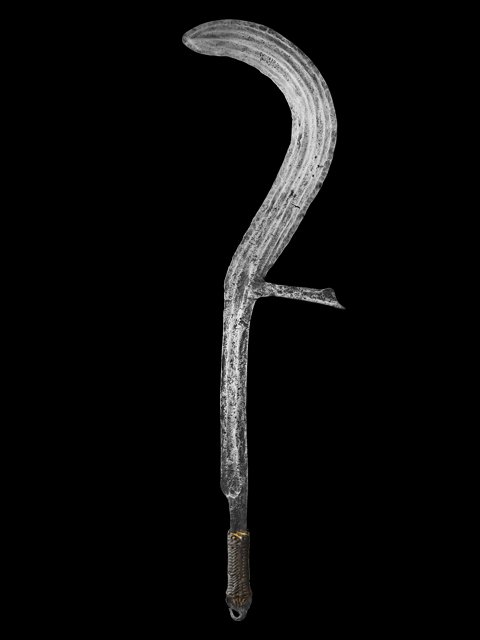
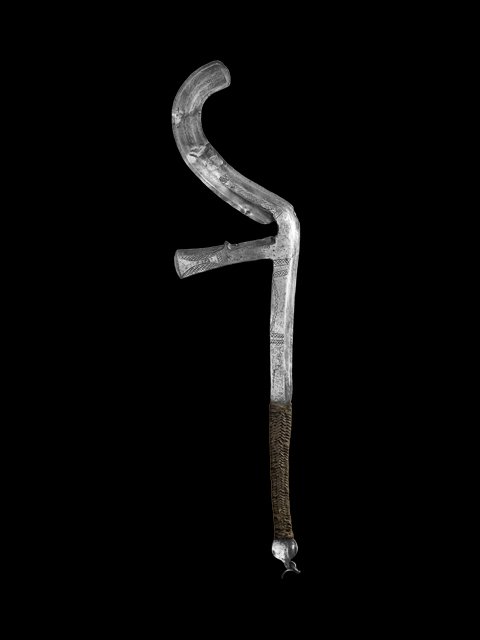
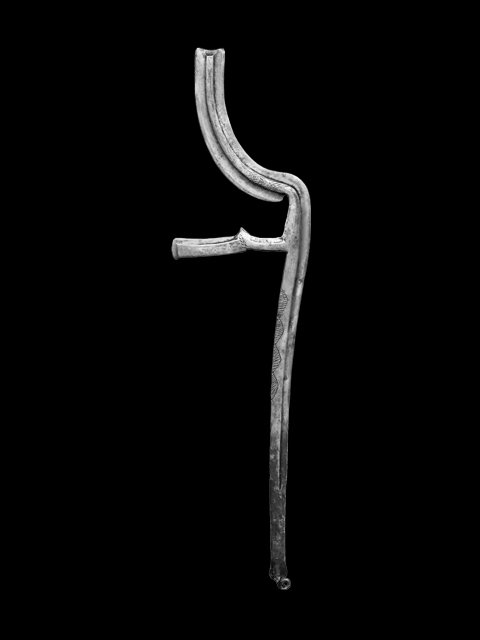
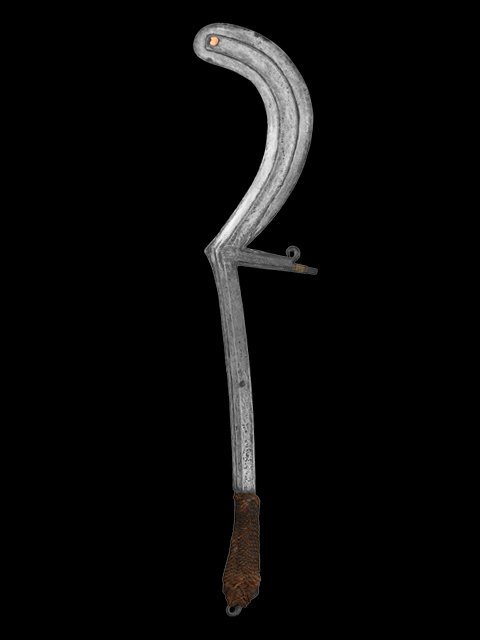
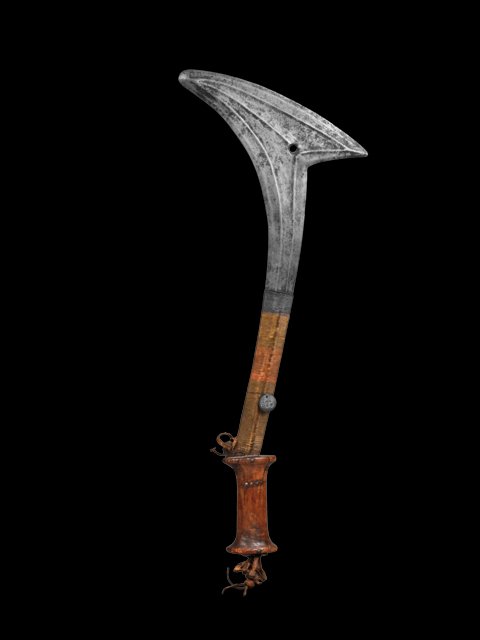
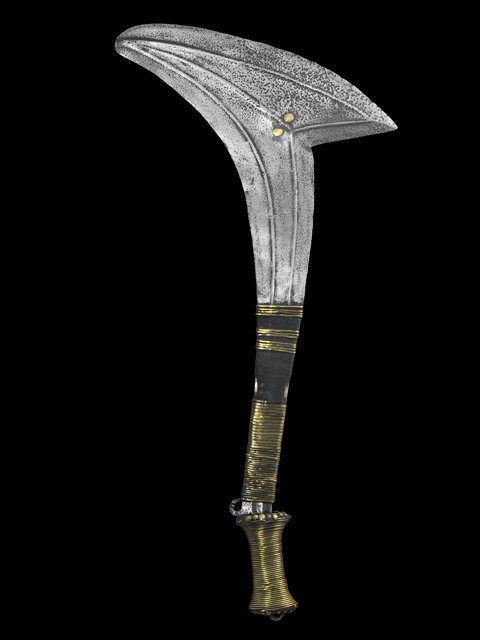
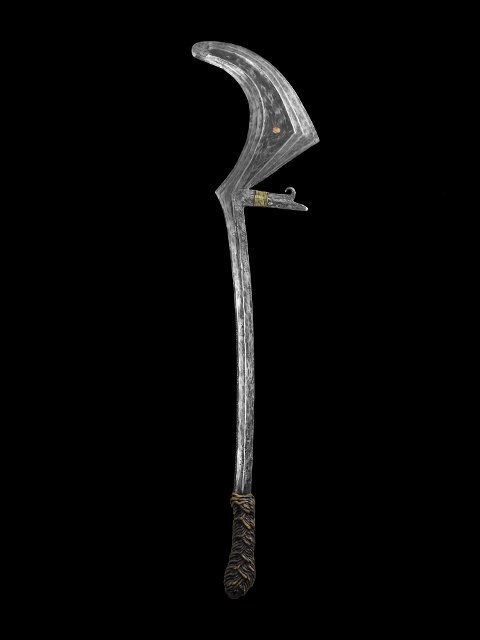
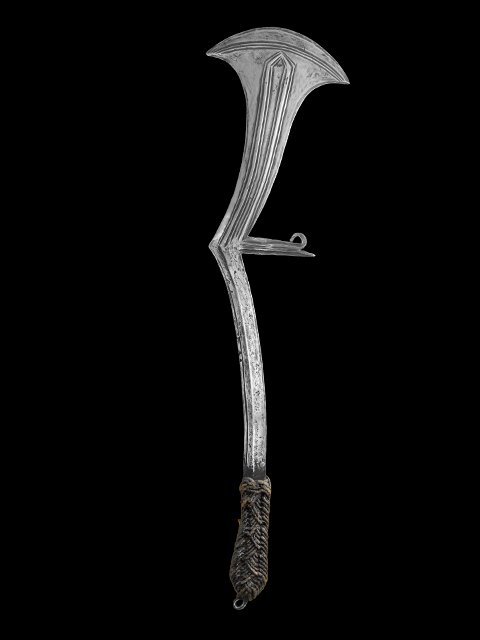
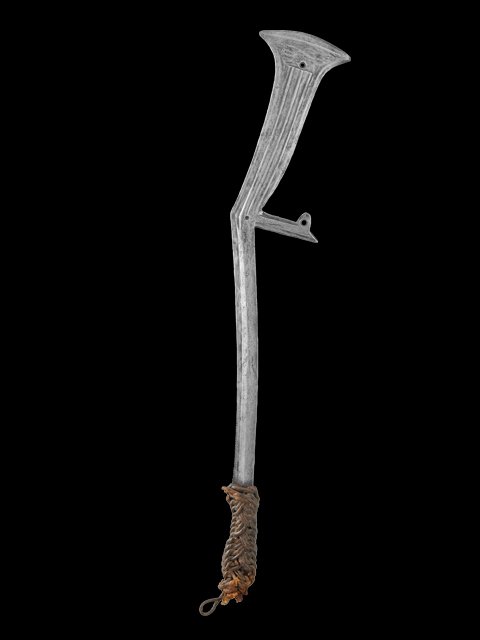
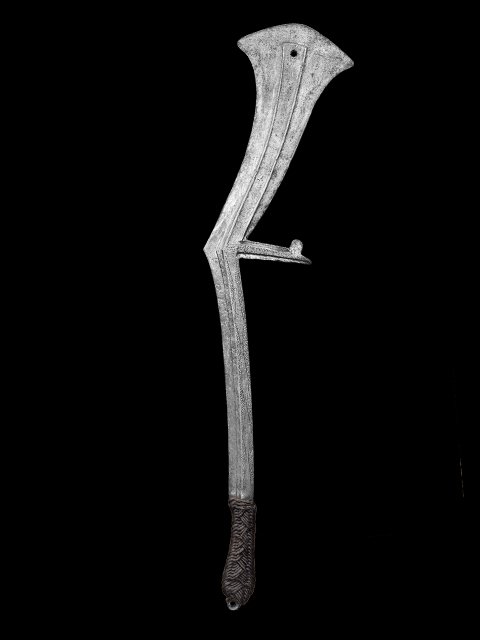
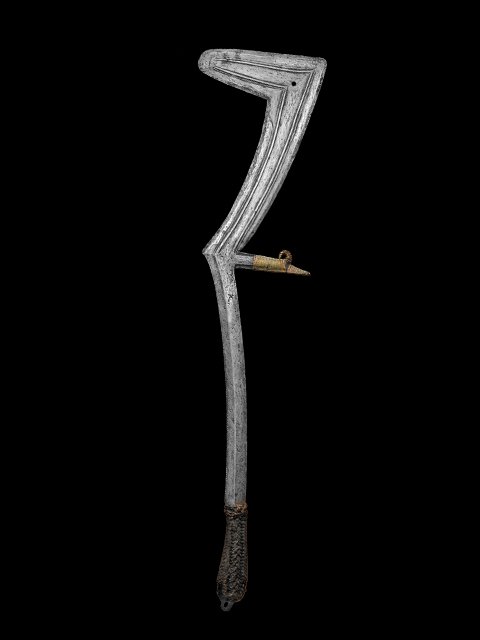
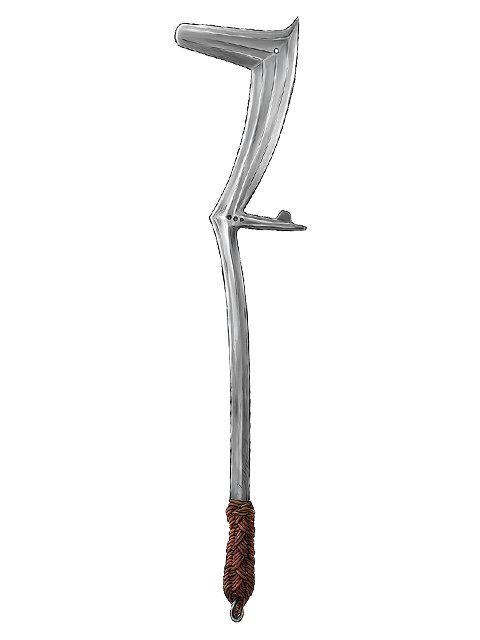
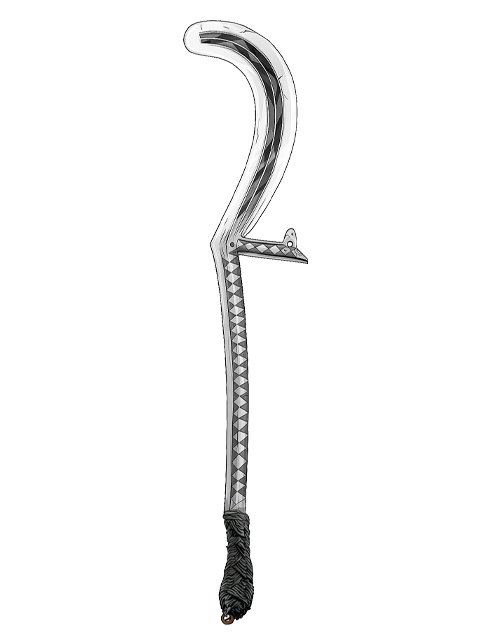
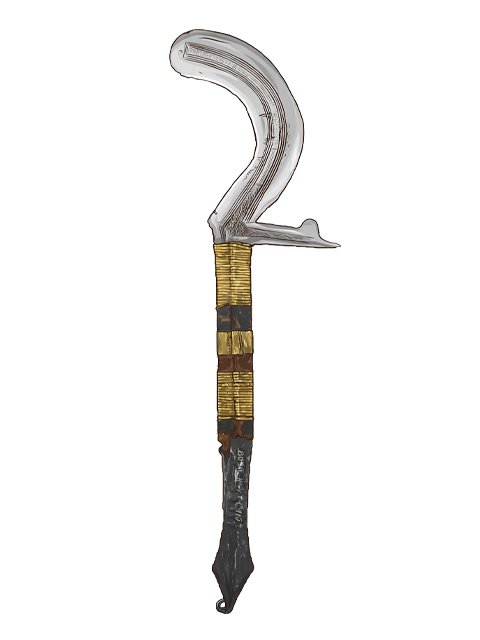
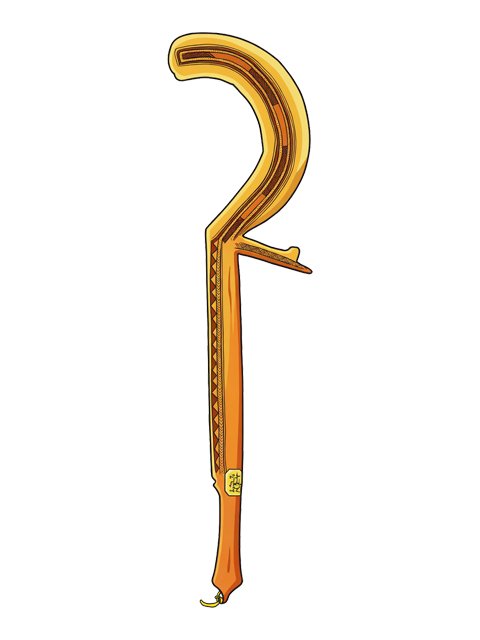
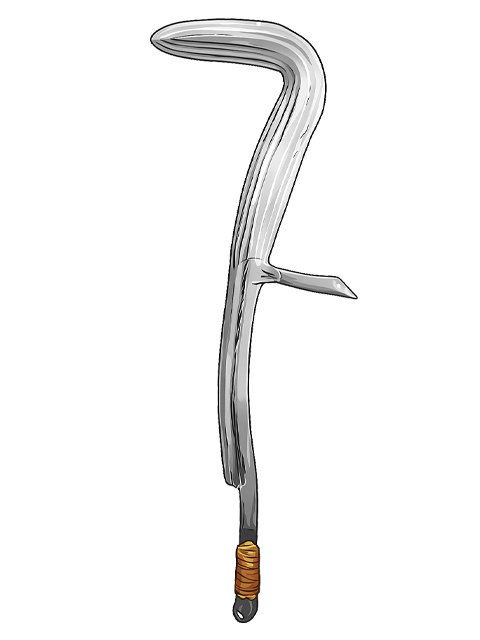
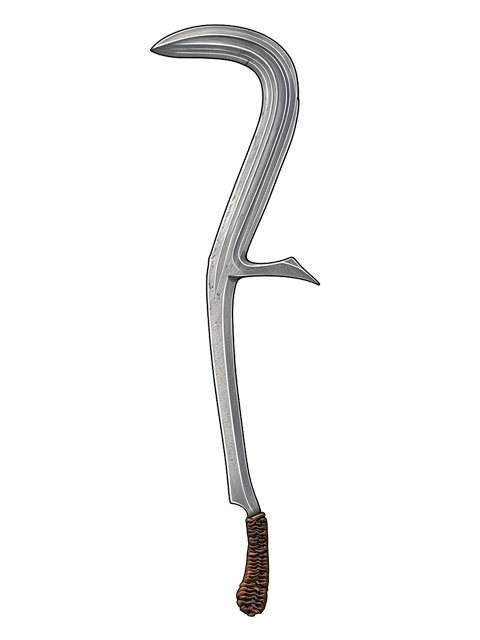
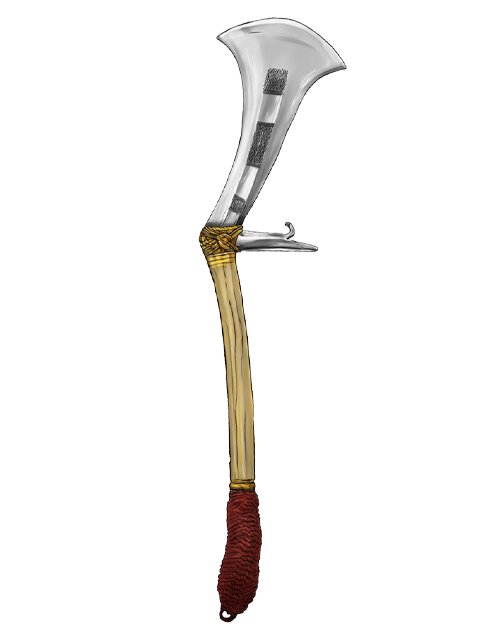
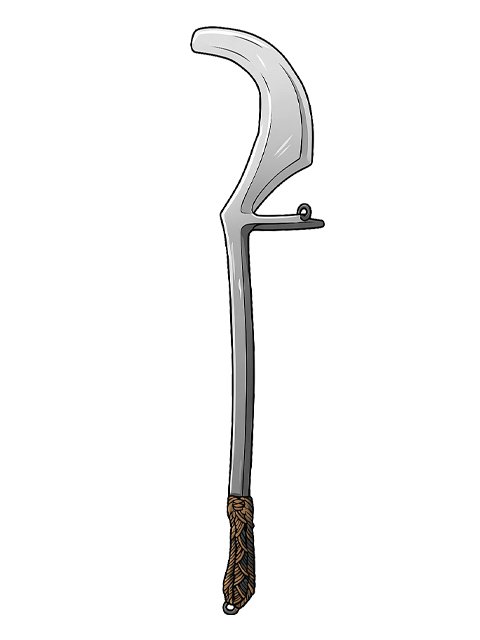
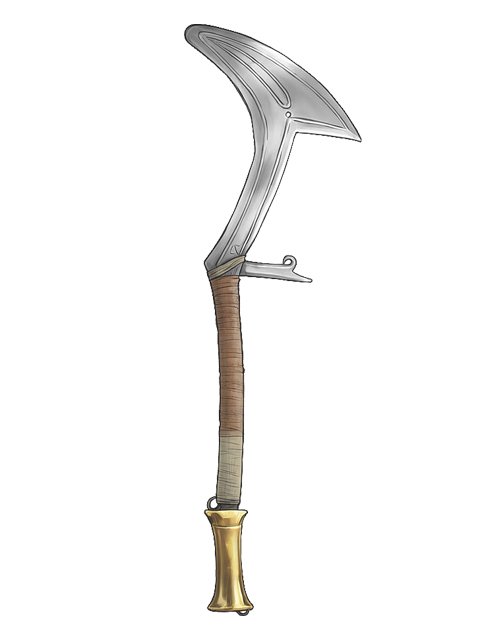
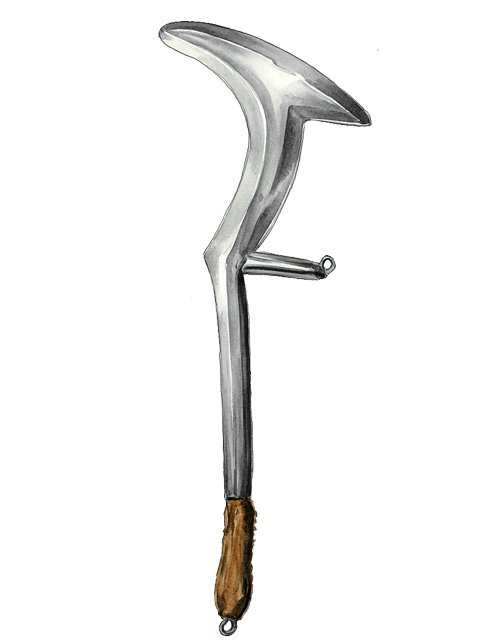
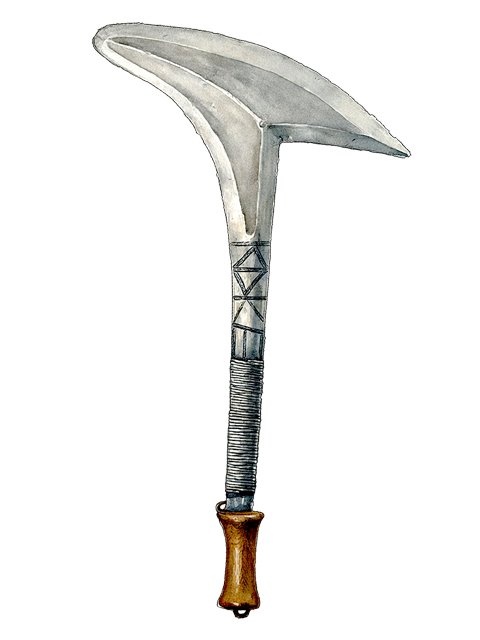
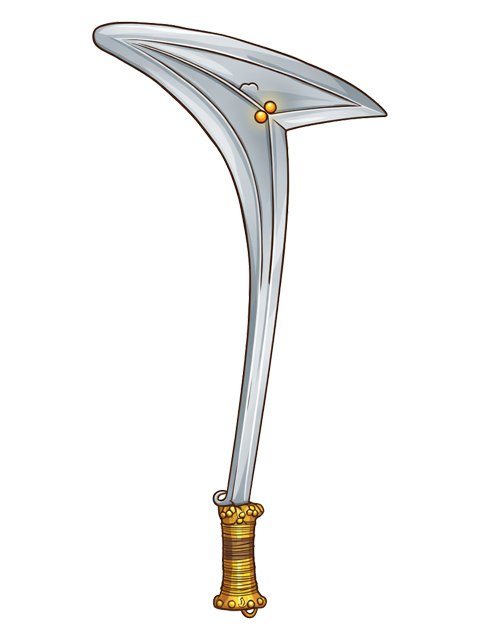
Although considered alongside throwing knives, knives from
this province were used as hand weapons, accompanied by an
armament of spears, bows, and arrows. A model attributed to
the Kare, who were influenced by the Sara, has a completely
reversed structure, and was actually used as a throwing knife.
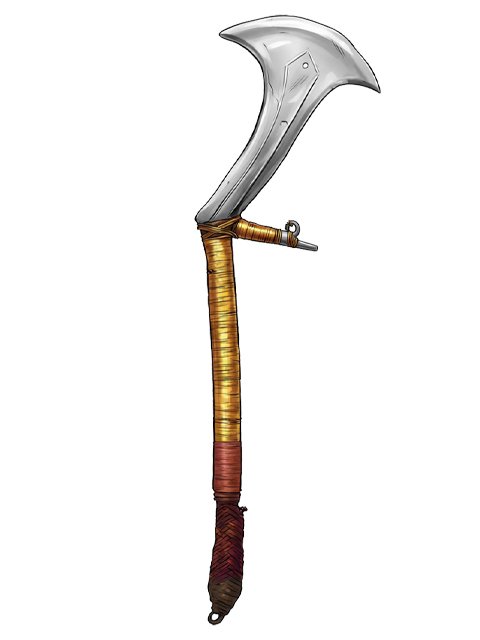
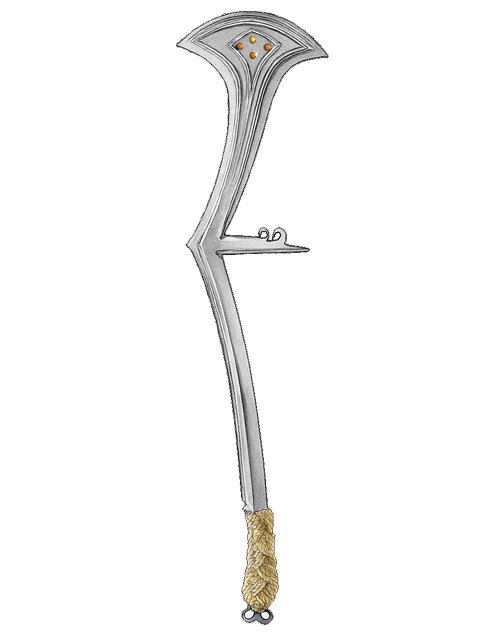
The other types (non-Kare) are 60 to more than 70 cm in length
and weigh around 650 g. The blades can be engraved with
geometric patterns and decorated with holes and rivets of copper
or brass. The handles are braided leather or vegetable fiber.
The stem can be covered with copper or brass wire or
wrapped in leather or monitor skin, and sometimes these
elements are superimposed. These knives are called za.
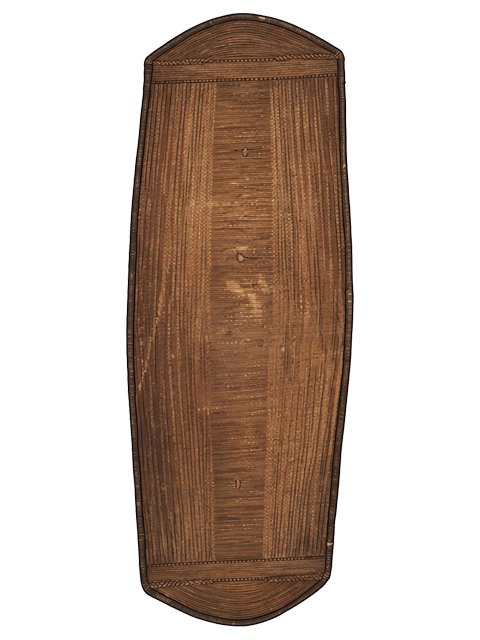
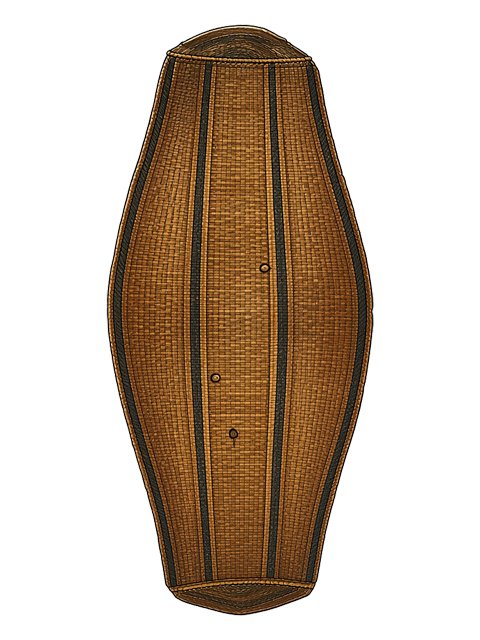
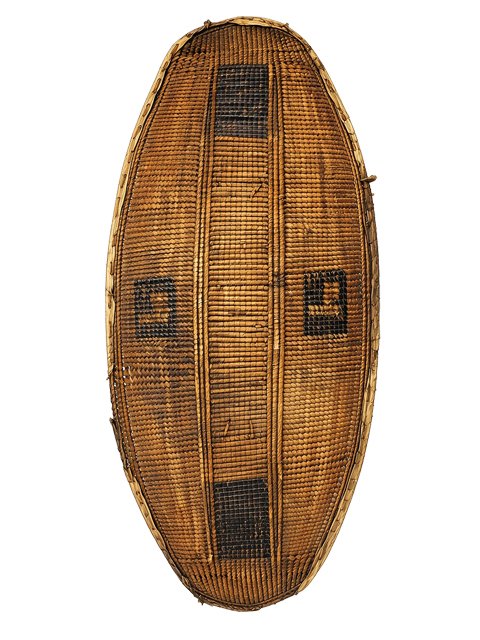
Shields are wickerwork and generally large. One model is flat
and slightly curved on the inside (mbundondo, ngeli) with
a rectangular handle and decorated with geometric motifs.
The other, often curved on the outside, has a round handle and
basic decorations. They are also found among the Ngbaka-Mabo
and the Kaka.