This province, located entirely in northern Sudan, extends
east to the Blue Nile, north almost to Meroe, and west into
the Kordofan region and eastern Darfur. There are the Fundj
(Funj) in the north between the Blue Nile and the White Nile
and the Hameg (Hamej), whose name has the same meaning
as that of the Kirdi, who live in the region of Dar Fung and
the Blue Nile Valley. The Nilotic tribes – Dinka, Nuer, Shilluk,
Burun, Jumjum, and Medan – live in stretches along the White
Nile. The Nuba live southeast of Kordofan. The Ingessana
(Uduk, Berta) occupy the Tabi hills, and they are sometimes
referred to as the Tabi.
This region consists of desert plateaus to the west and dry
savannah on rocky terrain to the east.
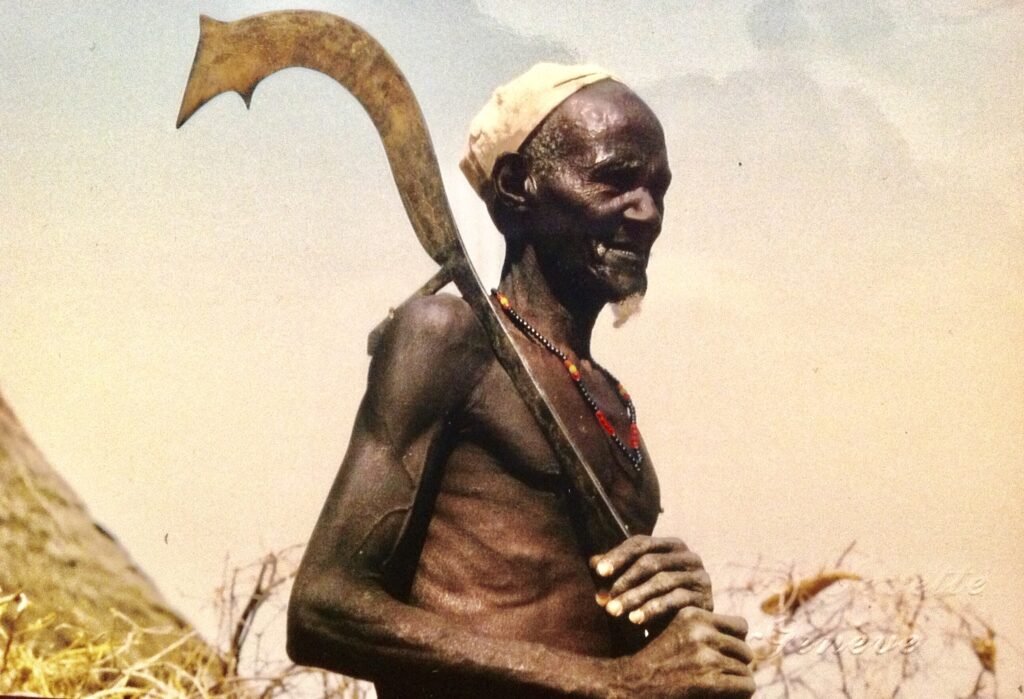
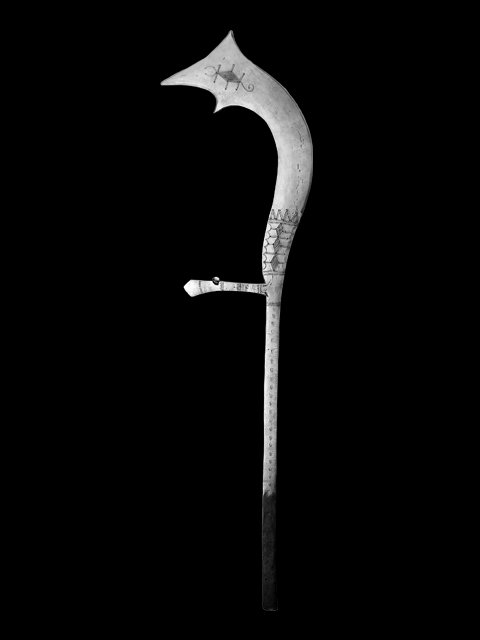
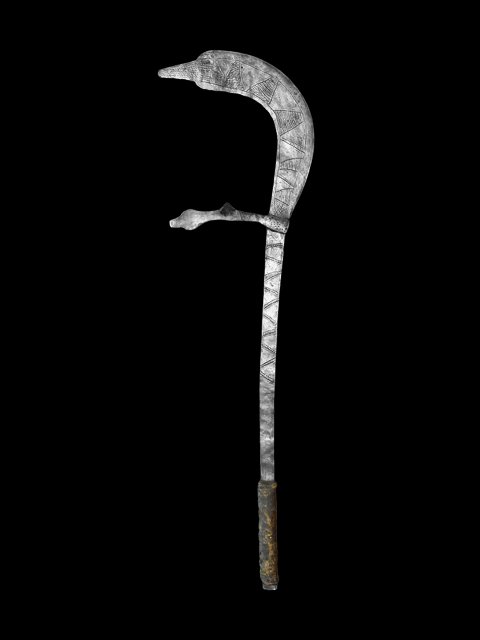
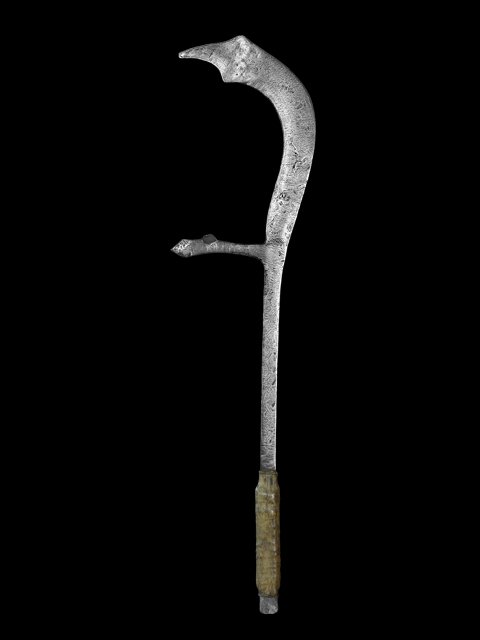
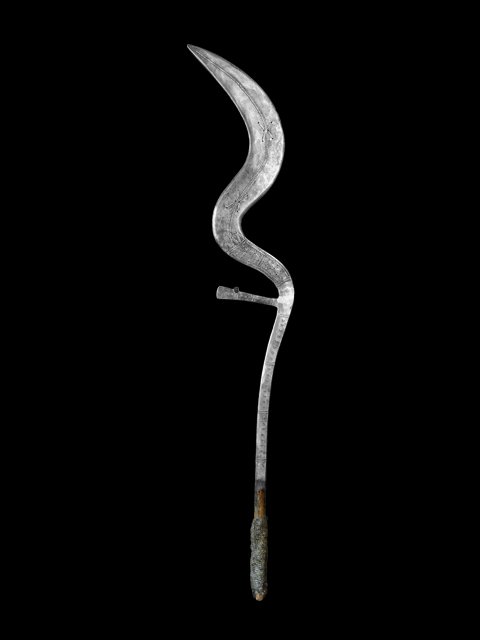
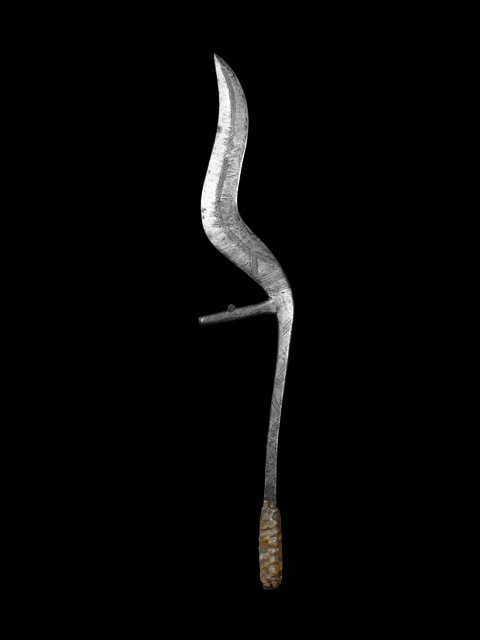
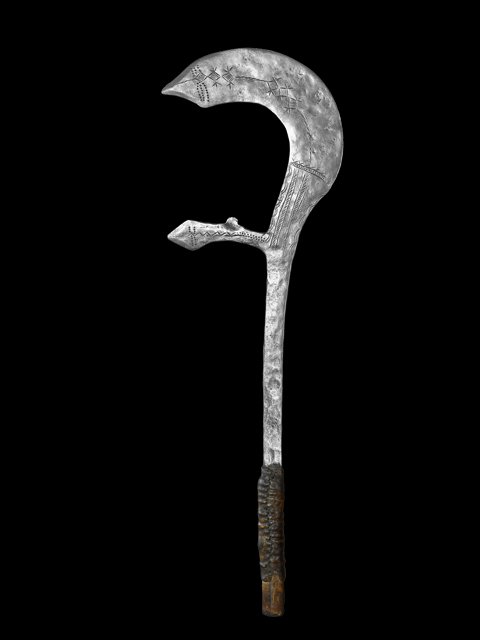
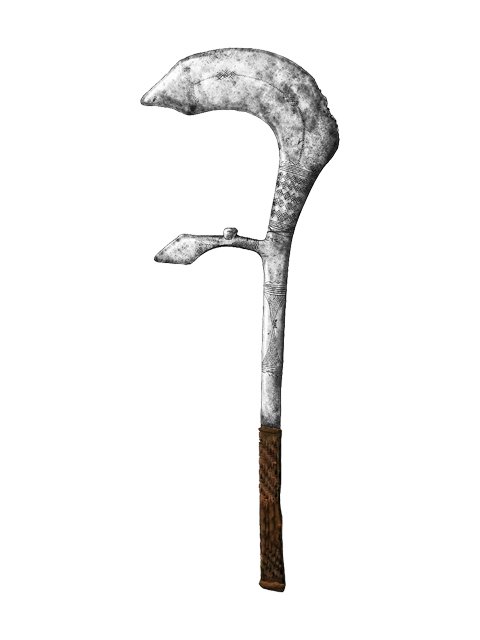
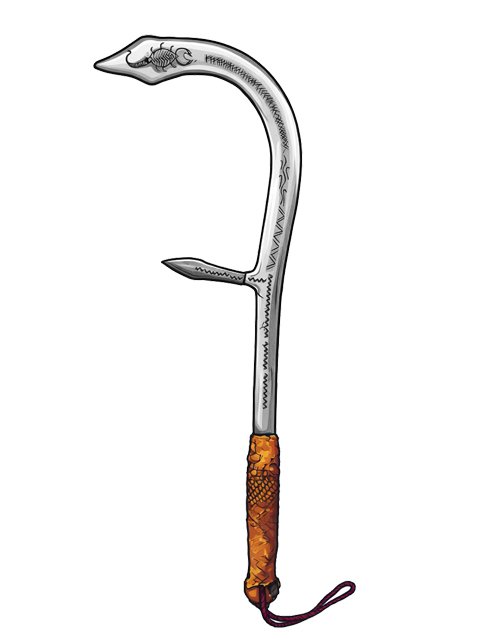
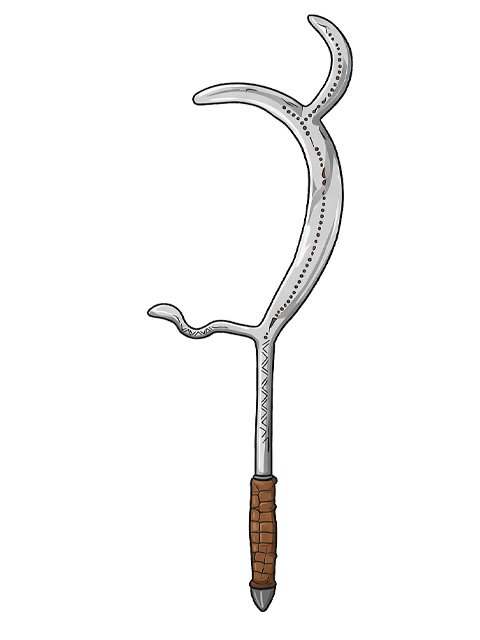
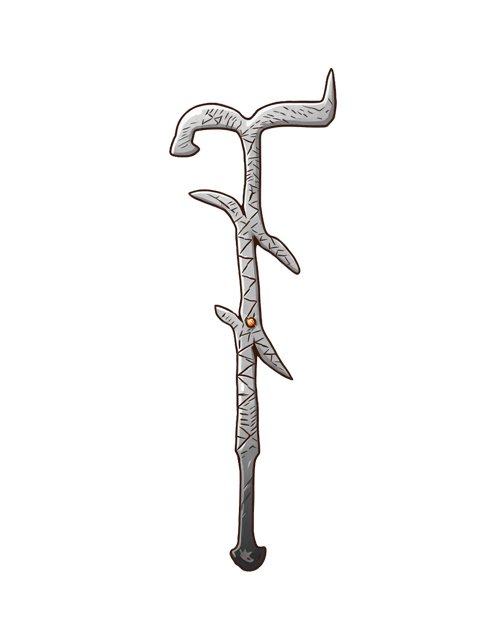
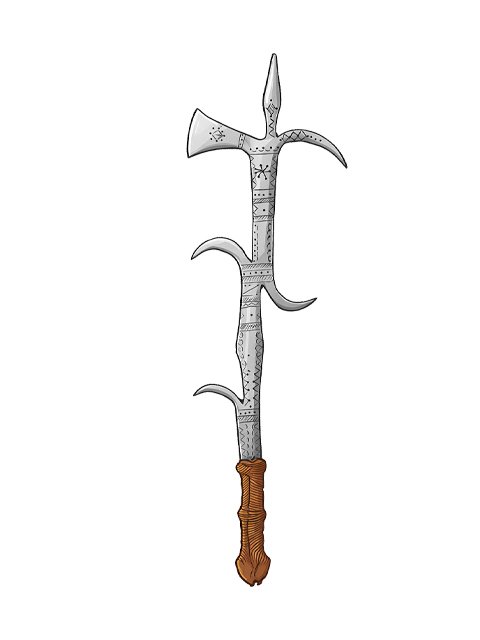
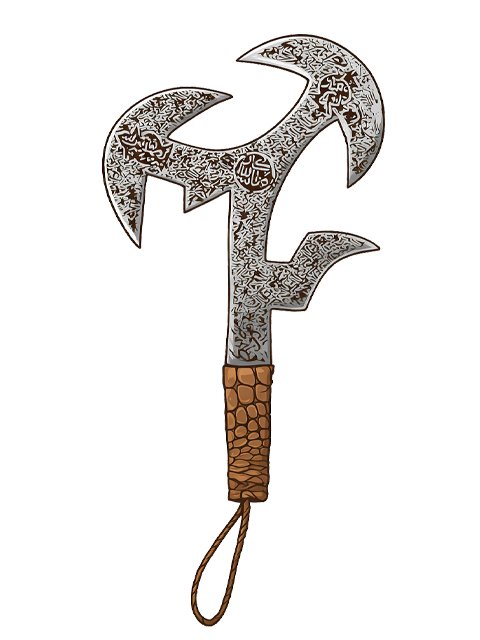
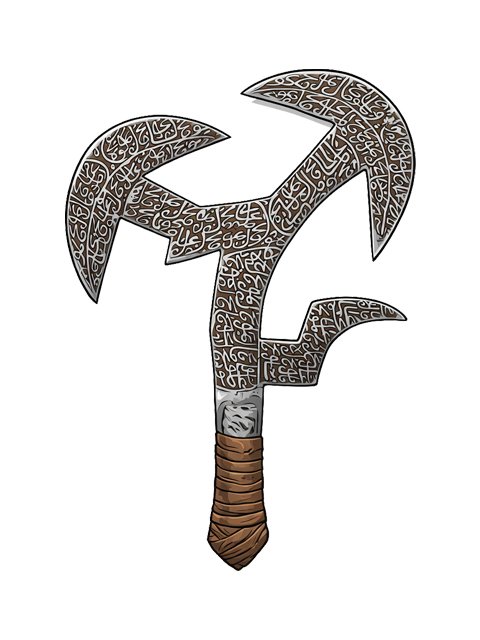
The first group of knives is typically F-shaped, with a narrow,
squared handle section and an upper branch that flares with
sharp edges. Typical geometric engravings are found on both
sides along with incised animals such as spiders, snakes,
scorpions, lizards, and even stylized antelopes. The handles
are mostly covered with leather, sometimes with strips of
wood to thicken the grip, or braided vegetable fiber or leather.
Their size varies from 60 to 70 cm and their weight from 600
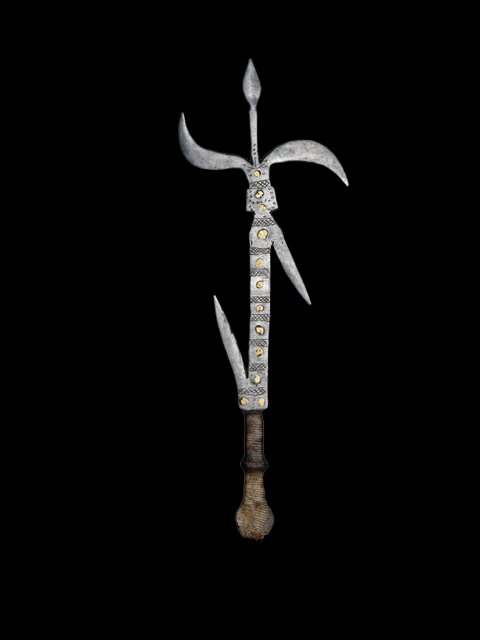
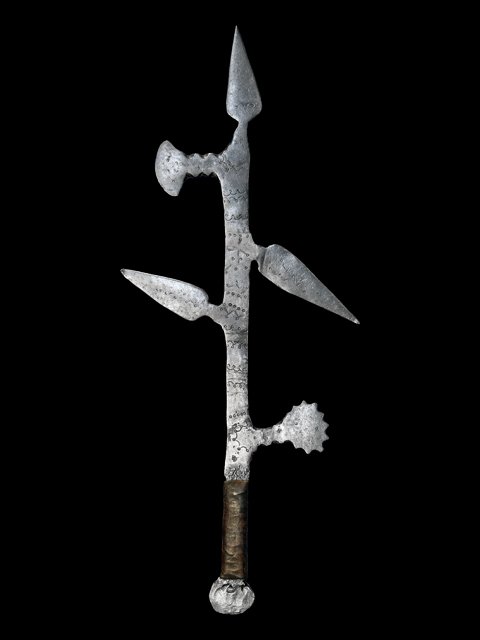
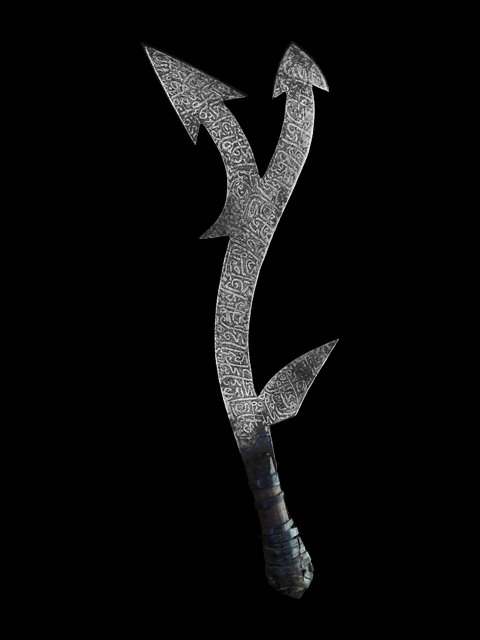
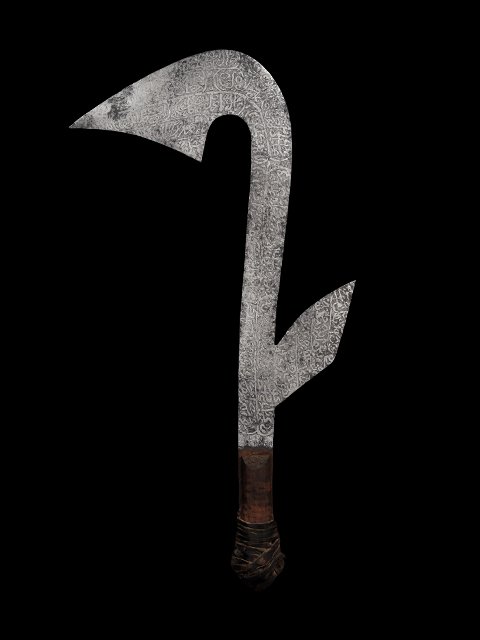
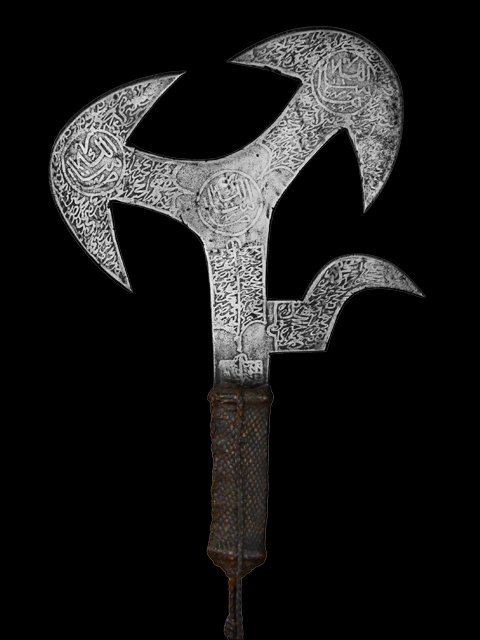
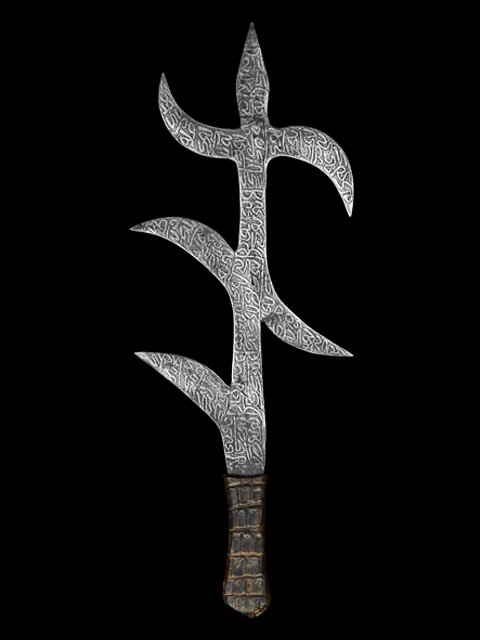
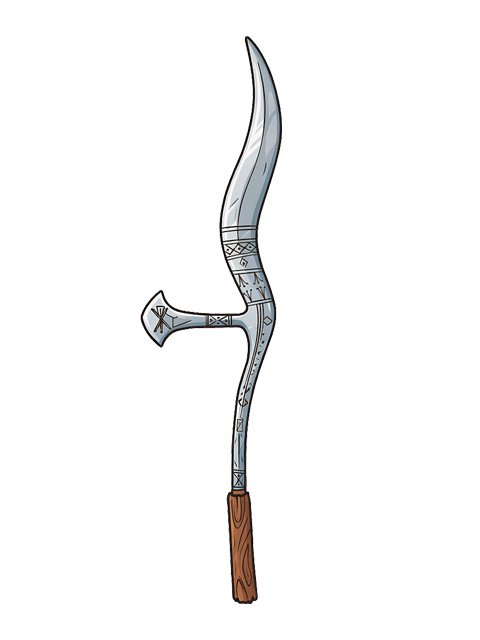
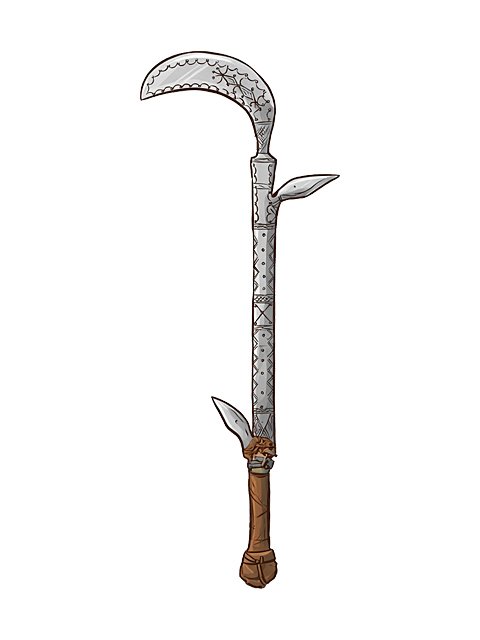
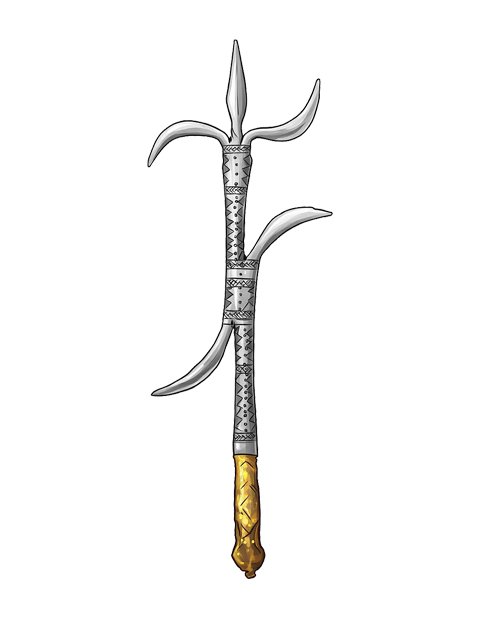
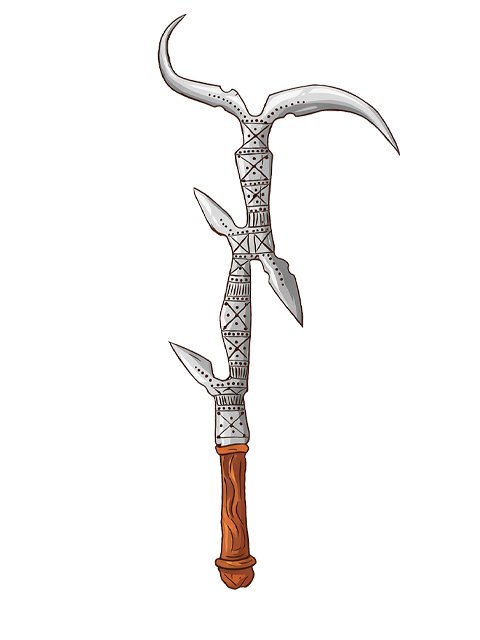
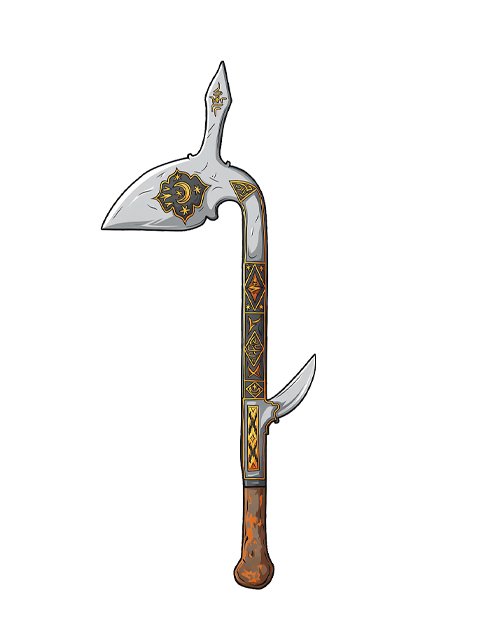
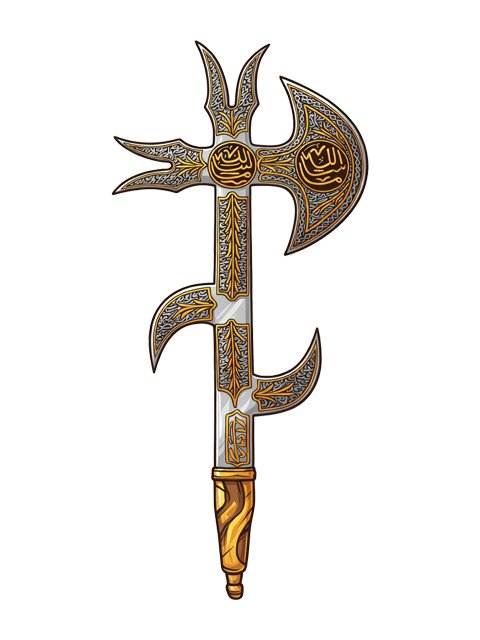
to 700 g. The second group includes knives that are not
« functional », that were probably intended for ceremonial use,
even if nothing can prove this assumption. It is also possible
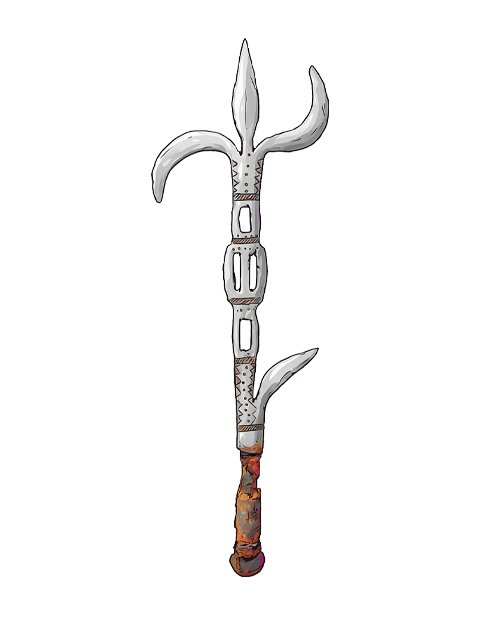
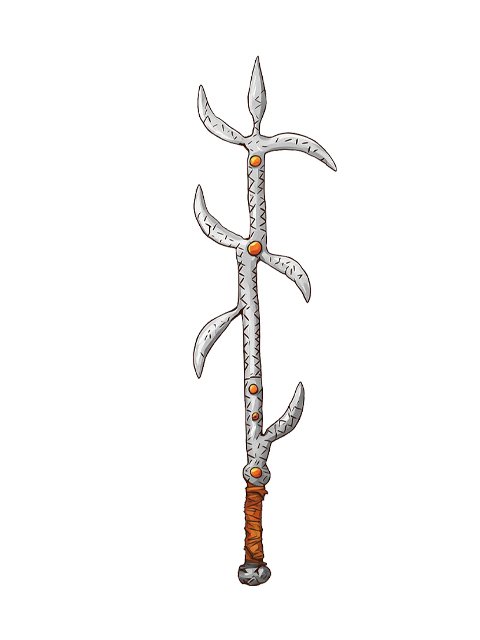
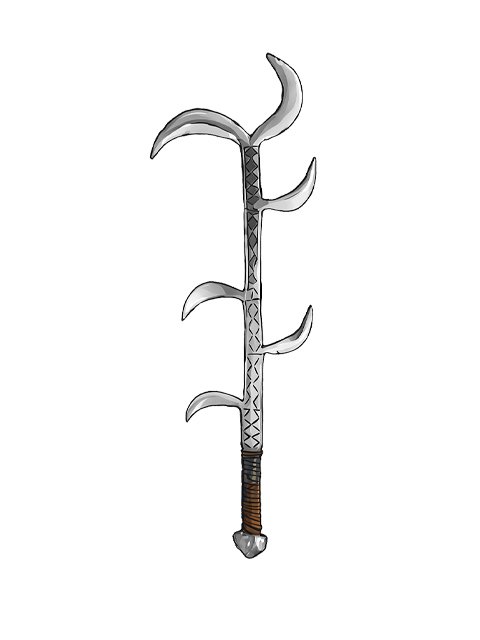
that they were made to sell to tourists. A first type comprises
plant-shaped or tree-shaped knives with a size of 40 to 50 cm
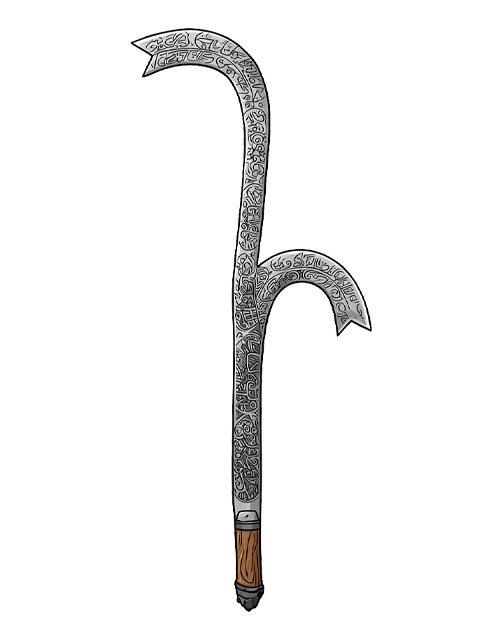
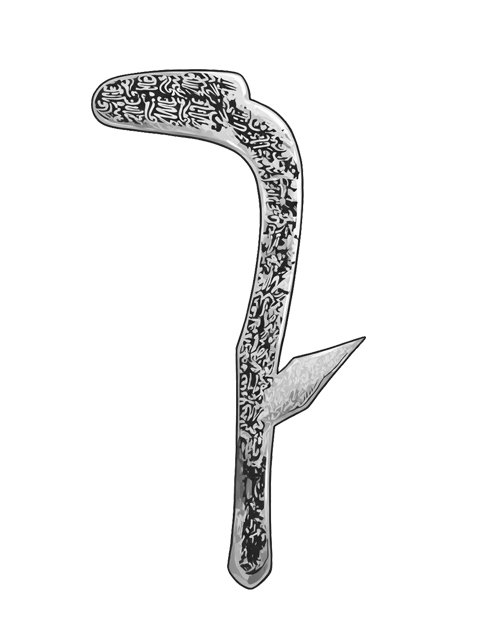
and a weight of 300 to 500 g. The second type consists of flat
knives without sharp edges. Acid etchings on both sides
reproduce the calligraphy of Arabic characters. The sleeves
are covered with leather. These knives come from the cities
of Khartoum and Omdurman and were produced during
the caliphate Madhi period (1885-1898). The design is that of
other throwing knives (Ngbaka, Banda, and Gbaya) brought back
by slave traders during raids in the Congo Basin region.
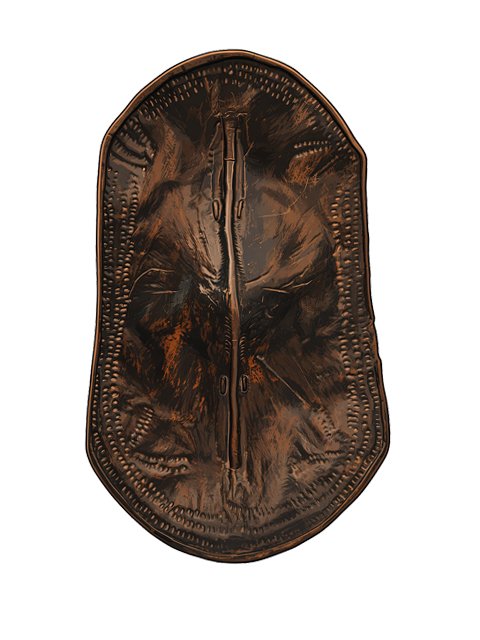
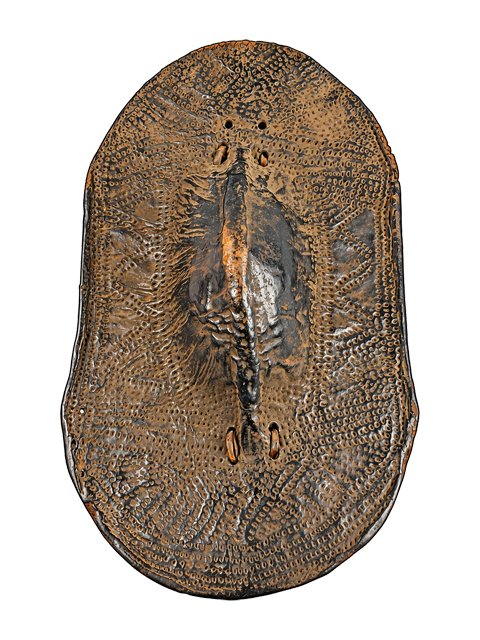
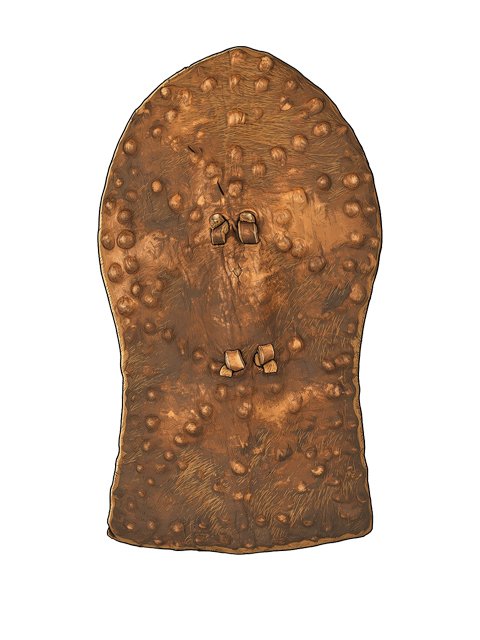
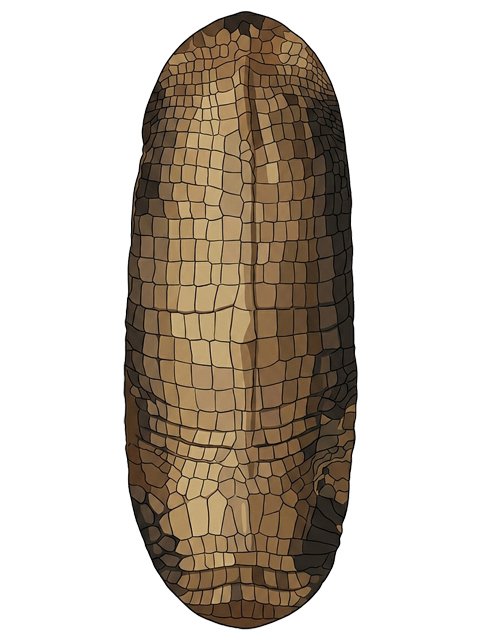
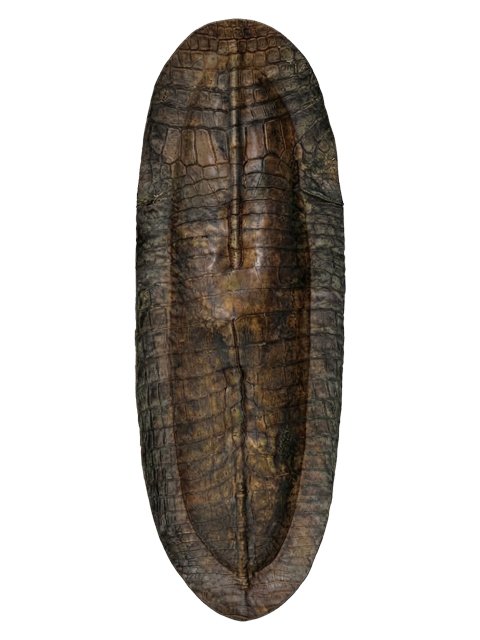
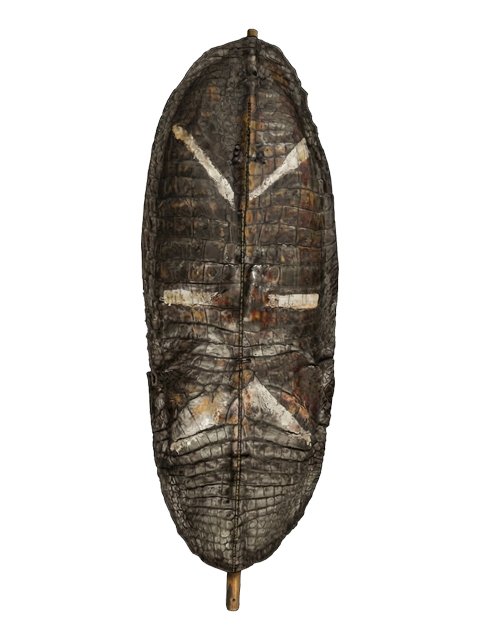
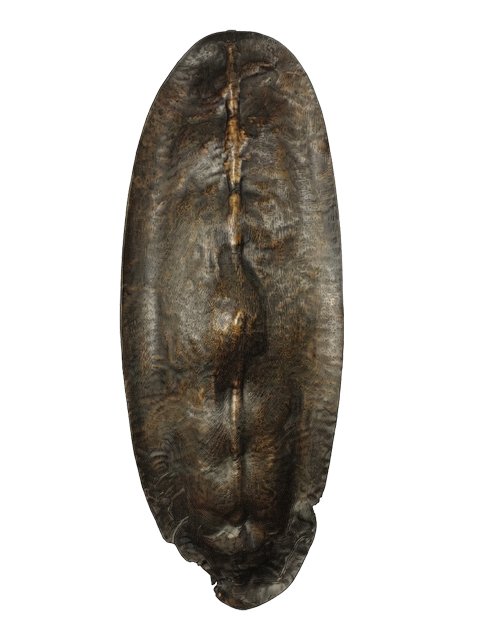
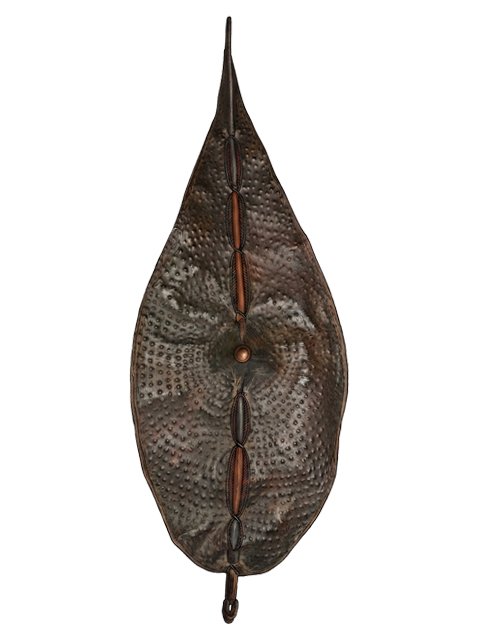
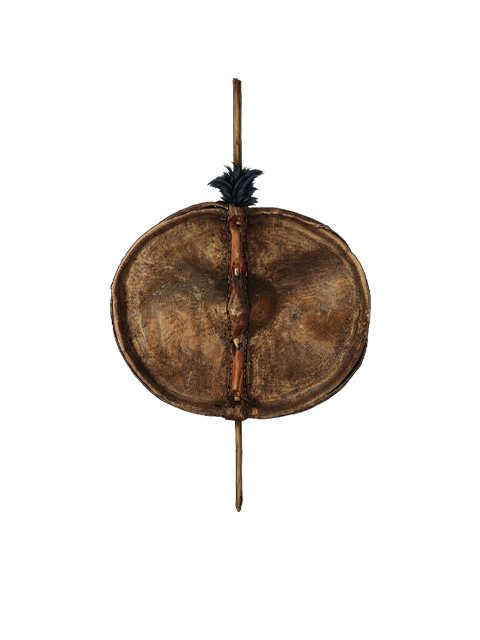
The shields of this province are leather, sometimes decorated
with repoussé patterns, and their size and shape vary.