This province extends from the south bank of the Ubangi River
to the north and south banks of the Congo River, forming
a triangular area that contains highlands and savannas to the north
and tropical forests interspersed with dense savannas to the south.
The Gbaya-Ngbaka (Ngbaka-Gbaya, Ngbaka-Minagende) occupy
the center of this region, the Ngbandi dominate in the east to
the Uele River, and the Mbanja (a Banda vassal tribe of the Ngbandi)
inhabit the northwest. The Ngombe (Mabinza, Doko, Poto, and
Mbudja) extend south on both sides of the Congo River. Smaller
groups like the Mono-Gobu, Mbati, Lobala, and Nzombo are spread
out along the Ubangi River from upstream to downstream.
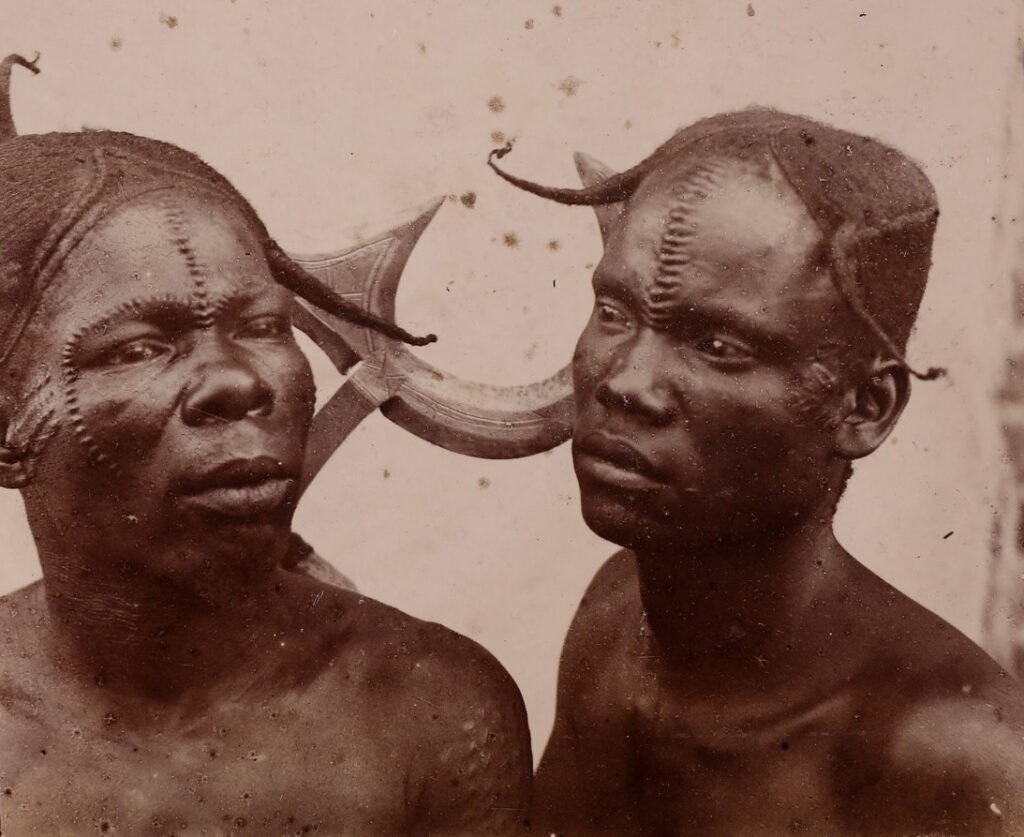
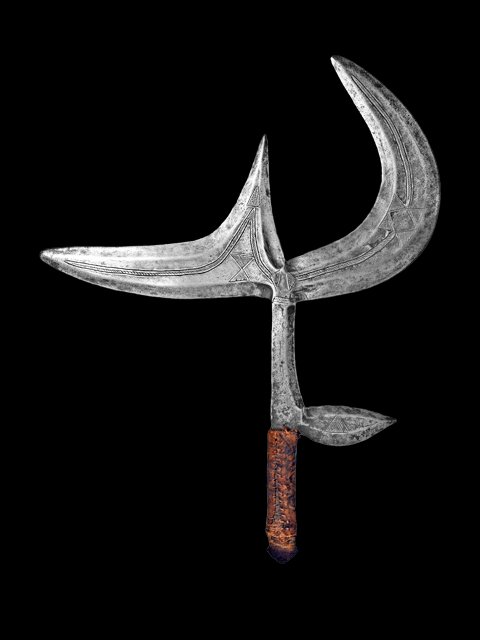
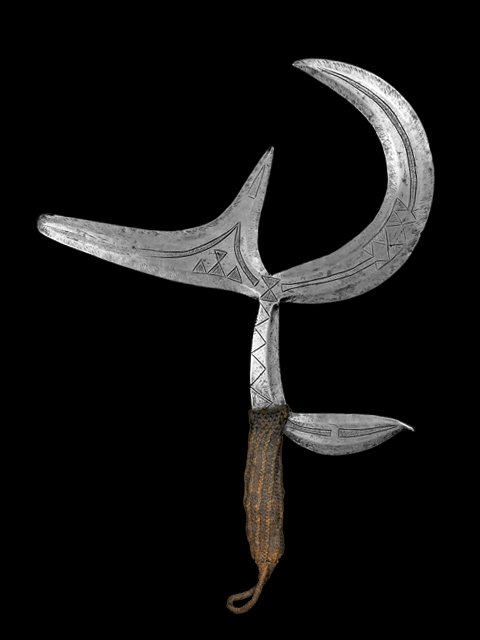
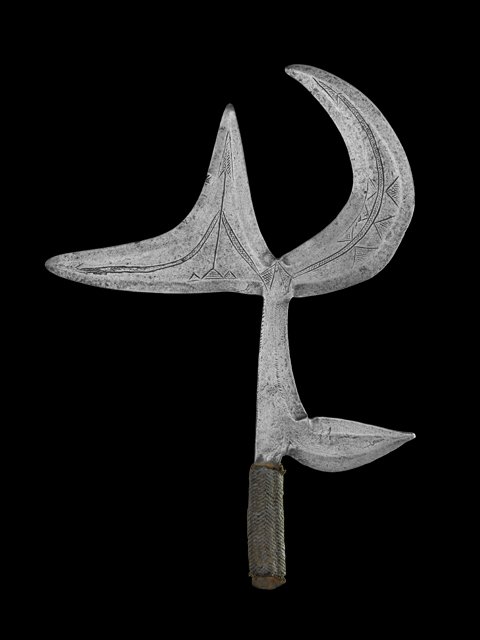
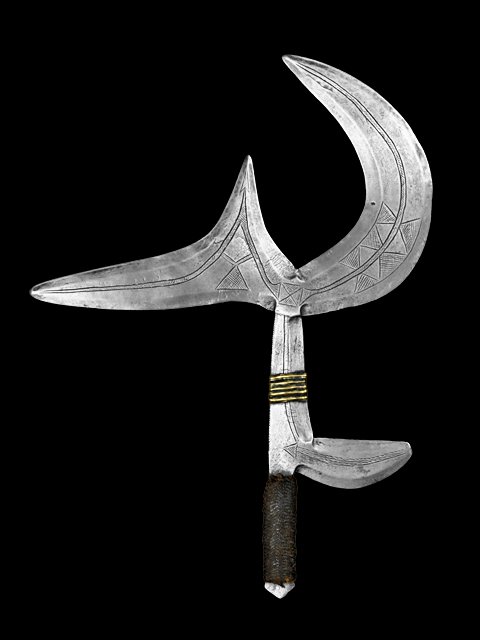
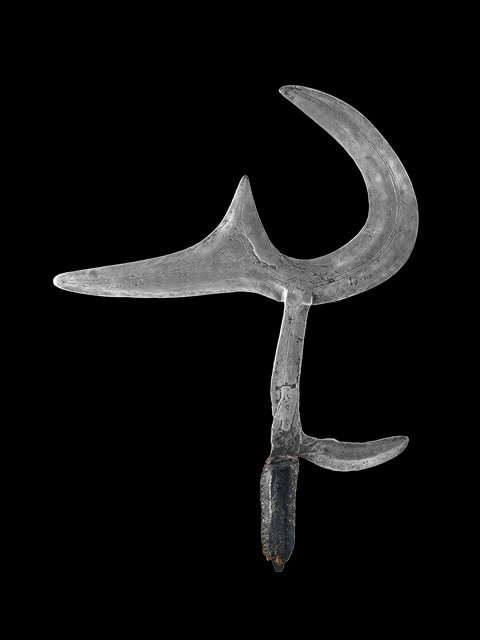
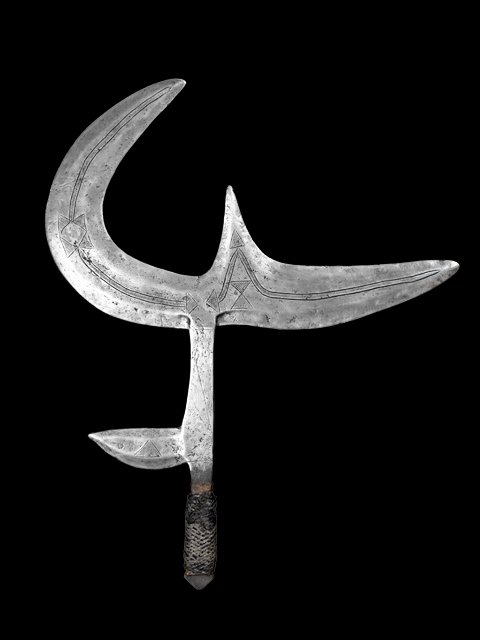
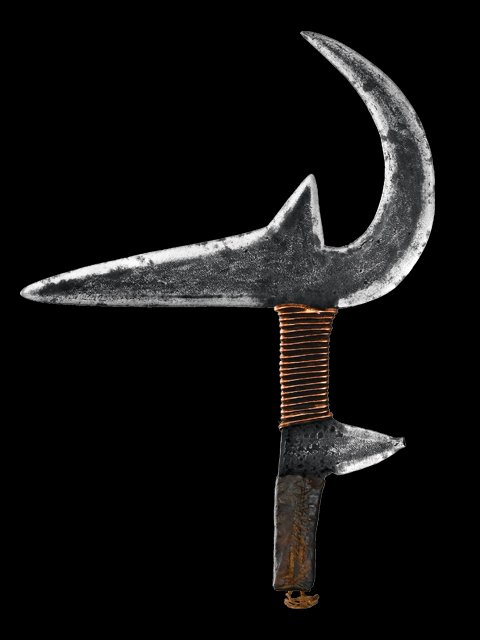
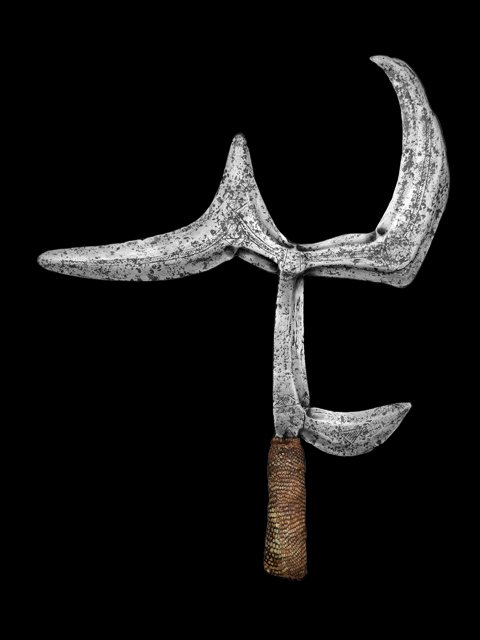
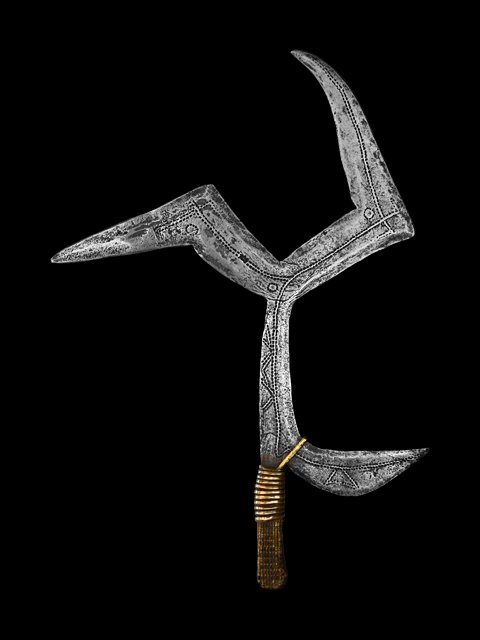
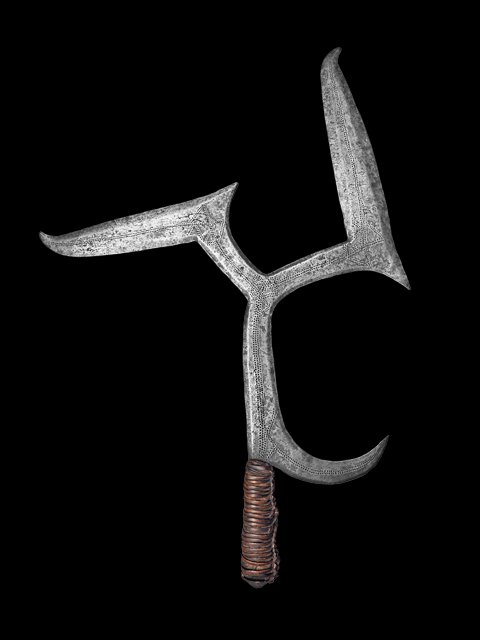
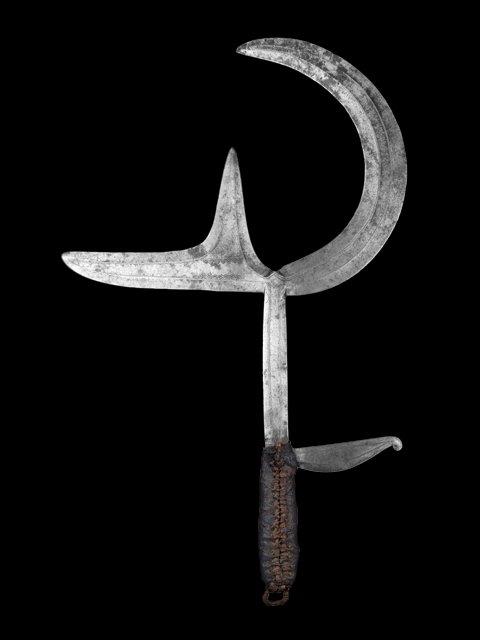
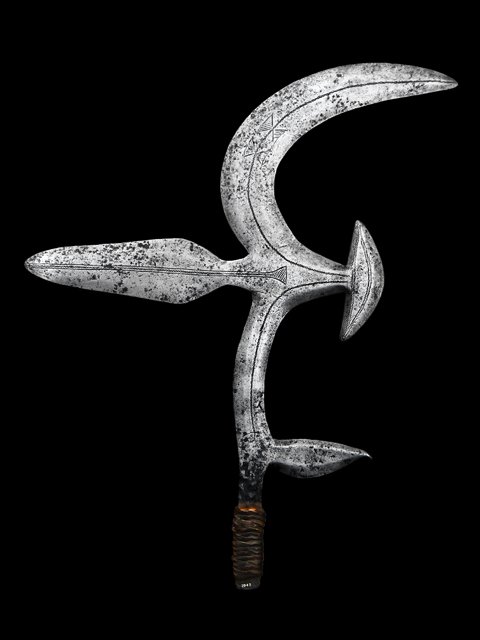
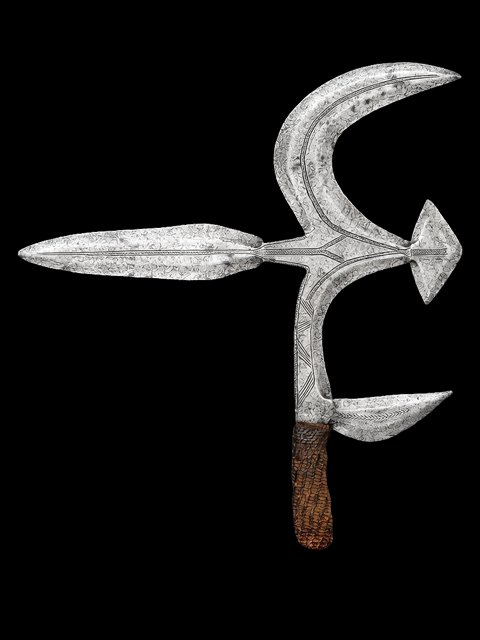
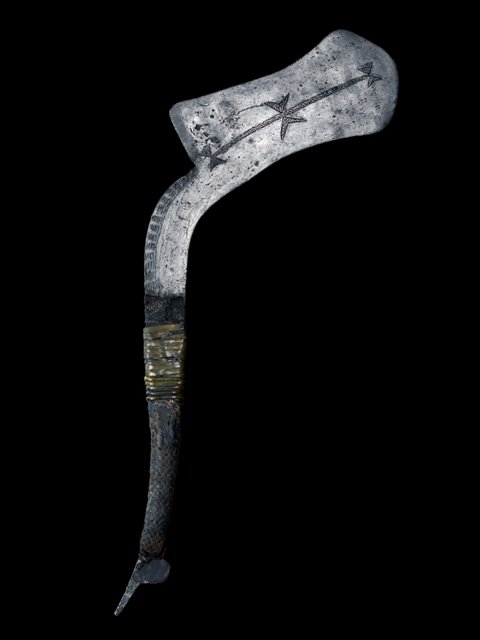
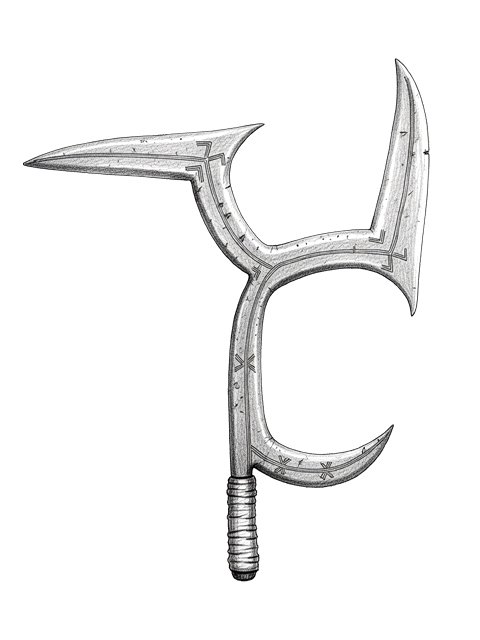
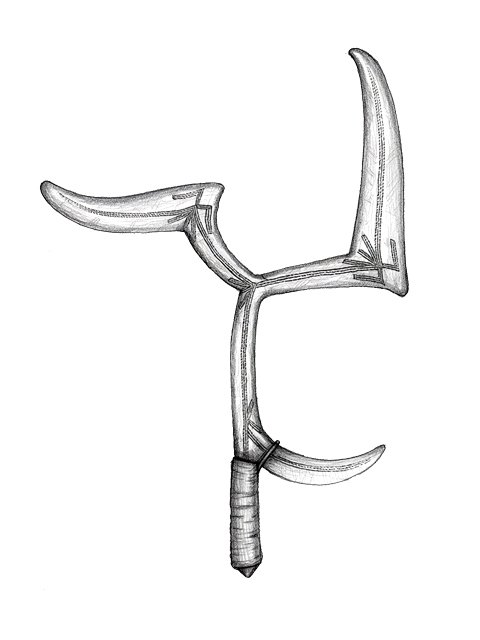
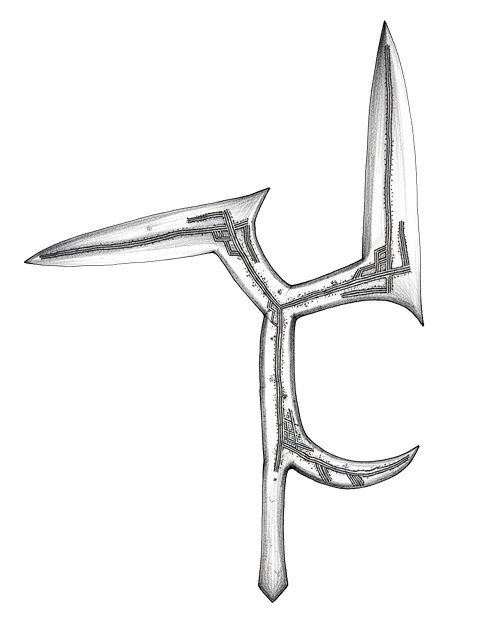
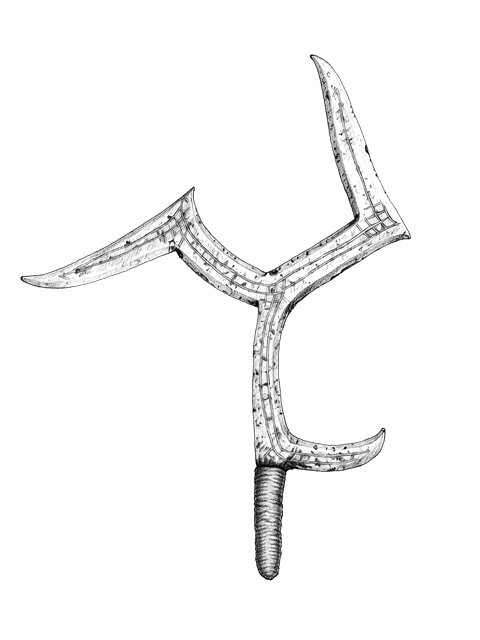
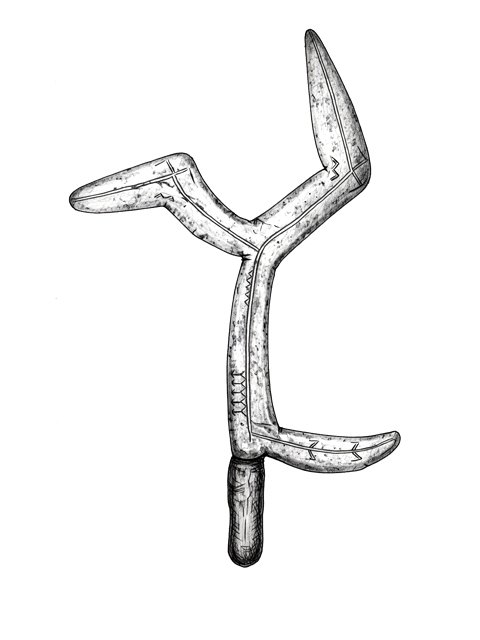
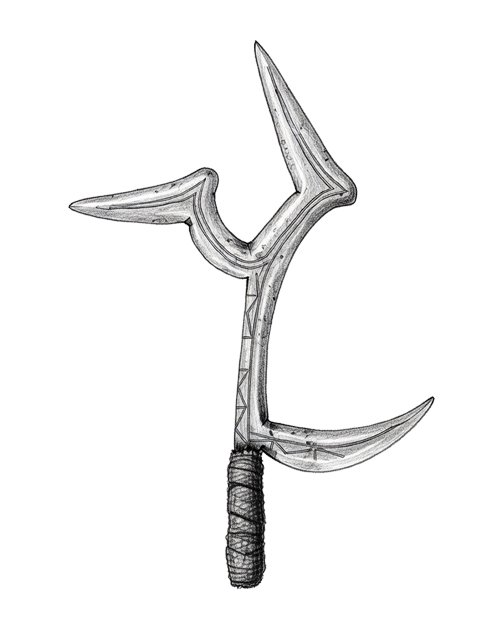
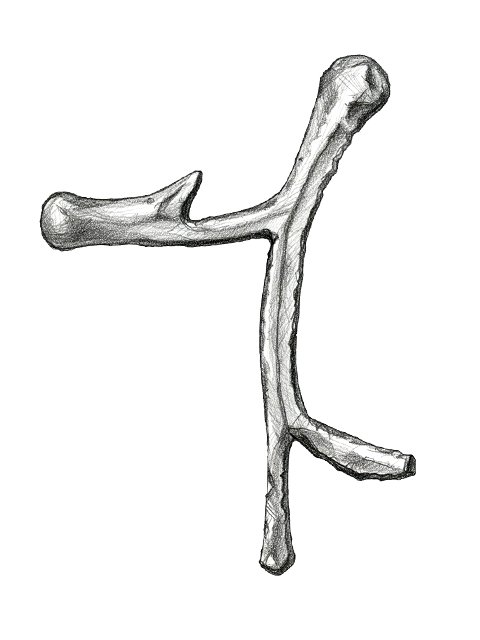
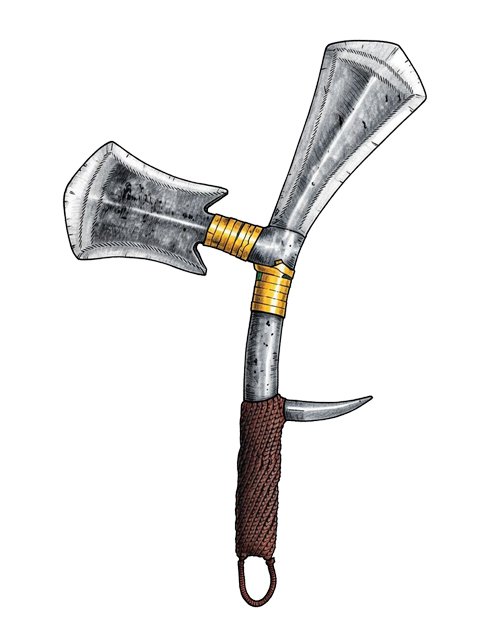
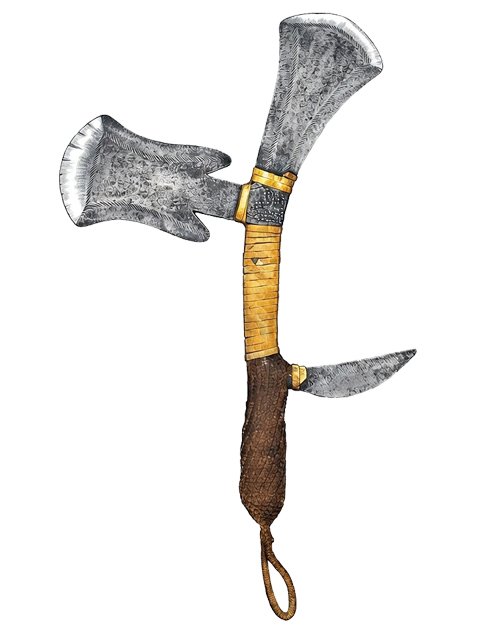
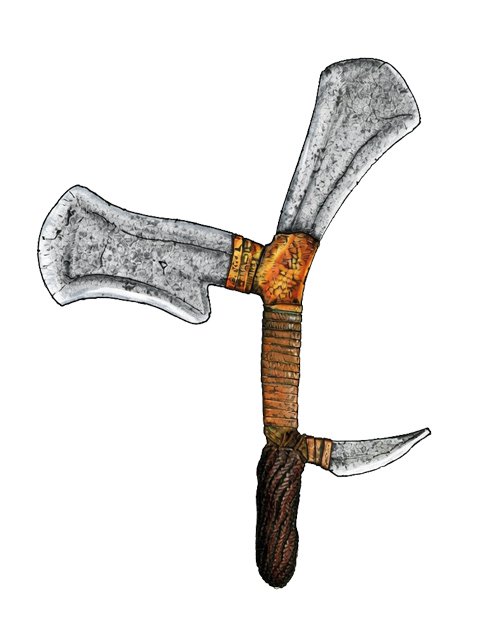
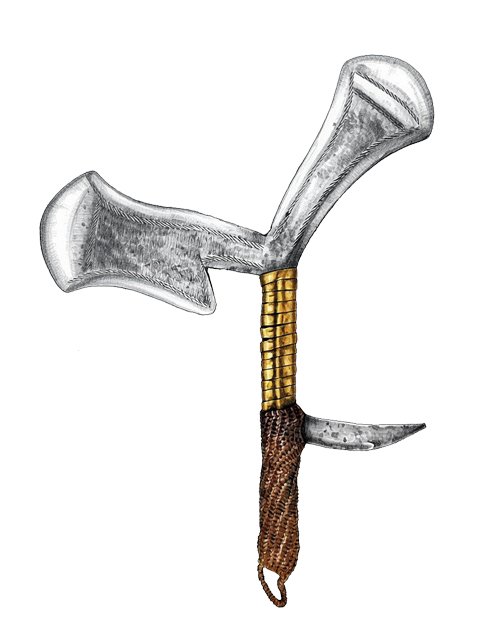
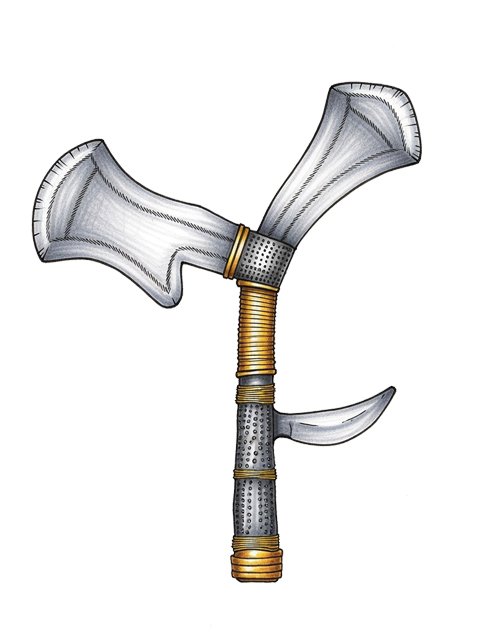
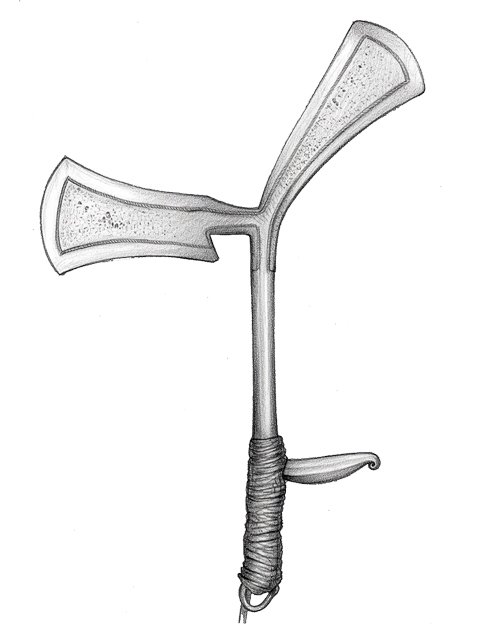
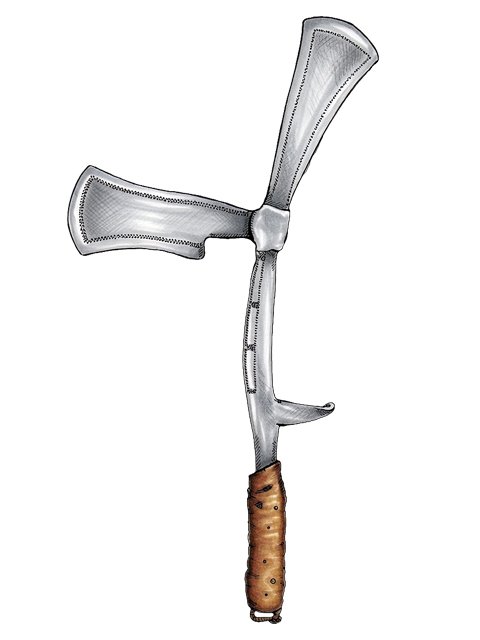
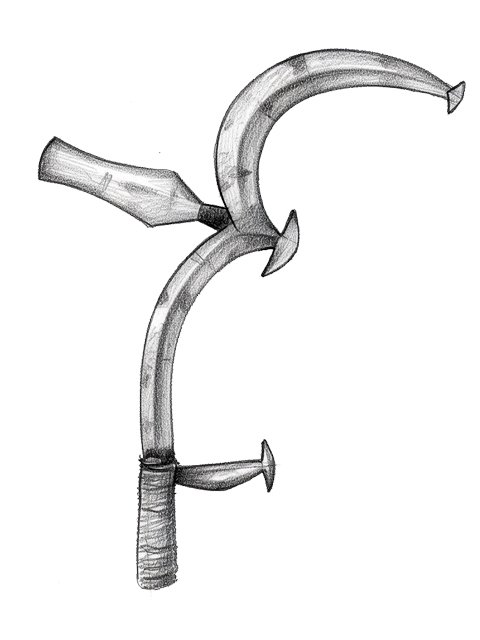
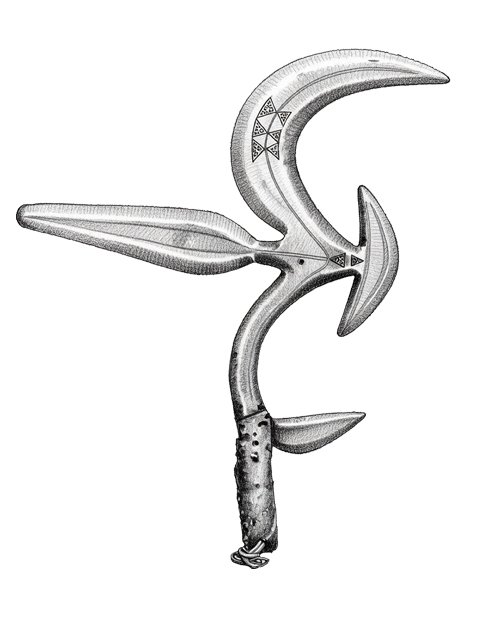
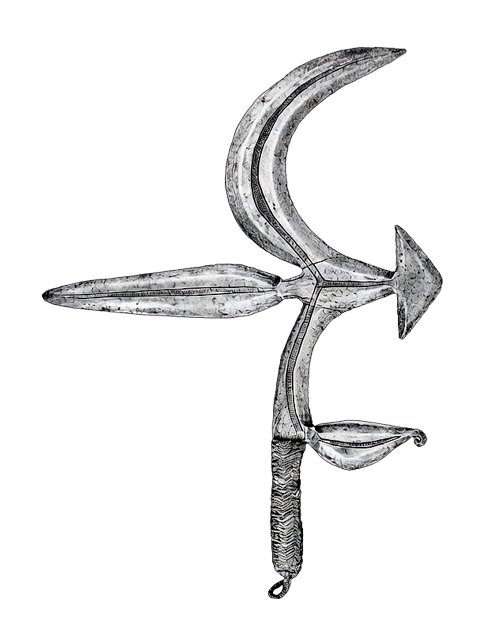
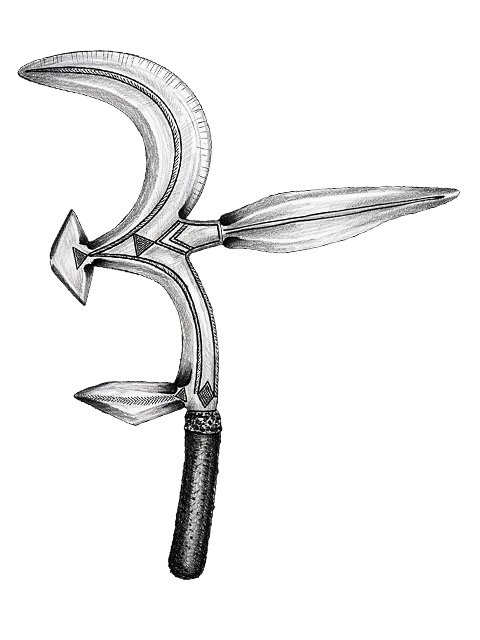
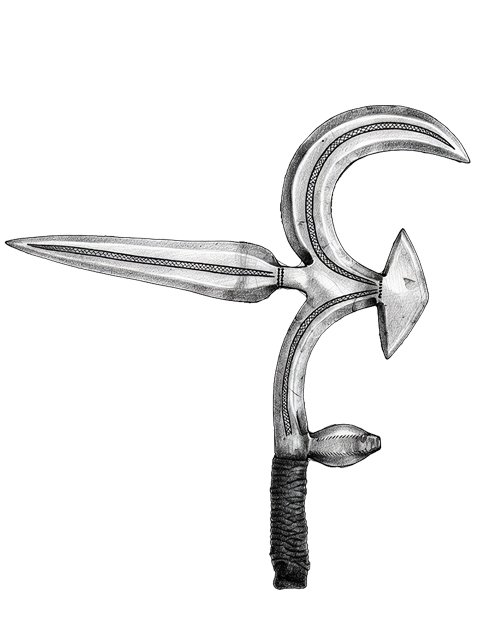
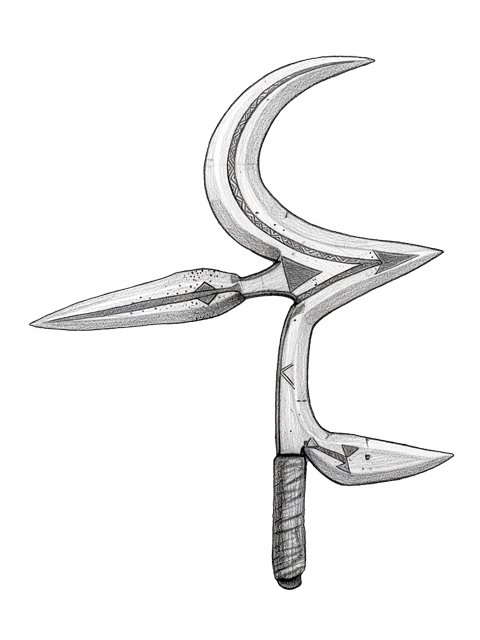
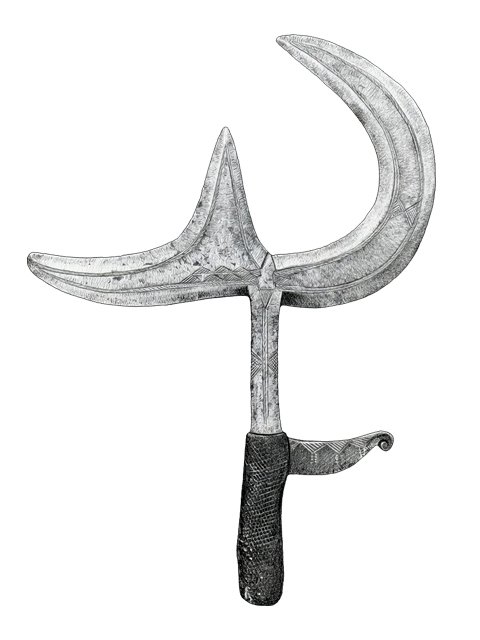
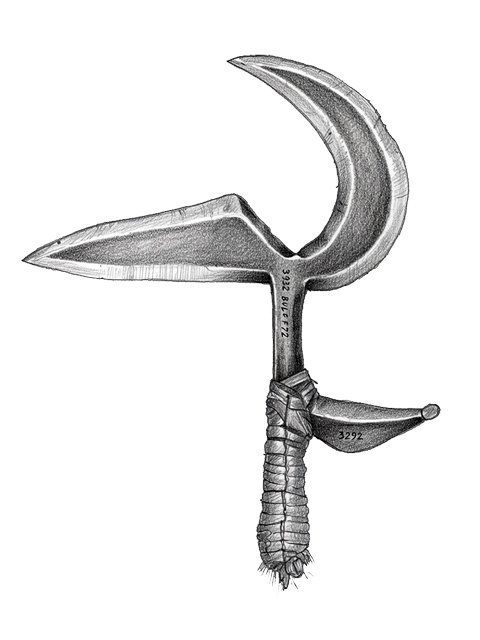
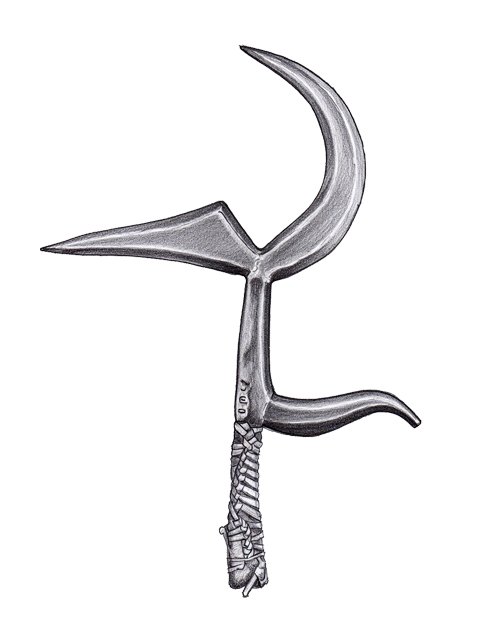
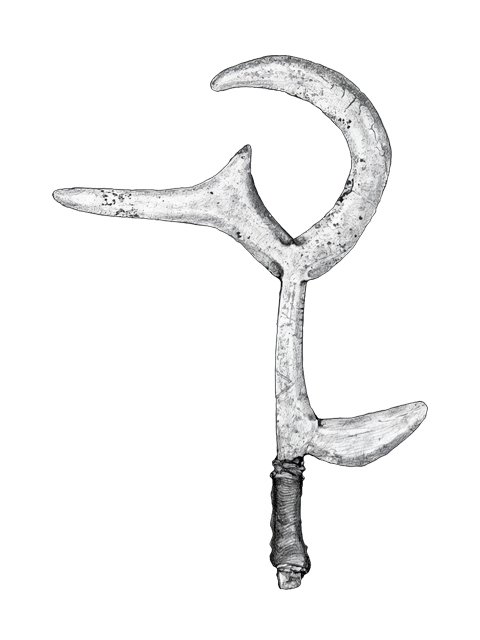
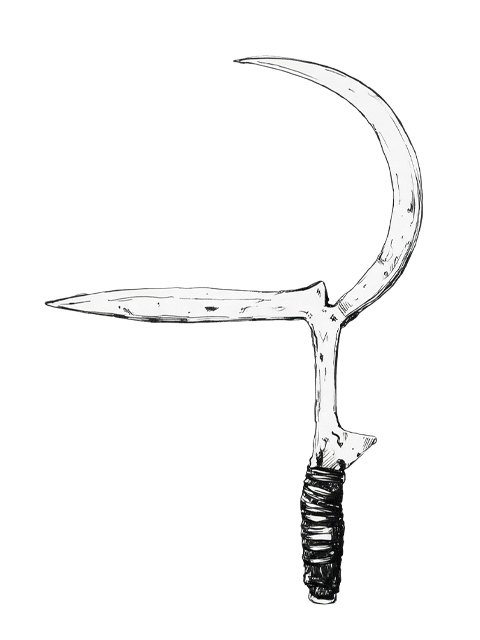
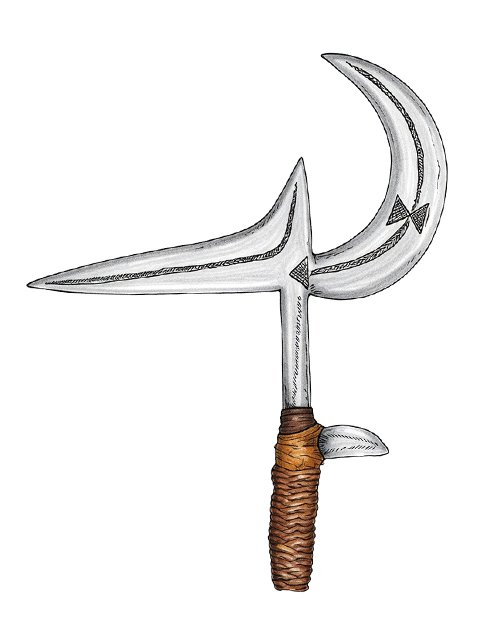
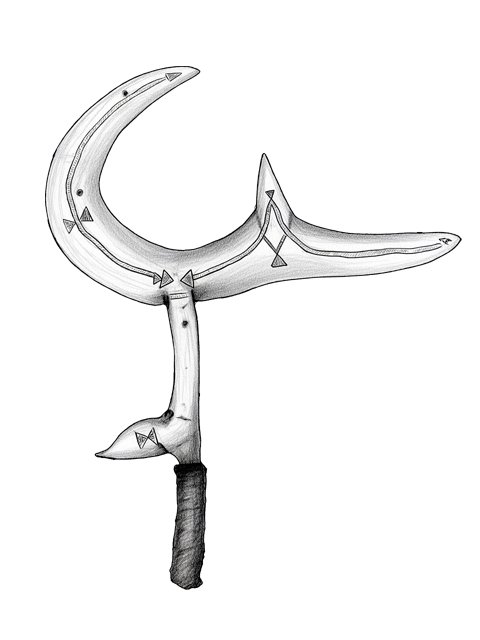
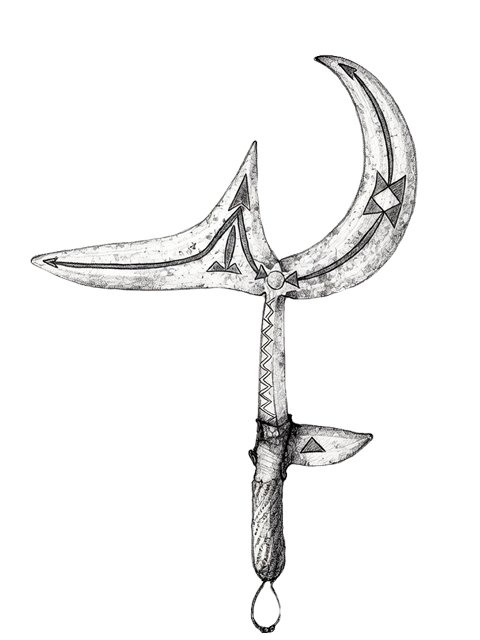
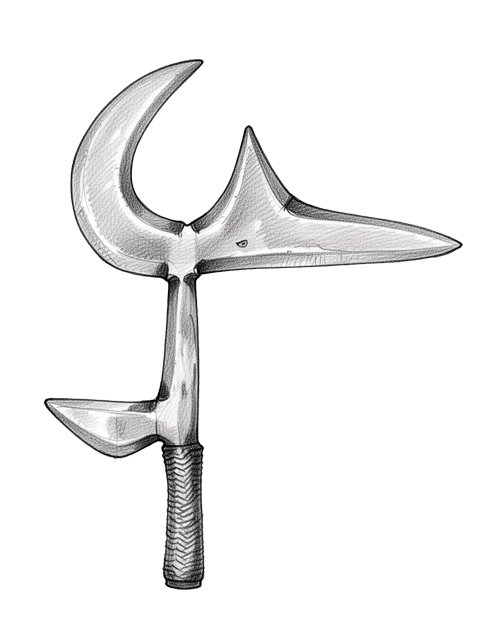
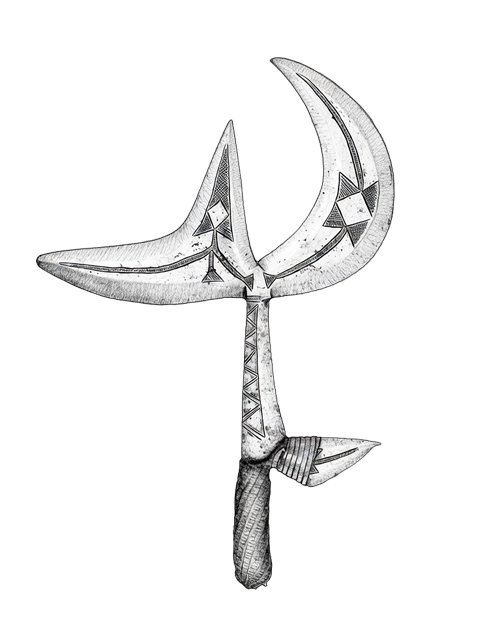
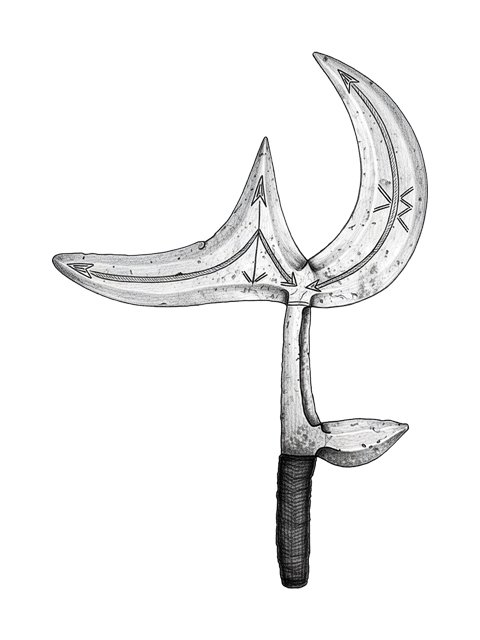
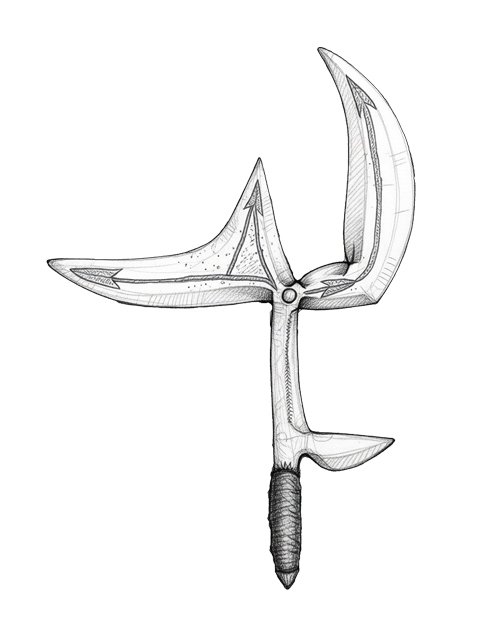
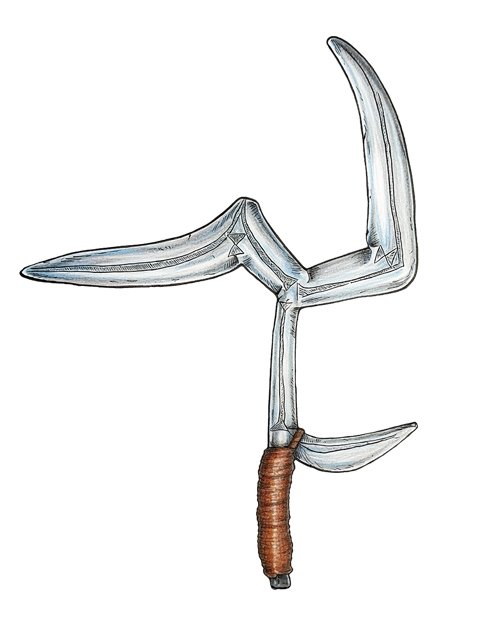
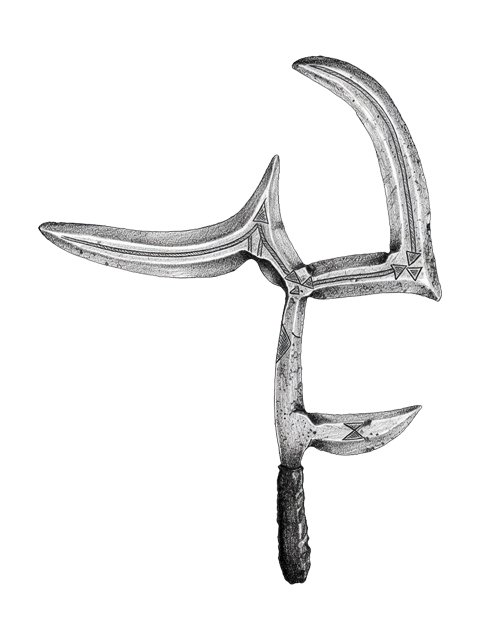
The Gbaya-Ngbaka are the original designers of the dominant
Y-shape throwing knife with the rear wing that curves forward.
The classic model is engraved on the front with specific triangle,
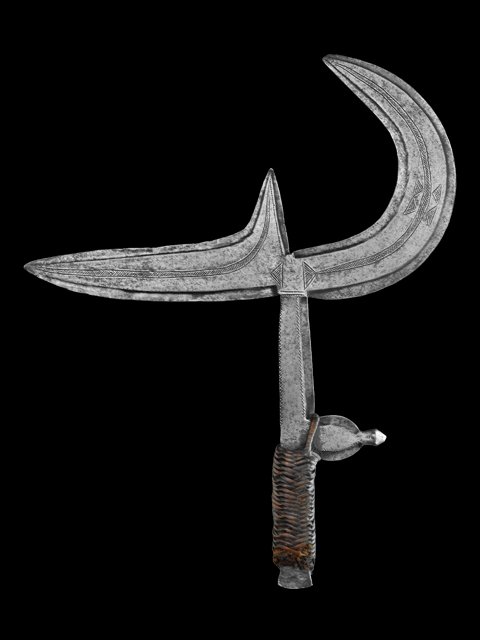
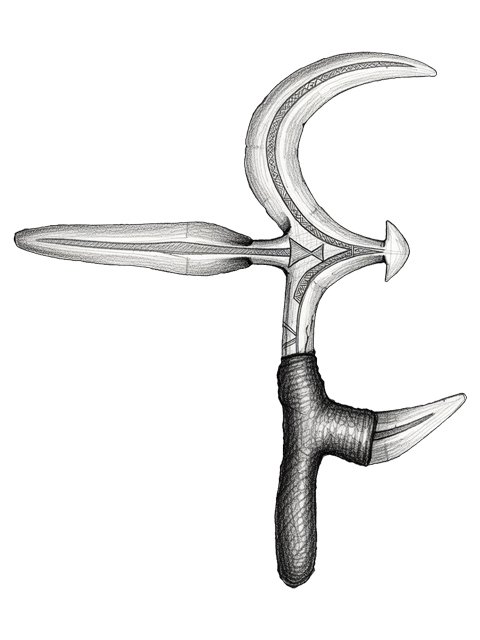
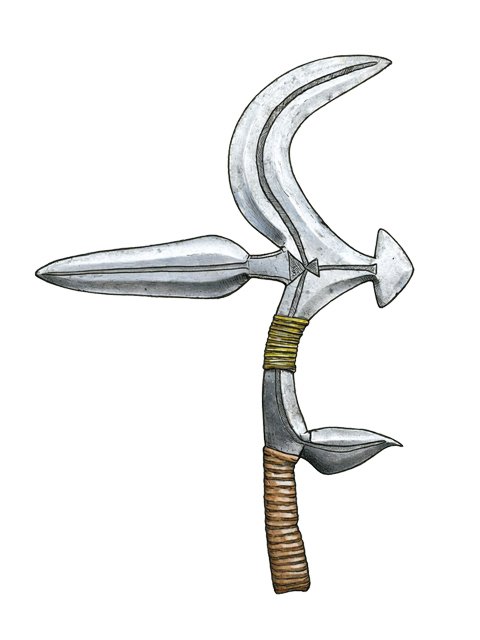
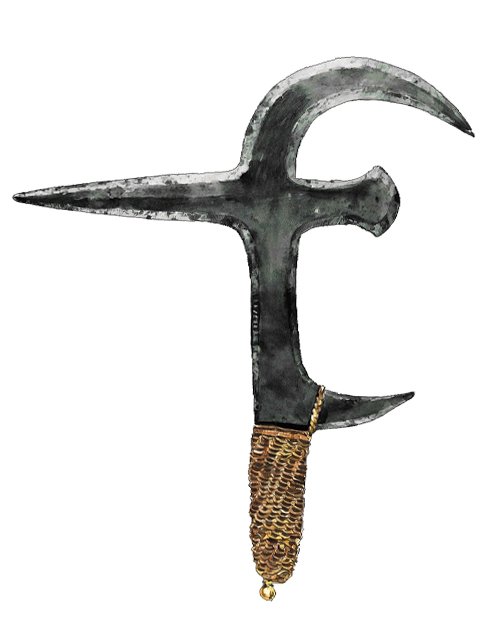
hourglass, and arrowhead patterns. It is called za. Their other
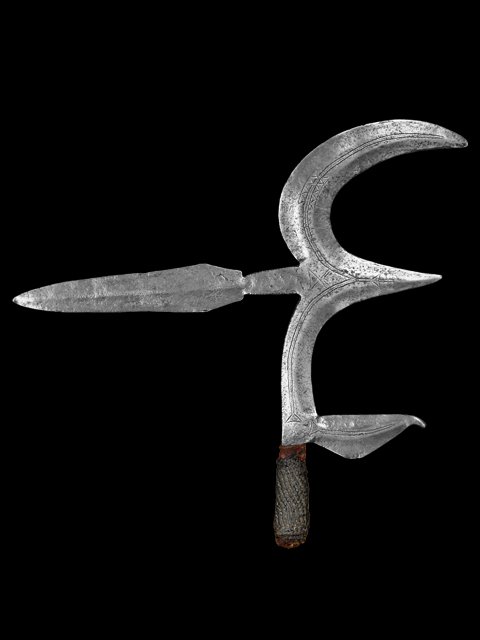
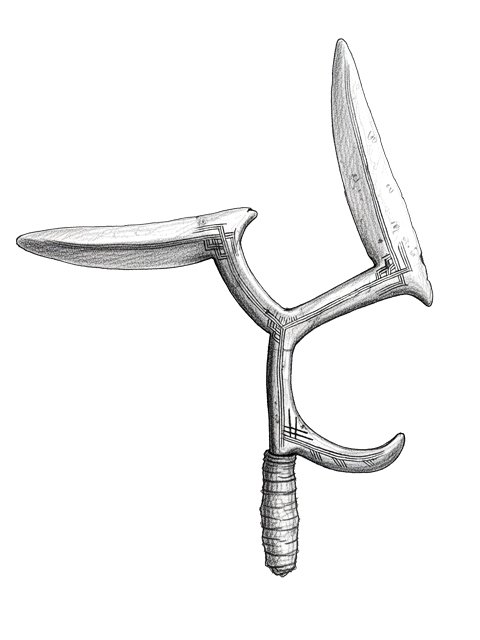
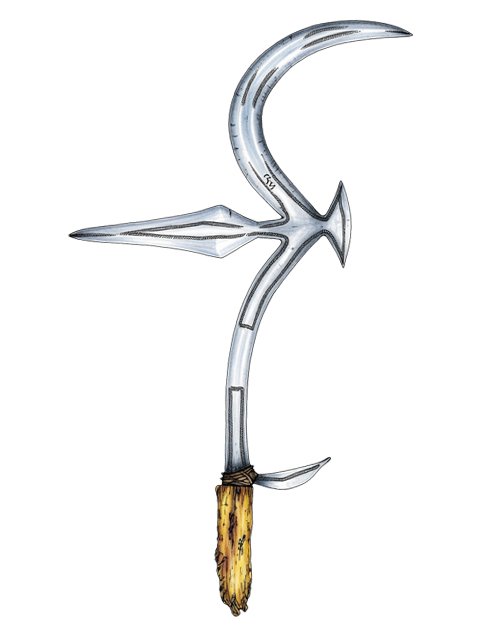
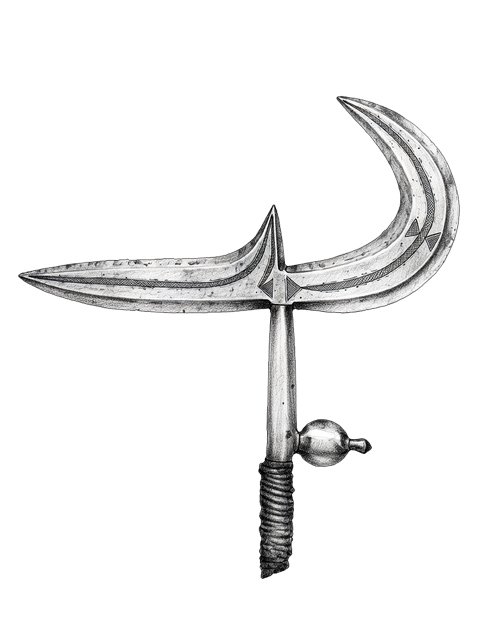
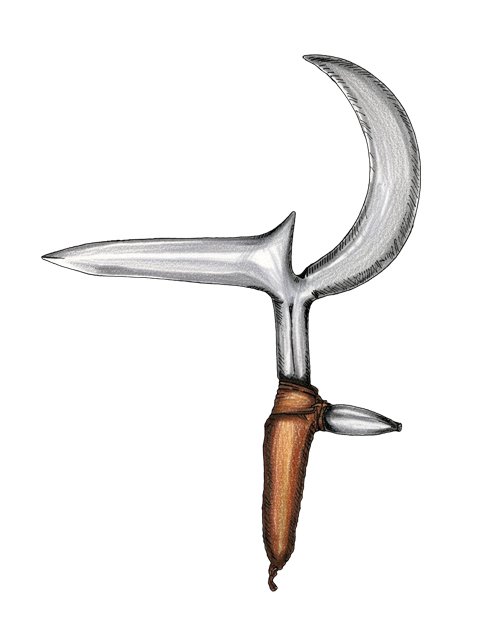
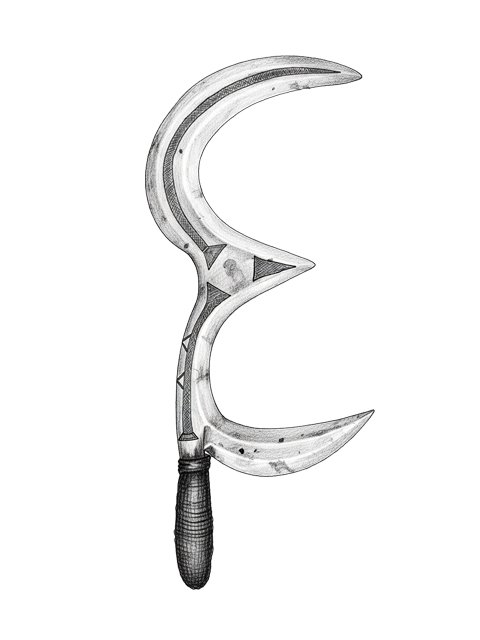
model looks more like an E that sometimes has a conical tip on
the back; it is called za-sali (a « 2 in 1, » throwing knife + spear).
The za-sali was often used as a hand weapon and described as the
« husband » and za the « wife. » Their neighbors the Ngombe,
Mbanja, and Ngbandi, were known to manufacture and use
identical knives, but not always, which is why attribution is
sometimes difficult between blacksmiths and users.
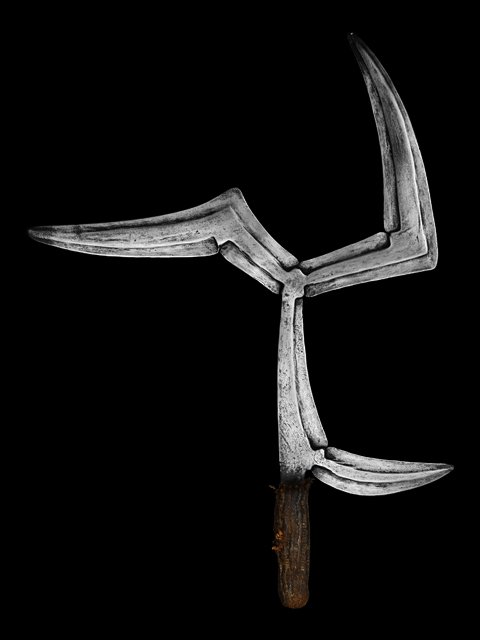
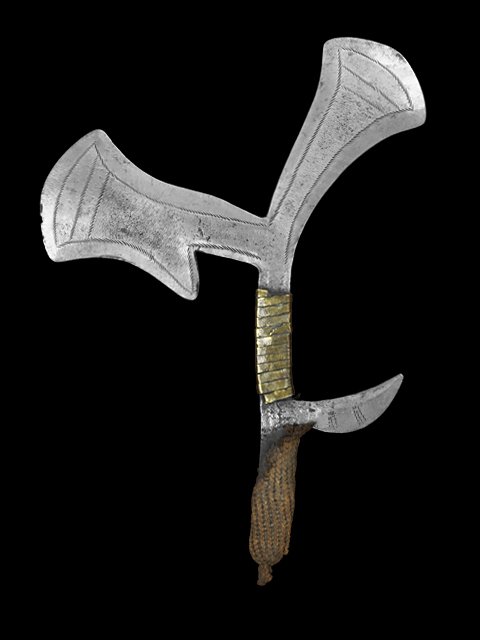
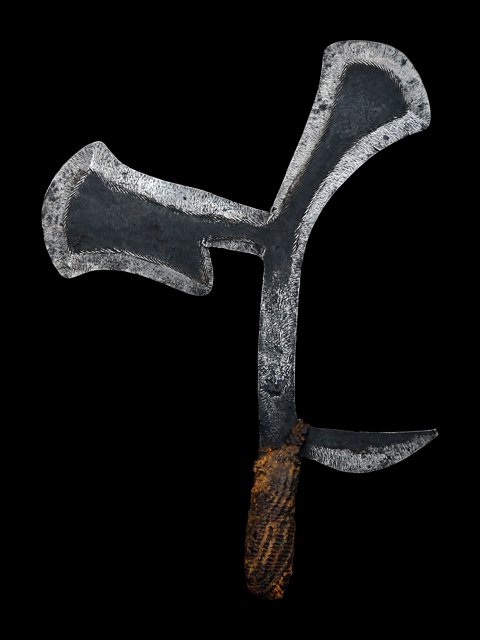
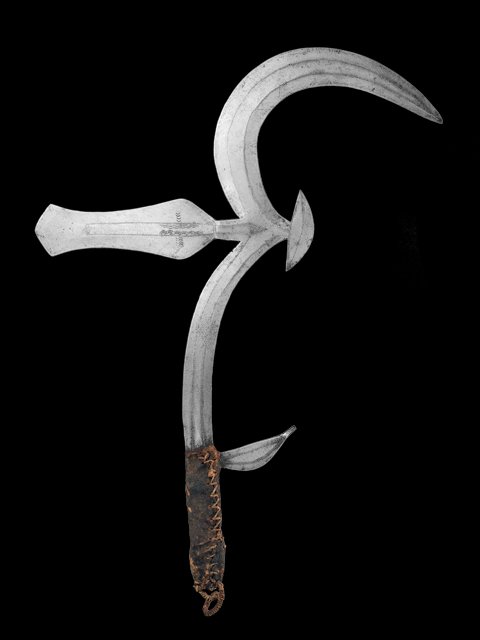
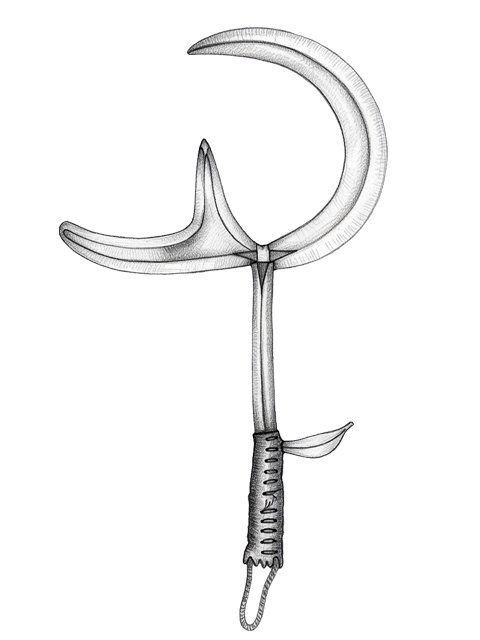
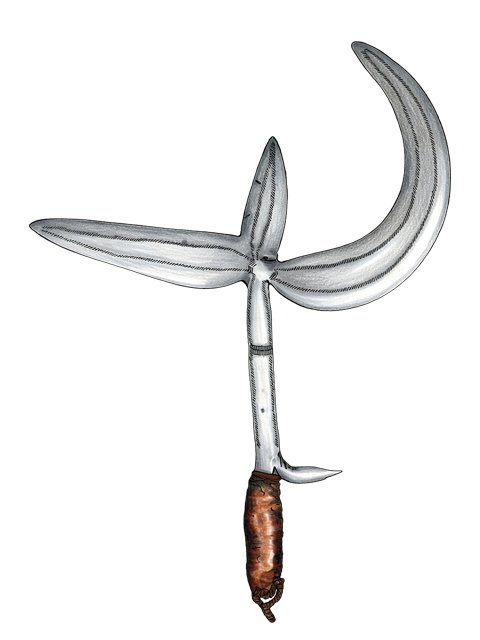
Some models are specific to the Ngombe. We distinguish two
periods: a pre-colonial one which ends in 1920, during which
the models used were identical to those of the Gbaya-Ngbaka,
and another going from 1920 to 1950. In the later period,
the knives become larger and finer, the engravings become more
superficial, and some examples have extravagant forms. Note
that these Ngombe knives are generally engraved on both sides.
They are prestige emblems, even currencies.
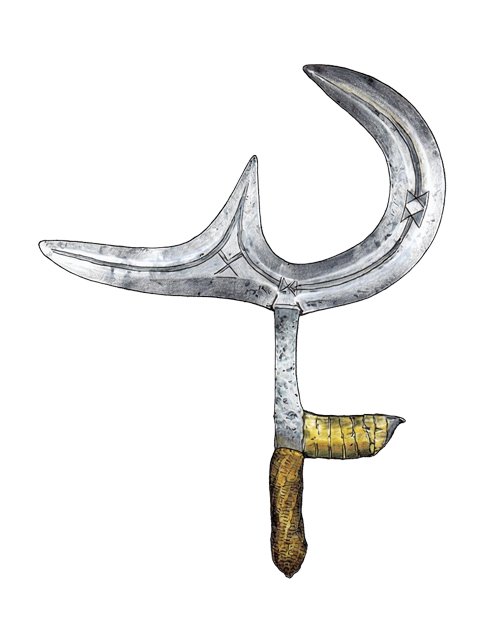
The sizes range from 28 to 50cm and the weights vary up to
700g. Their grips and stems can be covered with natural
braided fibers, snake or lizard skin, leather, brass, or iron and
copper bands.
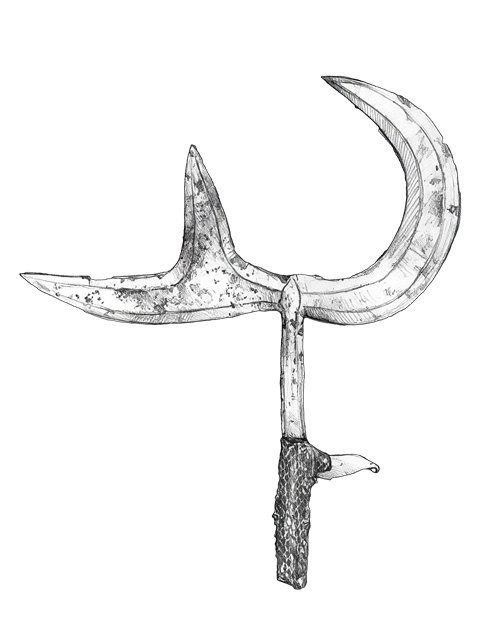
The Banda-Mono and Nzombo also forged distinct knives.
The ngunda (za of the Ngombe) is described as having been used
to replace the ngwolo (ngulu) in the ligbeti ceremony, during
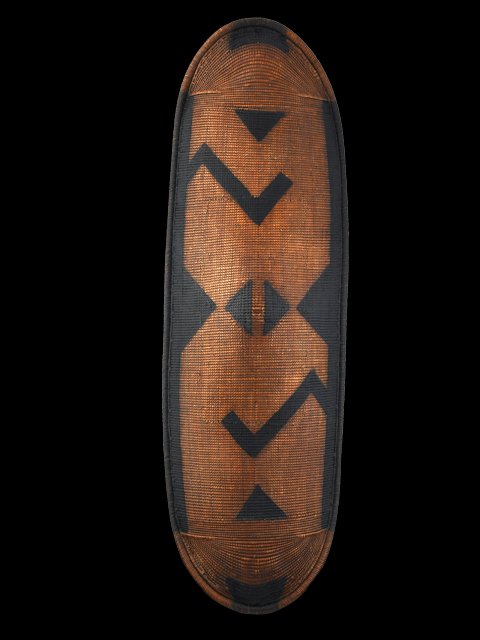
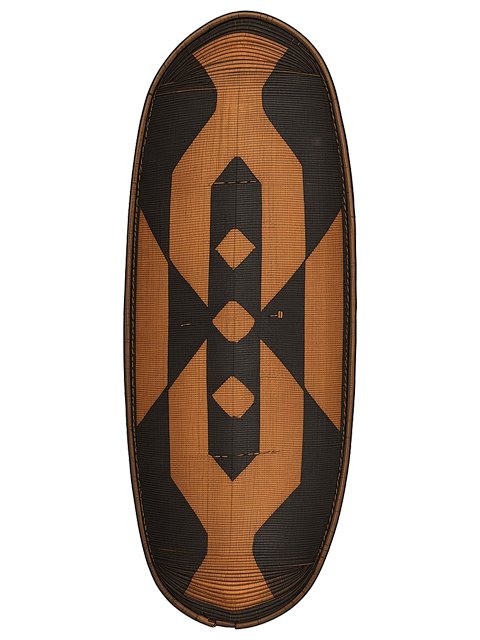
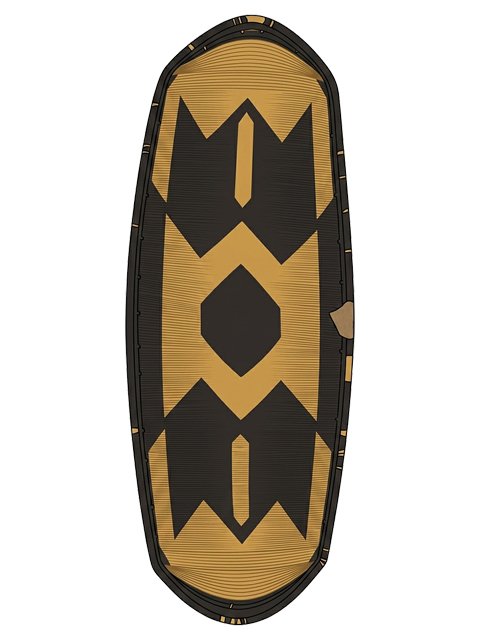
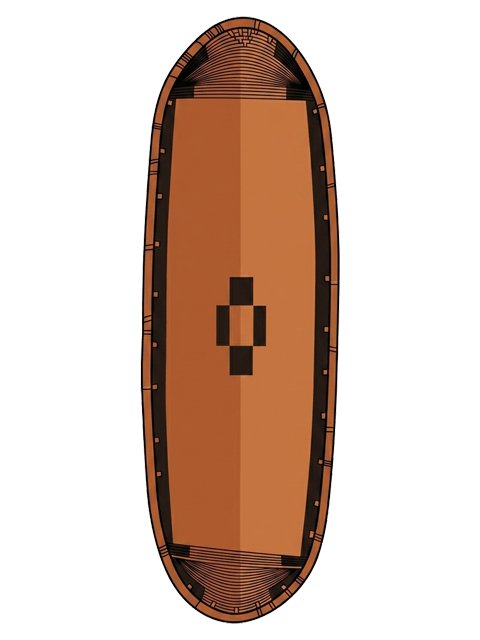
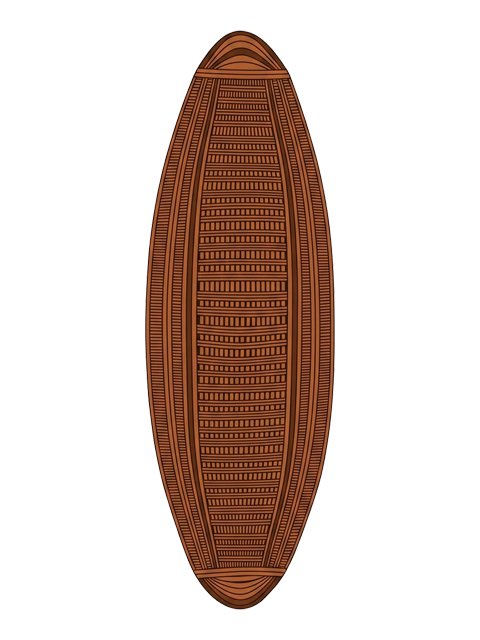
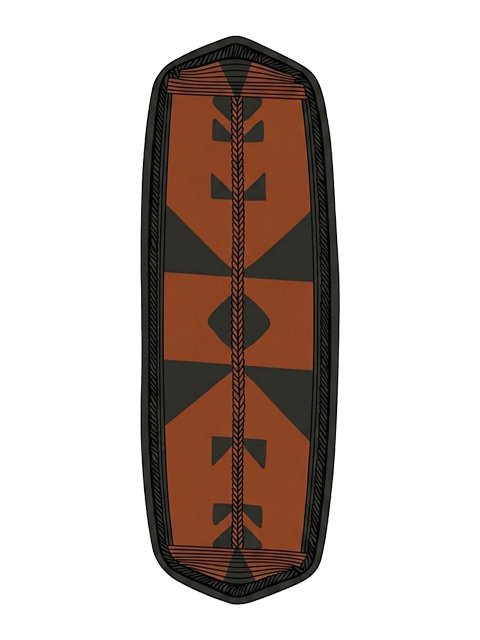
which slaves were executed by decapitation. Basketry shields,
spears, javelins, poisoned bows and arrows, curved knives,
and swords complete the armament of these tribes.