These peoples occupy a very large region that extends from
southern Cameroon through Republic of Congo and Gabon.
The knives of this province are divided into two groups: one in
the north, around the Sangha River and the other in the south,
around the Ogowe River.
It is a geographical area covered by forests interspersed with
savannas, with highlands in the south.
The Sangha Region
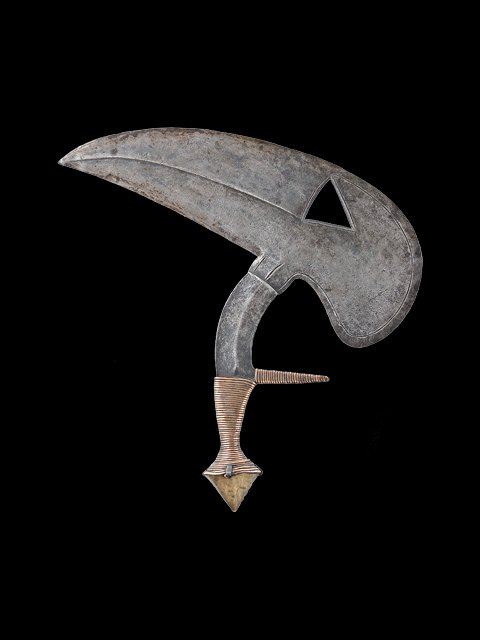
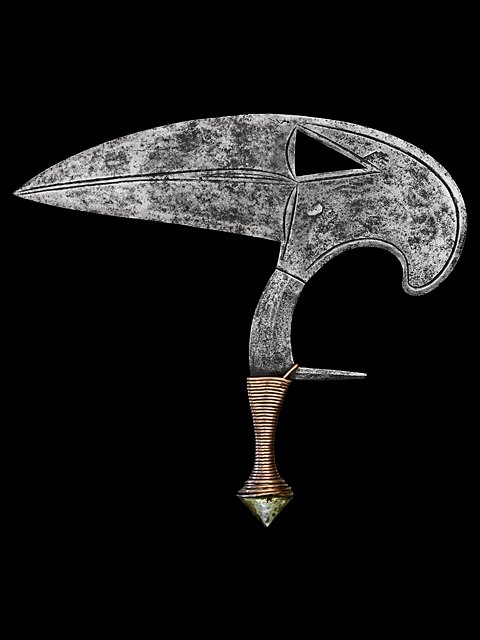
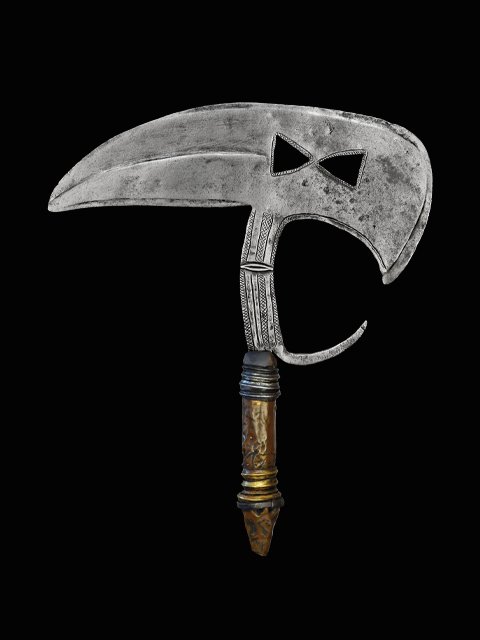
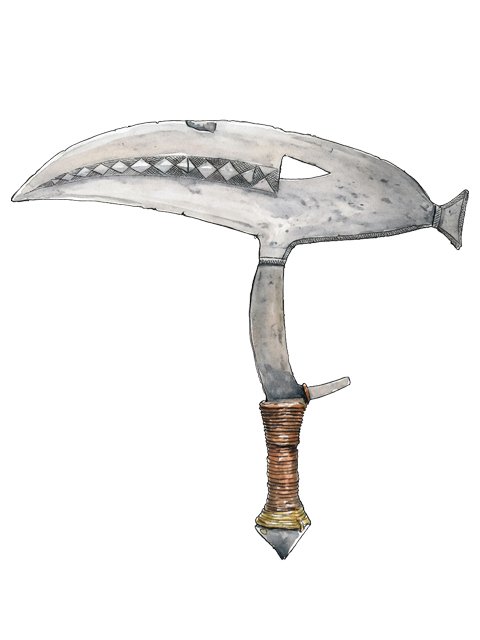
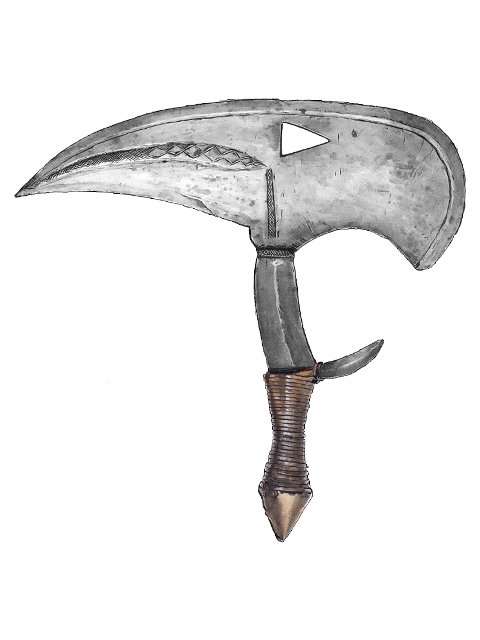
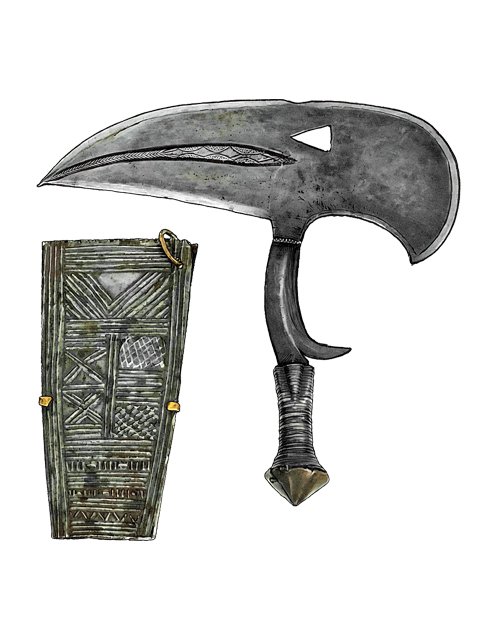
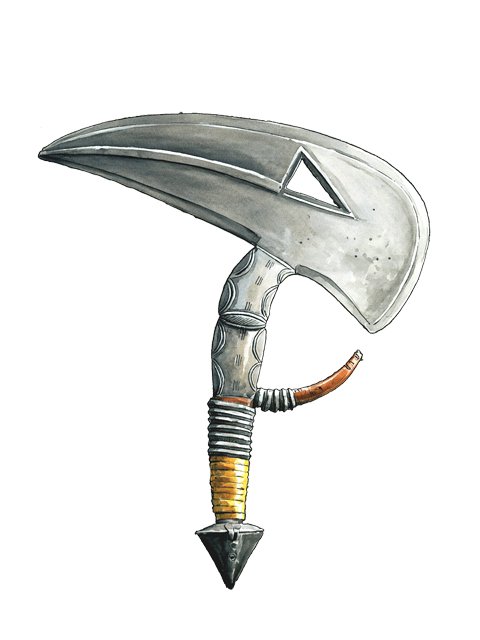
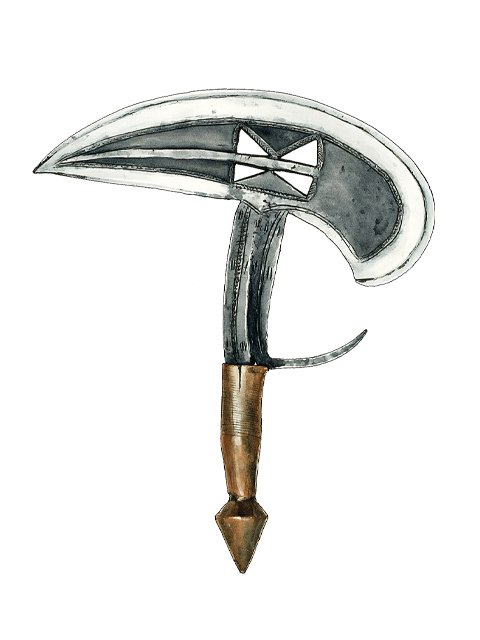
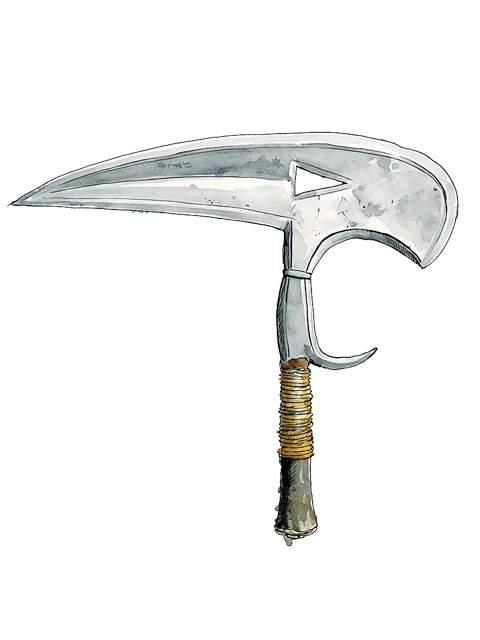
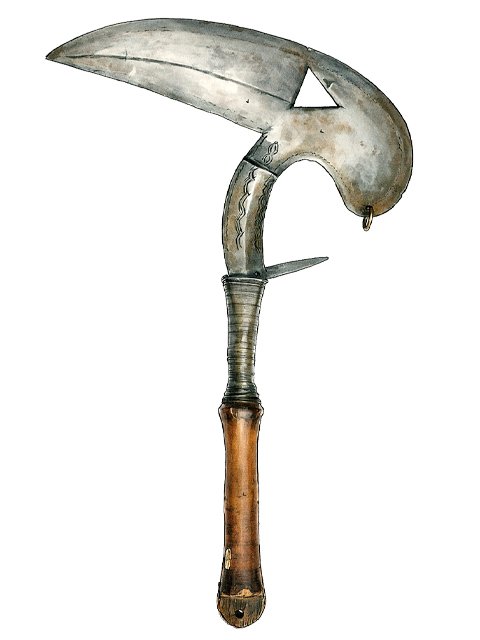
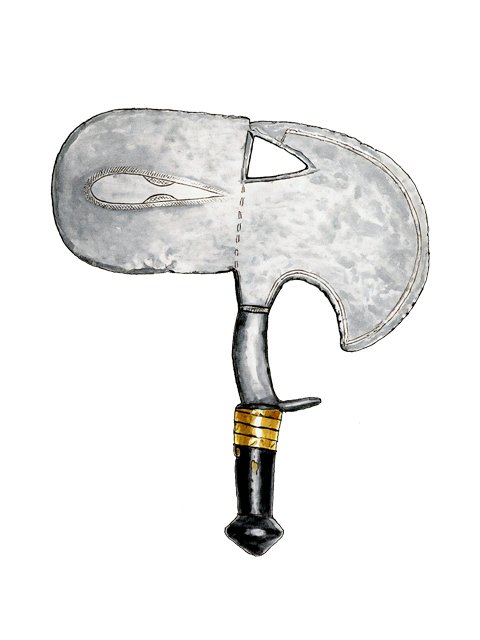
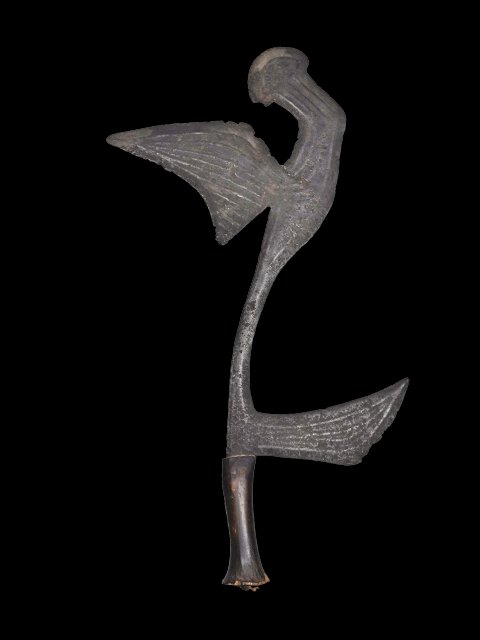
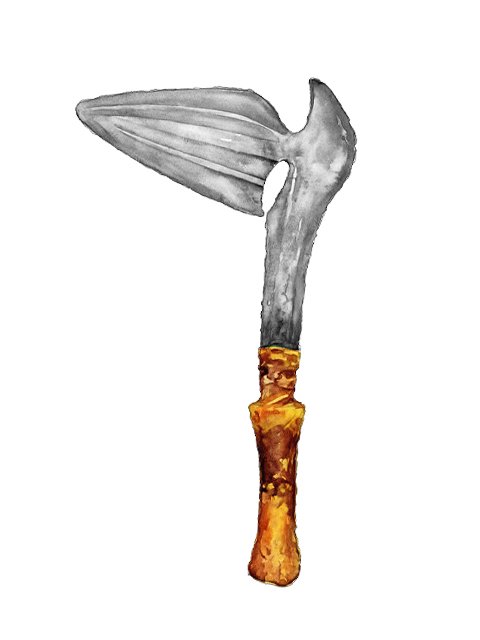
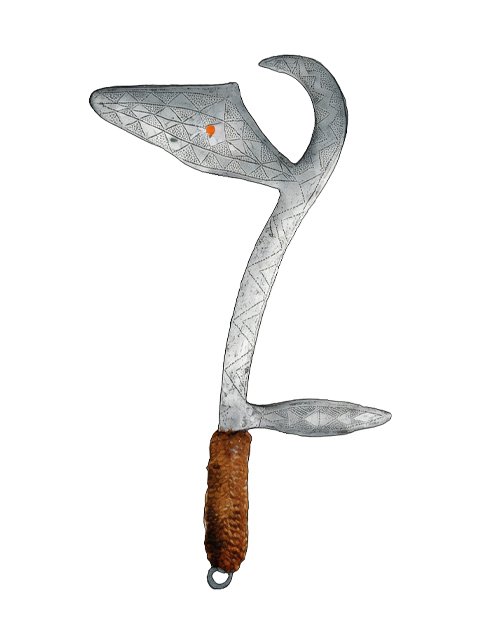
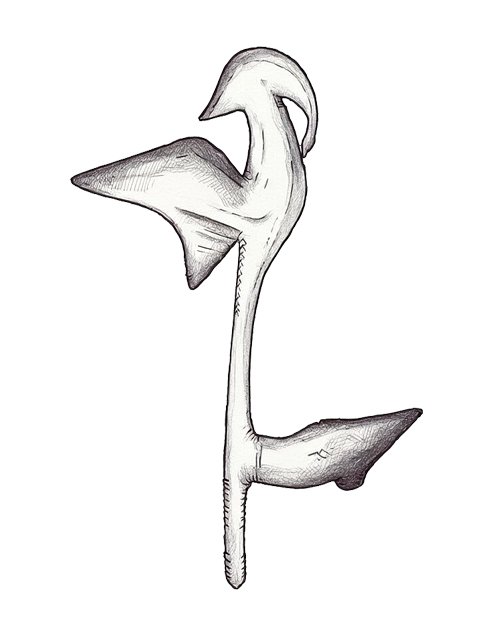
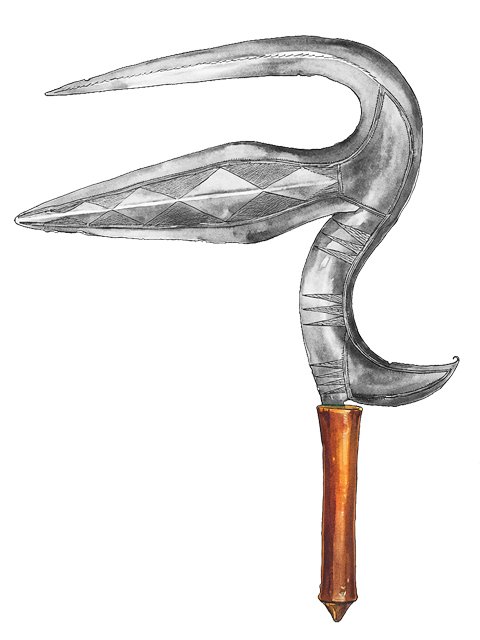
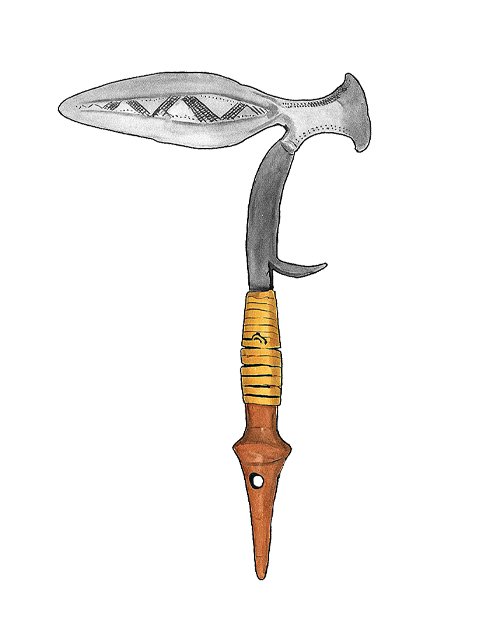
I have included a knife from this region. Its shape is complex
and it can be compared to that of a bird, just like many of
the knives from this region, which are often compared to birds or
the beaks of birds (hornbill). Unfortunately, I have no precise
information on the tribal origin of this knife. A closely related
knife is kept at the National Museum of Denmark
in Copenhagen. It was brought back in 1775, making it probably
one of the oldest throwing knife known.
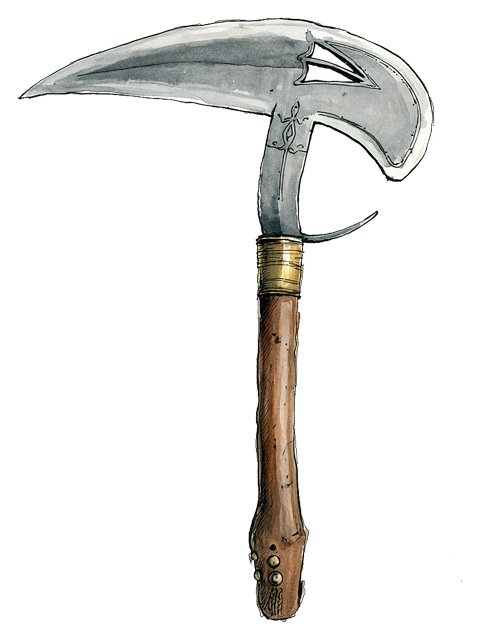
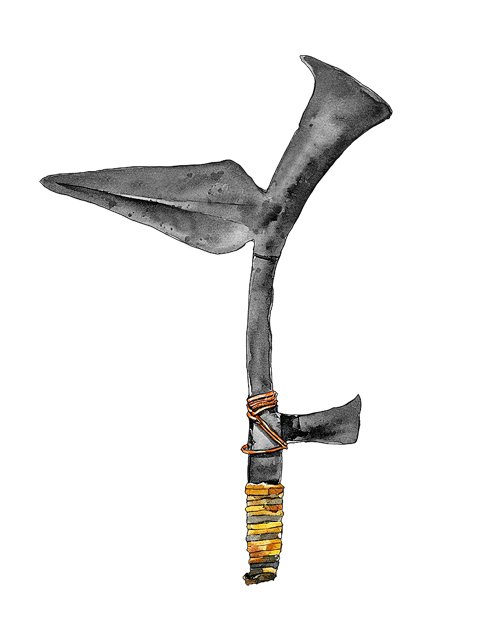
The forms encountered in this region oscillate between the Y and
the Z, yet some are not very far from the F and constitute the last
transitional models between the knives of « North » and those of
the « South. » The key model from this region comes from
the Bumali and might represent the original design of Ogowe
knives. The size varies from 40 to 50cm for the largest and from
20 to 30cm for the smallest; the weight ranges from 200 to 300g.
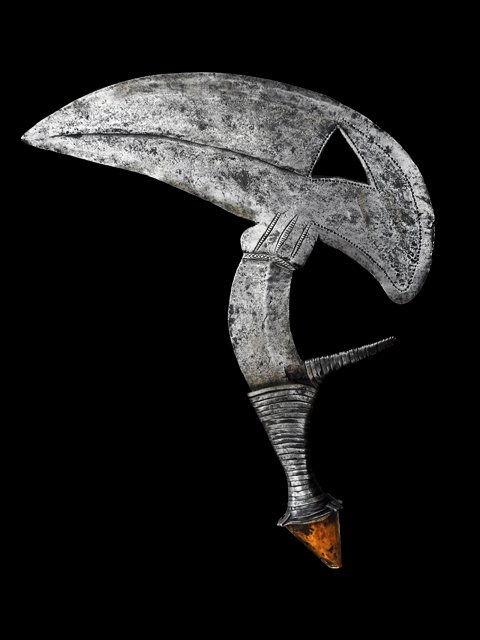
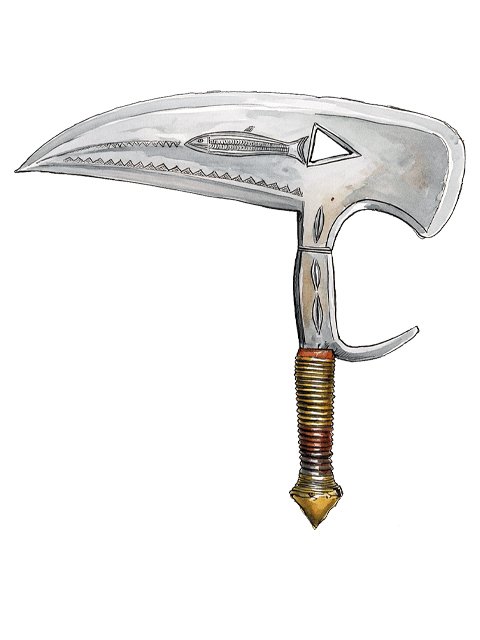
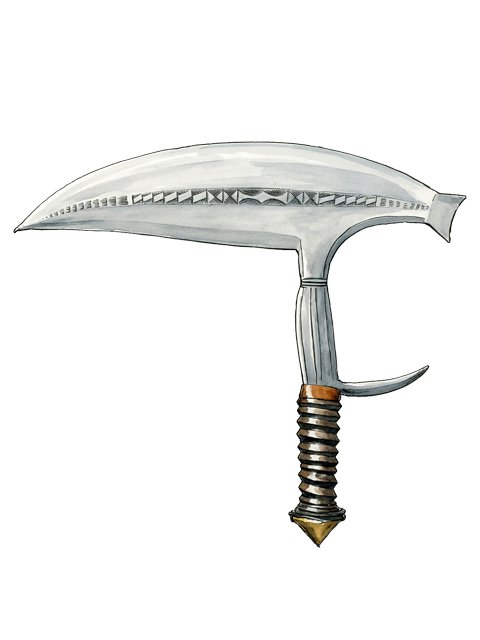
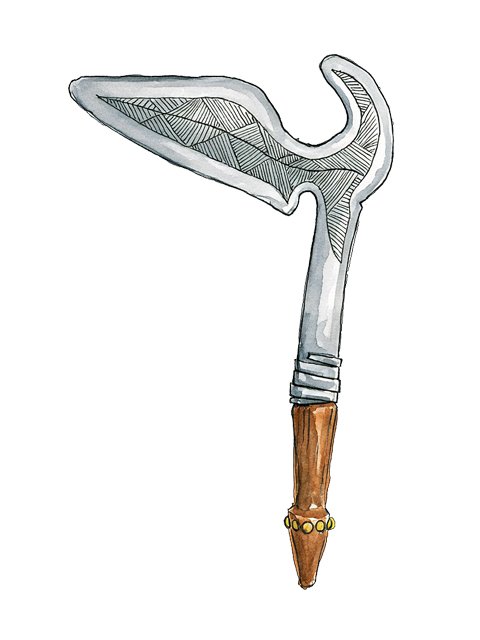
Sometimes the blades are decorated with engravings (chevrons,
linear patterns).
A small number of them were probably designed to be thrown,
and over time, wooden handles replaced fiber ones.
Their primary use was probably ceremonial. This region is
populated by the Ngumba, So, Makaa, Djem, Konabem, Mpyemo,
Bumali, Fang from Cameroon, and Kele. These tribes are closely
related and intertwined.
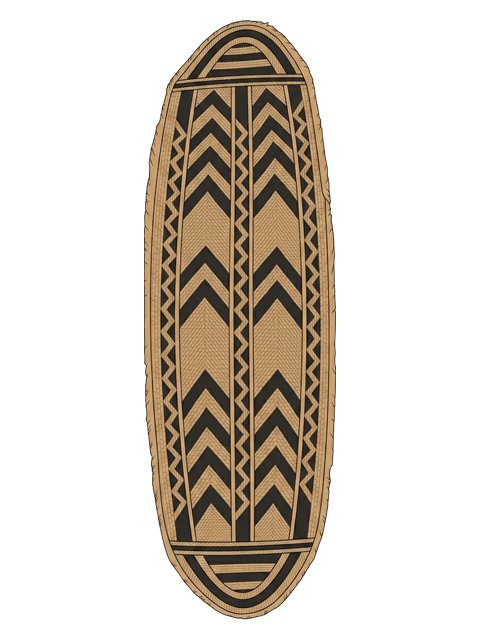
The armament of these ethnic groups is strongly influenced by
the Fang who used javelins, spears, swords (fa), daggers and
axes, as well as leather and basketry shields.
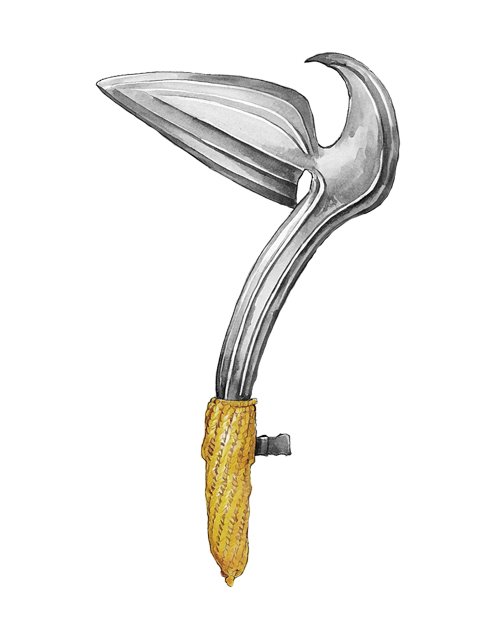
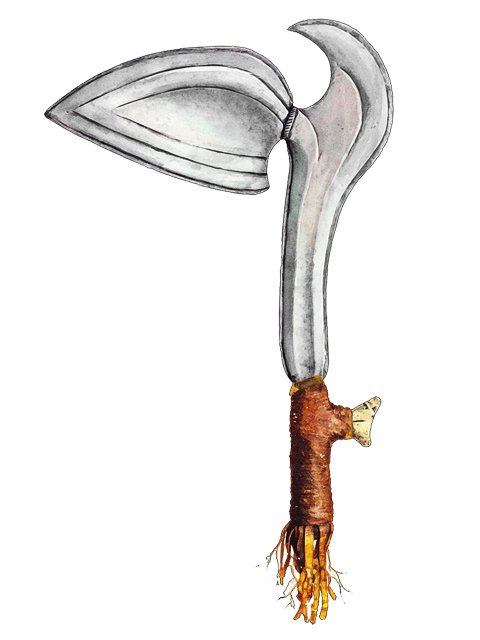
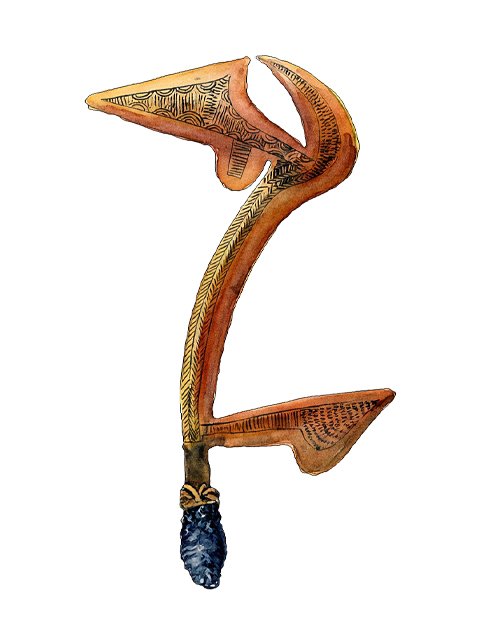
The Ogowe region
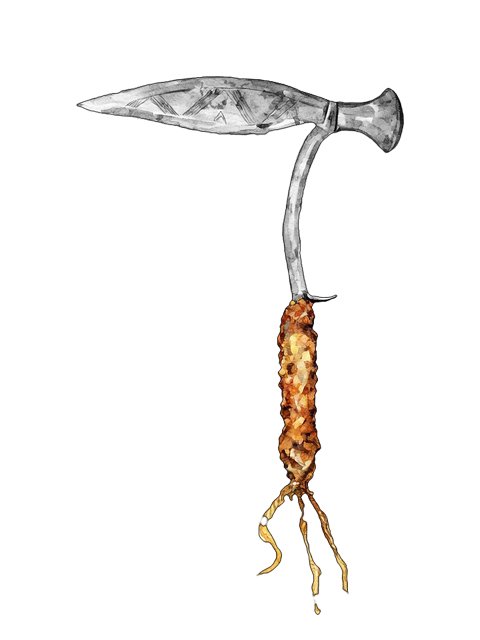
This region is dominated by the Fang (Betsi, Ntumu, Mvai,
Zamane, and Makea). But the knives were made and used by
the Kota populations: Kota, Chaké, Mahongwe, and the other
(non-Kota) ethnic groups: Nzabi, Wumbu, Mbamba, Ndumu,
Wandji-Duma, Ndasa, Sangu, Tsogho, Mpongwe, and Kele.
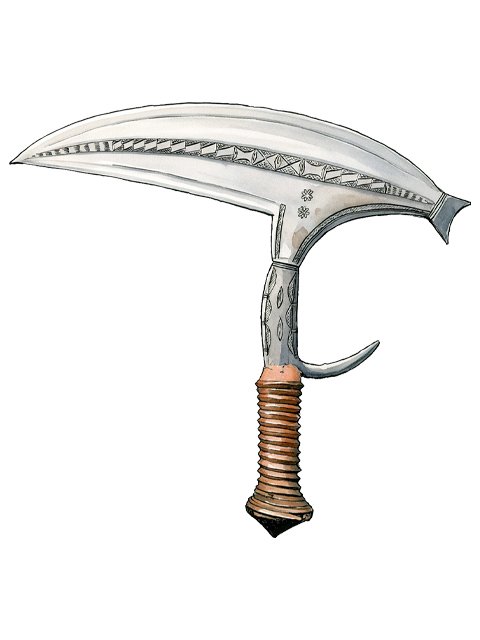
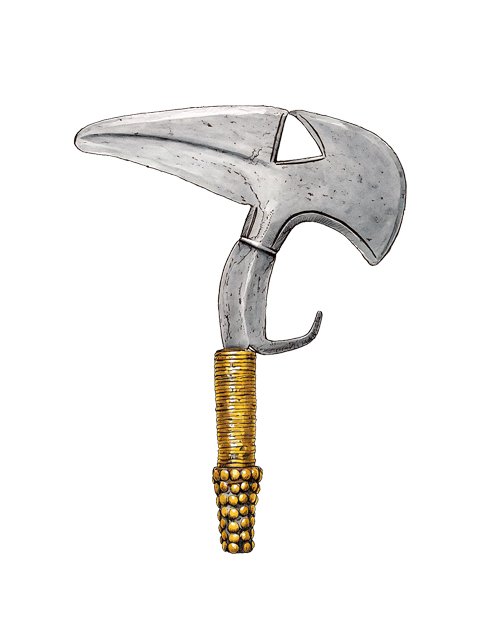
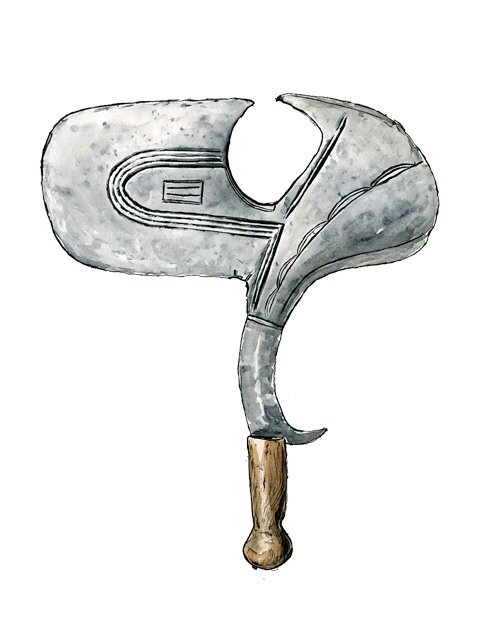
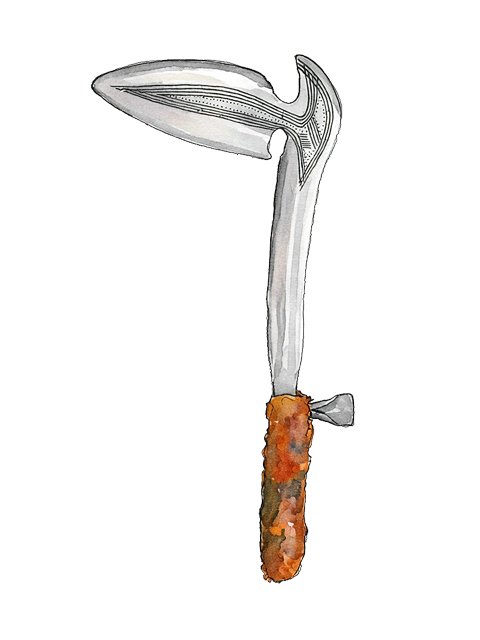
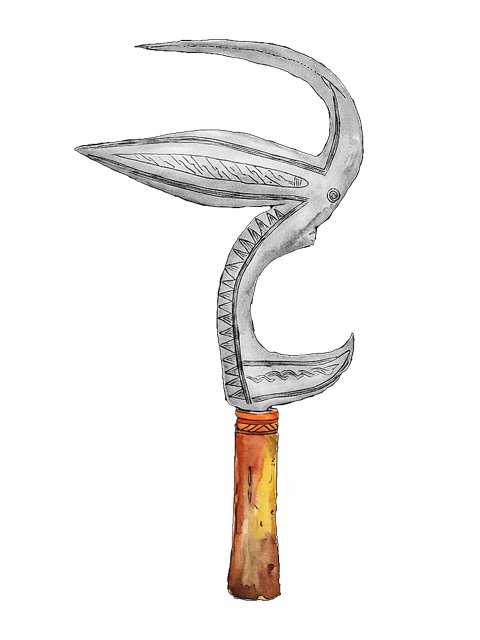
The southern Fang (Fang Zamane, Fang Chiwa) are known for
their particular model with a long handle, likely an adaptation of
a traditional Kota blade (with or without a spur).
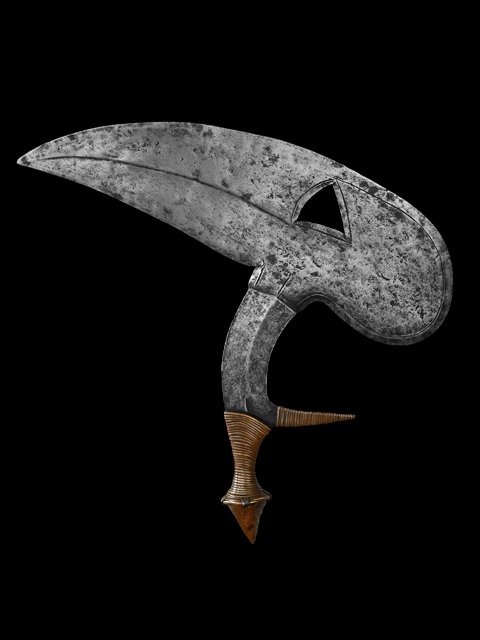
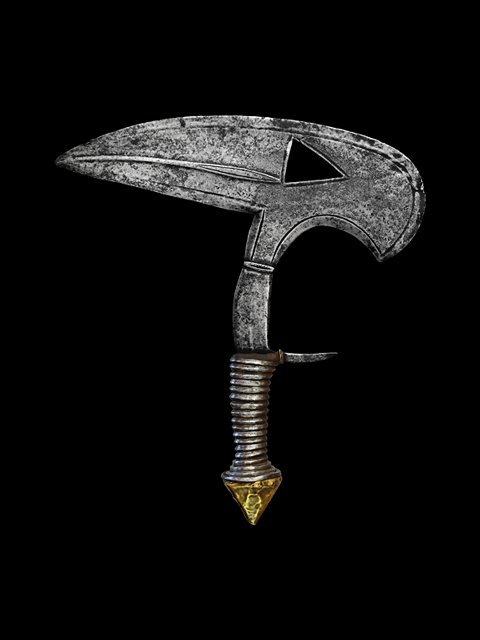
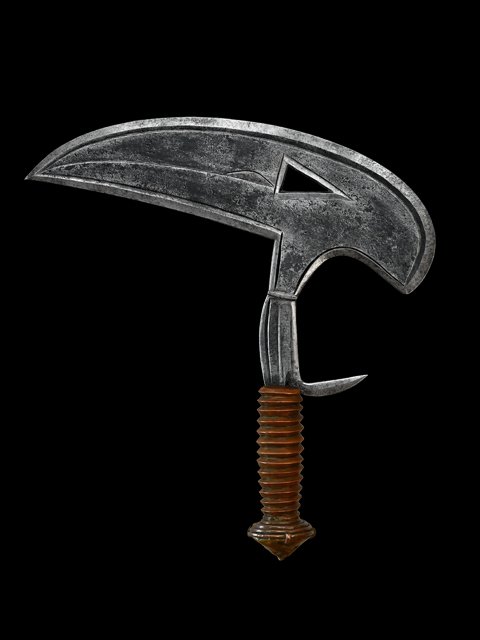
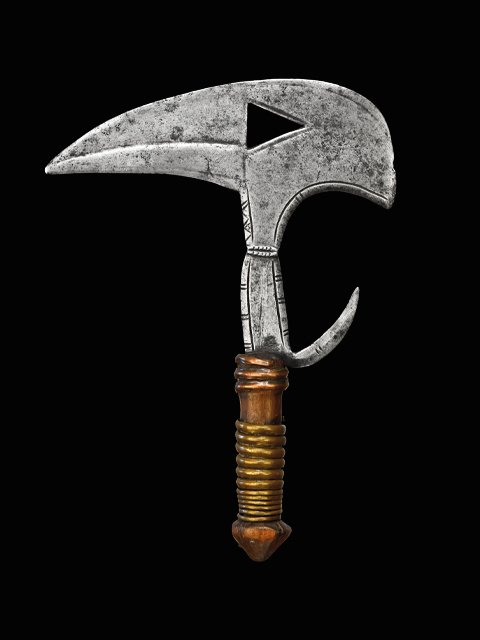
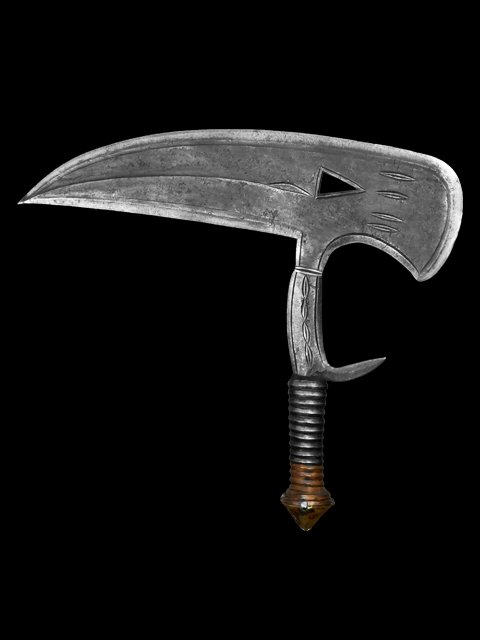
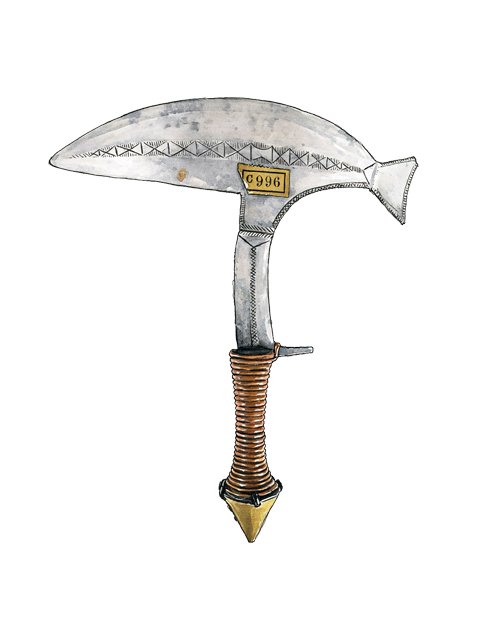
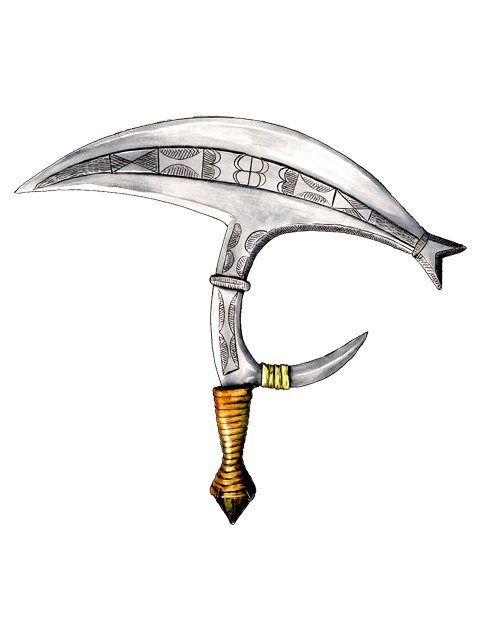
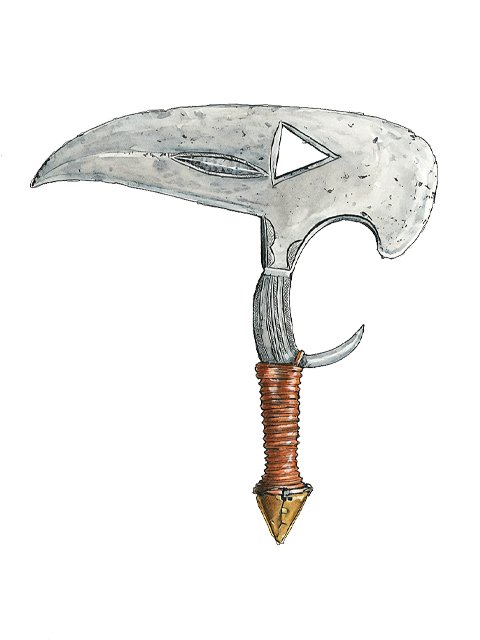
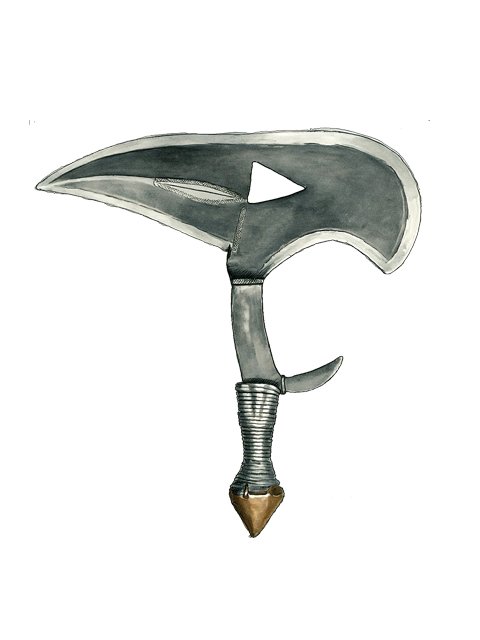
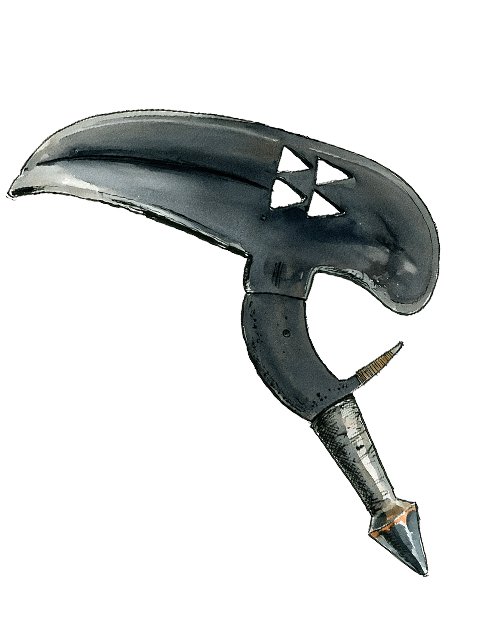
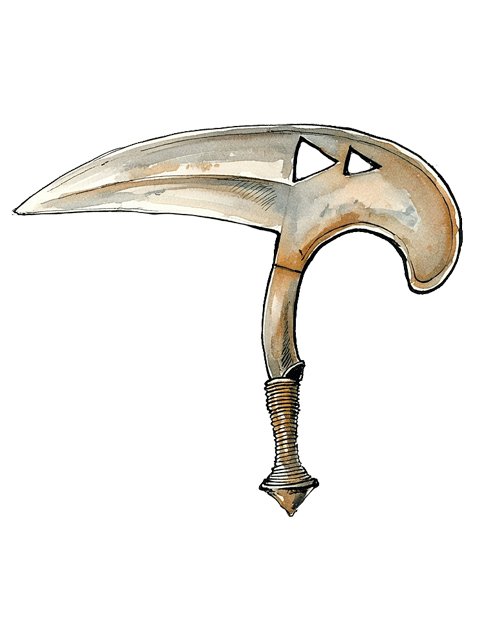
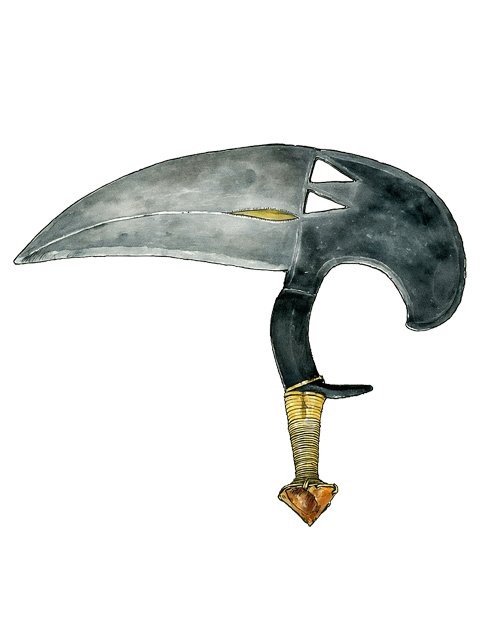
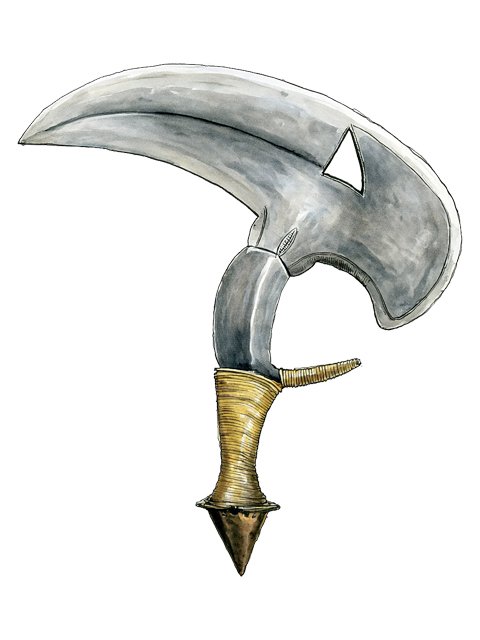
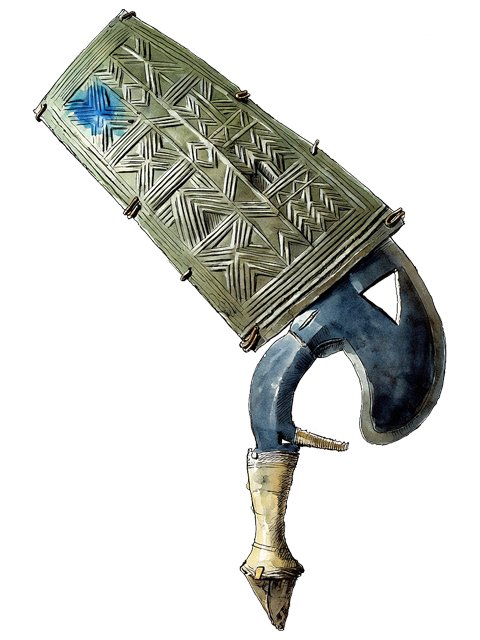
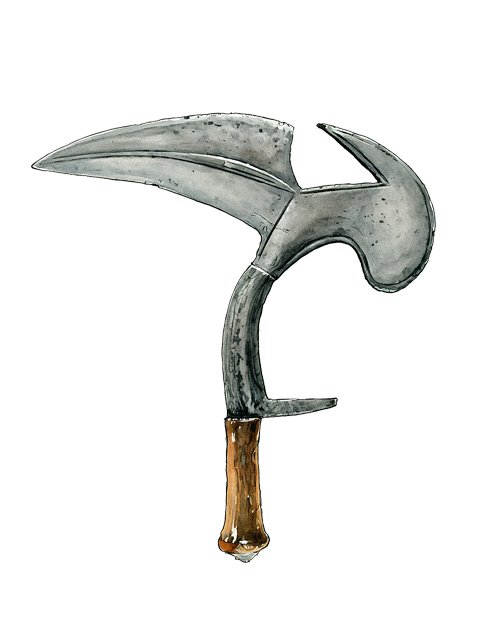
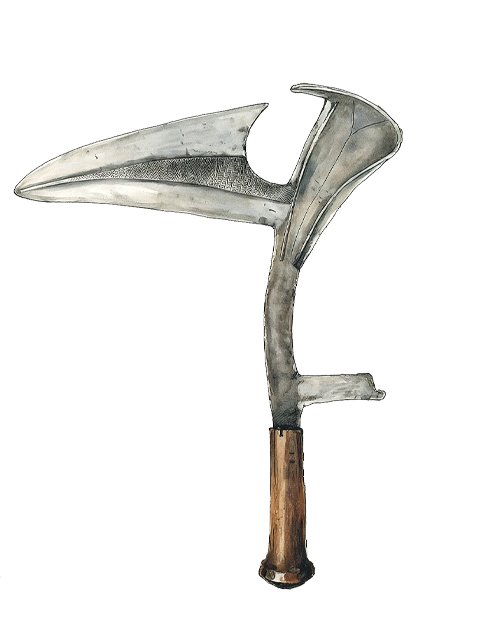
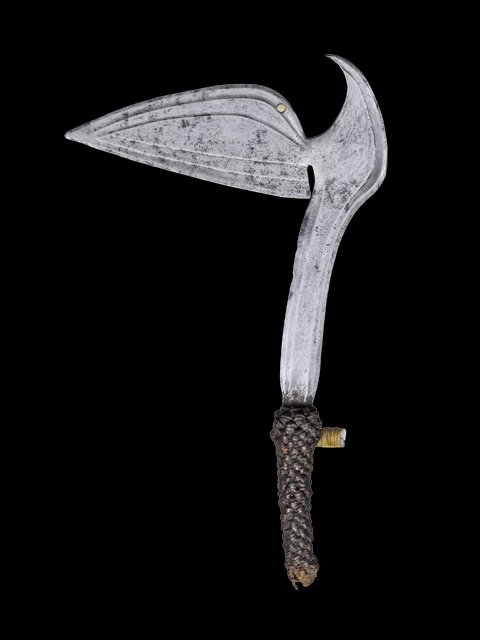
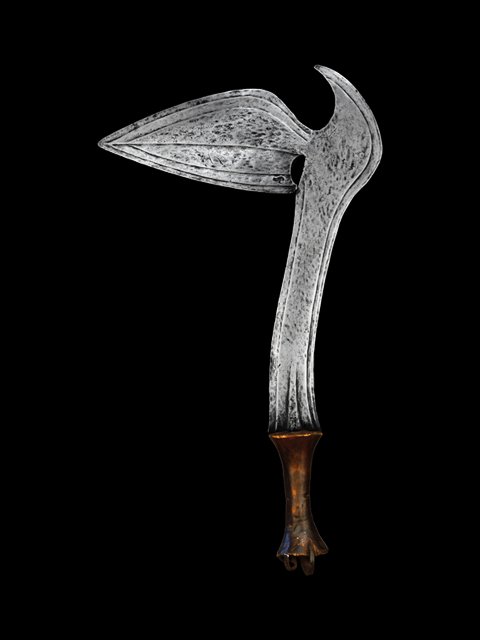
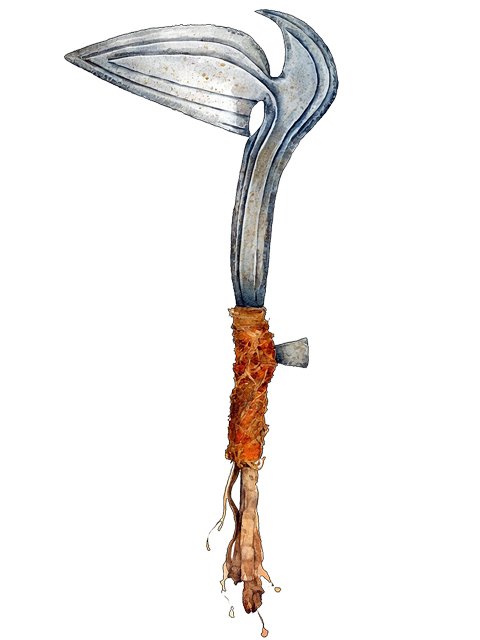
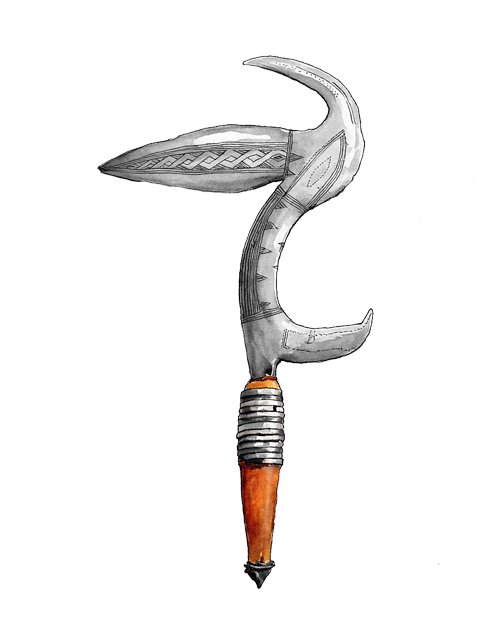
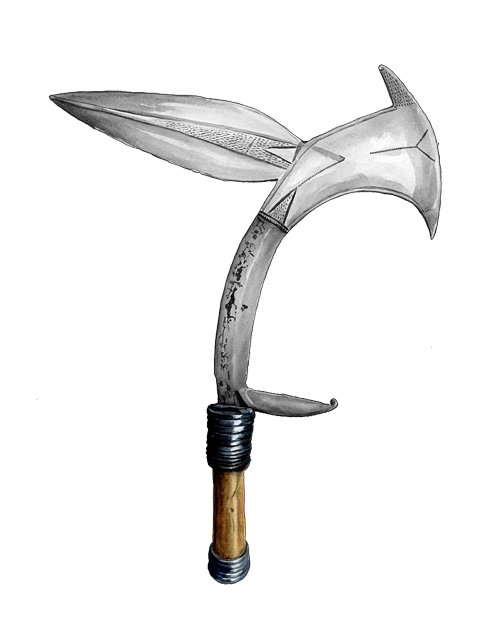
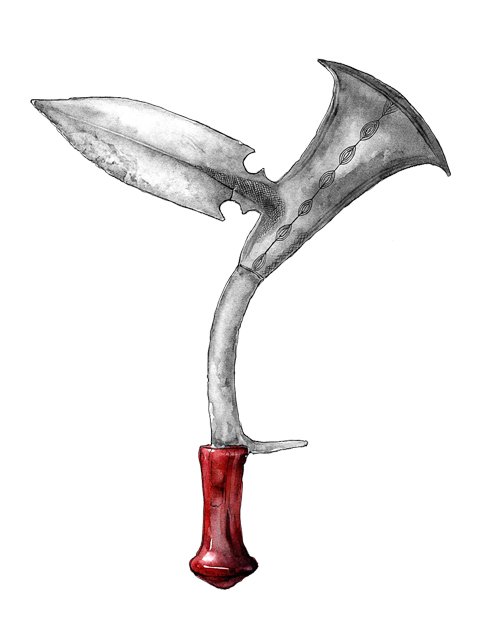
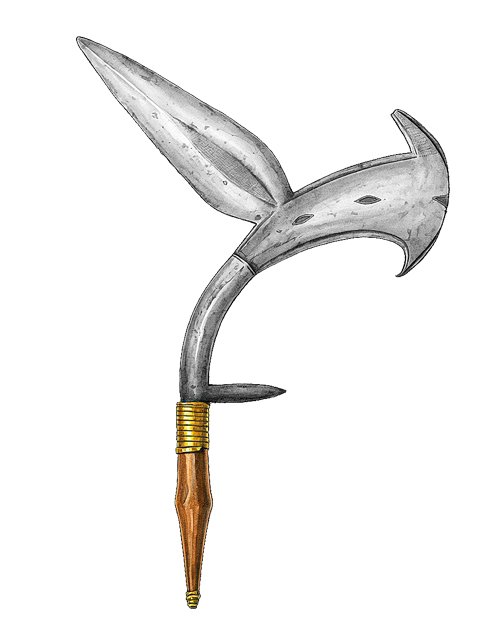
These “hornbill” knives have been widely distributed throughout
this area.
This is perhaps due to their attractive shape, which has also made
them very popular with collectors. These knives were not
weapons of war, but rather emblems of religious prestige and
symbols of the social authority of members of secret societies
dedicated to war and hunting. Their use was ceremonial or even
sacrificial. Divergent opinions also exist, including cannibalistic
practices and animal sacrifices. These knives were not intended
to be thrown; however, they share certain characteristics with
throwing knives and it seems appropriate, for a better
understanding of the subject, to include them in this monograph.
They are 20 to 35cm high and 20 to 40cm wide and weigh from
300 to 400g.
These knives are called musera, ebasa, and nsili, but are most
often referred to as osélé, onzil, and musélé (the term used
varies based on which ethnic group used them).
Louis Perrois, in his study on Bakota circumcision (1985),
describes a dance featuring an initiate and his knife: « In a circle
formed by men, the monster Mungunda (who has not yet put on
his mask) holds a musélé knife, in the shape of a hornbill head,
very pointed and sharp with two cutting edges, which seems very
dangerous. The man who represents Mungunda is on all fours
and he brandishes the musélé threateningly, while snorting like a
wild pig. The Mungala initiates will measure themselves in turn
with the monster by jumping over him while dancing, while
Mungunda tries to hurt anyone who dares to provoke him. If, due
to clumsiness, an initiate is injured, we treat him immediately…
In the past, more serious accidents happened… and we had to
hide this from the [uninitiated] laymen by staging the accident
as a normal death in the forest… »