This province is vast and extends from the east of Lake Chad
to the northern border of Chad (even encroaching slightly into
Niger) and east to the border of Sudan. The Saharan populations
occupying this area are numerous: Maba, Tama, Mimi, and Dadjo;
the Tubu-Daza are the most predominant. The Tubu occupy
the north of this region and the Daza the south. The Tubu
of Tibesti are also called Teda. The term Beri includes
the Zaghawa and Baele from this province, as well as the Kanuri
and Kanembu, who were studied in stylistic province 1.
The Maba and Masalit (a Maba group) occupy the former
Sultanate of Wadaï. The Tama, Sungor, Mararit, and Kibet make
up the Tama group. The Dadjo occupy the southeast of
this province. The north of this province is desert and rugged,
extending to the mountains of Tibesti in northern Chad;
the center and the eastern parts are semi-desert, and
the southwest is covered with a swampy savannah.
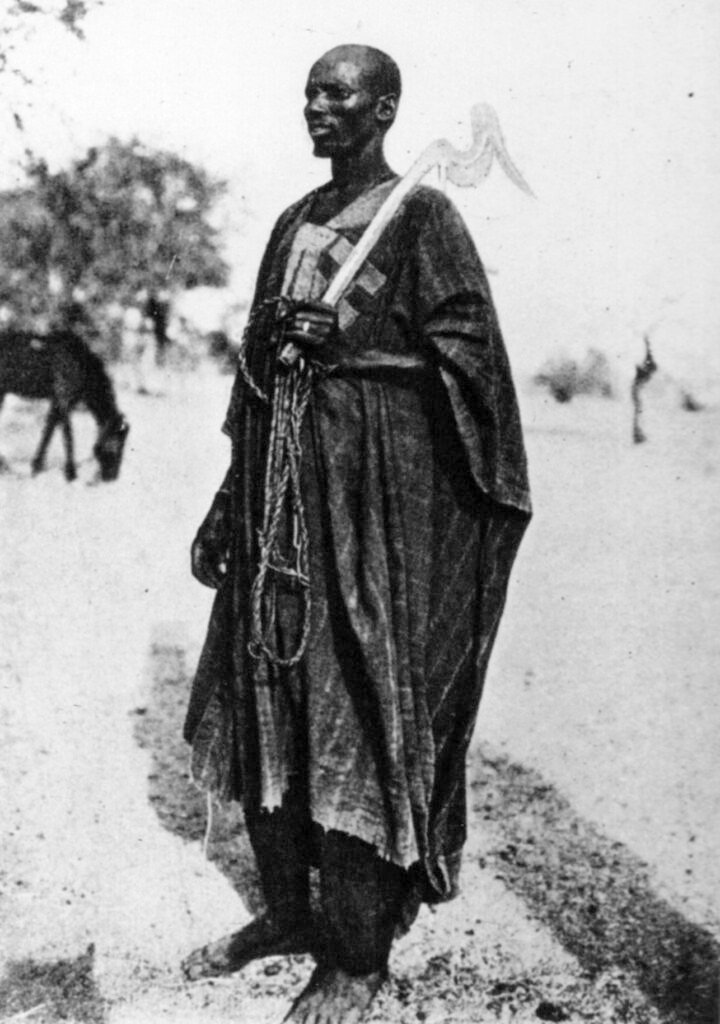
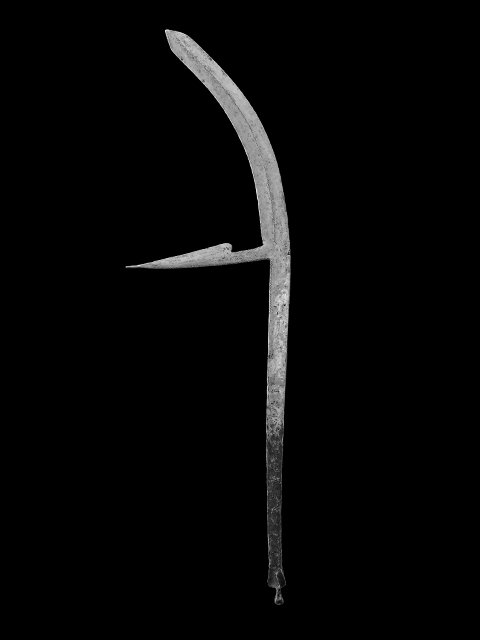
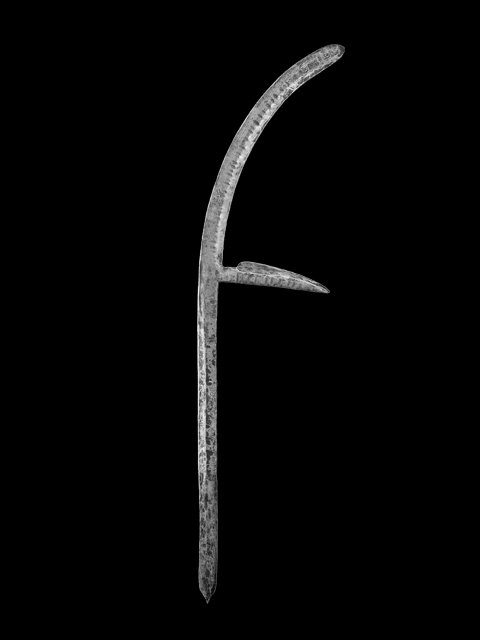
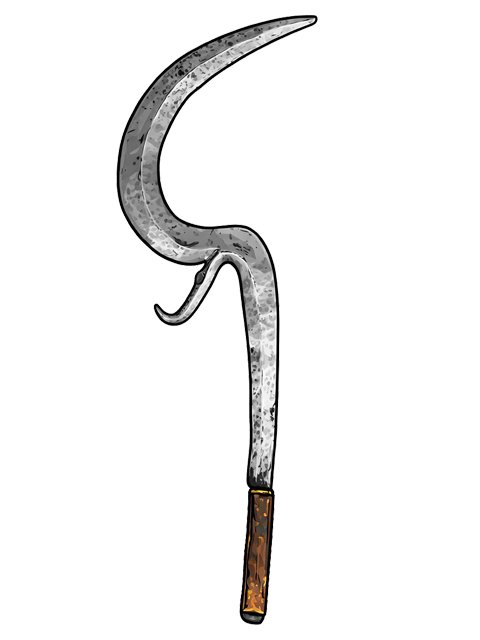
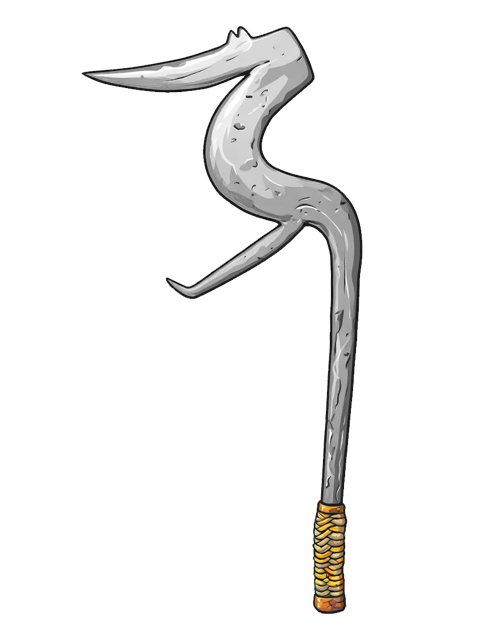
It is important to recall that throwing knives were forged by
the haddad for all of these nomadic pastoralist populations.
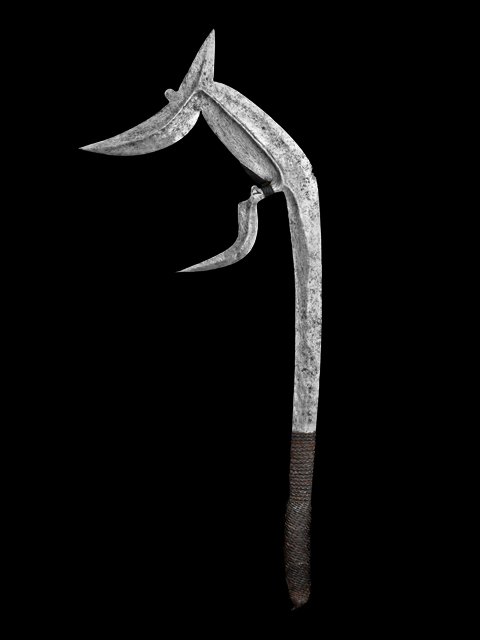
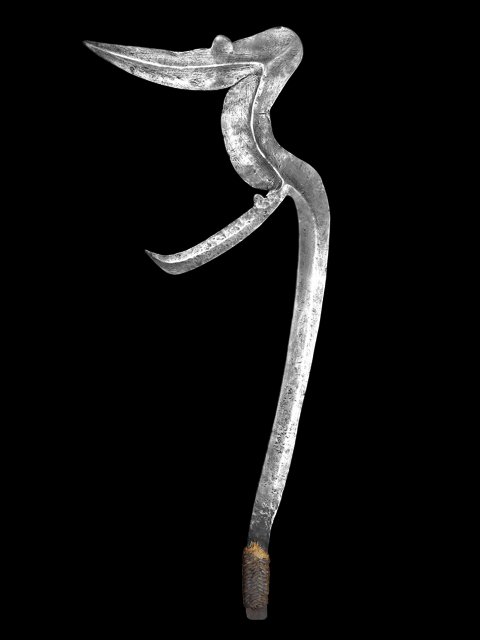
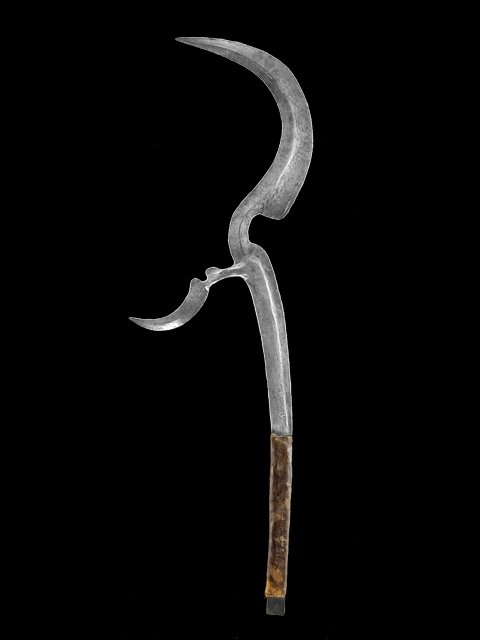
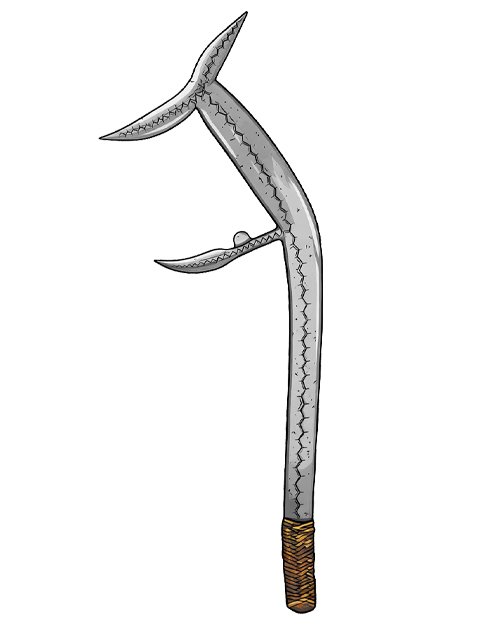
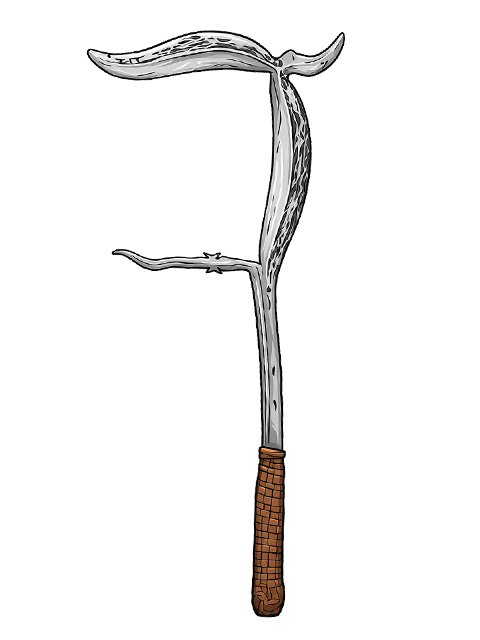
The main characteristic of these knives is this ridge on the top
of the upper branch of the stem, found on both the front and
the back sides, but sometimes less pronounced on the back.
The professional workmanship gives a very characteristic
relief to the blade and the transverse branch (which is generally
welded and sharply angled), which gives this type of throwing
knife a modern and naturalistic design that evokes a bird’s head.
Crisscross engravings are sometimes present. The handle consists
of woven leather straps, simple or sophisticated, and sometimes
dyed. The size varies from 60 to 70 cm, the thickness can reach
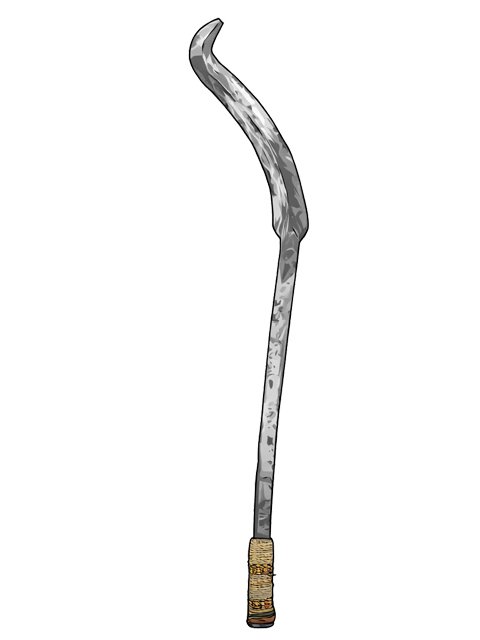
7 mm, and the weight is 600 to 700 g. The more classical models
have the same characteristics as those of the first province
studied. The main armament consists of javelins, daggers, swords,
and throwing knives used as hand weapons but also thrown
horizontally; their weight and their sharp points gave them
a formidable efficiency in reaching the legs of opponents…
They were also used for hunting and dancing. Representations
of these knives have been discovered in cave drawings from
Tibesti and Ennedi, attesting to their early use. Their shape
has sometimes been used to brand camels with a hot iron.