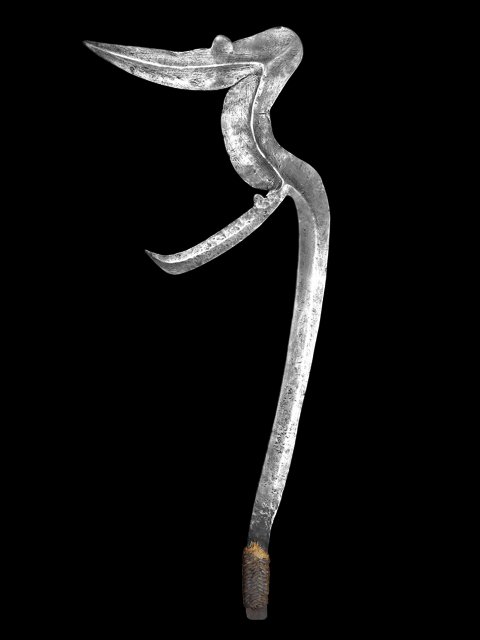
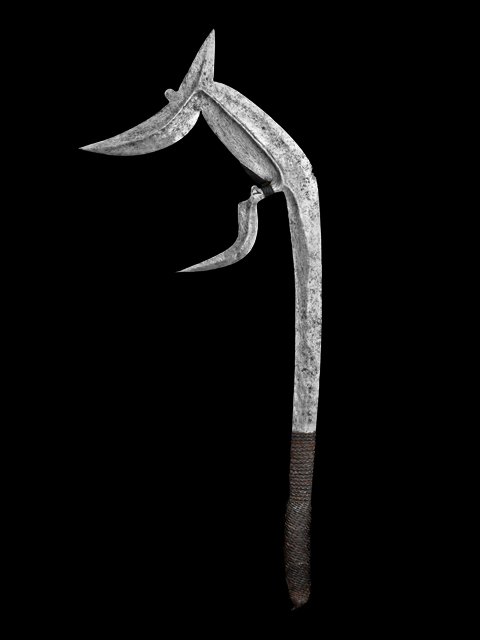
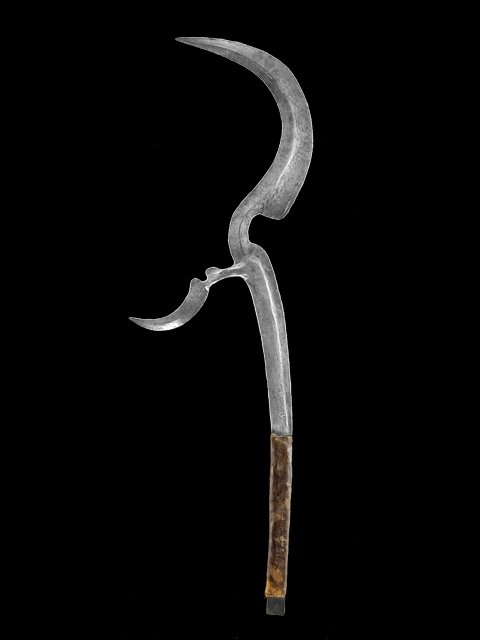
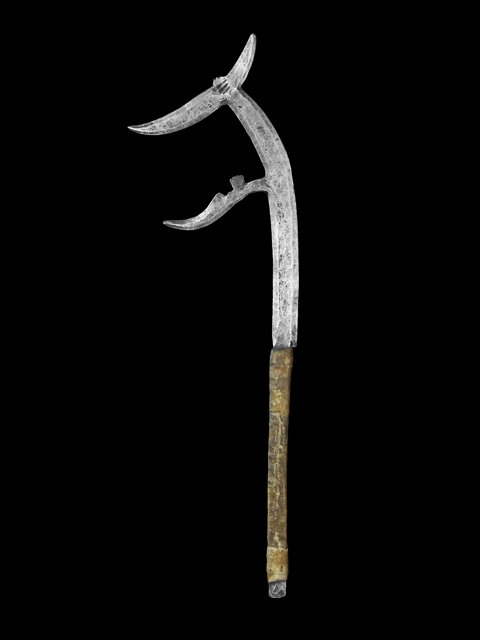
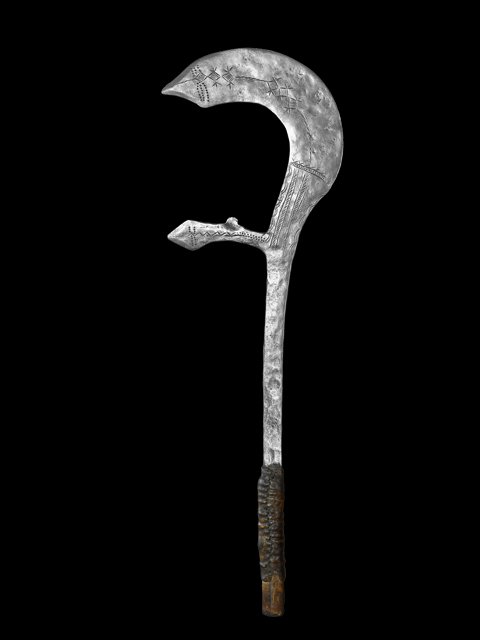
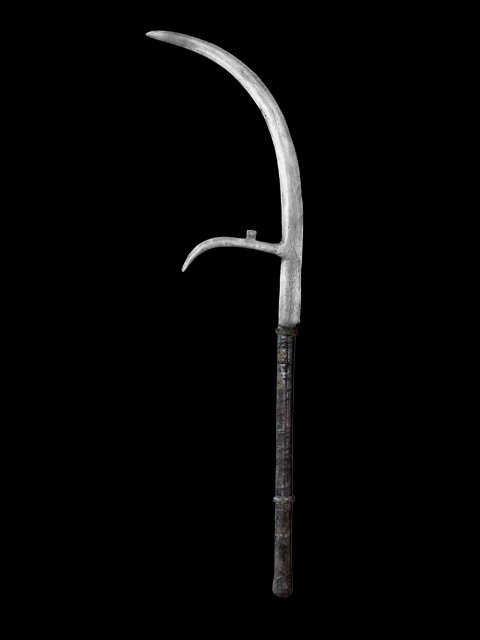
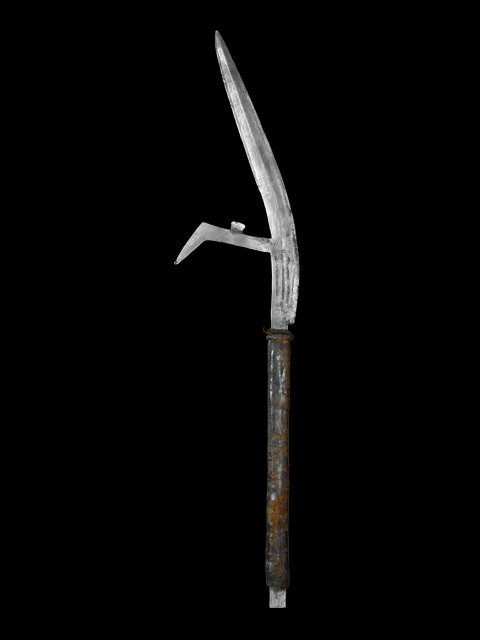
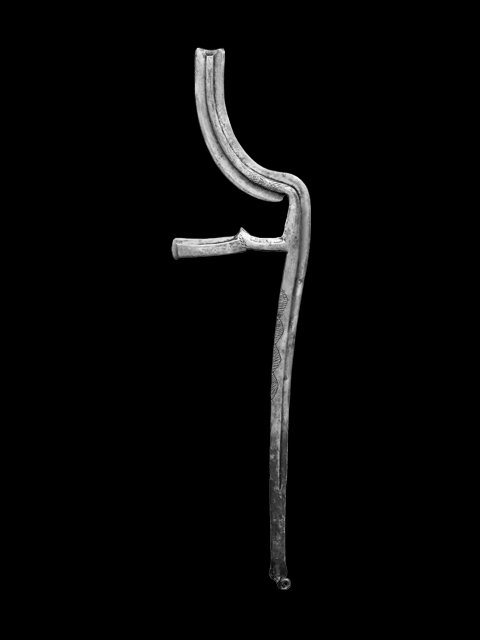
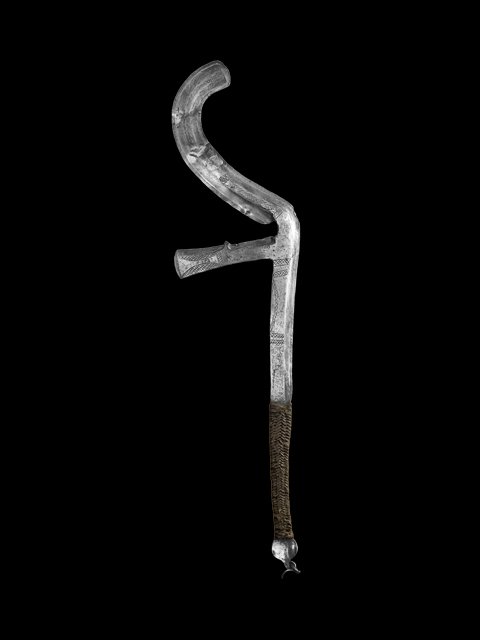
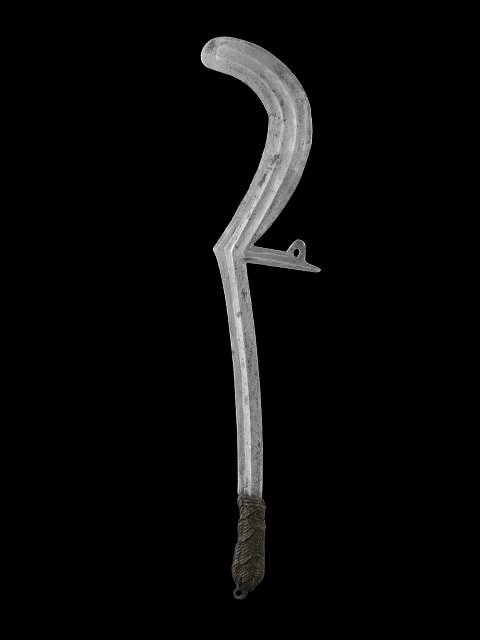
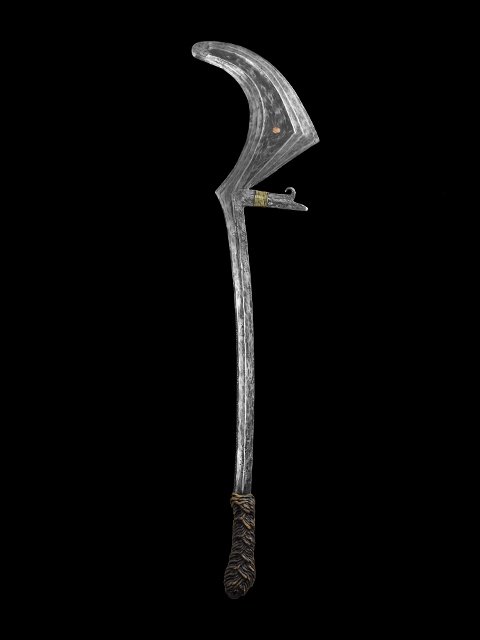
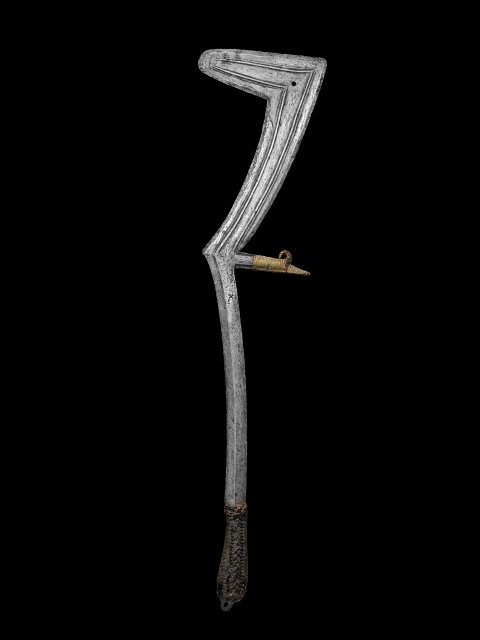
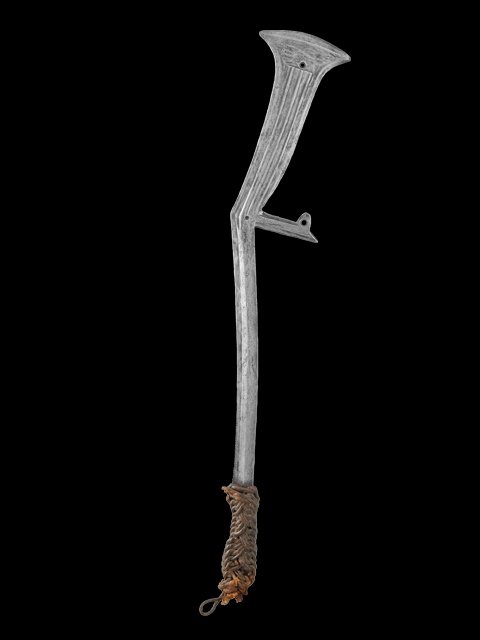
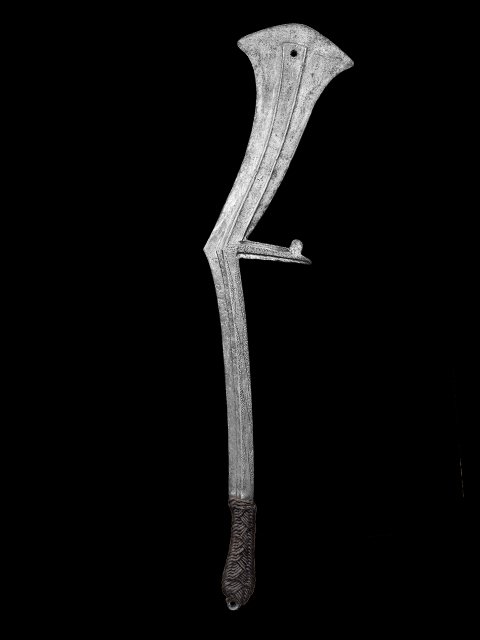
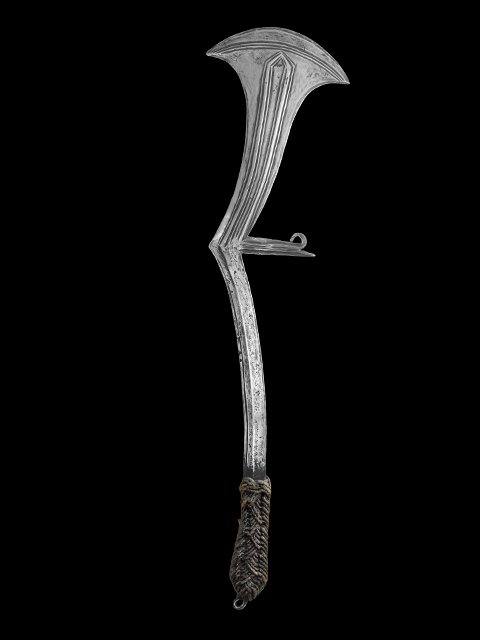
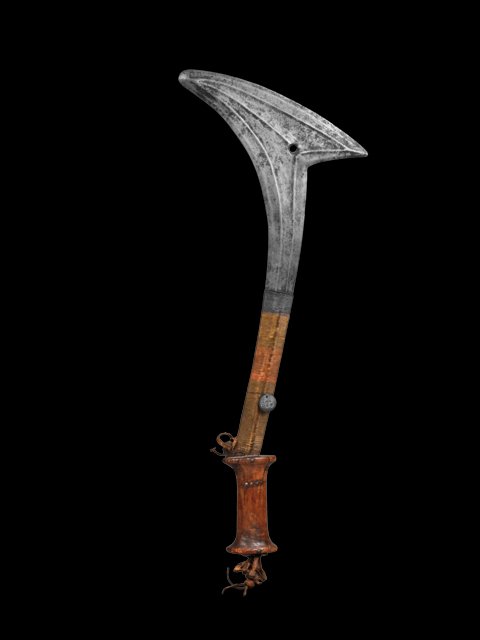
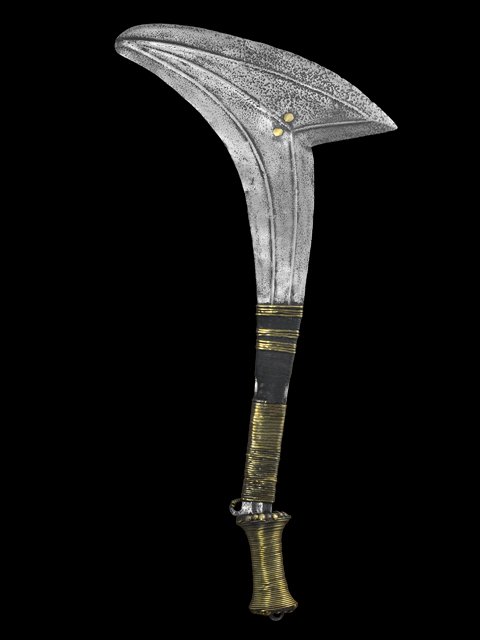
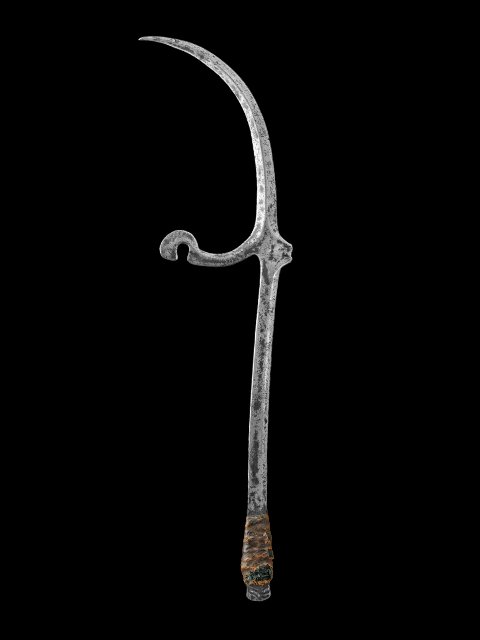
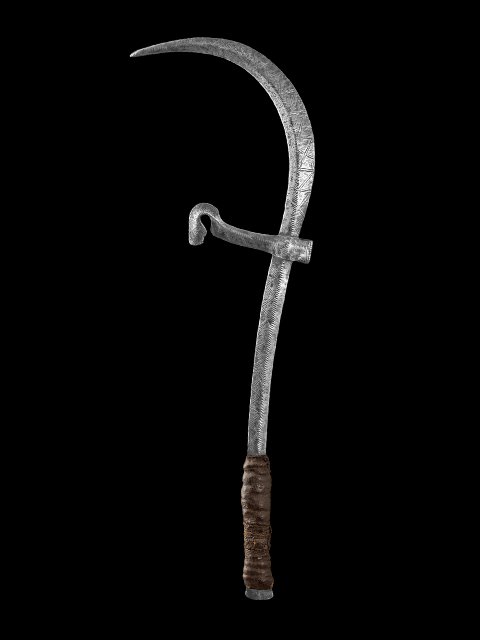
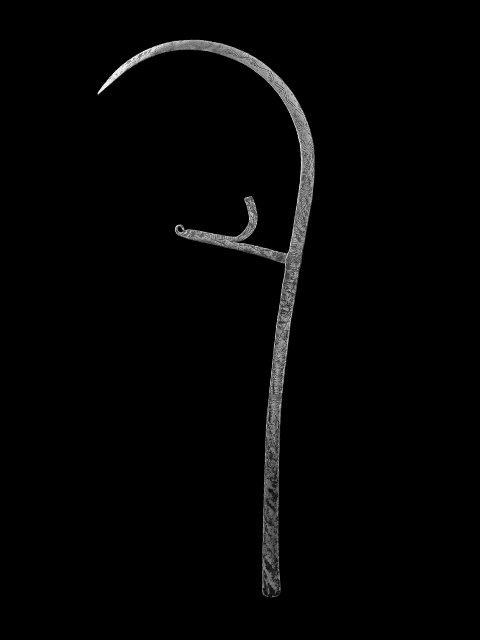
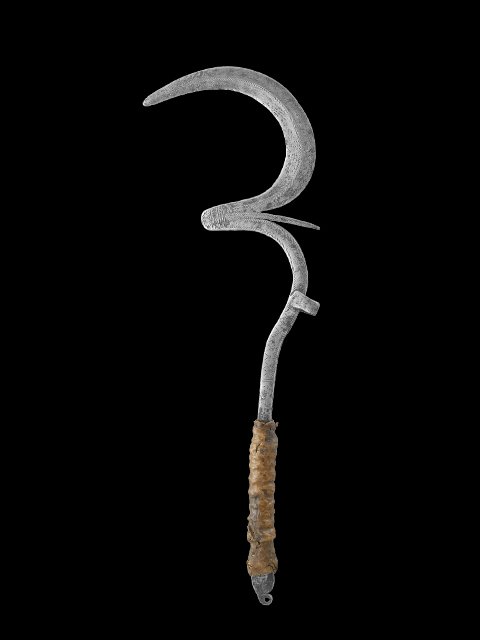
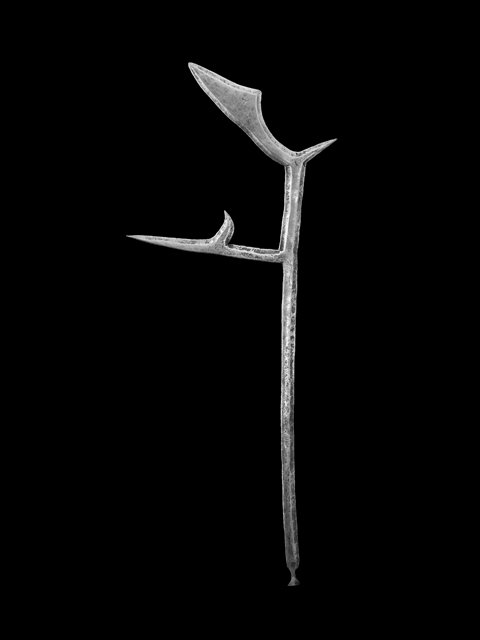
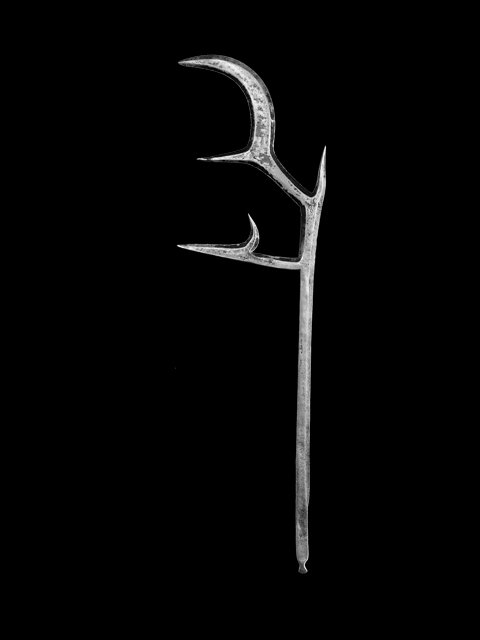
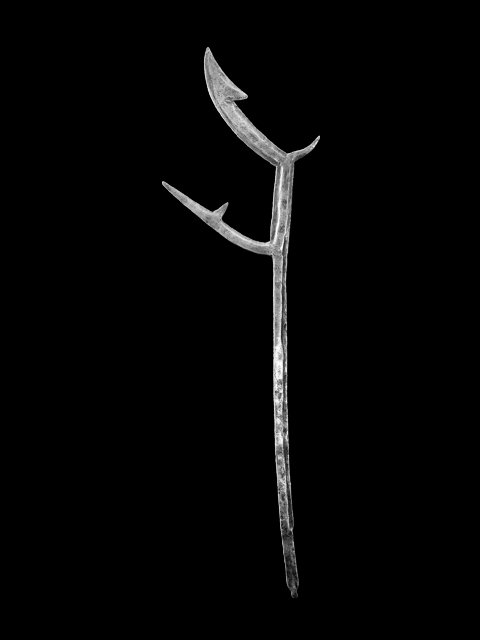
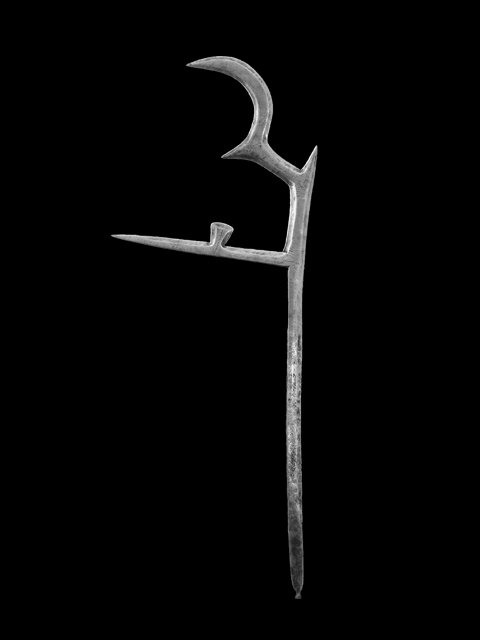
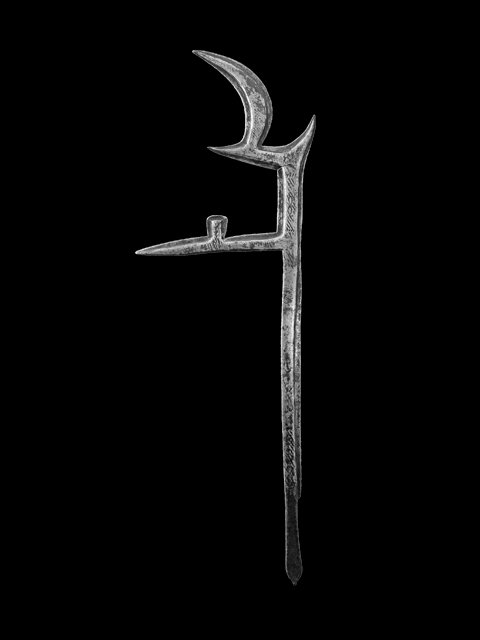
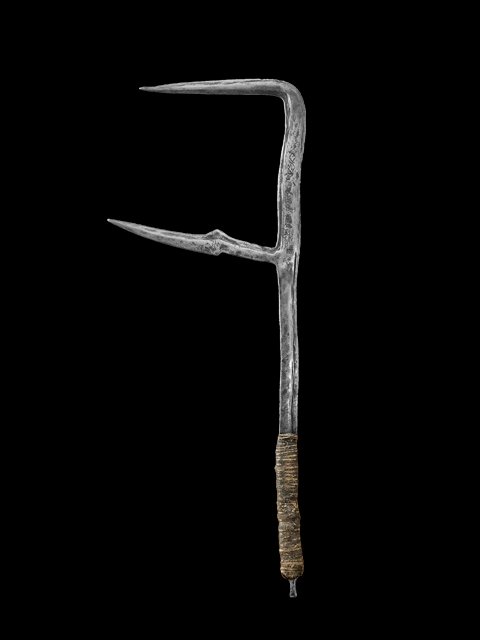
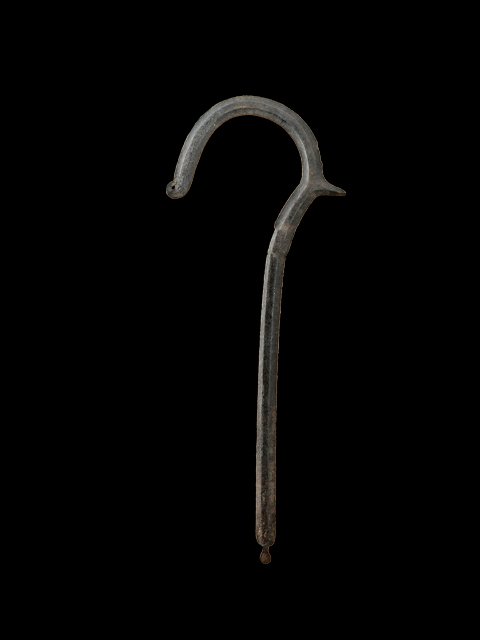
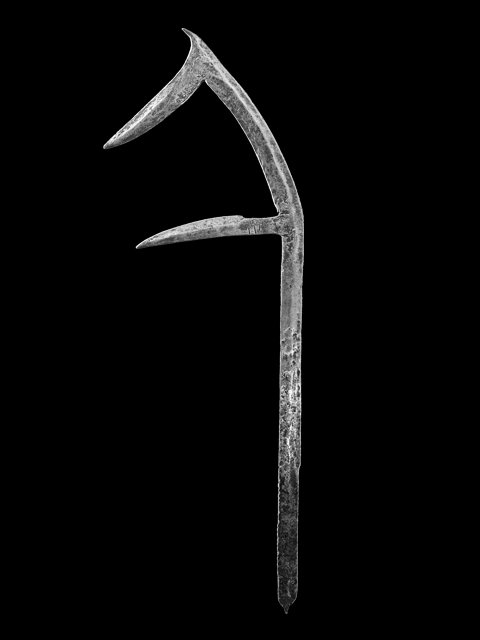
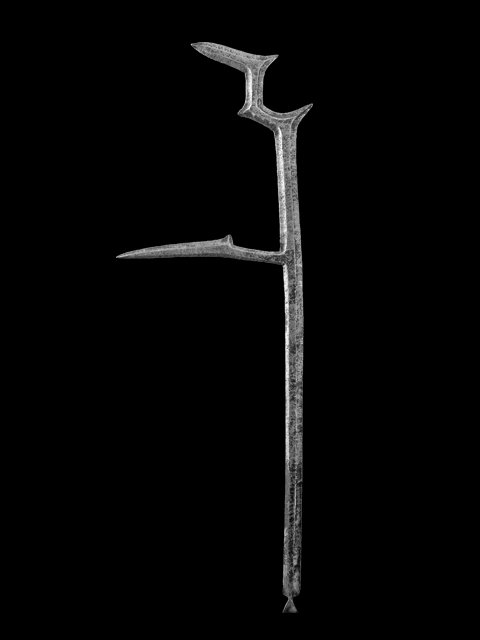
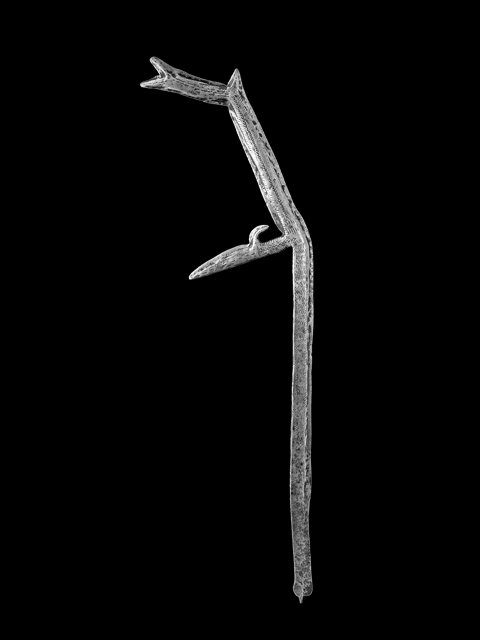
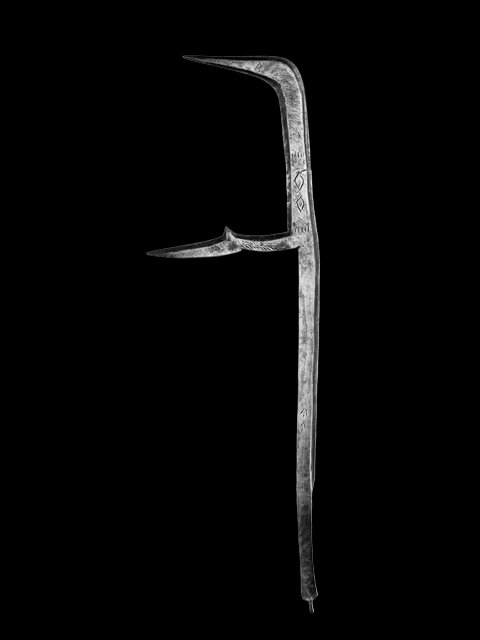
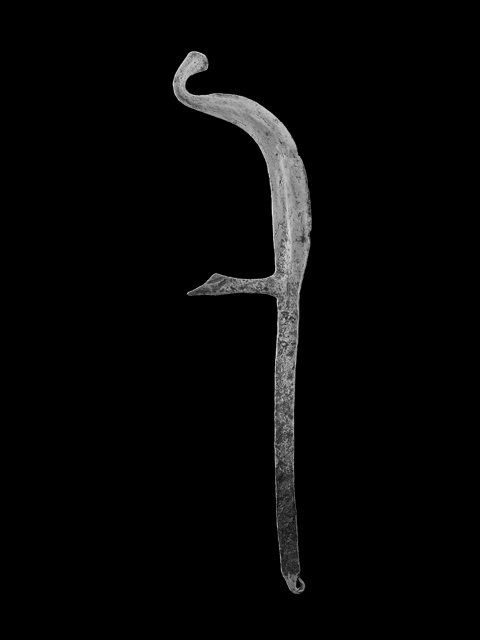
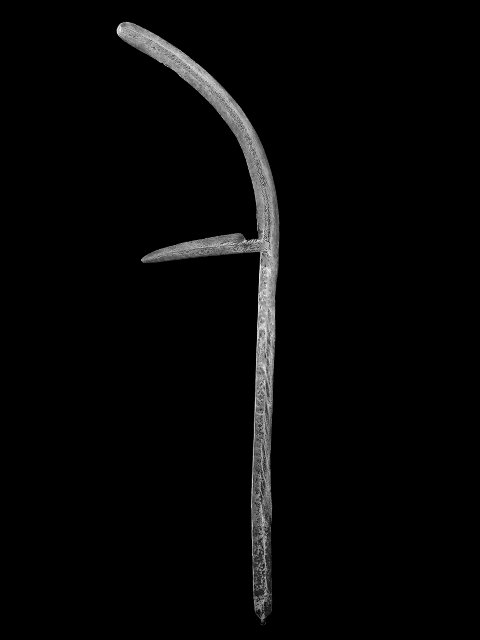
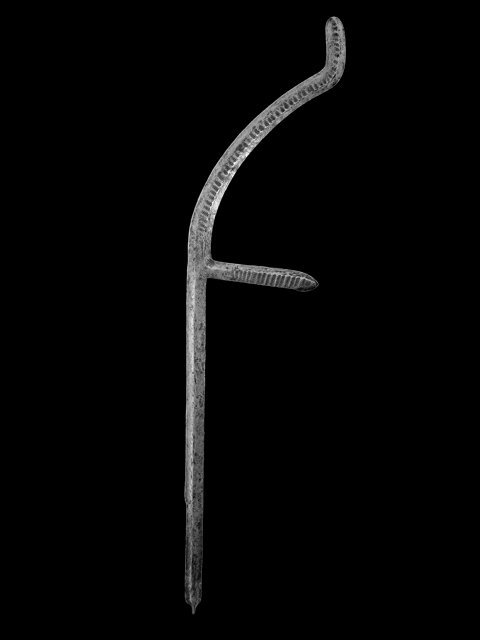
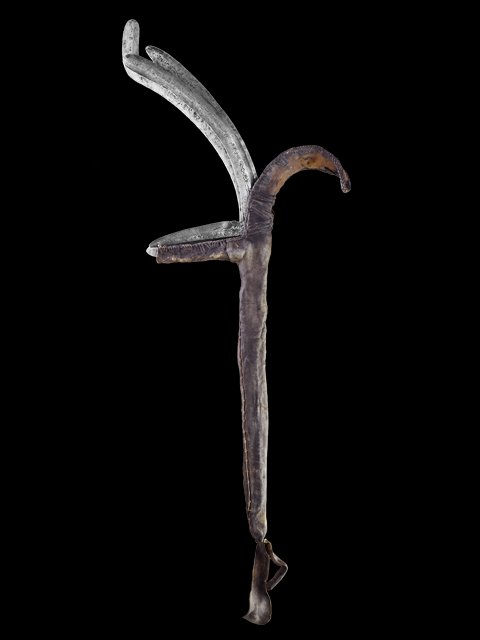
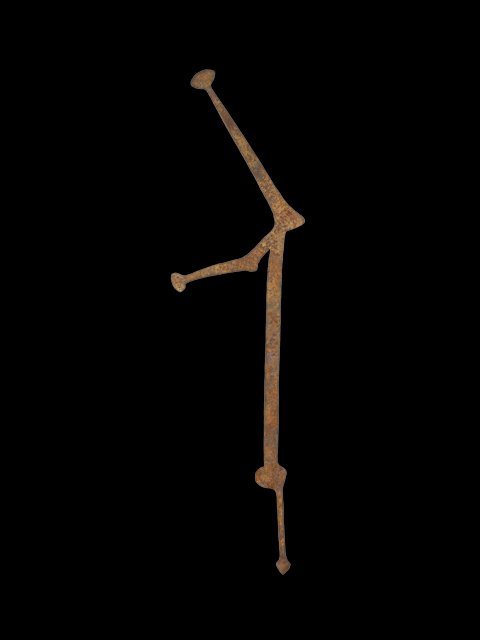
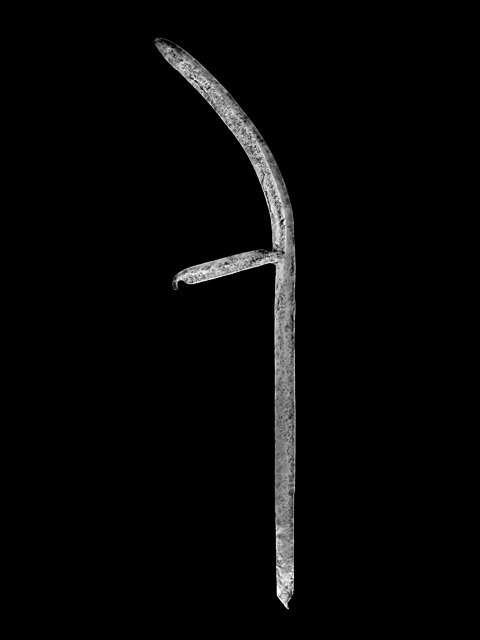
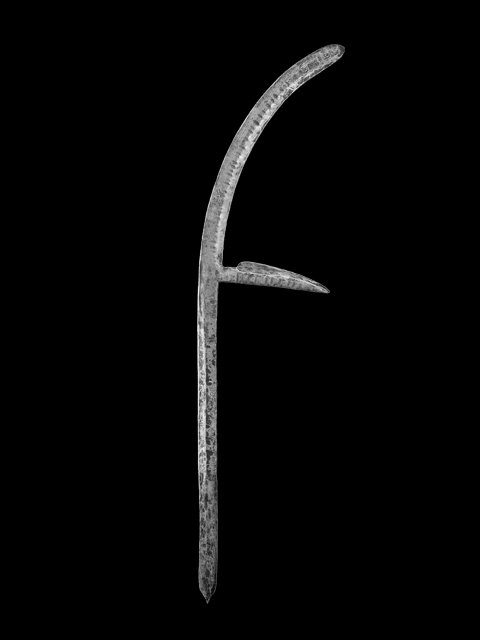
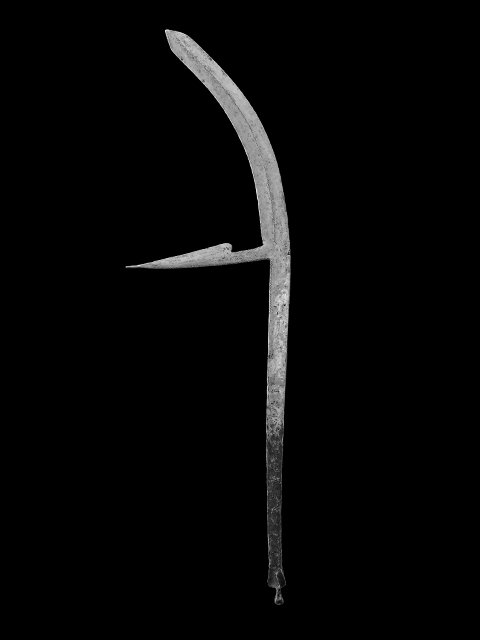
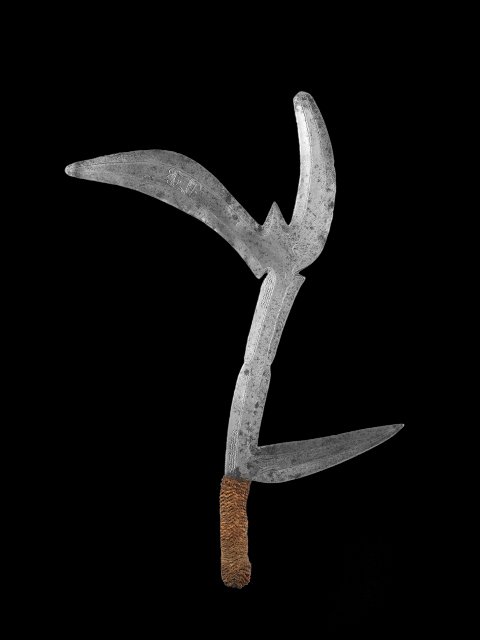
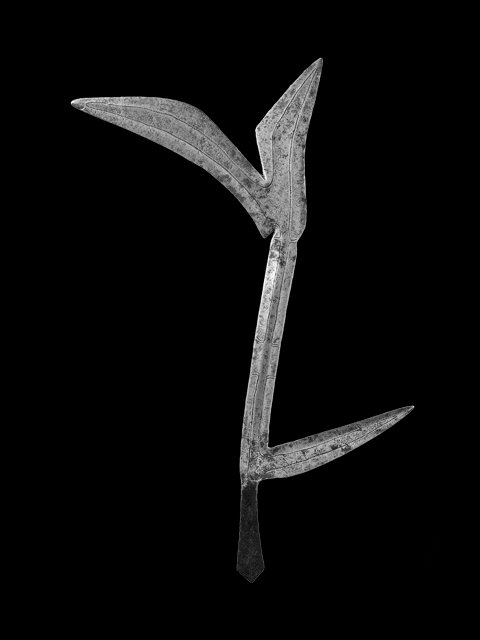
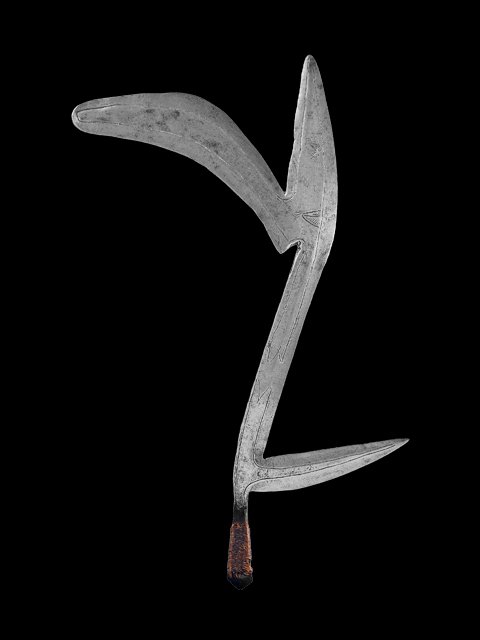
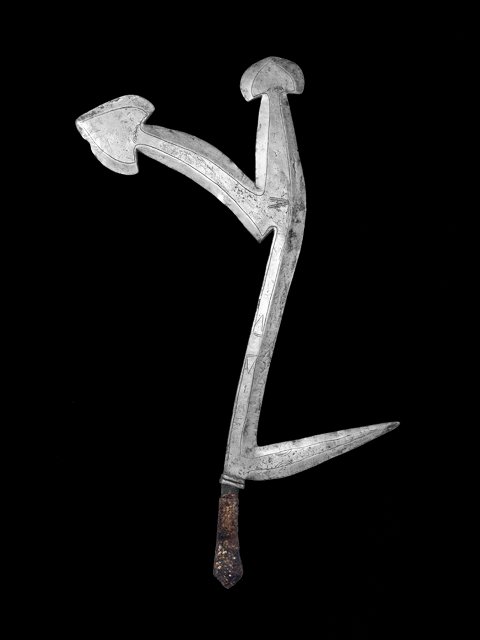
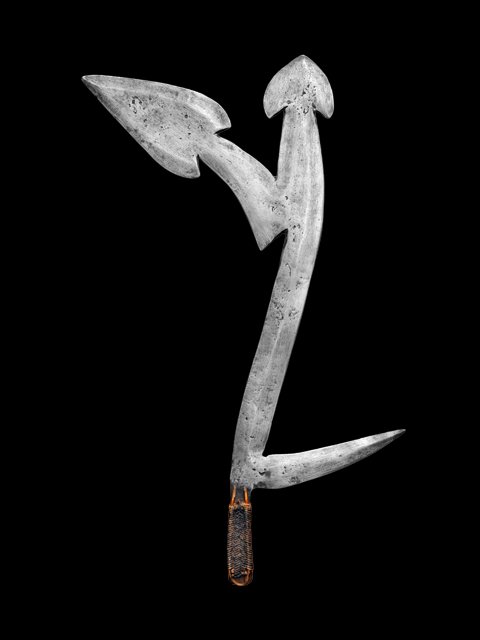
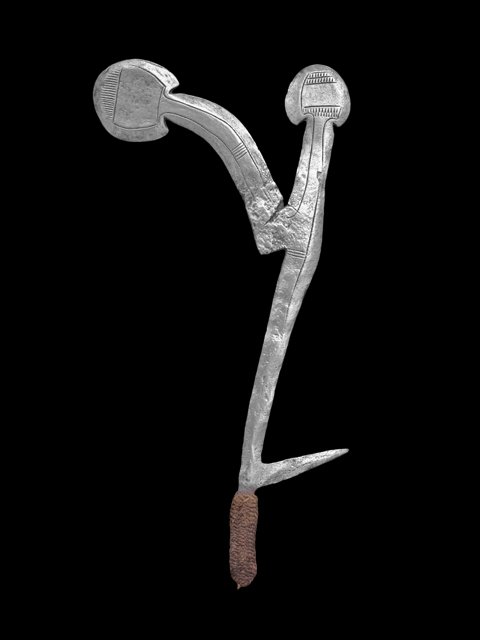
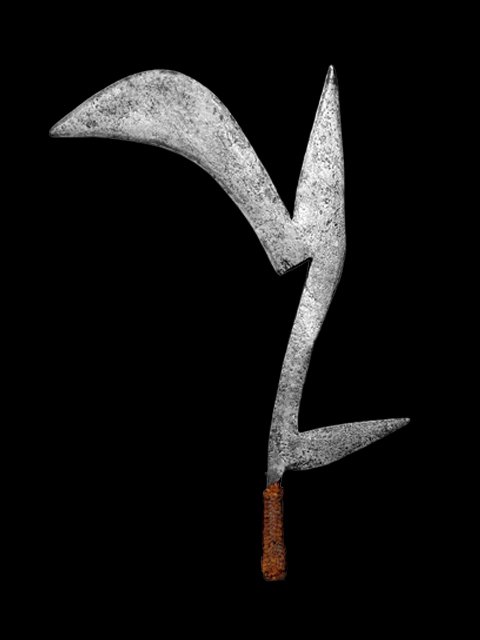
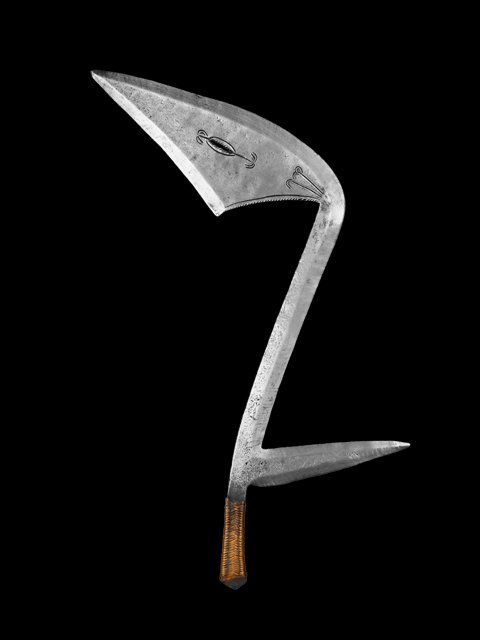
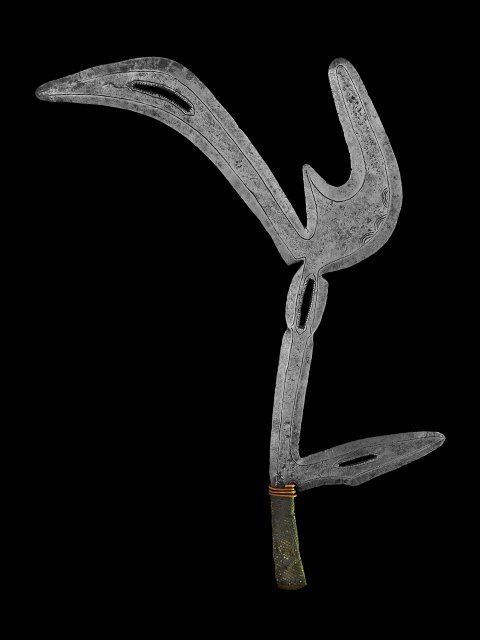
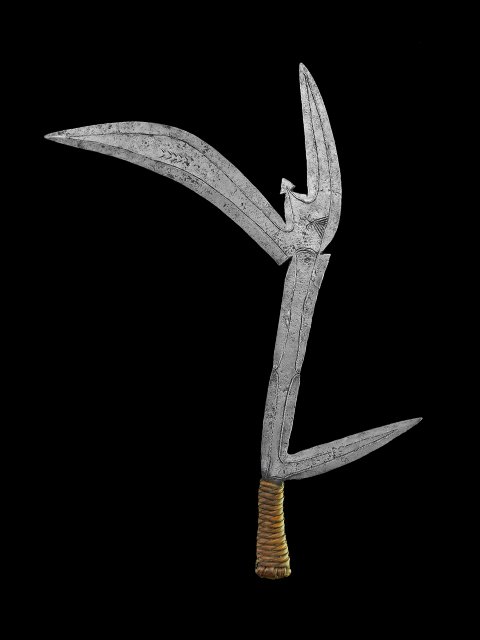
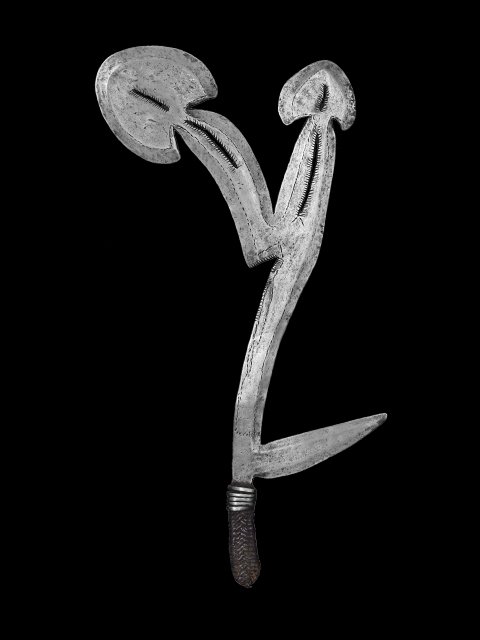
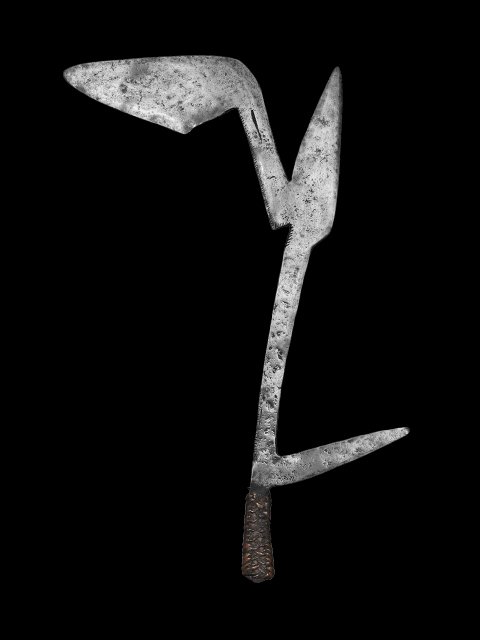
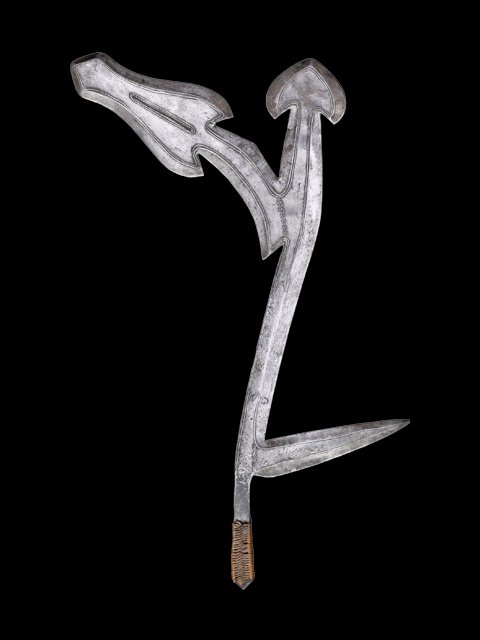
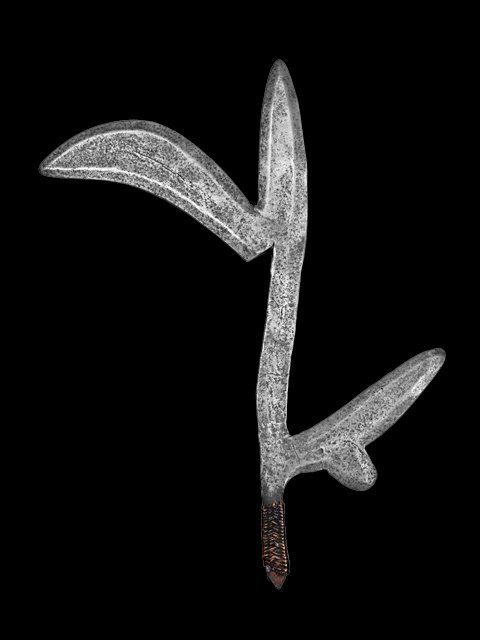
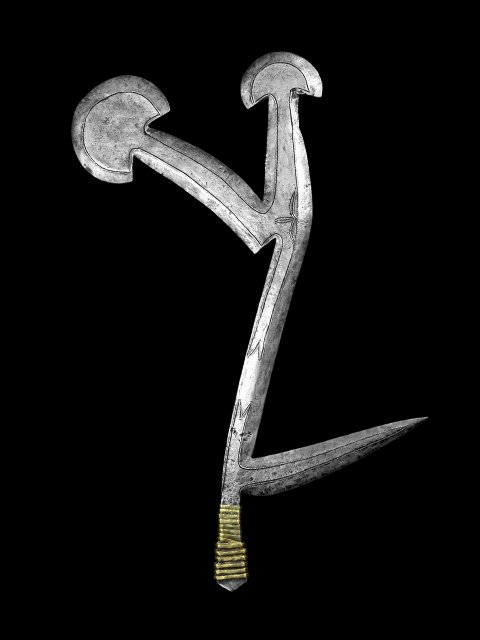
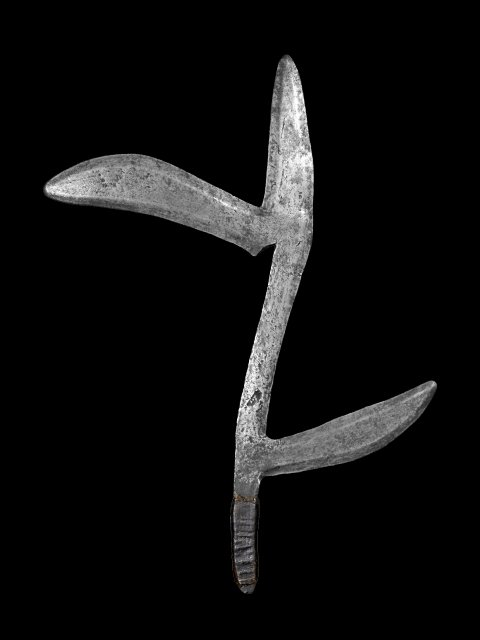
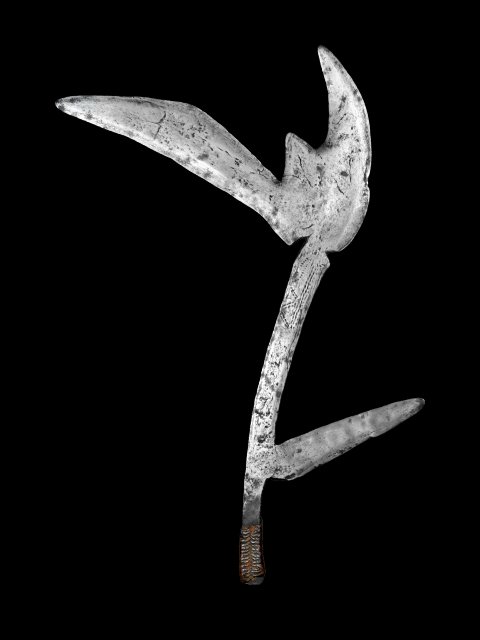
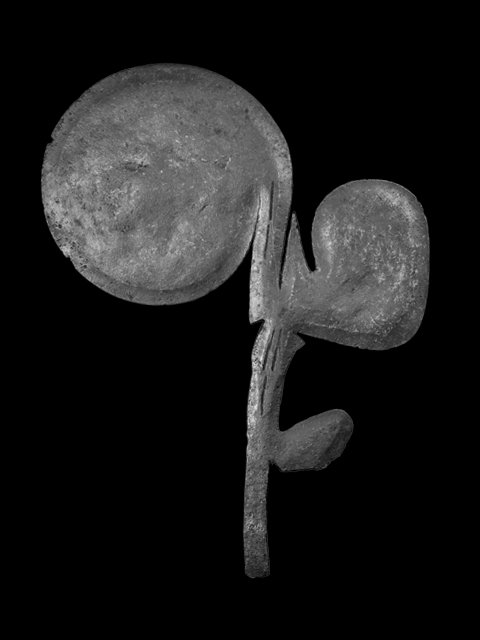
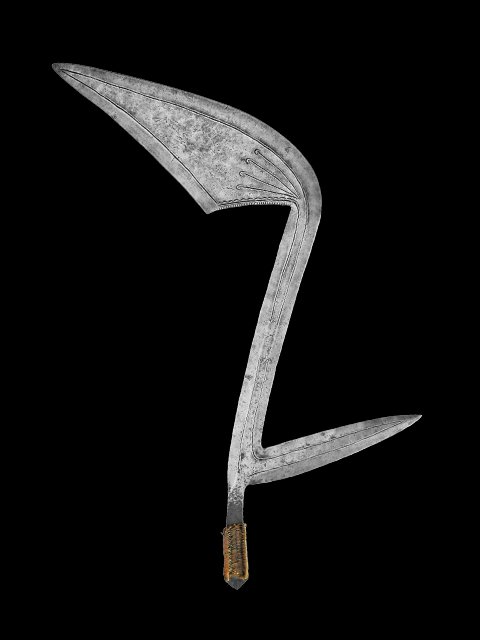
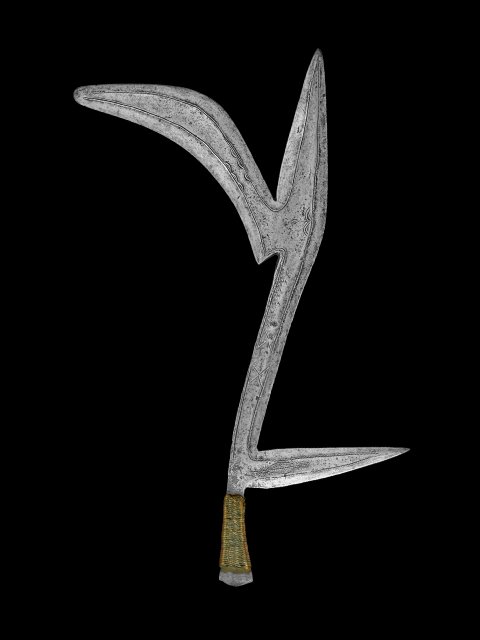
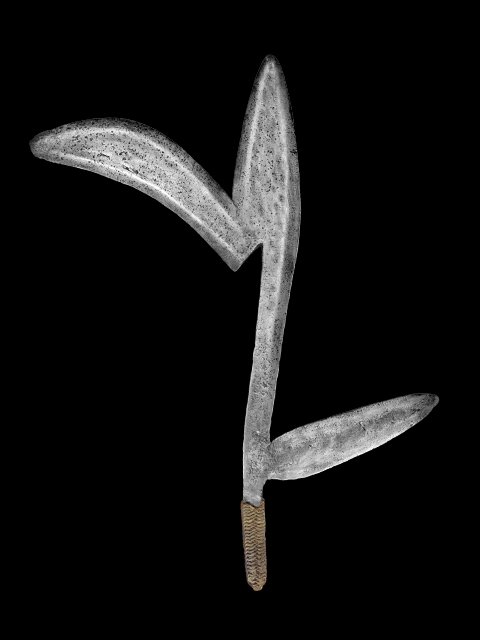
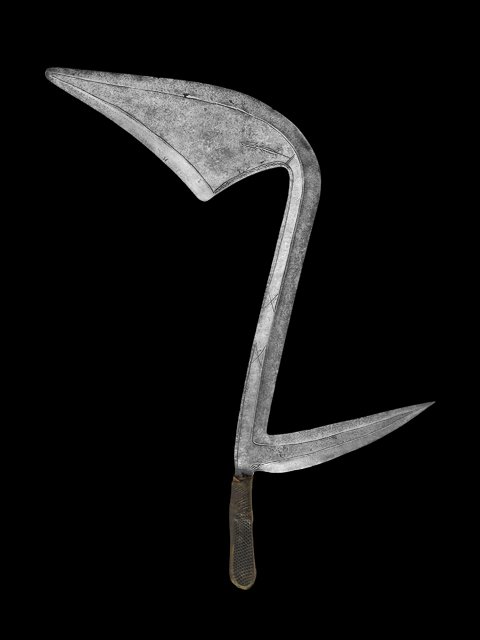
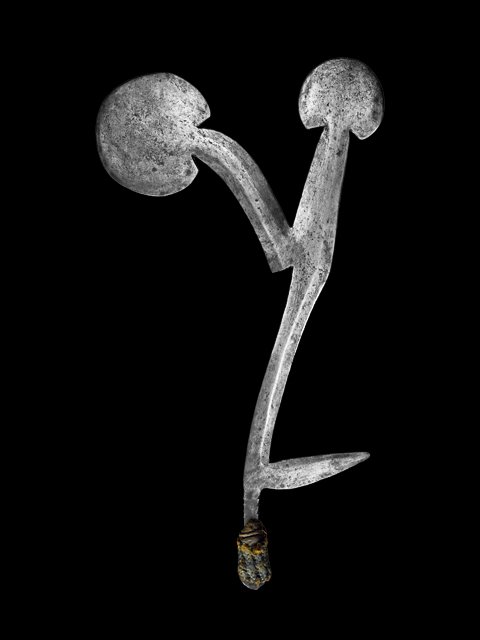
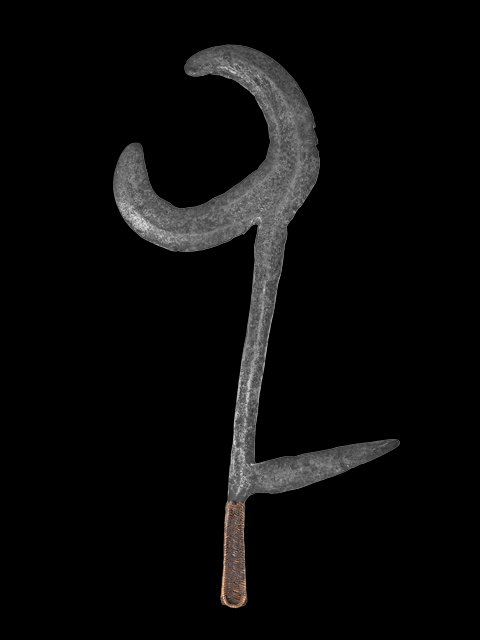
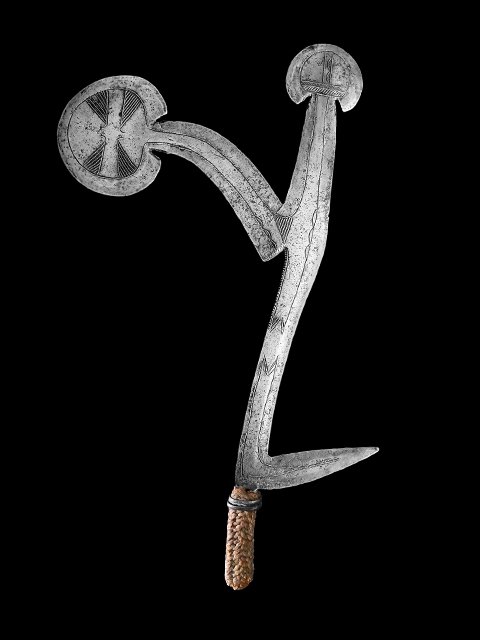
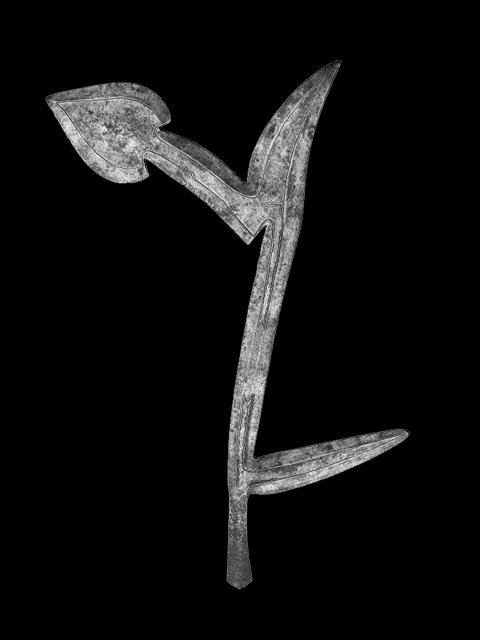
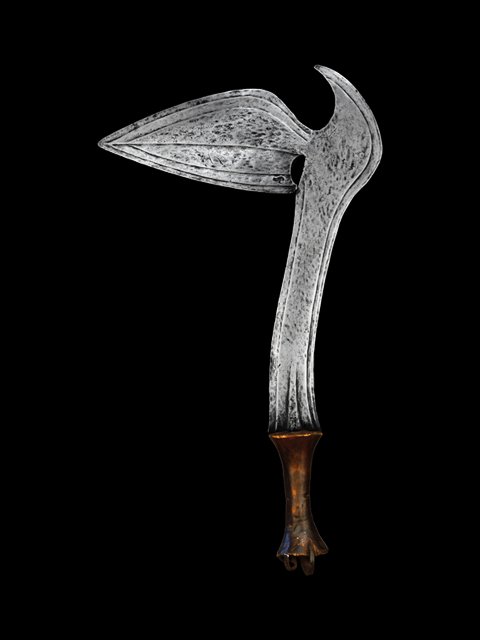
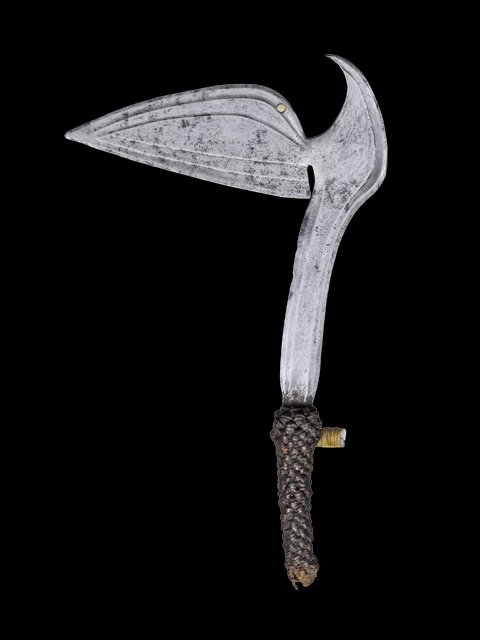
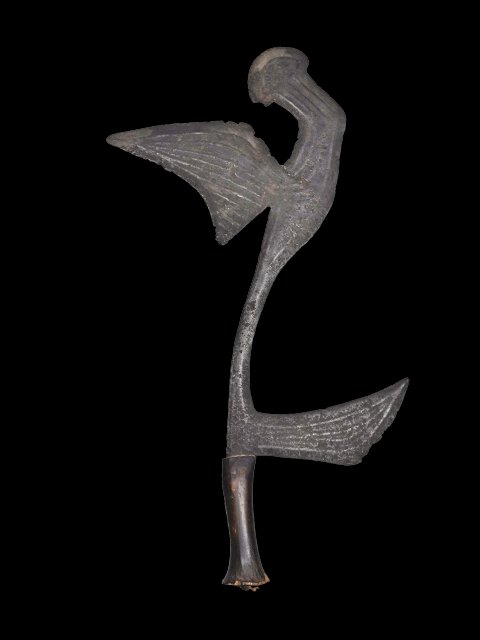
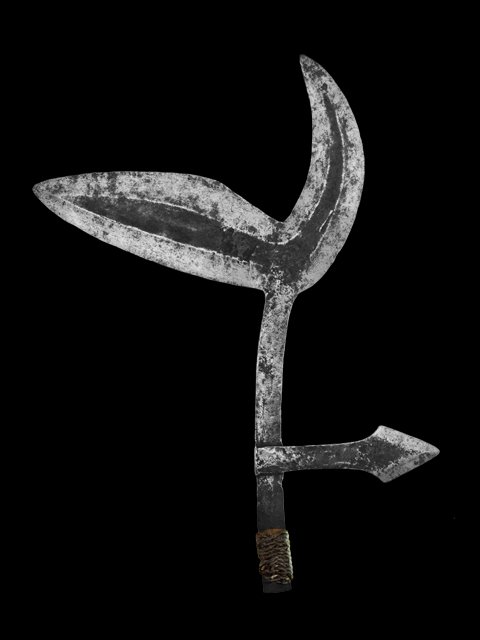
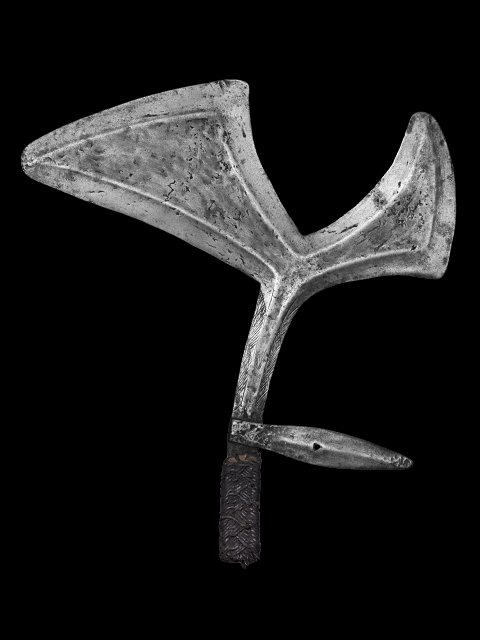
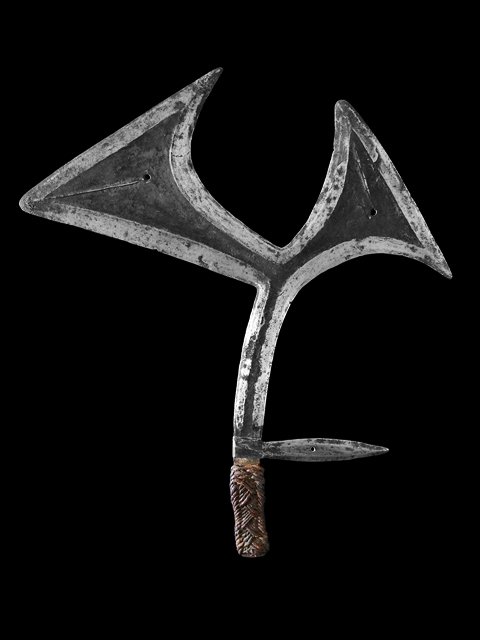
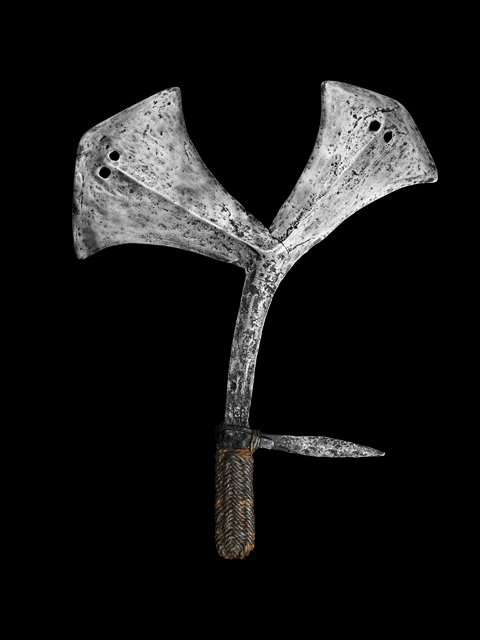
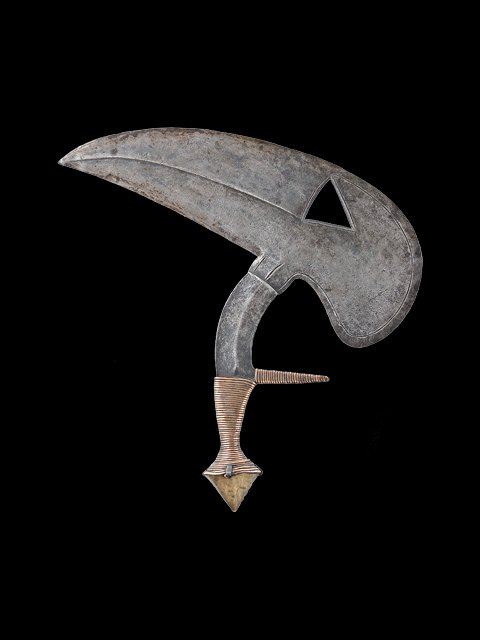
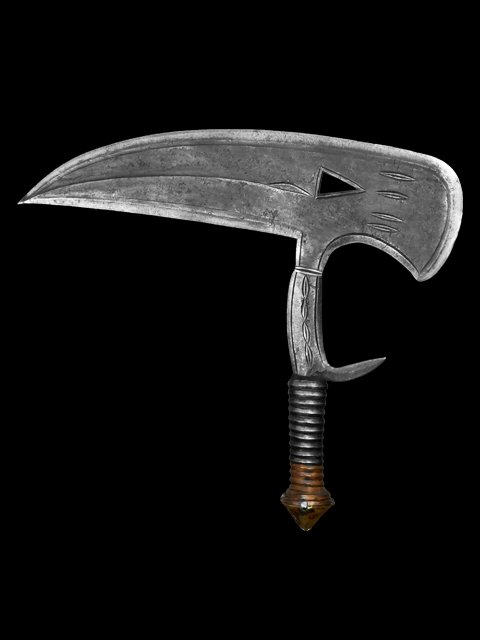
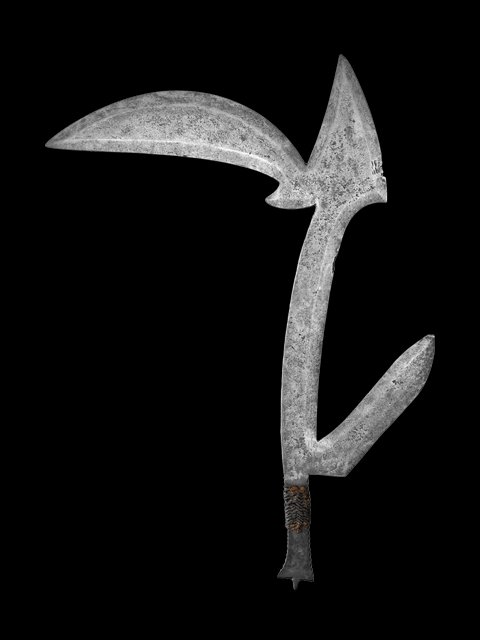
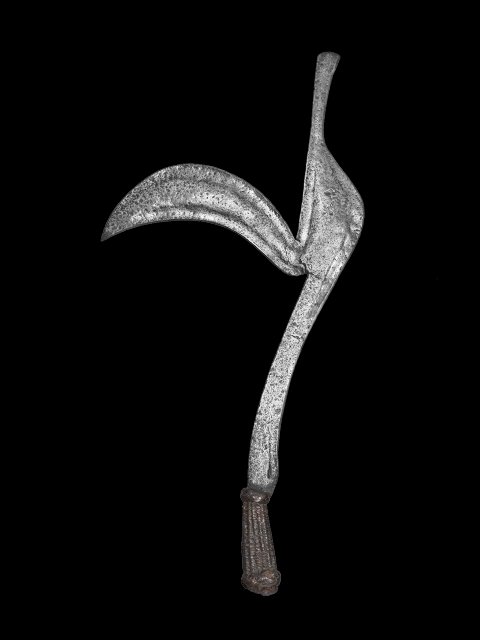
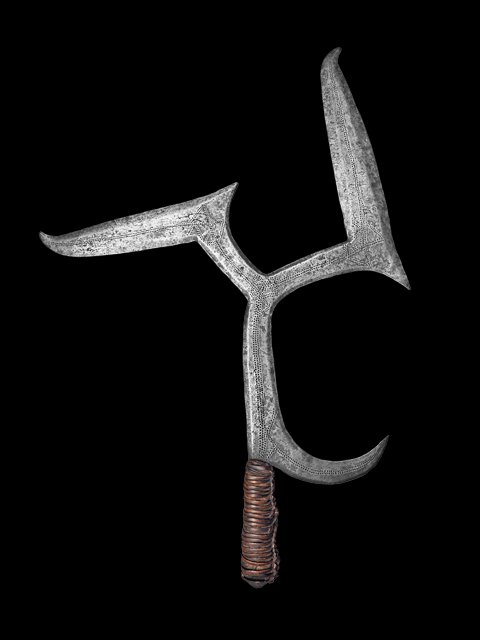
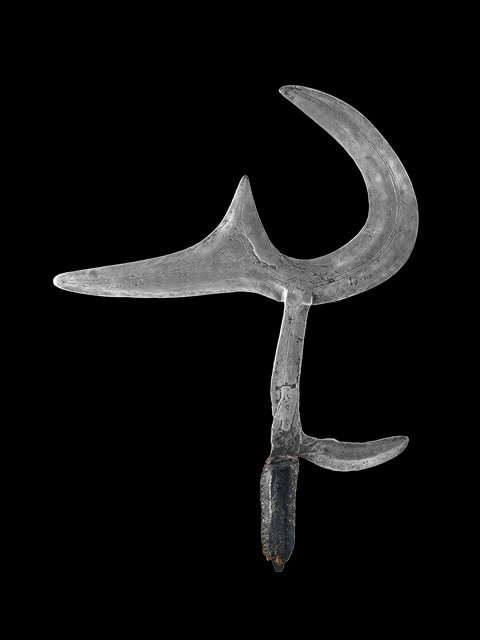
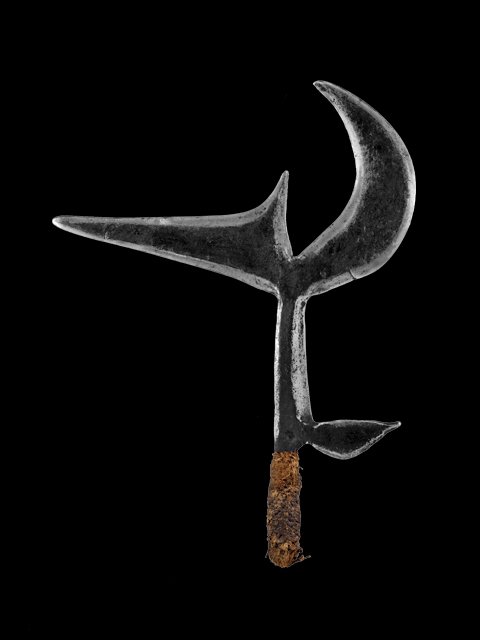
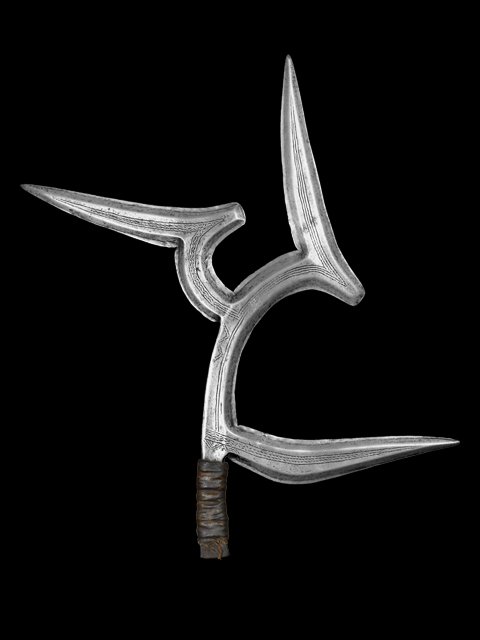
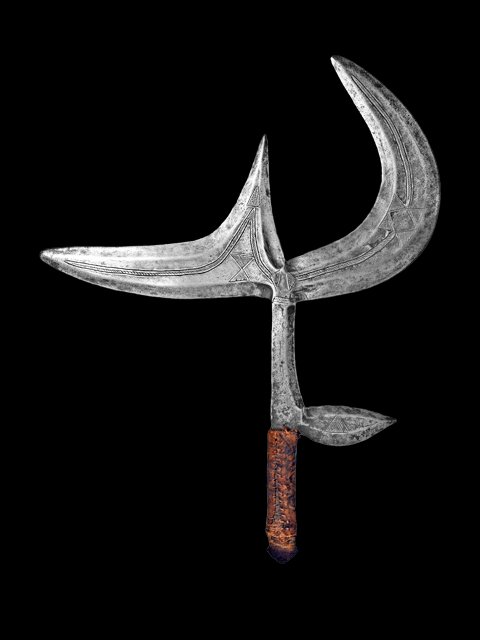
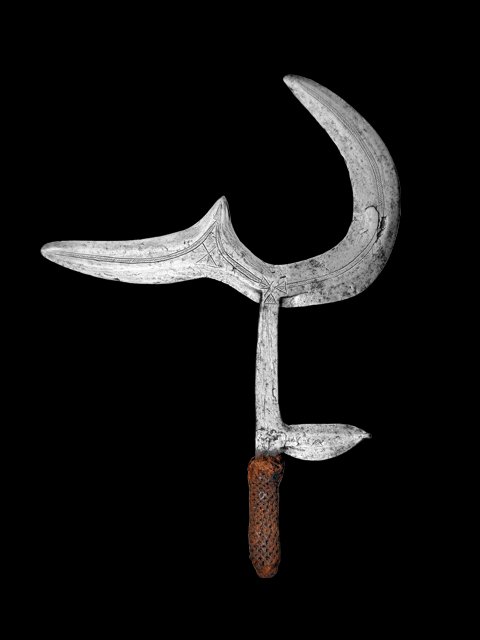
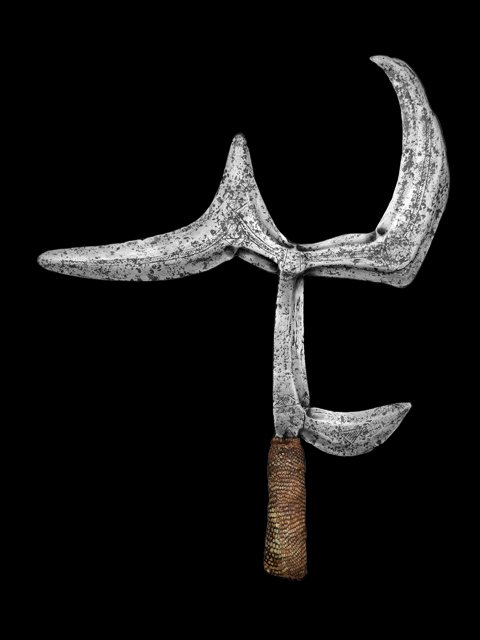
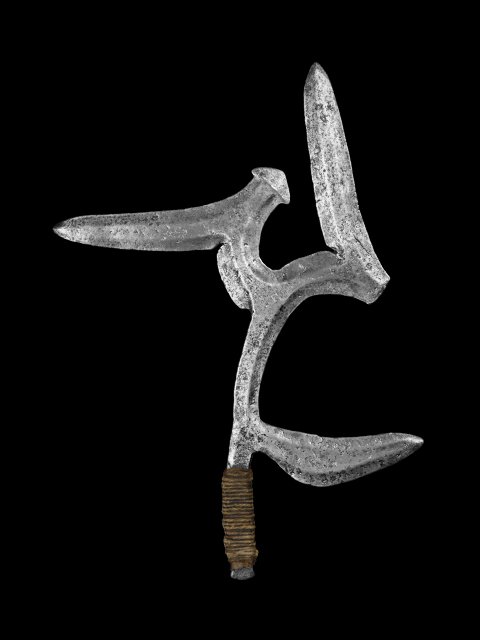
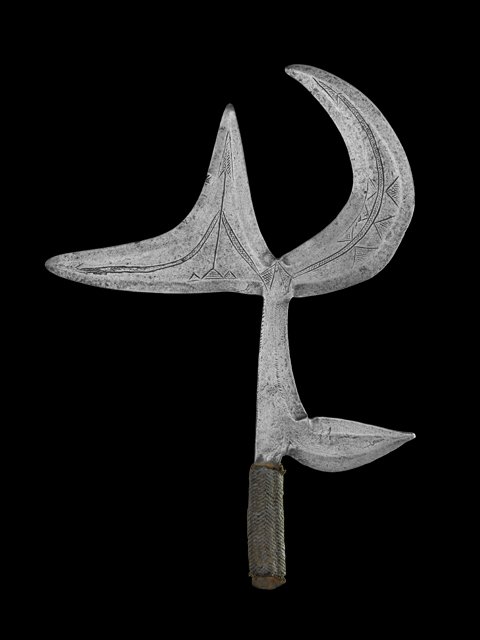
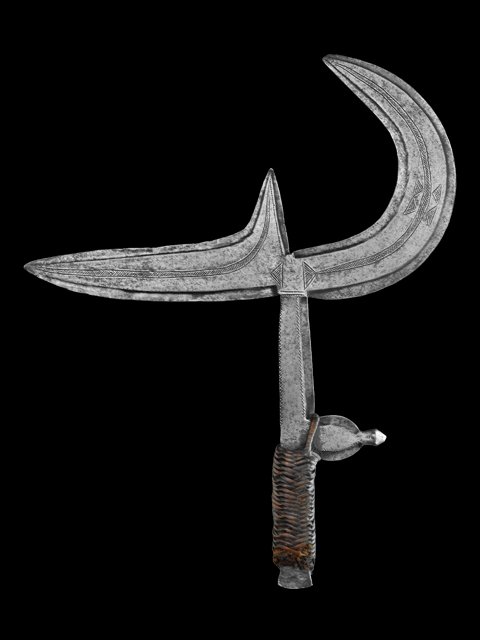
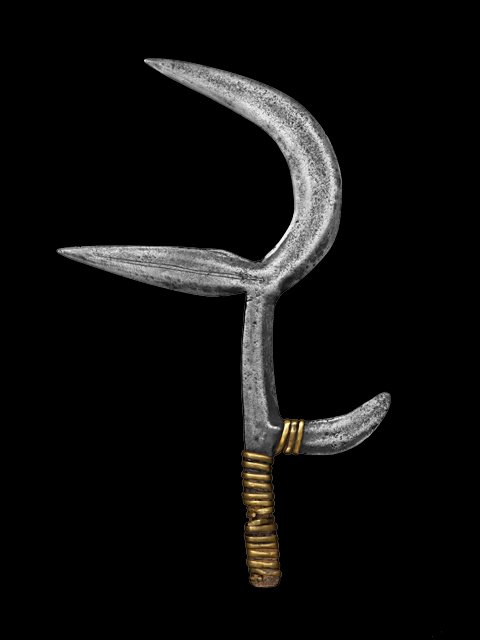
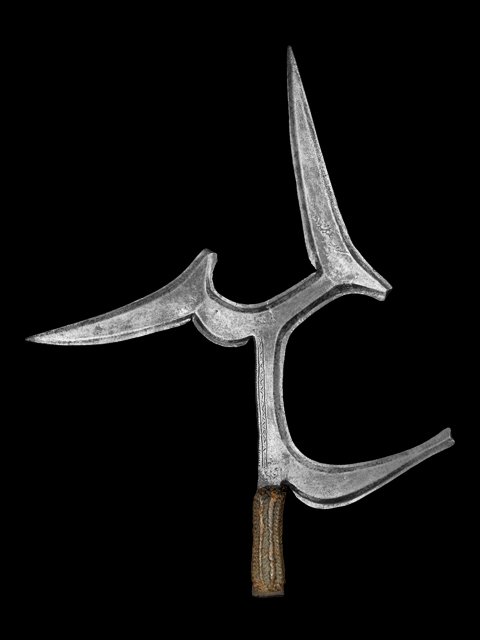
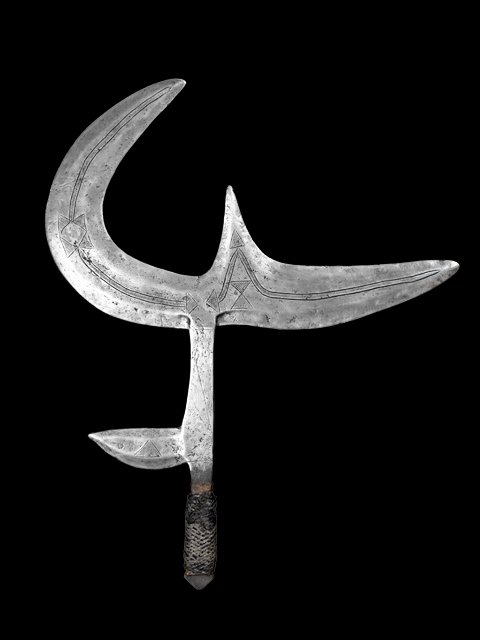
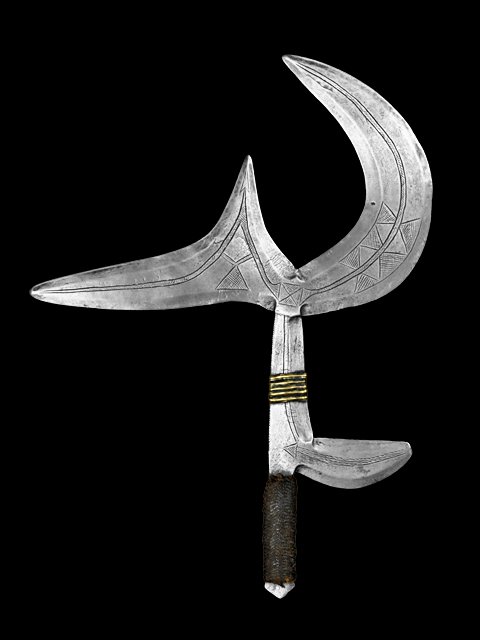
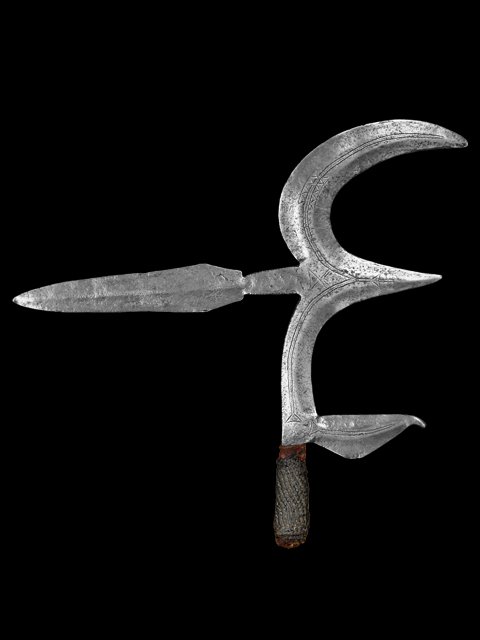
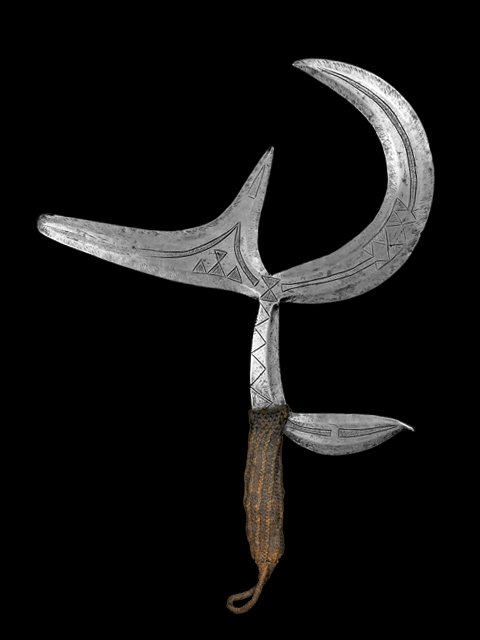
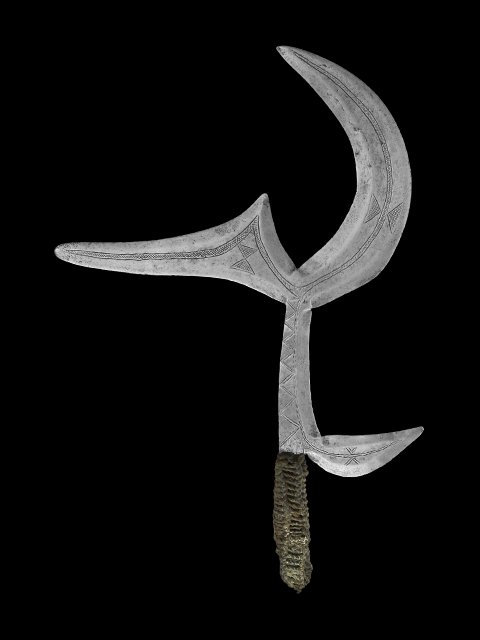
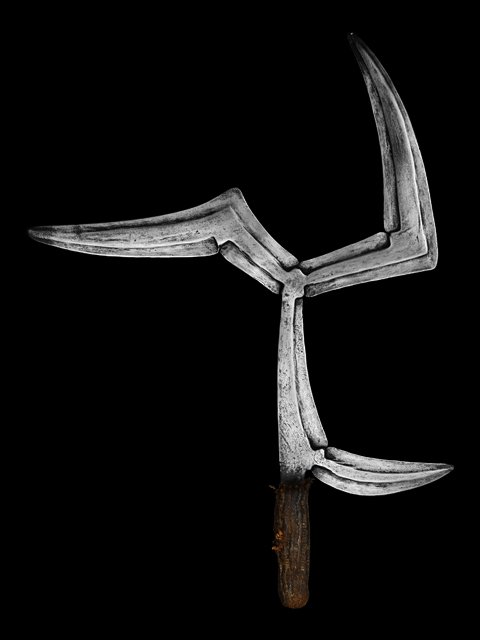
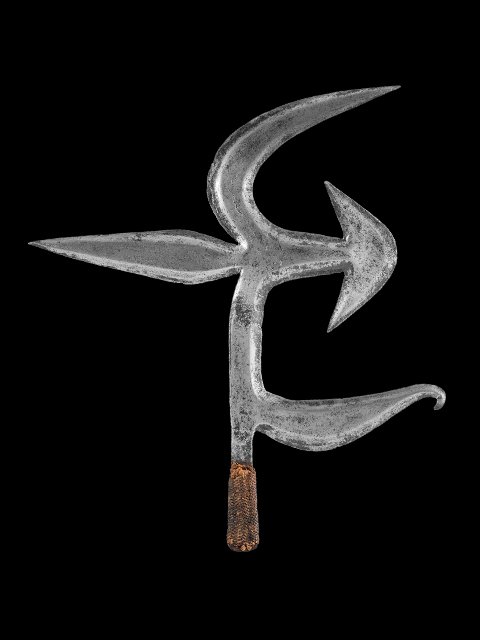
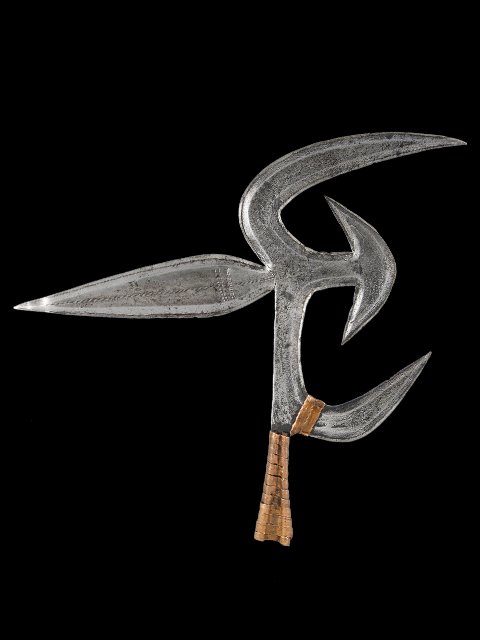
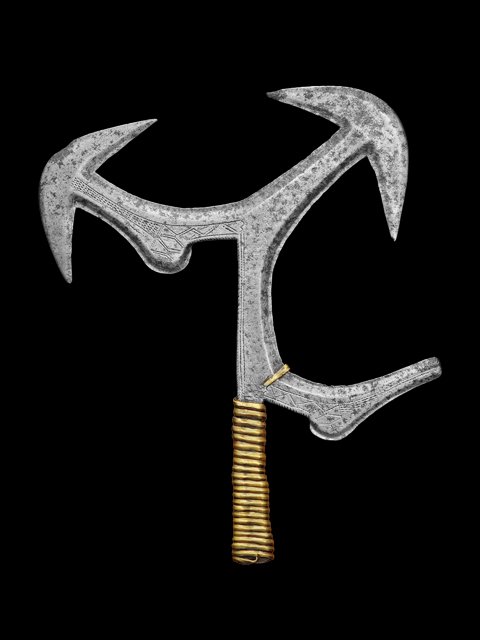
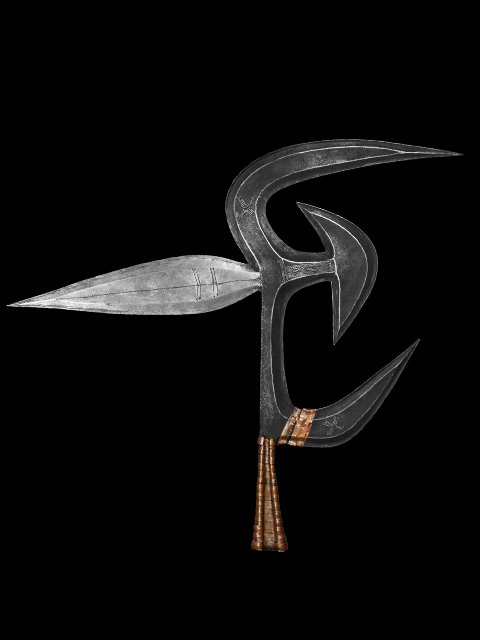
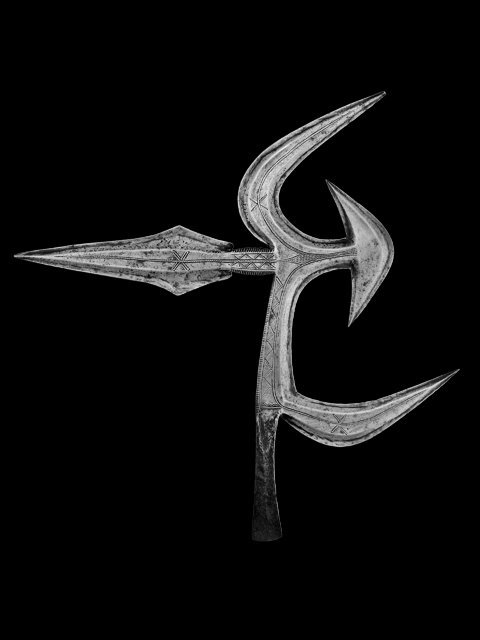
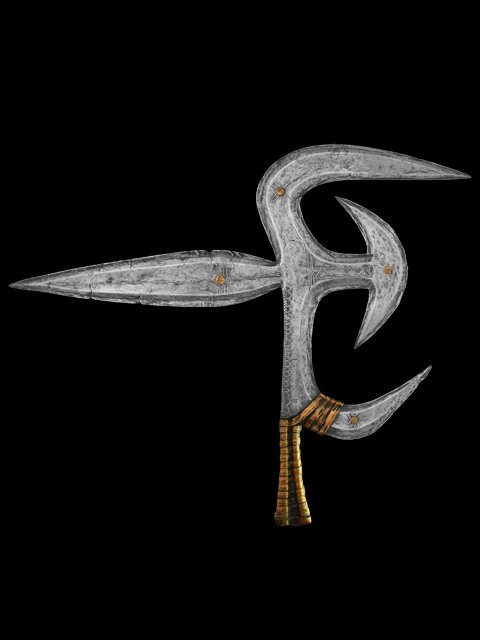
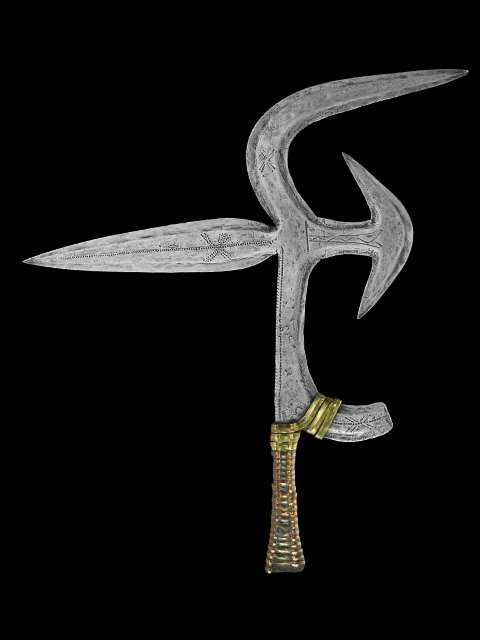
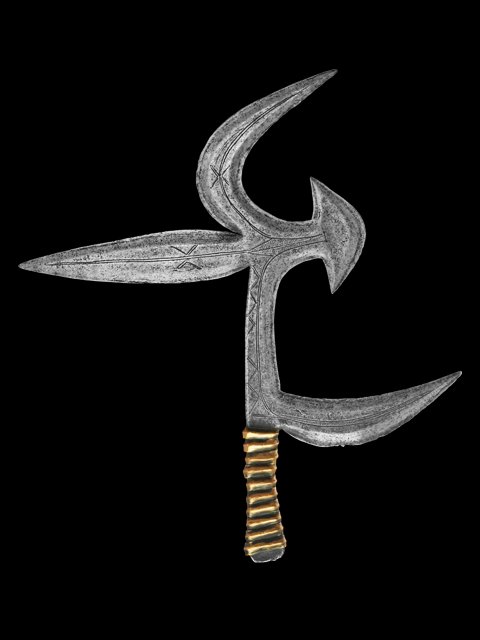
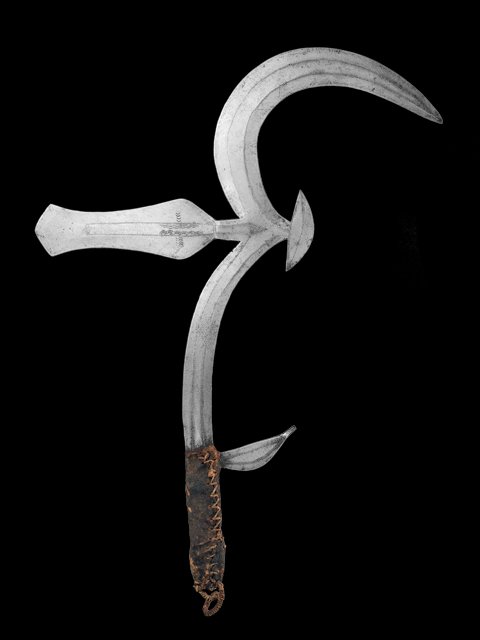
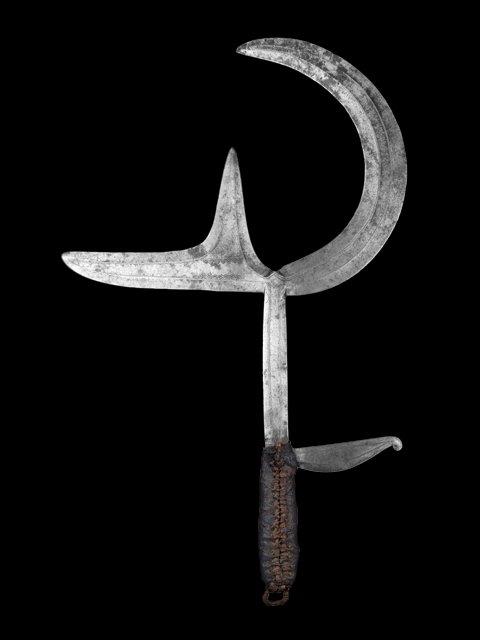
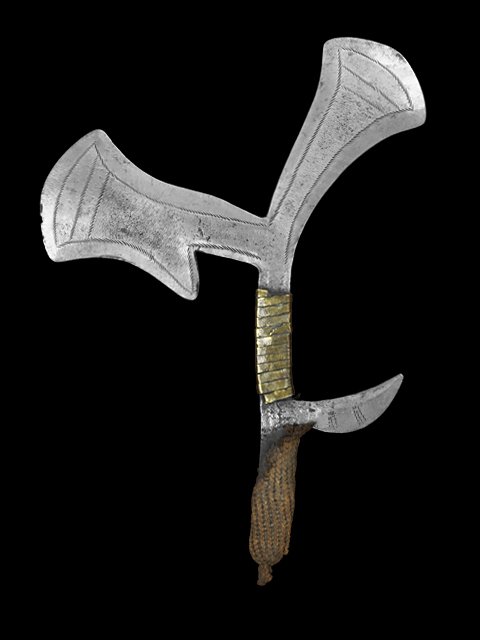
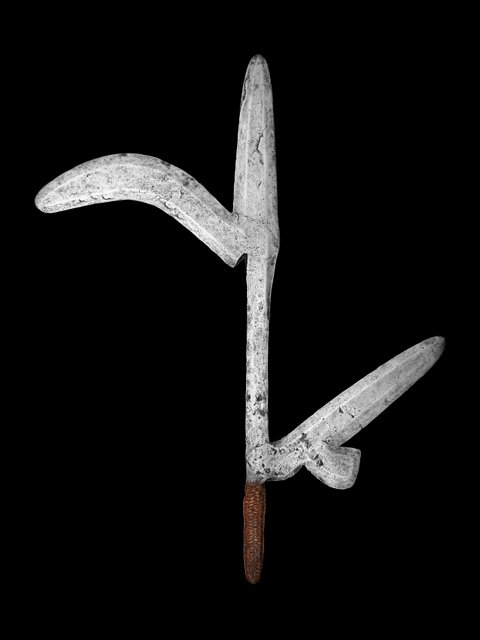
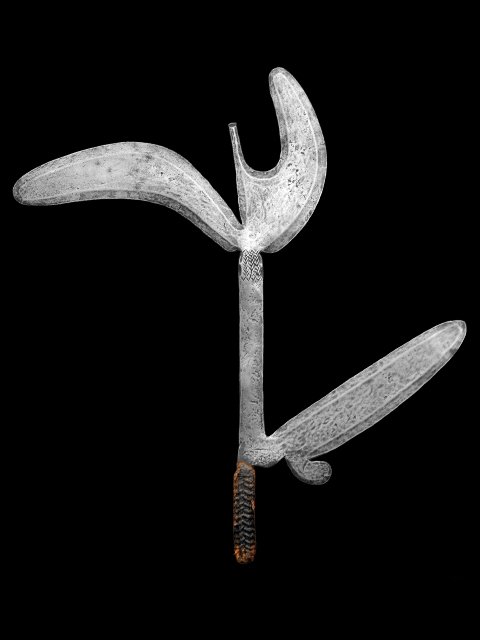
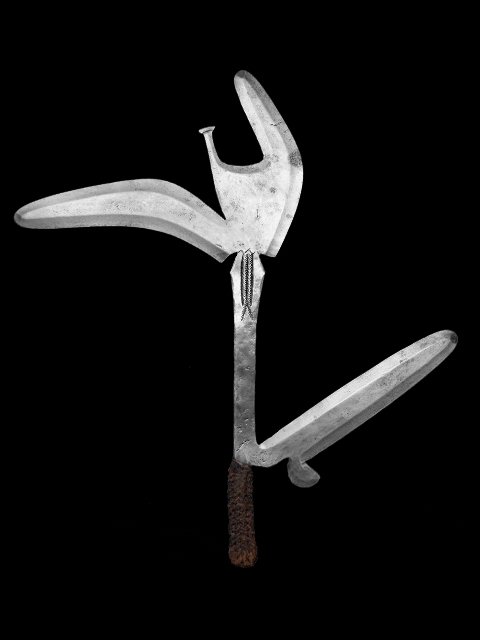
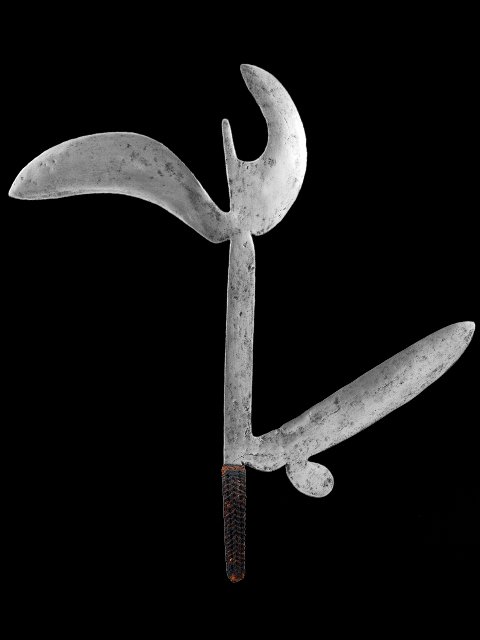
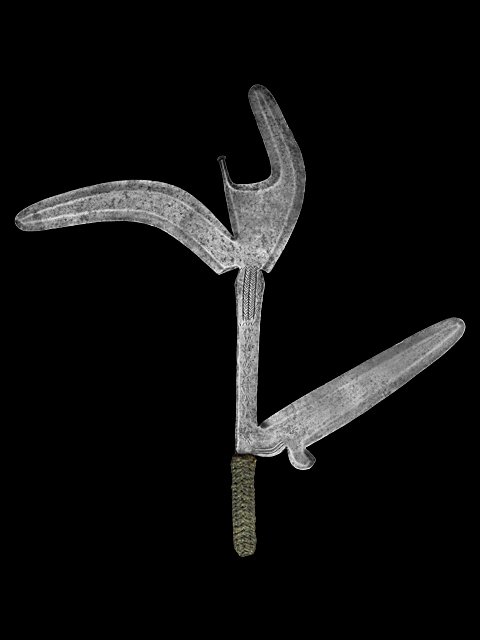
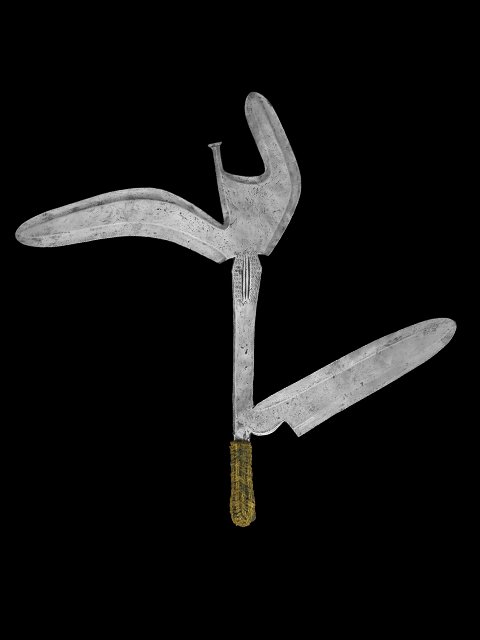
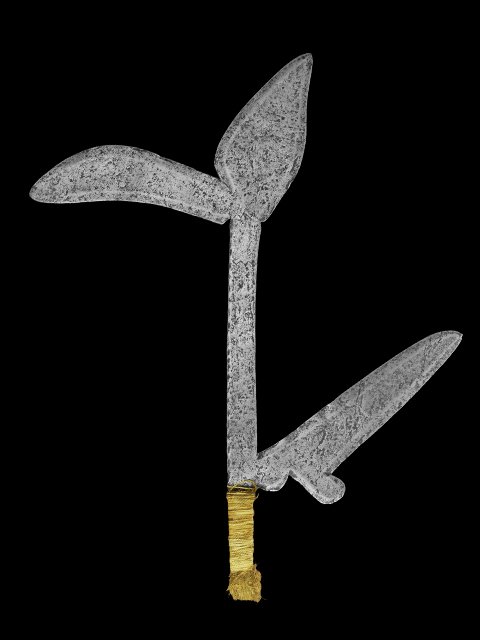
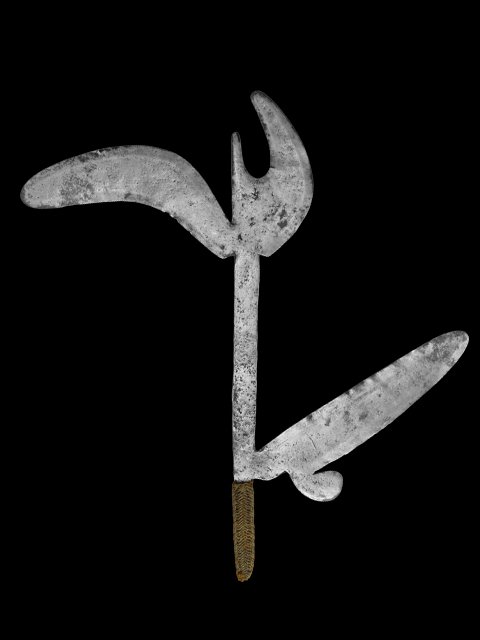
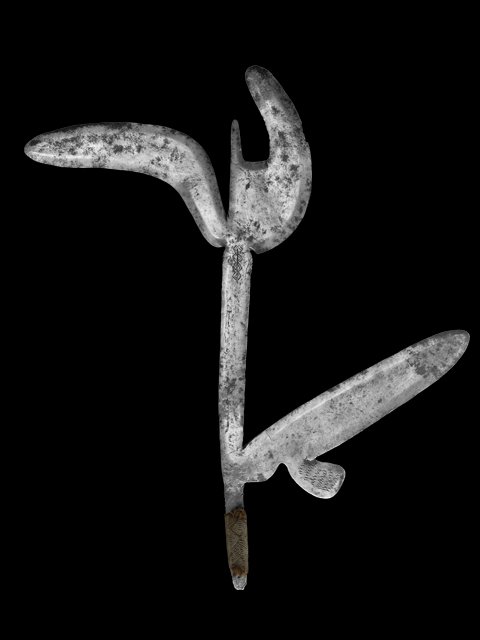
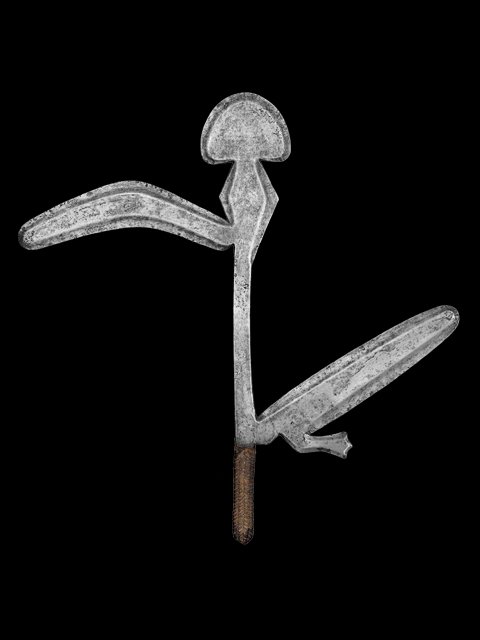
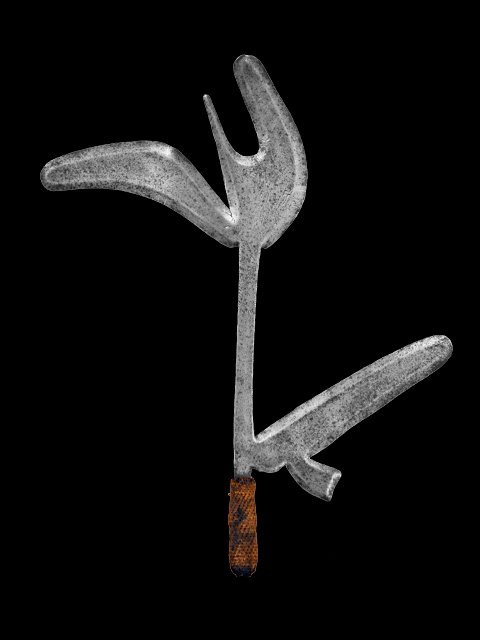
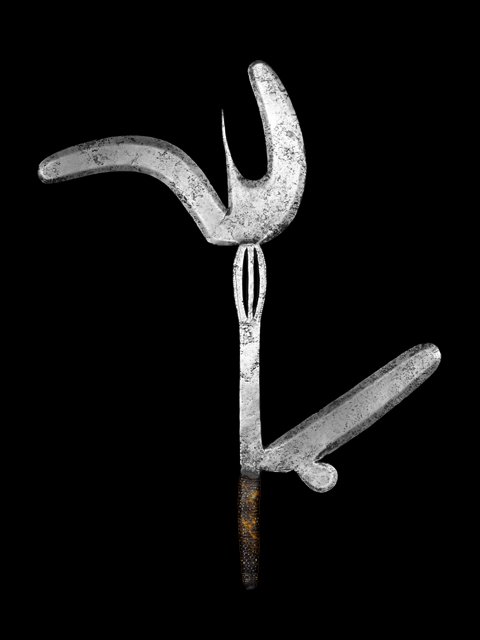
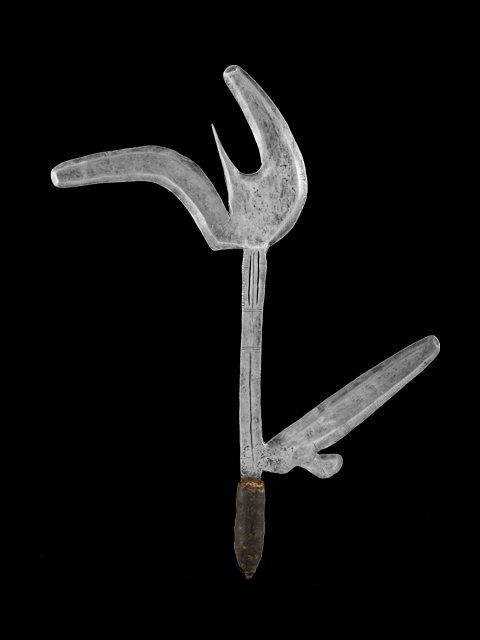
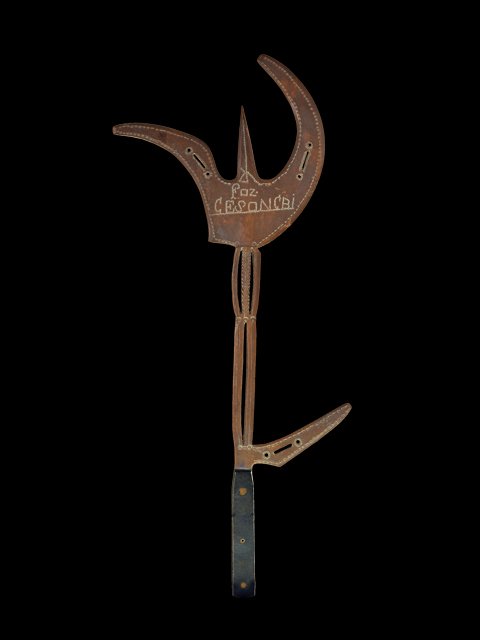
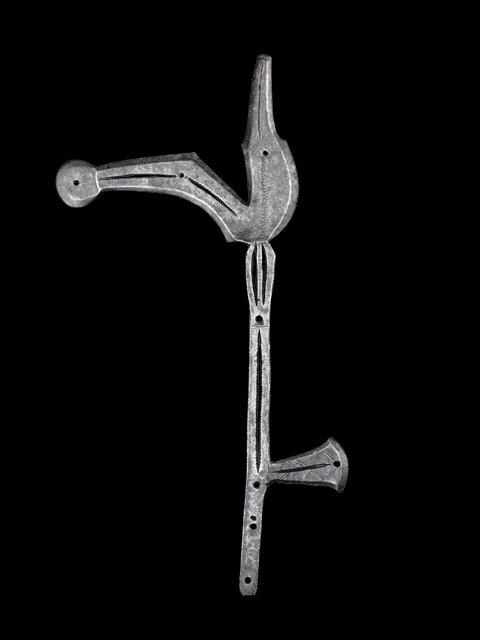
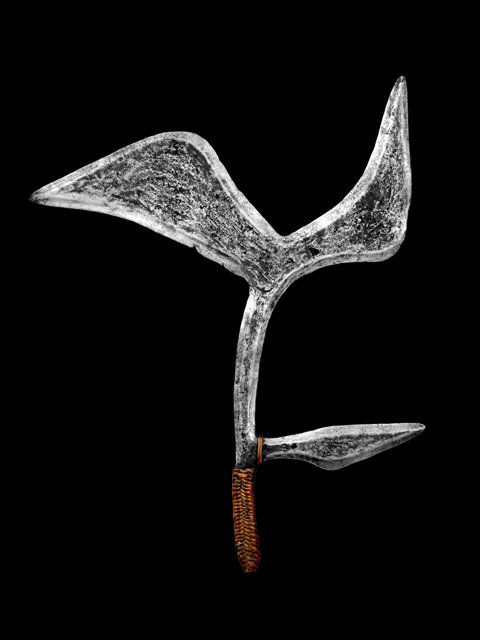
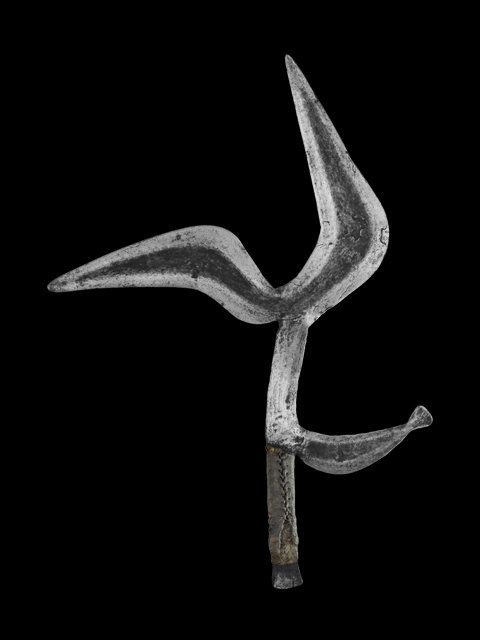
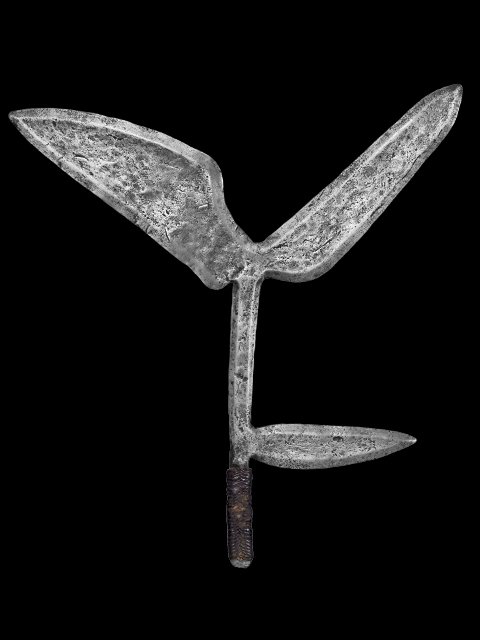
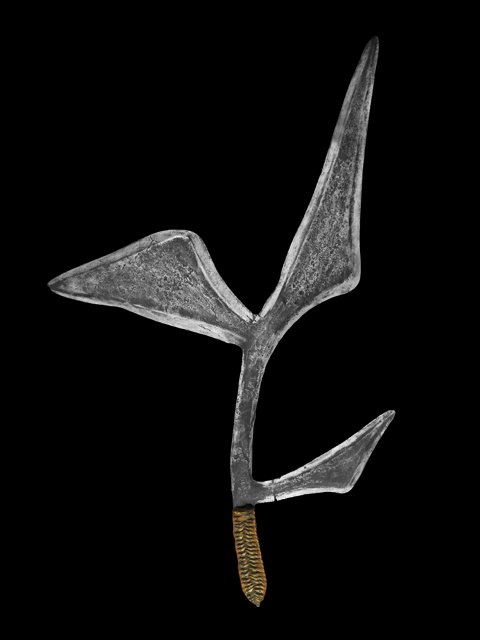
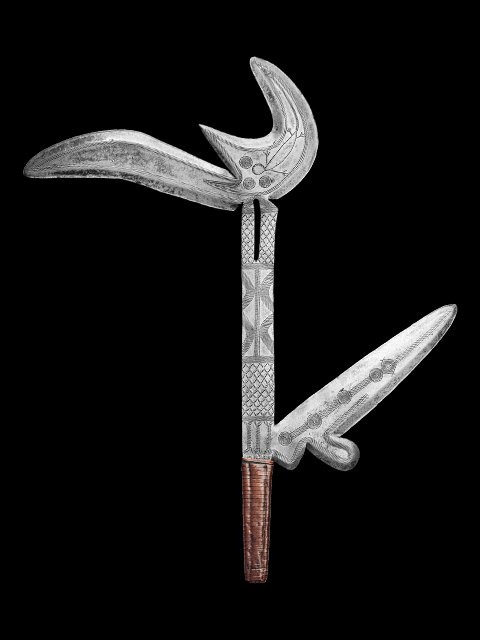
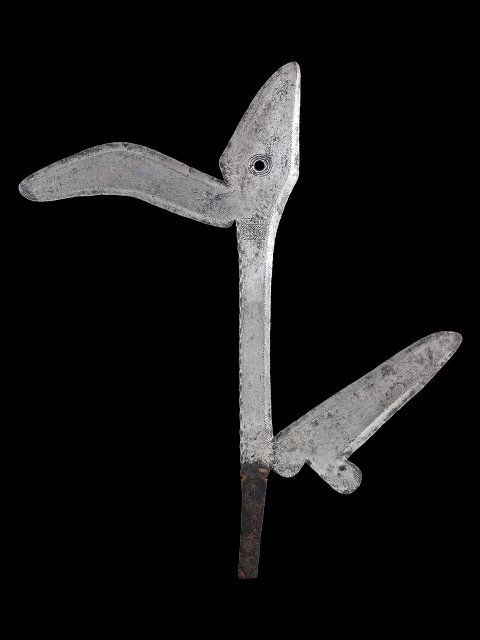
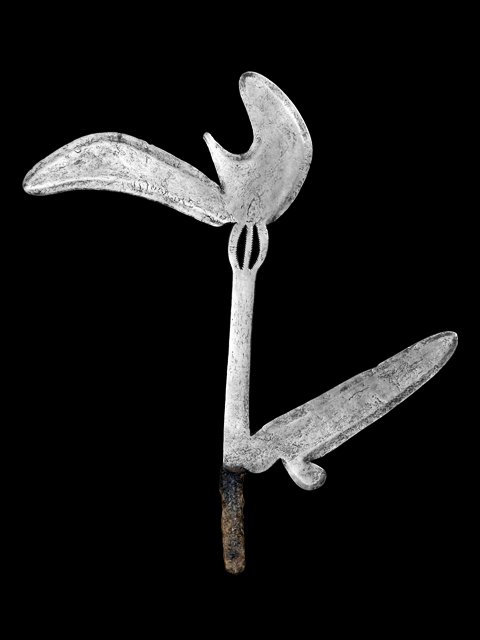
Throwing knives from Central Africa
Definition
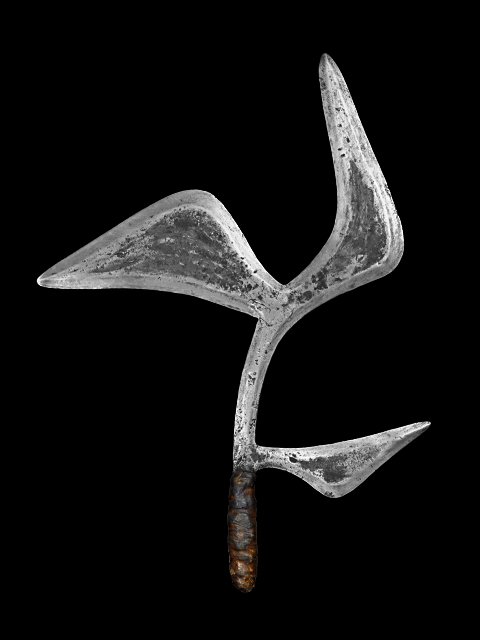
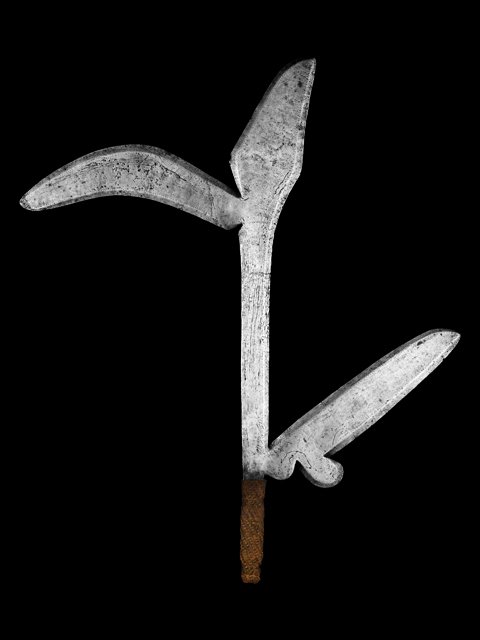
As their name suggests, these knives are meant to be thrown. They are
classified in the category of offensive weapons. Their origin is purely
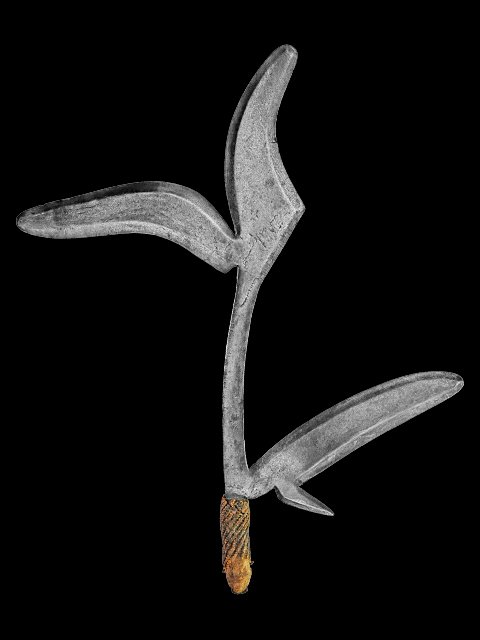
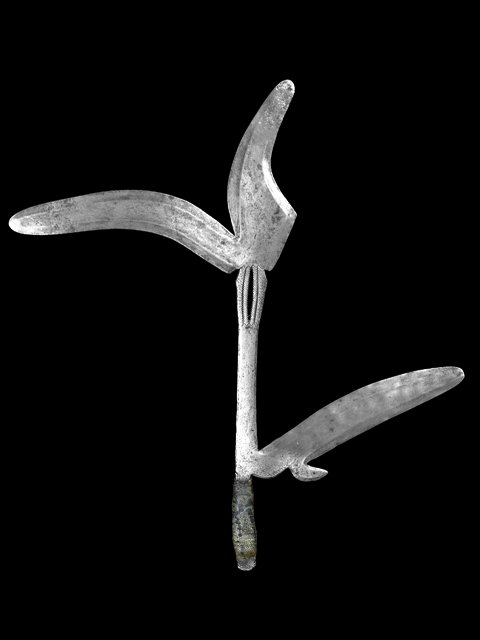
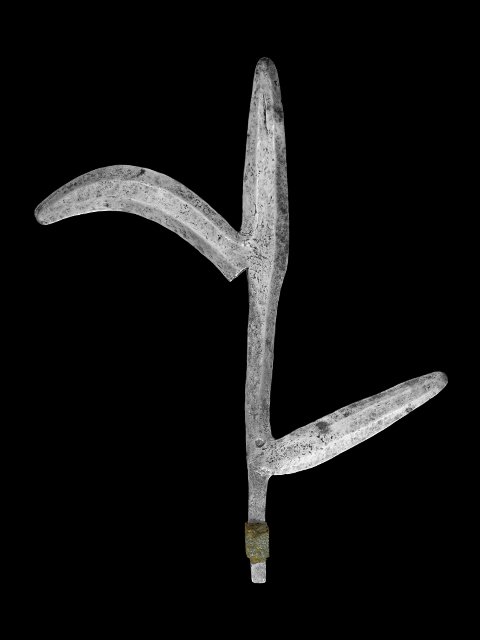
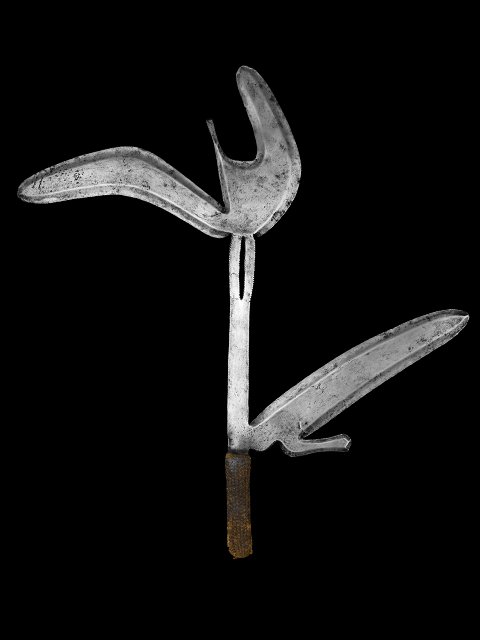
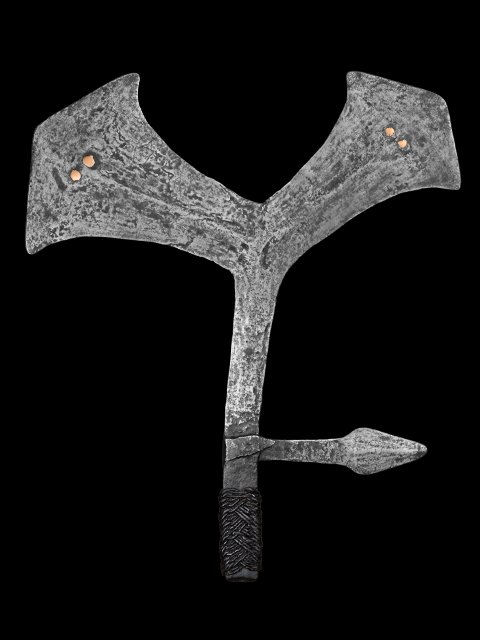
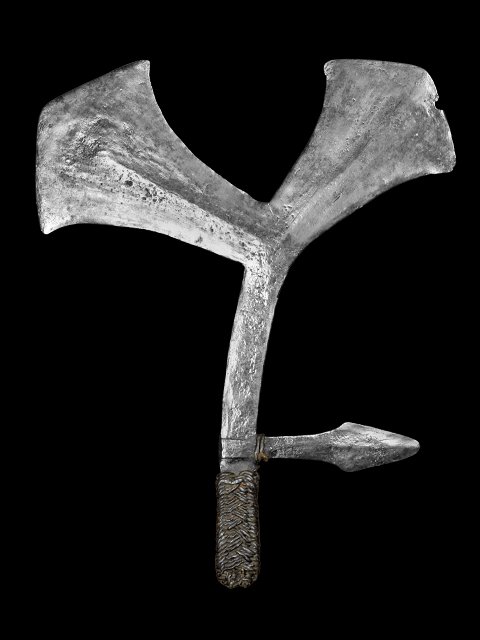
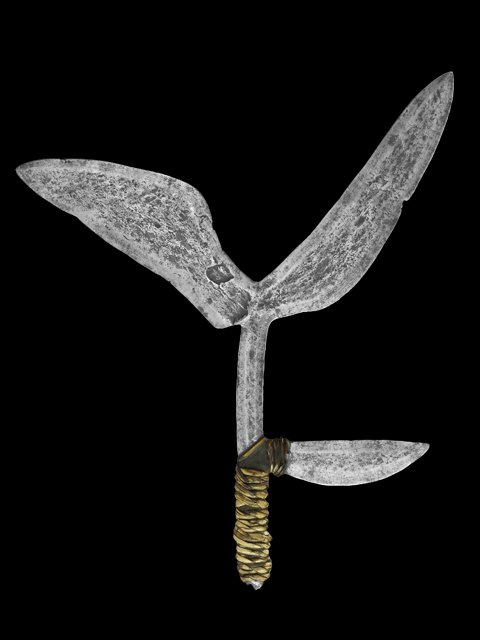
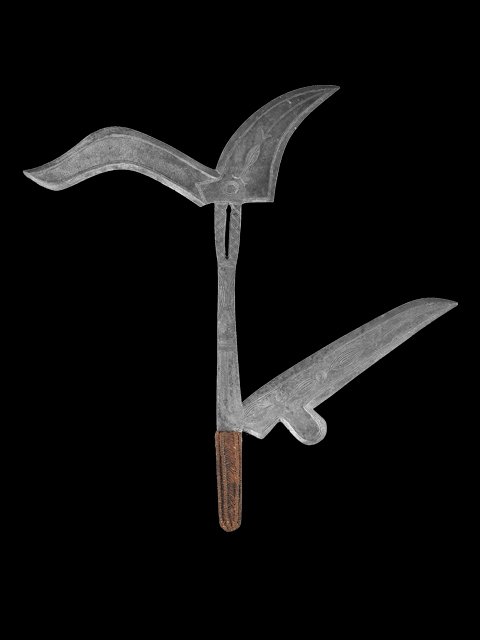
African. They are comprised of a blade and a handle. Classically, the blade
consists of a central axis supplemented by several branches, which
increase the probability of contact with the target. It has a flat side, the
back, and a convex side, the front, for better aerodynamics. It is made of
iron, but there are also rare models in copper and brass. The handle
located at the bottom of the axis is covered with a shock-resistant,
flexible material: leather, vegetable fibers, or metal wires or strips.
There are many nuances. We can find two planes of symmetry for the
placement of the branches on an axial stem, but not always. The faces
are sometimes flat or convex on both sides. Like a glove, the weapon
is designed only for either right-hand or left-hand use, and most models
are designed to be thrown with the right hand. The branches (wings)
have one or more cutting edges, with pointed or rounded tips.
Sometimes appendages or hooks are added. The most variation
is found with the materials used for the grips. There are even weapons
with the attributes of the throwing knives described above, outfitted
with handles that are wood or ivory: materials so fragile that they
render the knives completely unfit for throwing. They are nevertheless
classified as throwing knives.
Which brings us back to the initial premise: were these knives
all designed to be thrown?
Use
Originally, without a doubt, yes. Otherwise why bother forging one,
then adding several branches onto the stem if not to turn it into
a more effective weapon with the additional prospect of flying?
The blacksmith was inspired by wooden throwing sticks, already
having this appearance and used for millennia, to create a strong,
threatening, and effective weapon. The throwing knife is above all
a weapon of war. Used in assaults, this weapon with multiple
sharpened points had devastating effects on enemy ranks, and also
a significant psychological impact. Shining in the sun and whirling
through the air with a characteristic roar, this weapon provoked terror.
It could reach a target beyond 50 meters and cause serious injuries
within 10 to 20 meters.
However, it seems that some of these knives were used sparingly
because of their value. Some models were probably used as assault
weapons in close combat and therefore modified: thickened,
weighted, and outfitted with handles that ensured a better grip.
Also effective for hunting, these weapons were still in use recently
in some sub-Saharan areas for small game. Others were used as tools
or bush knives to guard against snakes.
In some cultures, the throwing knife was believed to have had a divine
origin and a particular knife could become a venerated object.
Presented during ceremonies, it received offerings and honor. Having
become obsolete with the importation of firearms, it was transformed
into a weapon of prestige and symbolism. To assert their authority, their
status as a warlord, or their membership in a secret brotherhood, some
dignitaries displayed models embellished with engravings in elaborate
patterns, decorated with ivory handles or wrapped with copper strips.
More simply, in some areas, the throwing knife was worn by men
pronouncing their status as an adult. And they sometimes accompanied
a man to his last home during funeral rites and could be kept as a relic.
Finally, its value also gave it a role as currency or dowry.
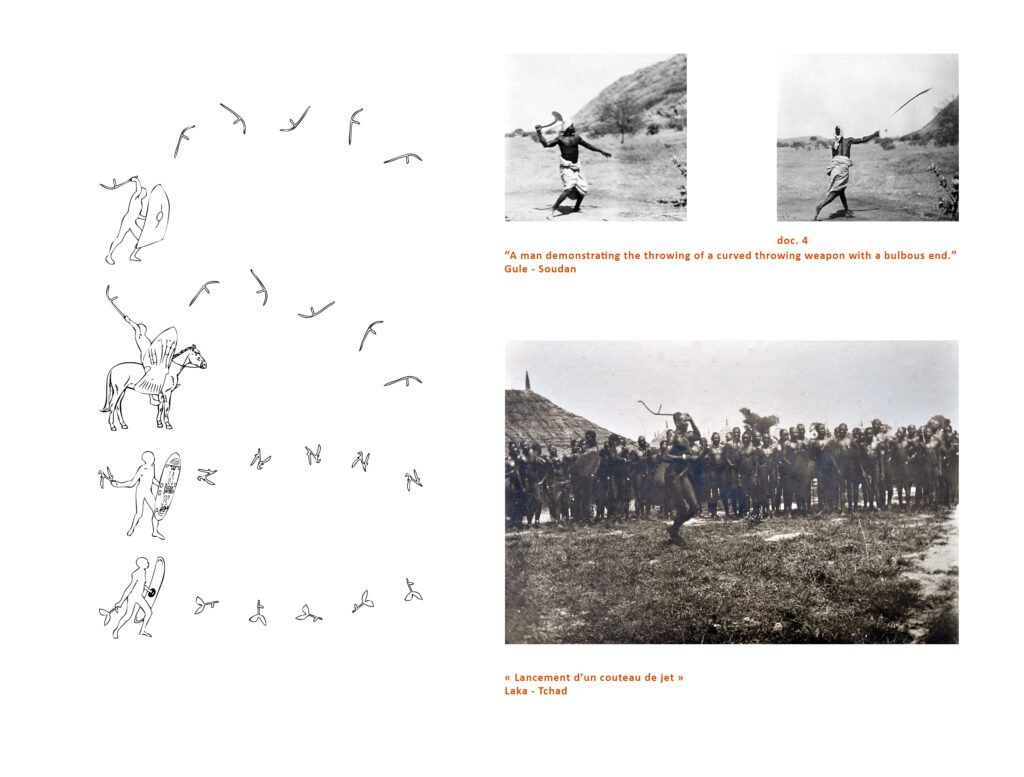
There are three ways to throw these knives: overhand vertically, sidearm
(parallel to the ground), and underhand (see drawings). Rigorous training
was required to learn how to throw these knives, and to perfectly hit a
target with force and precision. They could be thrown while standing in a
fixed position, walking, or even running slowly. There are images of riders
with throwing knives, and the possibility of them being thrown while on
horseback is not unfeasible.
Appearance
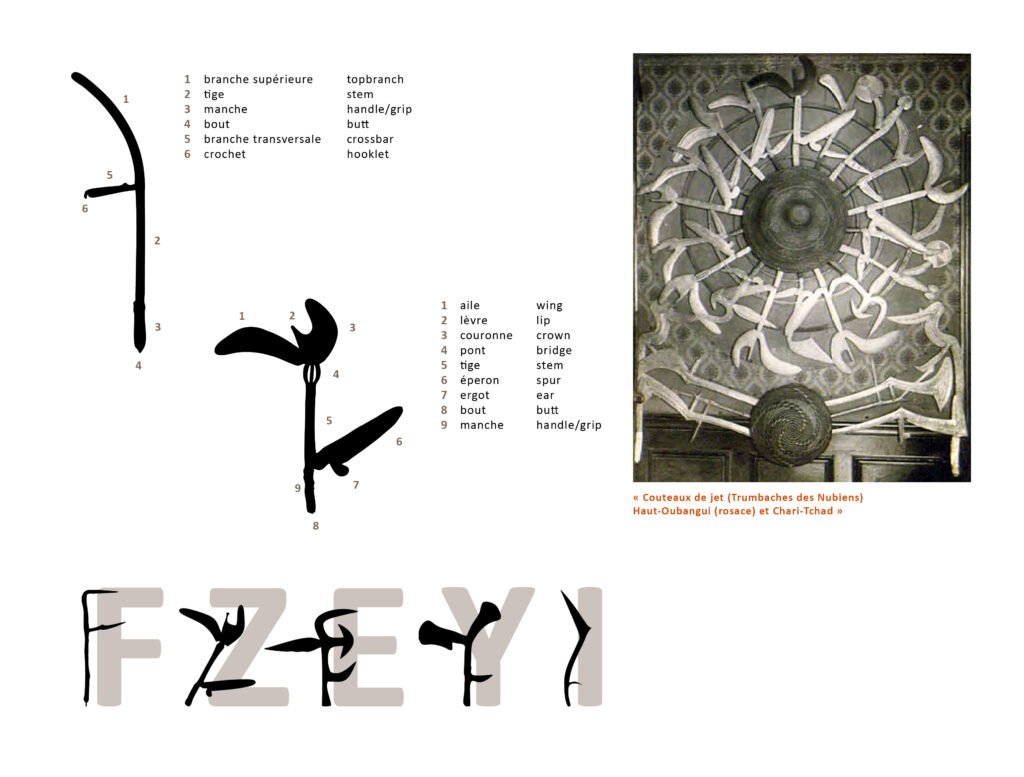
Simply put, we define two main types of throwing knives:
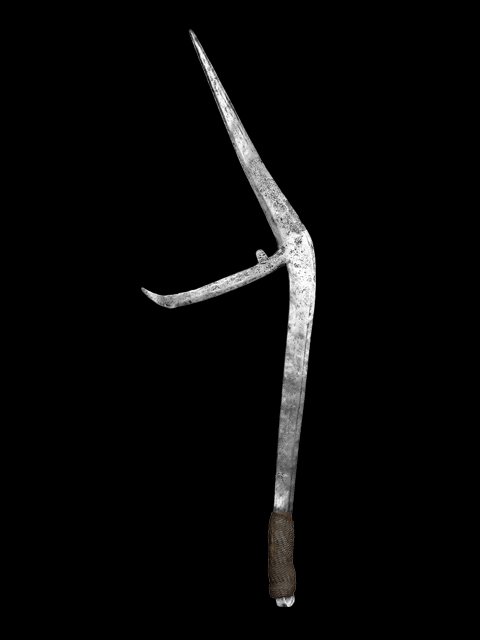
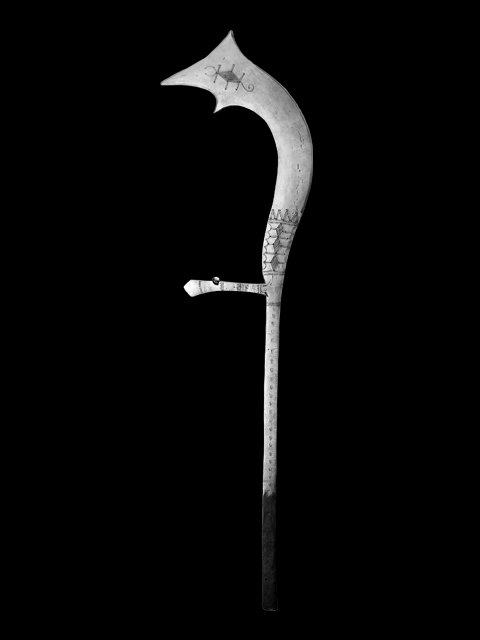
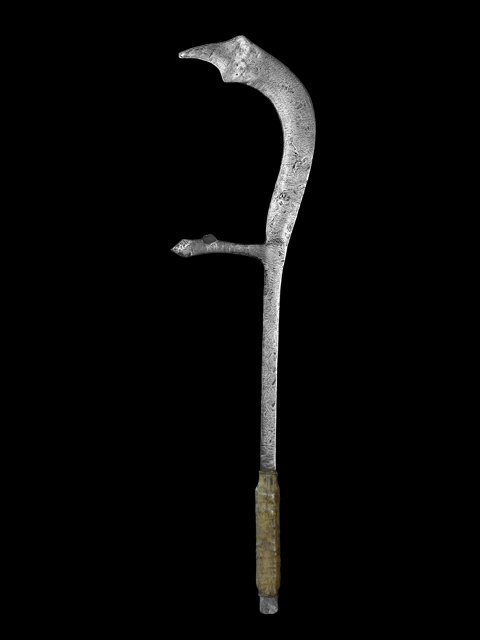
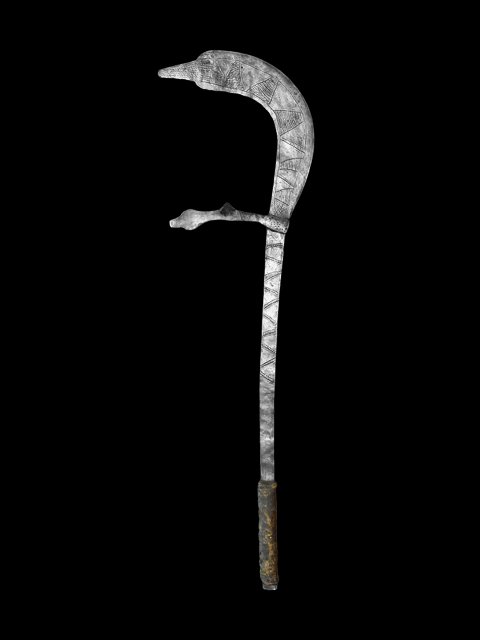
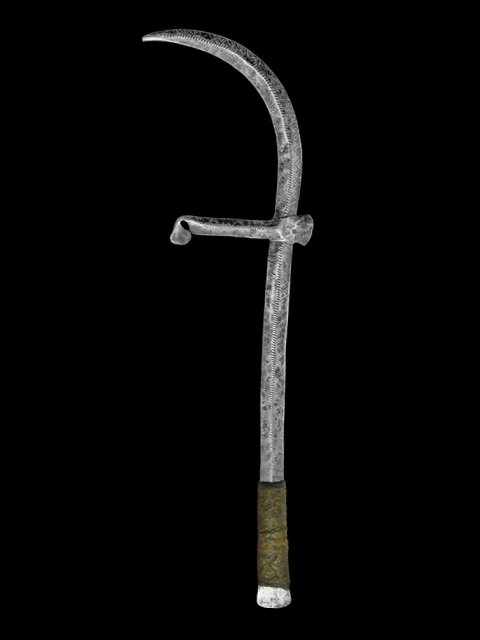
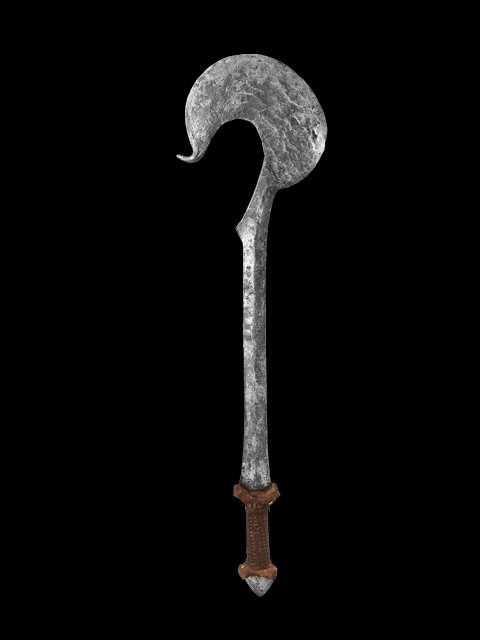
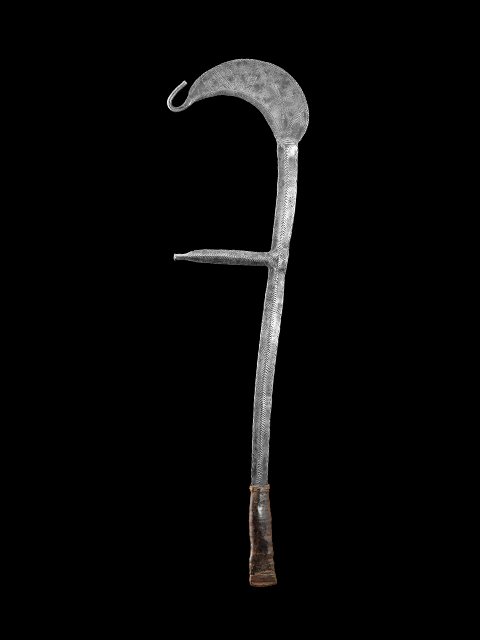
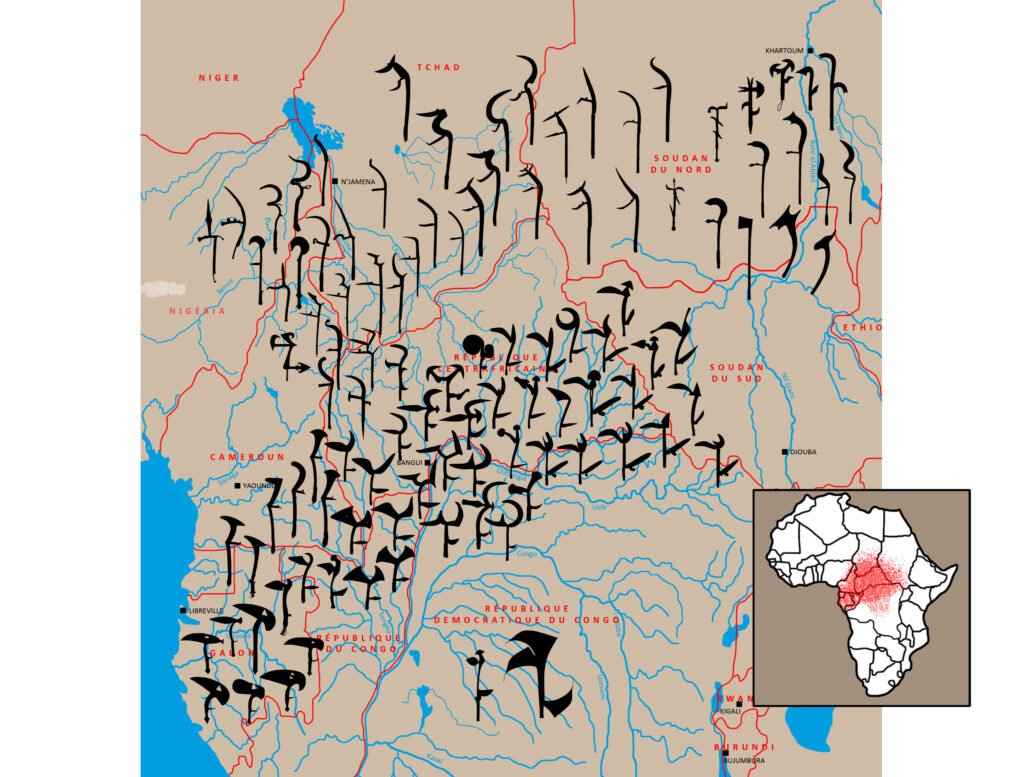
– Northern knives are generally long, in a reversed F-shape, and used
mostly in the desert and savannah regions of Chad, northern Nigeria,
northern Cameroon, and Sudan, but are also found in southern
Cameroon and northeastern Central African Republic.
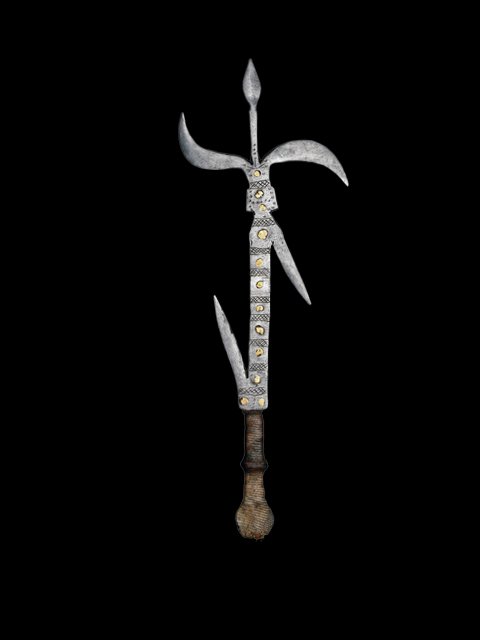
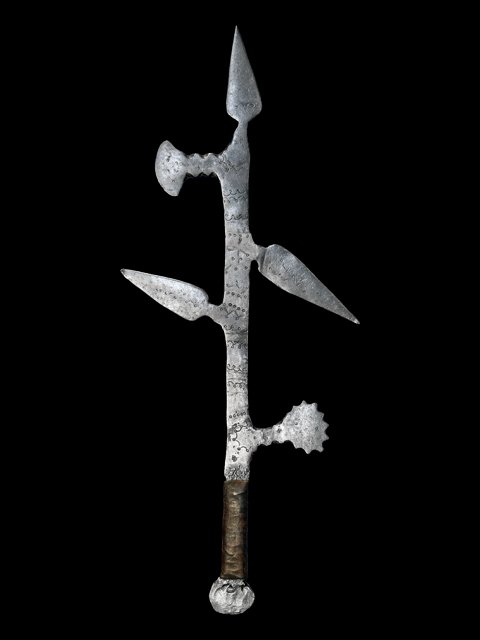
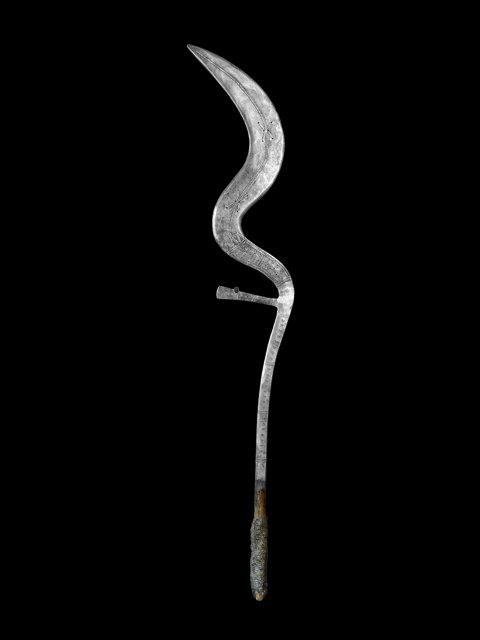
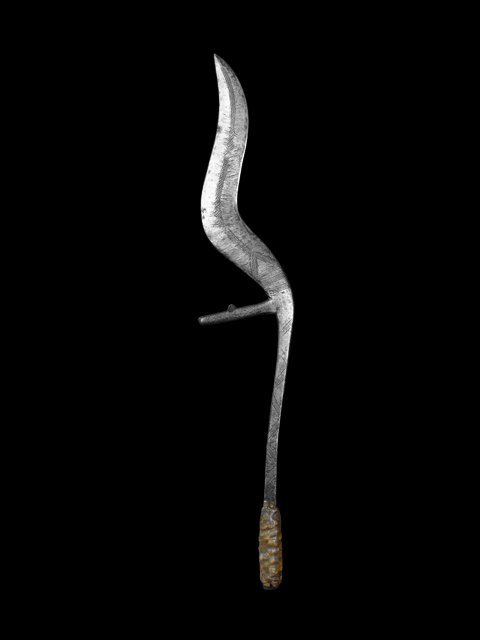
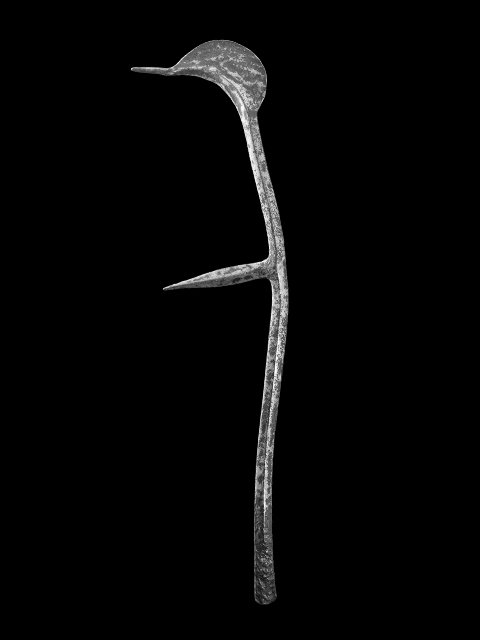
– Southern knives are shorter and come in many forms, sometimes
classified as Z, E, Y or I styles (but it can be difficult to fit some models
into this classification system). They are used in the wooded savannahs
and tropical forests of southern Cameroon, Equatorial Guinea, northern
Gabon, and Congo-Brazzaville, the Central African Republic, central and
northern Democratic Republic of Congo, and southwestern Sudan.
Evolution
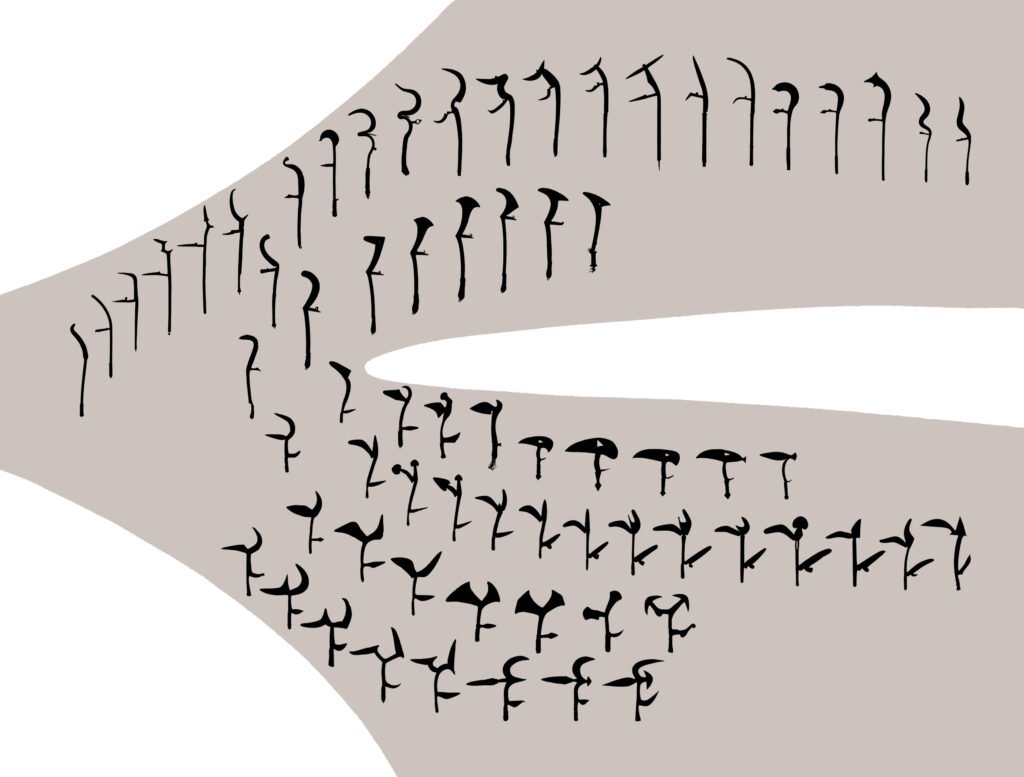
Scholars agree that the location of the origin of the throwing knife
is around Lake Chad. The original shape was an axial rod (inspired by
throwing sticks), which transformed into a curved knife. That was
augmented with a crossbar or even additional branches, then the curve
and the bar were reversed to lead to the more complex forms of knives
of the South. The distinction between throwing knives and curved knives
known as sickle knives is sometimes unclear. Some sickles have a flat side
and the other convex, or appendages that could be the first fruits or
the remains of an extra branch, which is why some sickles are considered
throwing knives.
Manufacturing
The blacksmith is a craftsman like no other, as his know-how
is incomprehensible to the other members of the tribe – he is magical
and linked to the occult forces of nature. He is important because of
his production but also for his secret knowledge. Subject to many
prohibitions, his work at the forge is accompanied by all kinds
of rituals.
The manufacture of iron is akin to a sexual act followed by a birth:
the stove represents the woman, the bellows of the forge the man,
and the product, the iron, the baby. Working the iron requires a powerful
fire, large quantities of charcoal, and the instigation of the bellows to
achieve sufficient heat. Iron metallurgy is a complex and expensive
operation that requires a lot of manpower, and therefore also a
well-organized society. The blacksmith purifies the softened metal and
then pours it into a wooden matrix or works the block of iron ore directly.
The cooled and hardened metal element, freed from the mold, is forged
on an anvil, a mass of iron planted in the ground. The knife is struck with
a massive round-headed hammer or stone. Finishing consists of
decorating the blades with engraved or stamped motifs. The impressive
result, obtained with these rudimentary tools, yields great admiration for
the work of these blacksmiths.
With colonization, the use of native iron was replaced by European
metal supplied mainly in the form of iron bars and later, in the form of
steel sheets. Blades were also forged in copper and brass, for prestige
weapons and currency. The forging of throwing knives requires
the mastery of difficult welding techniques, especially when adding
branches. Whenever possible, the blacksmith prefers to bend and
stretch the iron – reddened by pounding – to form its shape and create
the various points, which requires considerable time and energy.
Added to this effort is the beveling, grooving, drilling, and engraving
usually carried out after the iron has cooled. Finally, the sharpening and
polishing, the blackening of some parts, and the creation of the handle
complete the process. All this work explains why throwing knives
are considered to be so valuable.